


There’s understandably been a lot of concern about affordable housing in London – but less about affordable offices! As London has grown businesses and employers are also finding it more difficult to find somewhere to call home, at a price they can afford – and with many of Battersea’s existing office and industrial spaces being replaced by new housing developments, if we’re not careful we’ll see local businesses struggle to carry on, and fewer job opportunities for people who don’t want to commute right across the city.
Wandsworth borough currently has one of the highest office occupancy rates in the UK – an impressive 97%! There’s a major need for local business space – whether smart Grade-A offices, cheap and functional studios, flexible room for startups, or the semi-industrial space that keeps our local services running.
In this article we take a quick look at what is currently available, and what might happen in the next few years.
Big, glamorous offices
When you say ‘office space’, many people think of the glass towers in the city, complete with big glossy receptions and fast lifts. In property developer terms these are ‘Grade A’ offices, i.e. smart / expensive spaces aimed at attracting big London headquarter offices. And several of these are being built in nine Elms – notably for Apple (who will be taking over 50,000 square metres in the power station itself in a year or so – that’s a big office, about the same as the Gerkhin skyscraper in the City) and the US Embassy itself (another 50,000 square metres). Penguin Books are already occupying 8,000 square metres by the embassy, and publisher Dorling Kindersley is taking over 4000 square metres right next to Penguin. There’s more of this to come with a further 20,000 square metre building being built between the US embassy and Vauxhall, and 70,000 or so square metres to be built in later phases of the power station project. However a recent study on Employment Land and Premises identified that even after all these developments are built, Wandsworth will need to add another 30,000 – 65,000 square metres of office space by 2030.
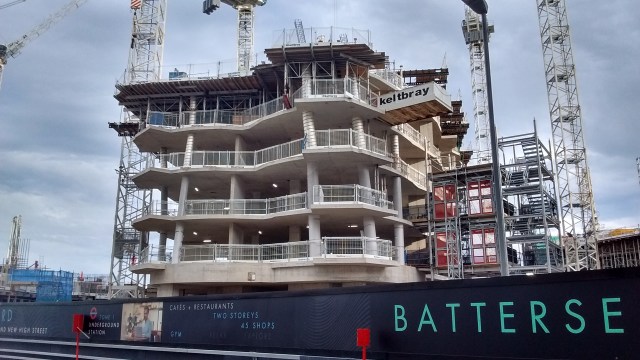 These are important employers, and it’s good that Nine Elms is developing offices and jobs rather than just flats (not least because it’ll prevent it being a ghost town on weekdays) – but they aren’t the sort of spaces a small local business will be renting any time soon.
Outside Nine Elms, Wandsworth currently has 400,000 square metres of office floorspace of various grades of quality and price. Some of this is used by the Council itself (albeit this has reduced quite a bit in recent years), and some by services like Royal Mail on Lavender Hill and the Wandsworth job centre. Some of the larger ‘accessible’ areas are the likes of Battersea Studios (which offers over 5,000 square metres of modern serviced flexible office space just off Queenstown Road).
A scattering of office spaces have been developed in new buildings along the riverside (and have been slower to let – as they’re not easy to get to – which is why policy now is to steer any larger new developments towards the town centres). Down the line, Clapham Junction is may well the biggest new cluster of office space outside Nine Elms – as it’s fabulously well connected, and redevelopment of Asda and / or the station sites could well see office space added.
Industrial spaces


Readers may be surprised that the Borough also has 1.5 million square metres of ‘industrial’ land. Despite having one of Europe’s busiest concrete production facilities just off Queenstown Road, we’re not going to be seeing steelworks in Wandsworth any time soon – as the days of heavy industry in central London are long gone. About half of this is for actual ‘industrial’ use – including myriad plumbers, glaziers, builders, scaffolders, garages and others who look after our buildings, vehicles, gardens & streets – all of whom need somewhere nearby to call home. The rest accommodates the unglamorous but important services that keep things running – whether handling our waste, sorting the mail, processing deliveries, keeping things moving. Not to mention dozens of companies, from Chesneys (who repair and sell vintage fireplaces) to Caffe Nero (whose main roastery is just north of the Shaftesbury Estate – you can sometimes smell the beans!).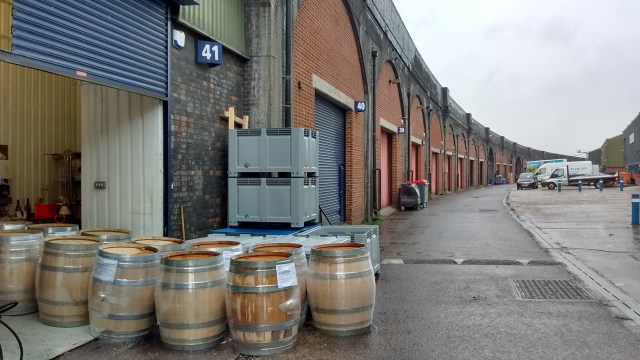 We also have a brewery, a distillery, a commercial butcher, a winemaker, and even the company that maintains the gaslamps in central London – all within ten minutes of Lavender Hill. Honourable mention goes to the various local railway arches, and to the gaps between railways not suitable for housing (north of the Shaftesbury Estate), as a location for relatively affordable industrial space.
The draft London Plan now has Wandsworth down as one of the Boroughs that needs to provide new industrial space (whereas the previous aim was just to retain what we have). There’s no new land, so this means consolidation, intensification, and co-location of uses where possible – as well as protecting ‘industrial’ employment areas, like Stewarts Lane. In the future, the most likely solution is to build upwards, and make existing industrial areas more dense – moving away from single storey warehouse buildings – while resisting temptation to build flats with token industrial use on the ground floor.


Smaller offices
Battersea’s businesses are overwhelmingly small, and many employ under 10 people – covering every category from technology firms and event planners to nurseries, and property maintenance. There are a fair few small offices, but they are popular and are constantly under pressure from developers wanting to convert them to flats and sell them off – which is an easy win for developers but damaging to the long term future of our businesses and our town centres. This is why Wandsworth has put some restrictions on converting offices to flats along the western end of Lavender Hill.
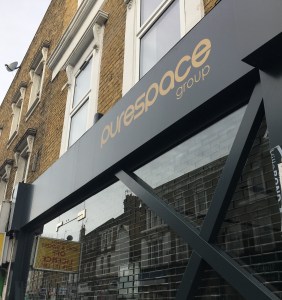 There’s also lots of demand for offices for micro businesses (2-5 people), and the recent trend of some smaller shop fronts being used as offices for small businesses (for example at the eastern end of Lavender Hill) has been helpful for businesses, and reasonably compatible with the desire to keep an active and lively ground floor use for high street buildings.
Some tiny businesses also want space with the flexibility to move and grow – and don’t necessarily want to be tied in to a 15 year lease! This has fed in tot he rapid growth of flexible co-working space – the Battersea Studios (on Silverthorne Road) is maybe the biggest local example, but we also have many others including IdeaSpace on Lavender Hill, and the Scratch Hub co-working space on the lower level of Battersea Arts Centre. These can offer everything from a single desk (for the self employed who want somewhere other than home to work) to medium size offices on flexible terms. These are very popular and bound to keep growing.
Affordable workshop & studio space
It’s not just about smart offices: more robust business space, where ‘messy’ creative businesses can operate, is also important. The Battersea Business Centre on Lavender Hill is a good example of affordable workshop space that can accommodate caterers, workshops, artists and the like – an increasingly rare option in the area. Fortunately it is being protected as a local employment space: the images below show the Employment Protection Areas along Lavender Hill.


What’s the council doing about it?
An important way the Council can steer the development of space for local businesses is via the Wandsworth Local Plan – an important document that sets the vision for future development in the Borough. It matters, because any major new proposed developments (whether flats, offices or indeed anything of any size) will need to be broadly consistent with the plan. 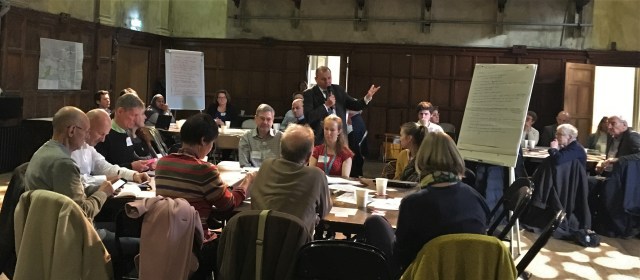 And the need for space for businesses is not lost on the Council. We recently took part in a Council-led workshop with community groups, as part of their ongoing work to update the Plan (which your author has reported on in some detail on sister site the Clapham Junction Action Group). It was an interesting discussion, that covered a surprising amount of ground, and we were encouraged by the thoughtful approach of several of the Council policy leads. Everyone agreed we need local businesses and jobs, to avoid the borough being a dormitory suburb.
With land at a premium, and flats always the lowest risk option for developers, the employment areas we have are always under pressure from developers, which means imaginative approaches are needed to keep our local businesses alive. Local business space is rarely headline news – but hopefully this quick review helps illustrate why it matters! We’d welcome your thoughts & ideas on the issue, and will keep you posted on any major developments as well as the the Local Plan.
 A few photos of the works underway to create a new access path to Asda from the Dorothy Road – removing the steps. We first reported on this small but helpful project back in
  The design has been refined since the original plans were announced – it was originally a direct line but we now have a gentle curve to better integrate with the park. It’s all being paid for by the Local Fund – that is, money paid by the firms building big new developments, towards local facilities.
 The helpful new street light installed a couple of years ago on this previously dark stretch has mysteriously vanished during the works, but we’re assuming it’s getting slightly relocated now that the ground level has reduced.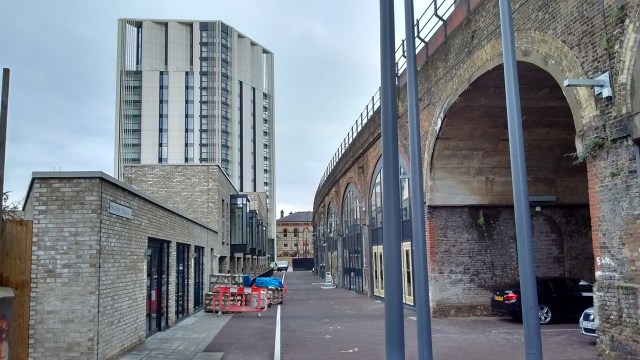

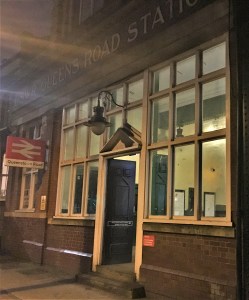
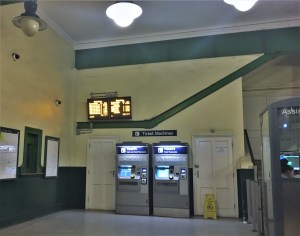
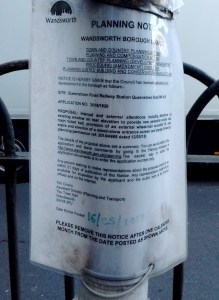 Said works are pretty minor. That small wall in the photo has to go, the overgrown back yard gets paved over, a disabled lift goes in, and the door you can see on the left of the photo gets opened up. The rather derelict outdoor privy visible at the right also goes, to tidy things up a bit. Taylor Wimpey got permission to add a rear entrance in 2014 (planning application 2014/4687), and – after it expired without being used – applied for permission again last year (planning application 2019/1820). South Western Railway, who manage the station on a day to day basis, have been putting in other applications in the meantime- notably one to replace all the lights in the station with ore efficient LEDs (2019/5256) – which is a good idea, but which slightly worryingly seems to assume the back areas will remain unused and that no new entrance will be built.
 Regulars at the small Sainsbury’s at the eastern end of Lavender Hill will have noticed the tendency for their fridges to break down as soon as it gets hot in summer – leading to a day or two of hardly any chilled stock. It seems there’s finally work underway to install new refrigeration equipment – we saw the large chiller unit pictured below being unloaded on Sunday.

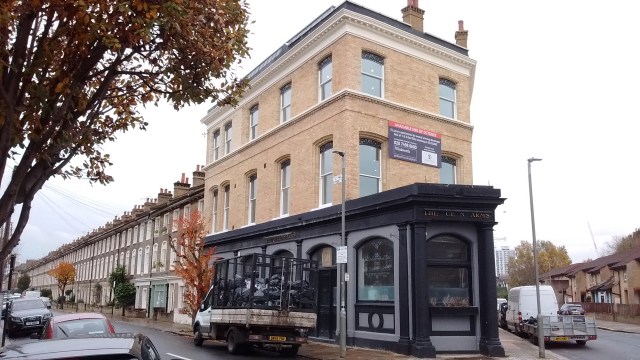
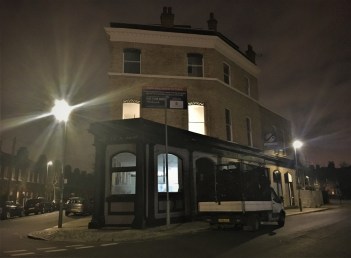
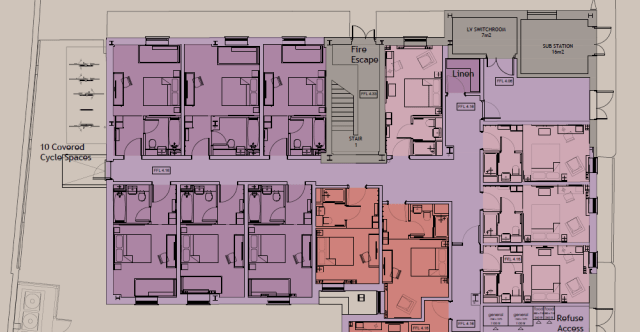
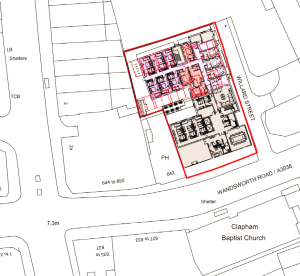 The Premier Inn close to the Lavender Hill / Wandsworth Road junction is growing. It currently has a little-advertised basement car park with 18 spaces for guests and staff (including two disabled spaces). They’ve been underused for the last few years (and aren’t even featured on the hotel’s website), and in 2018 the hotel successfully applied for planning permission to close the car park and convert it to an additional 13 bedrooms – taking the total to 105 rooms, and work is now underway.

 Barker 8
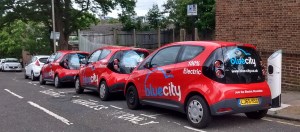
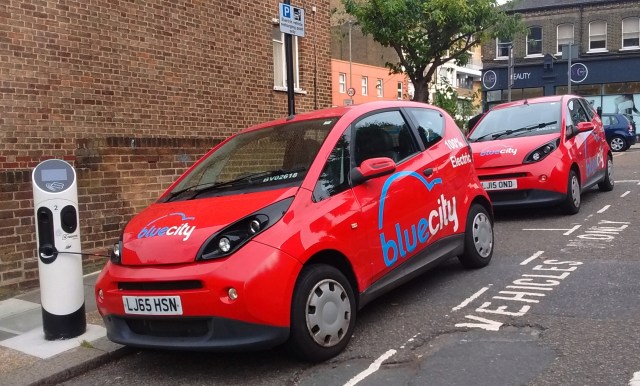 The BlueCity electric hire cars (which, despite their name, are red) will soon disappear from Battersea’s streets. Despite some success with a ‘Hire-in-Gatwick, drop-off-in-London’ trial, the operators struggled to get sufficient use to make the £5-per-half-hour service profitable, and plan to close down for good next week. BlueCity was a brave experiment, and it’s a shame to see them go. We’ve
 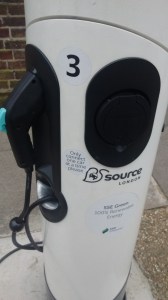 There were other problems. The company found itself having to negotiate separately with every single London Borough to build, or gain access to, charging points, which proved quite challenging. Wandsworth were quite proactive, but other boroughs seem not to have been interested. The cars had to be parked somewhere they could charge, and charging bays in popular spots tended to be full. And when the cars were fully charged, they could then block the spaces for days until someone else hired them. Unlike Zipcar, the BlueCity scheme never managed to get the same level of public attention, and maybe it never reached the scale & coverage where it was worth advertising widely.
 Almost certainly not. The BlueCity service was always going to be a bit of an experiment at first, and may have been a bit ahead of its time. Unusually, the company made its own electric cars and batteries – designed to be robust and more suitable for public use, and at least in theory a lot simpler to maintain than standard cars with petrol engines. When we see chargers become far more widespread, and when it becomes easier to use fast charging points run by various different companies without needing a completely different account and system each time (so cars can be dropped off and picked up far more widely), this sort of service should be easier to develop.
 The scaffolding has come off 7 Lavender Hill – which used to be the home of CutPoint barbers over the ground floor and basement, and a 4-bed flat spread across the upper levels. The property, close to the junction with Queenstown Road, was sold in 2017 for £915,000 (which apparently

 Some good news. Over the last few years, Wandsworth has seen a big
  We’ve
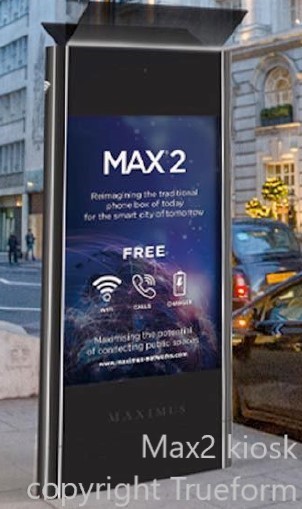
We’ve 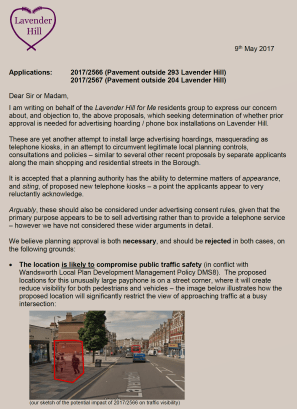 To roughly summarise the inspector’s judgement, they concluded that these mega-payphones would clearly have a “dual purpose” – being a payphone but also deliberately providing a disproportionately large advertising hoarding, that did not seem to be necessary for the payphone’s day to day operation. And because
  Lavender-Hill.uk : Supporting Lavender Hill