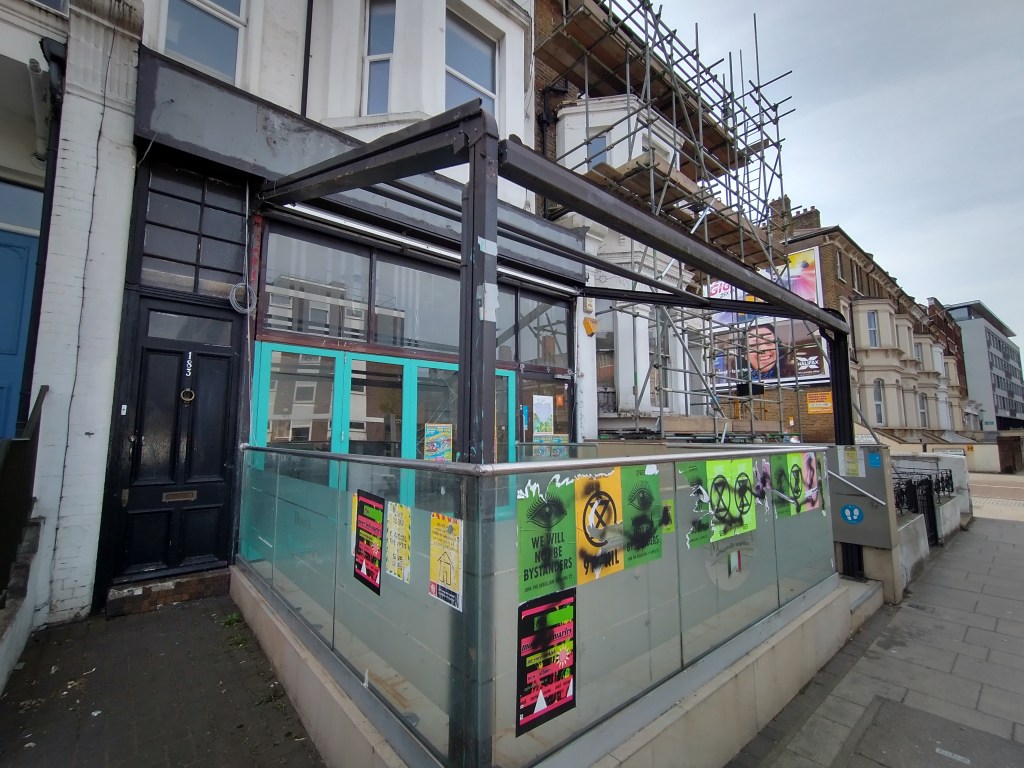
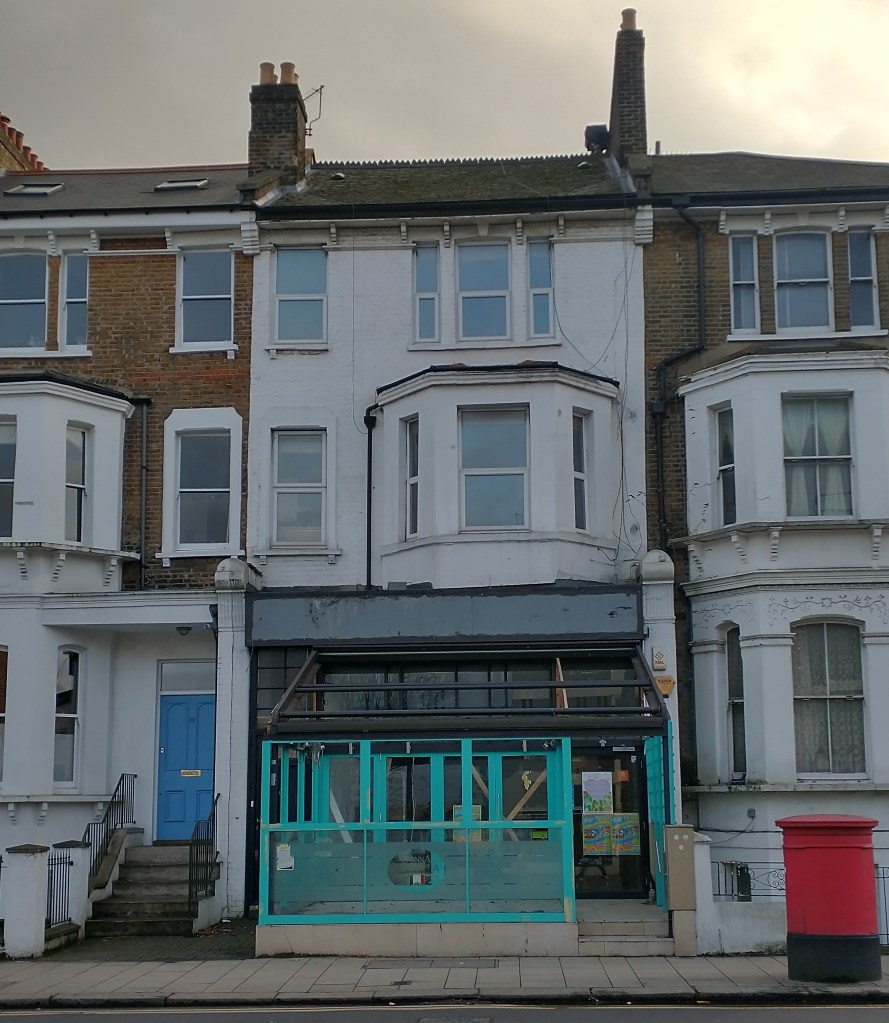
Sometimes things just don’t go to plan. And so it proved for Donna Margherita, at 183 Lavender Hill – one of our longest serving Neapolitan restaurants with two decades on Lavender Hill, and a firm favourite for years. When Coronavirus hit, restaurants were some of the hardest hit of all – but as we reported, Donna Margherita found a whole new opportunity, opening a delicatessen at a time when shop stocks were scarce and many were staying close to home and avoiding crowded supermarkets. A wide assortment of Italian produce was on sale, and while maybe not what they’d planned for, this clever approach kept things ticking over until we started to see light at the end of the tunnel. By spring last year, it was looking like the worst might be past, and they were again offering food service.
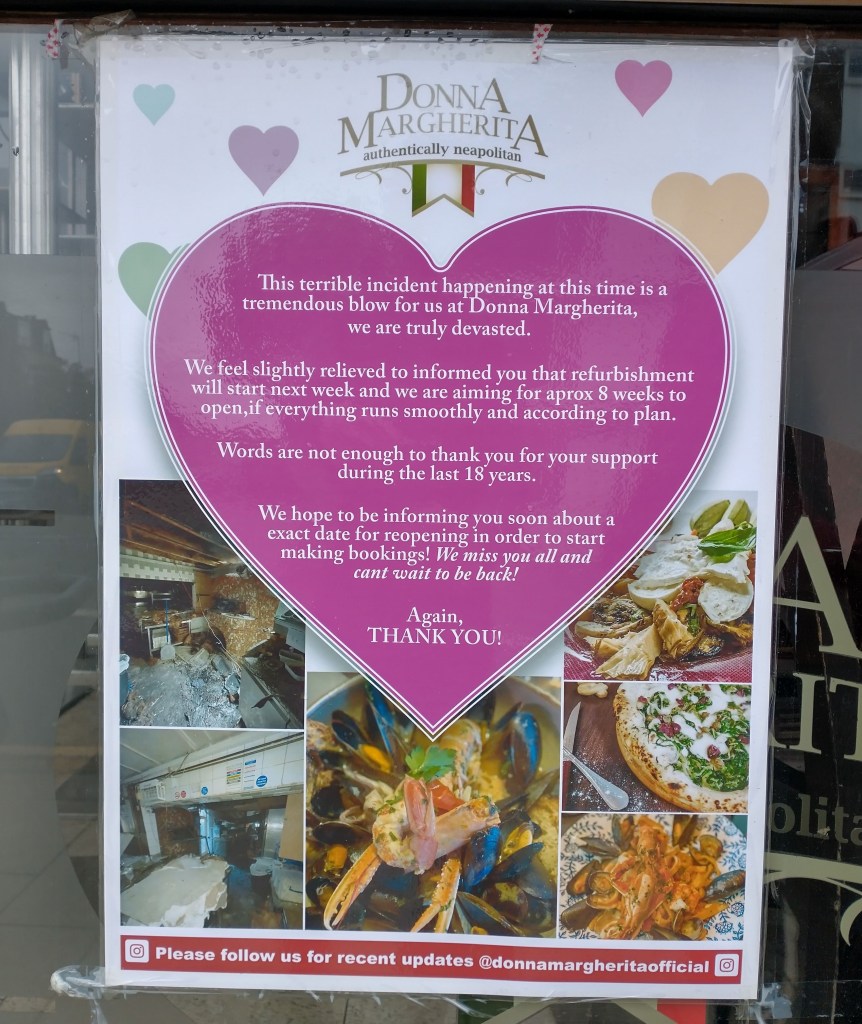
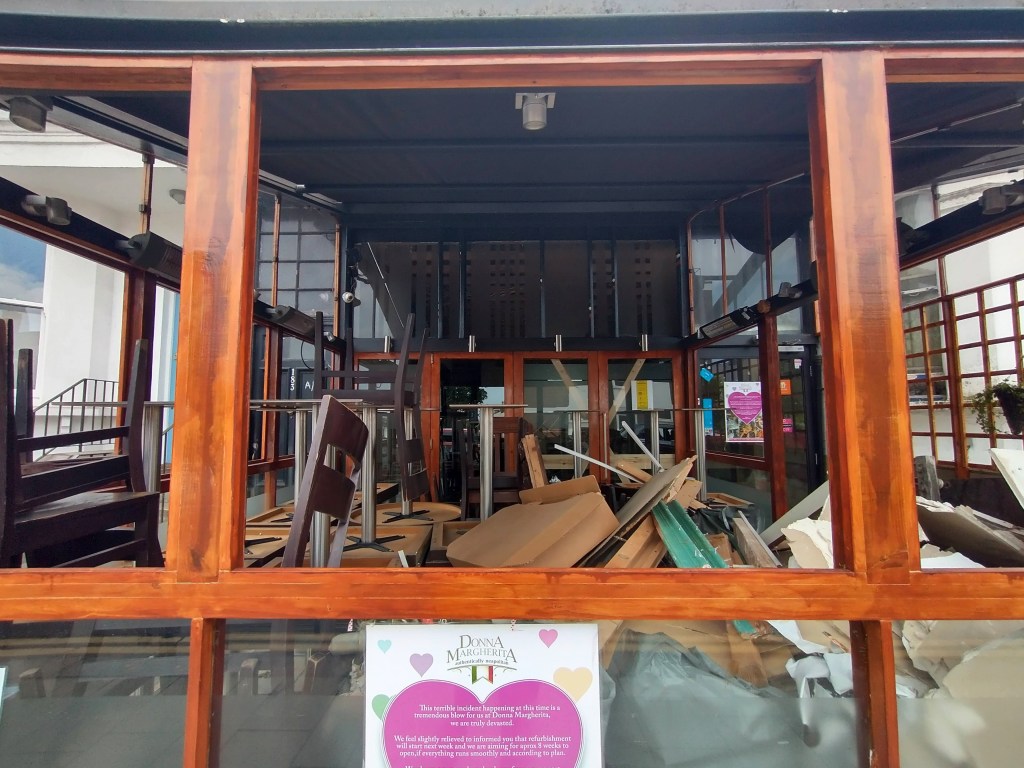
But then another disaster struck, with a kitchen fire in April 2021 that destroyed the back of the premises, and caused smoke and water damage around the building. With cruel timing this closed both the shop and restaurant with immediate effect. Initially there was shock and uncertainty on the part of the team, as they wondered if insurance would come to the rescue – but things started to fall in to place, leading to a substantial rebuilding exercise just as they had hoped to get going again after the worst of the pandemic. And having seen what the deli could do, the owners set out to rebuild as a pizza restaurant as well as a delicatessen.
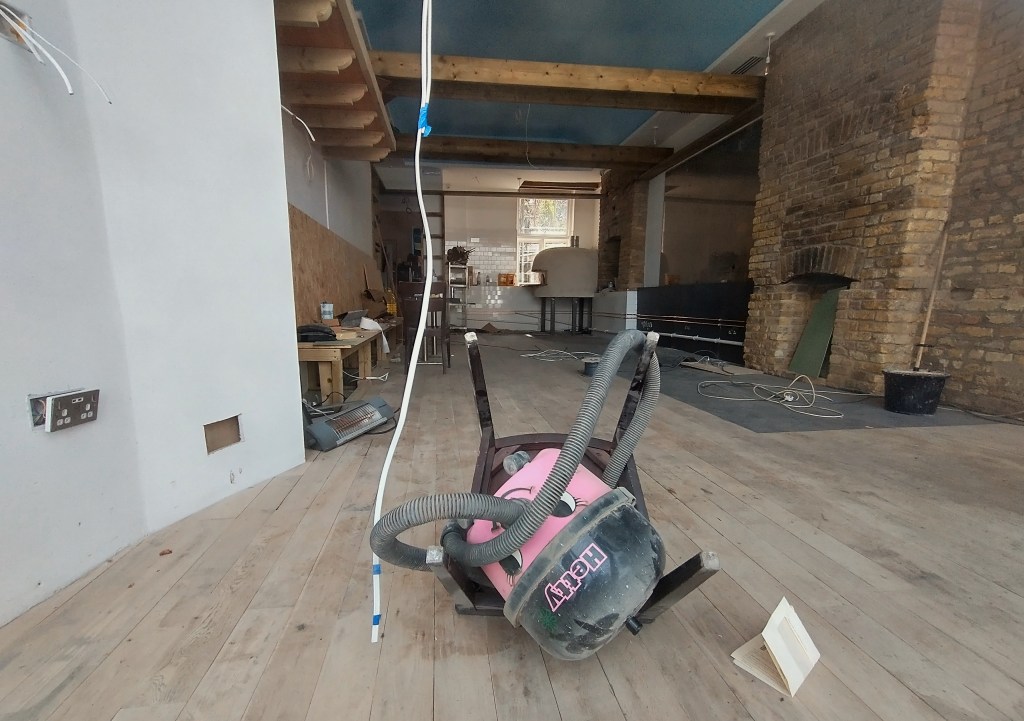
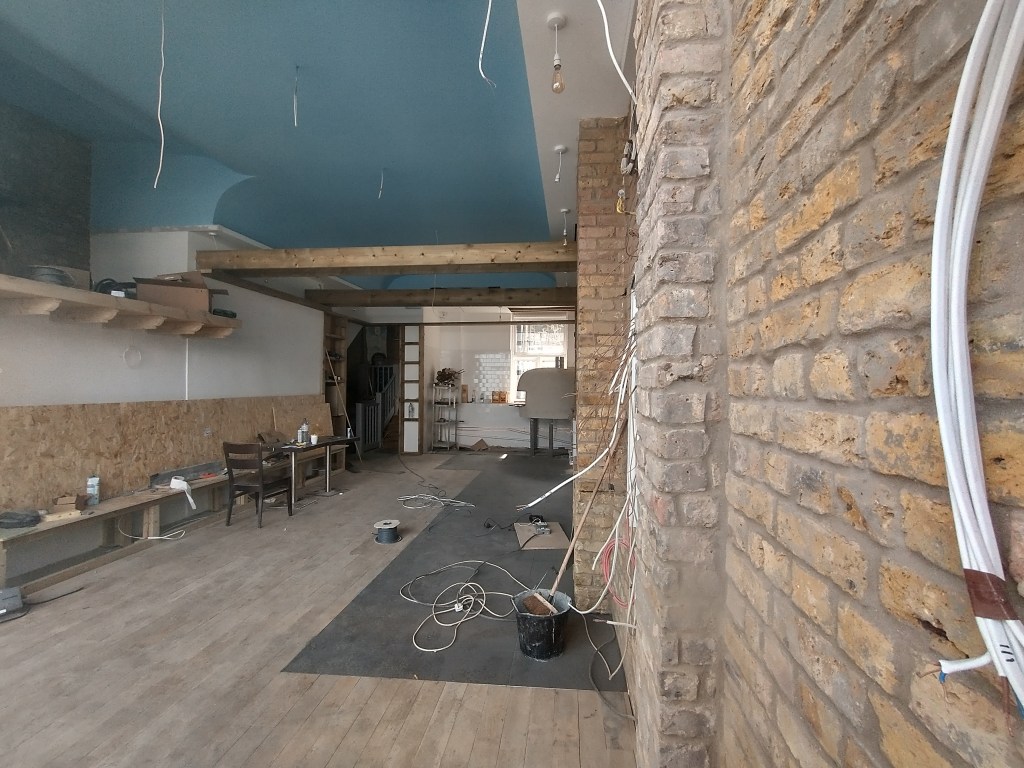
Works got going quite fast, with a clearout of the fire damaged contents, and building works to repair the back of the premises. As we understand it, things proved a bit more complicated than initially expected, and the premises needed rather more work than expected – so what had initially seemed like maybe a couple of months work stretched out in to more like five or six months, including quite significant repairs to the flooring beams, a complete rewire, and various other works.
The opportunity wasn’t lost though, to create something brighter and fresher than what had gone before, with a new look – including bringing light in to the back of the restaurant area with the previously largely hidden window, a curved new feature ceiling in sky blue, and a crisper, simpler overall design, There was still the all important pizza oven, at the back of the premises.
Things were actually coming on pretty well, to the extent that by September last year, we could start seeing what Donna Margherita 2.0 was going to look like. Donna Margherita’s Instagram was clearly showing the enthusiasm too: “Ciao Amici! We’re still full-on working hard on our Donna Margherita 2.0, works are proceeding great but unfortunately, it might take a few more months before we can safely open our doors.We appreciate every single one of you reaching out and we hope to see you as soon as we open! This is the longest break we took in over 20 years and it will probably be the longest one we’ll take ever, we love our job and making you smile with our food!“.
But then everything stopped. We hoped it was just a case of struggling to find people to do the finishing touches in a very tight market in the building trades. But six months on, the site remains deserted and there’s no sign of action, suggesting that the pressure of keeping afloat with the restaurant a building site may have been too much.
So… is this goodbye? It would be a sad end to a local institution. What went wrong? Can Donna Margherita still rise from the ashes? We’ve tried to get in touch and will let you know if we hear; and if any of our readers can provide any update on the team or the restaurant, do let us know.
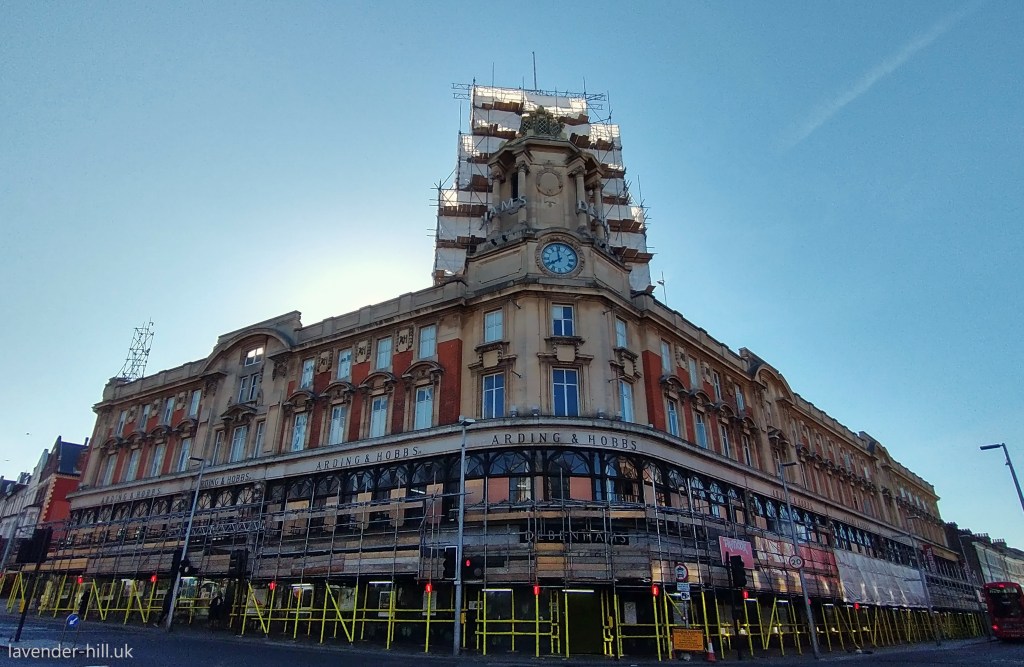
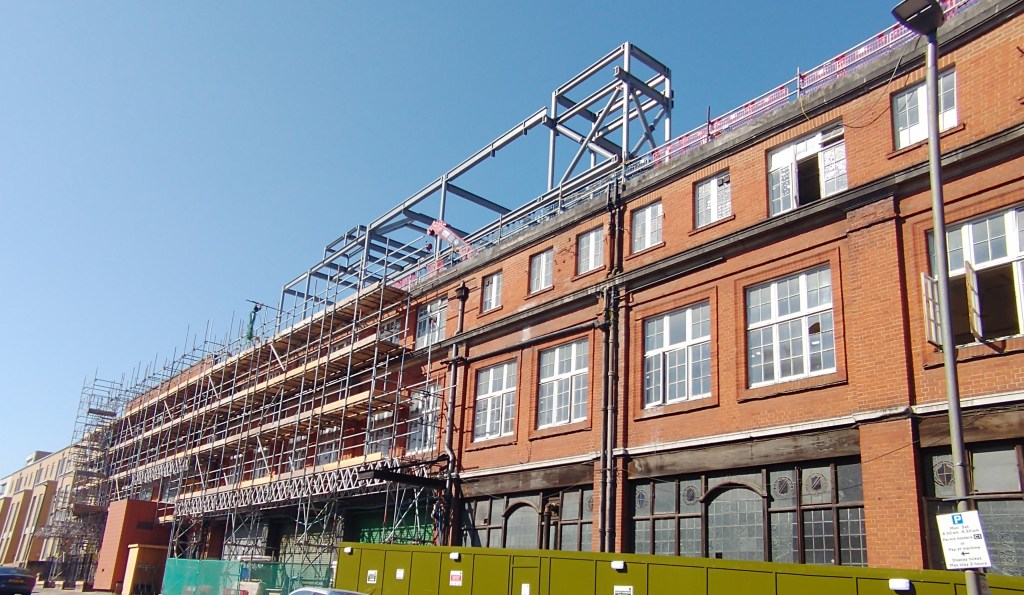
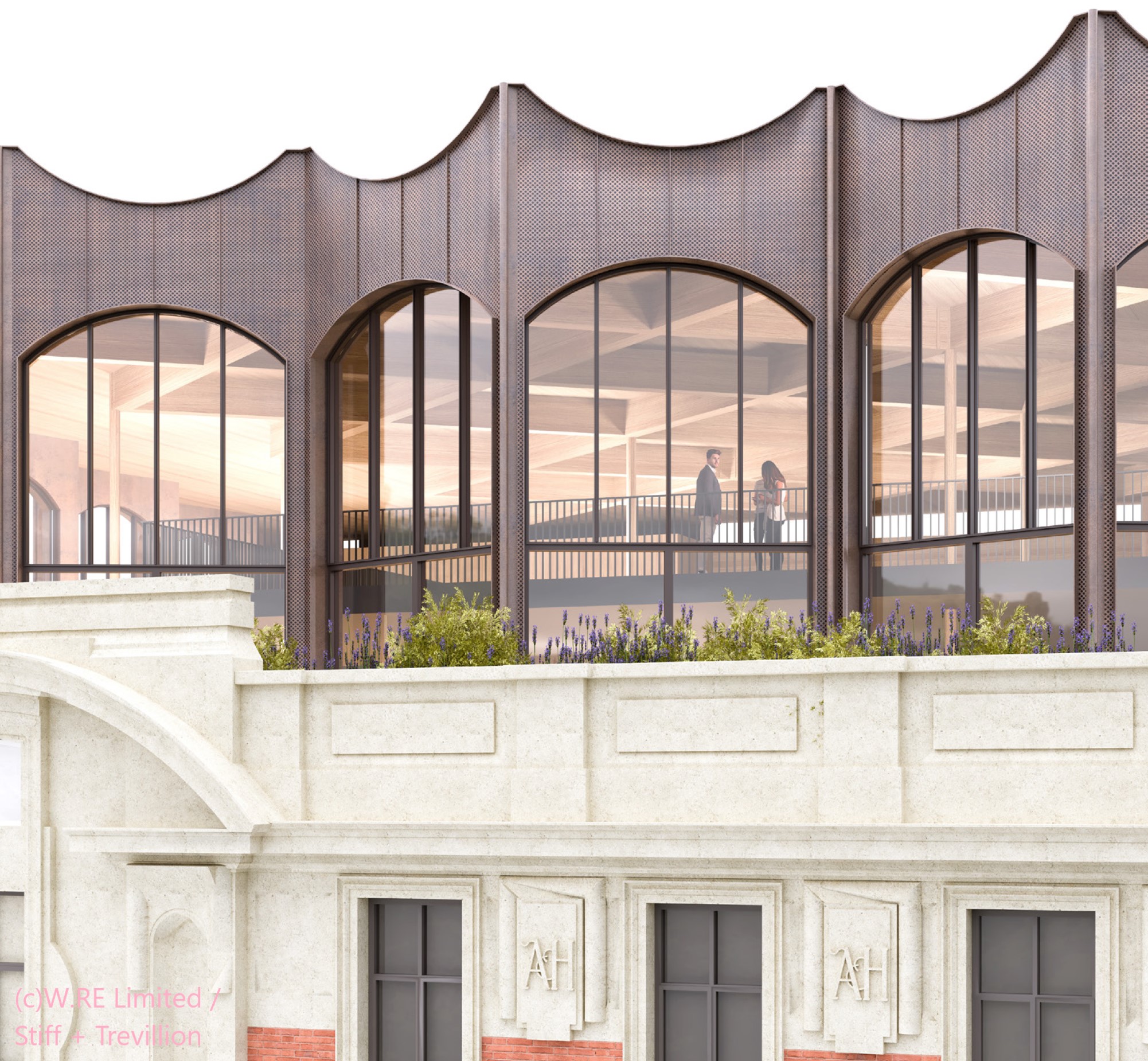
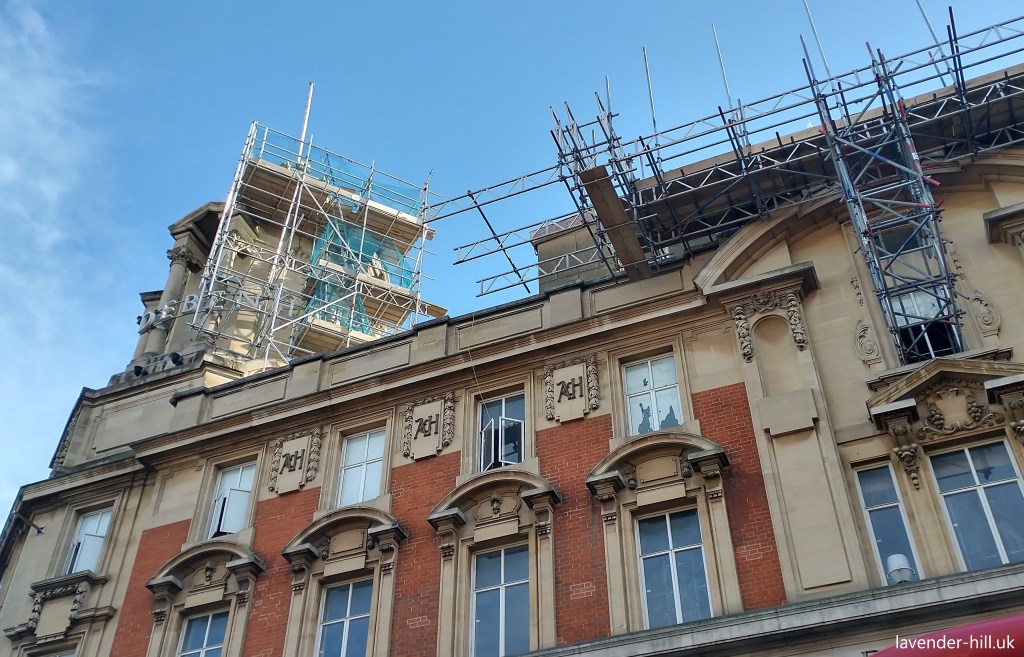
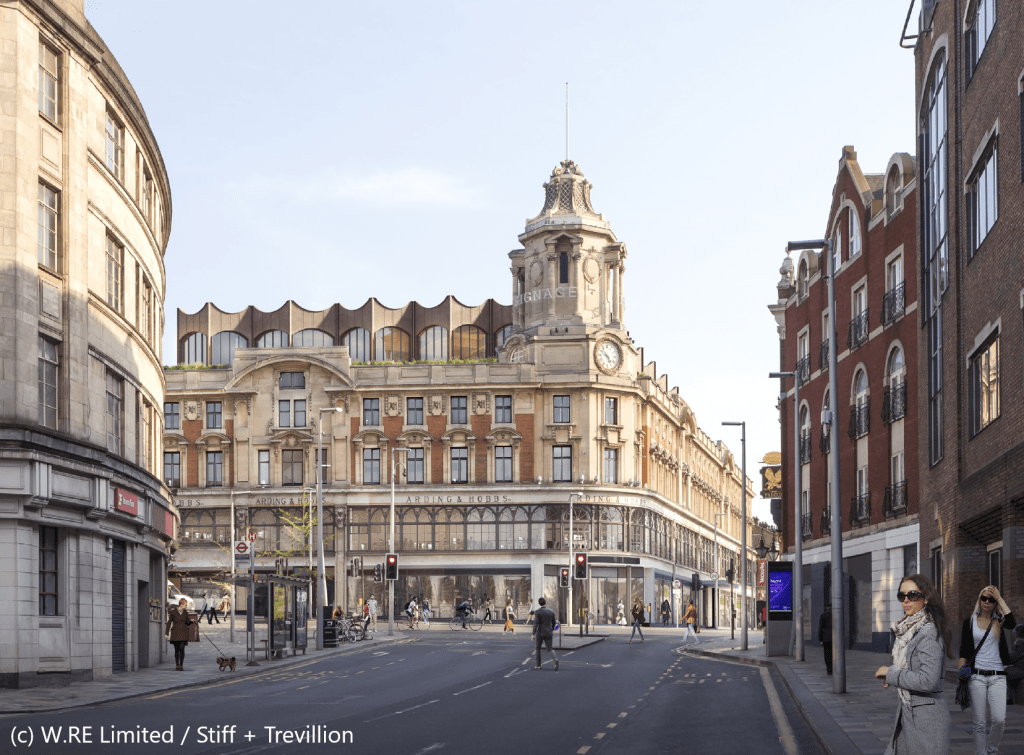
The first signs of the new two storey extension have appeared on the roof of Clapham Junction’s former Debenhams, as part of the work to turn the upper floors in to an office building. As we have previously posted, the rooftop extension has quite a different style to the building below, and is set back to provide a roof terrace as well as reducing its visibility from street level.
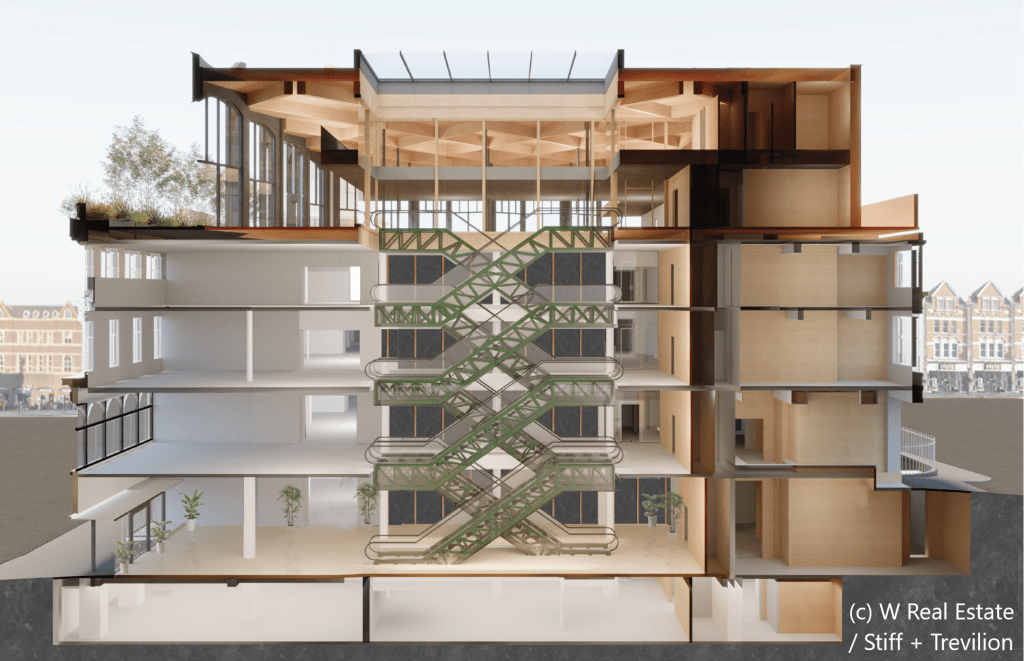
The roof extension, shown in the cross section above, is a lightweight structure made partly of wood – to not overload the structure of the building.
The structure is not really visible at all from St John’s Road, but can be seen from the back of the building – the photo above is from Ilminster Road, where the metalwork is becoming clearly visible.
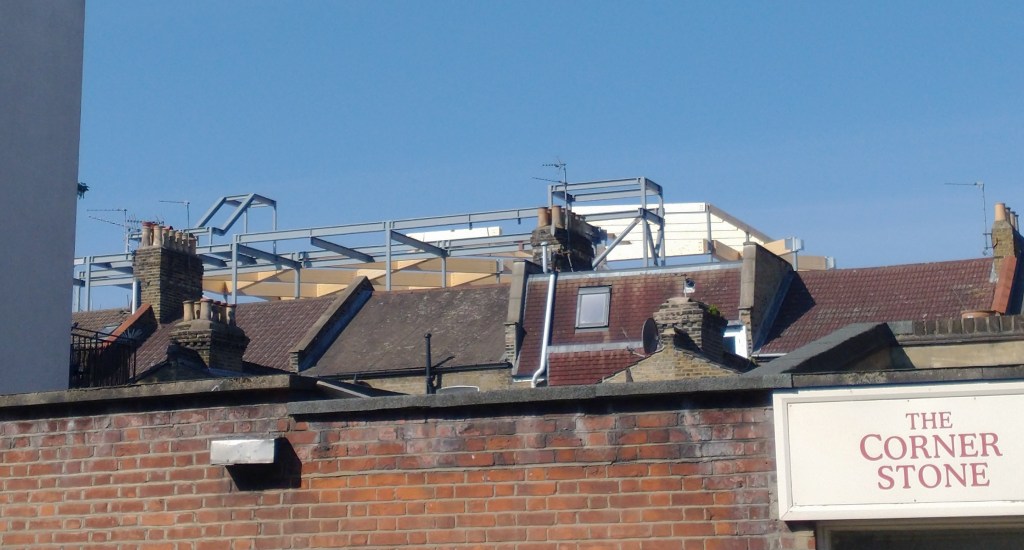
To see the wooden lattice roof section, which is set to have quite a presence in the new upper levels, you need to go further away – the photo below is a street further east, on Beauchamp Road next to the former Corner Stone Christian bookshop (which we recently posted on).
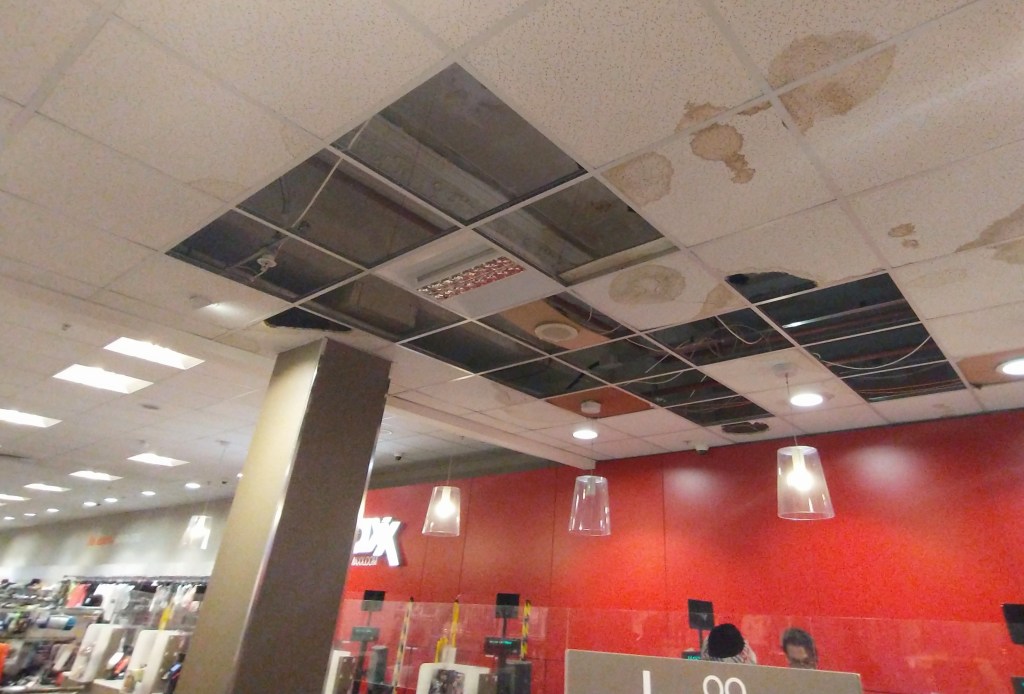
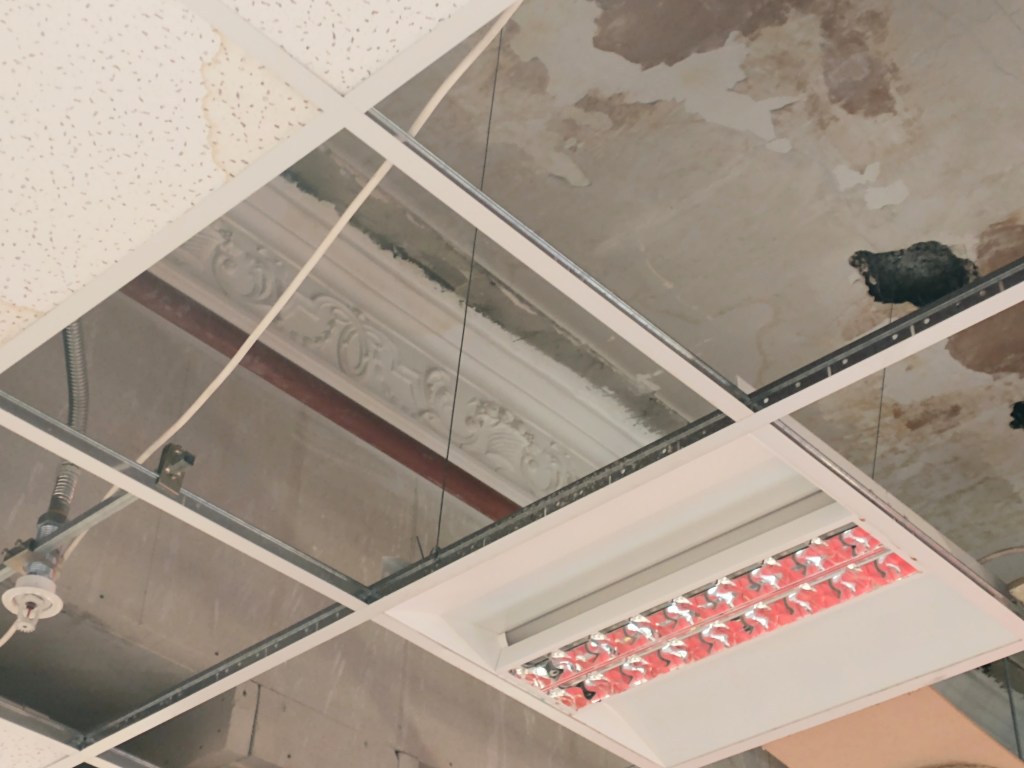
Meanwhile in T.K.Maxx downstairs, various parts of the roof have been removed, seemingly because of water leaking in to the structure. It’s easily fixable – but one small benefit is a rare chance to see the original decorative plasterwork in the ground floor, which was the grandest part of the old department store.
It’s in surprisingly good condition! Some sections of these old ceilings remain visible in T.K.Maxx’s first floor homeward section, and we know there is lots of this ceiling still in decent condition in the part of the building that was previously Debenhams. We know that W.RE are well aware of the quality of the building they have acquired, and that they plan to make the most of these high ceilings and period features in the new office section. It’s a bit of a shame that most of the ceiling in the T.K.Maxx section has been hidden away.
All in all, the roof extension is so far looking true to the artist’s impressions that were shared during the planning stage. Coupled with the news we broke last month that developers W.RE have already secured at least two tenants, which got a lot of attention and was picked up quite widely, this adds further confirmation that as former department stores around the country struggle to find a new purpose, Arding and Hobbs’ future is both fully on track, and likely to be delivered to the high standards this landmark building deserves.
Fabrics Galore is celebrating its 30th birthday today – one of the longest established traders on the street, bringing a huge range of fabrics from the subtle & understated to the bold and eclectic since 1992. It is a proper family business: owner Paul Johnston’s great grandfather was a trader and convertor in the then-booming fabric business in Bradford, with his father running The Shuttle fabric shop in Bradford, and his grandmother having done the same in Skipton. Paul himself started his career at John Lewis’ flagship store on Oxford street – a business notable for, among many other things, its comprehensive haberdashery section – before branching out and setting up his own business at Fabrics Galore.
Fabrics Galore has a loyal audience that stretches from regulars who have been customers for years or even decades, to those just something to make an interesting tablecloth or children’s craft project. Fabric is a category where it’s really best to actually see it – but Fabrics Galore has moved with the times and developed a healthy online business, including the ability to send sample swatches of fabrics to far flung customers, which proved it’s worth in keeping the show on the road during some parts of the Coronavirus, and which runs alongside the shop.
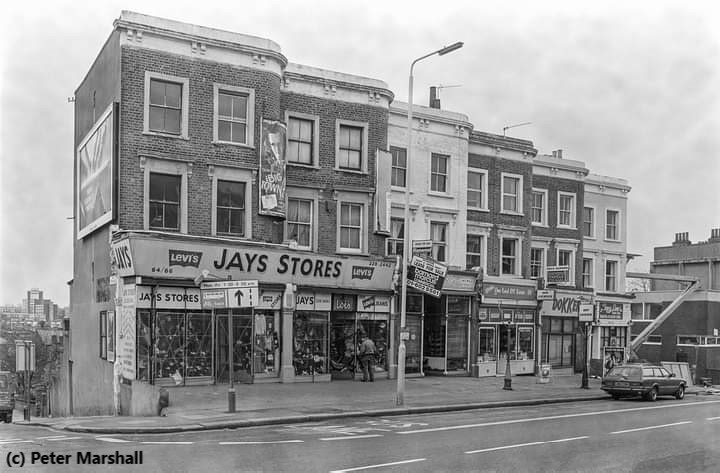
The building itself is admittedly not one of the street’s most elegant structures, being a fairly functional newish build. There was previously a small local post office on the spot, in a building we believe had been built in the 1960s; thanks to our readers we have a photo which just about captures that old building shown below, taken by Peter Marshall in 1988 – you can just about see it at the right hand side, it’s only about half the height of its neighbours. When that building was redeveloped the post office moved to what is now the Tesco a bit further down the hill, and then again to the Queenstown Road. We suspect that Fabrics Galore might be the first and only tenant of the current shop – there aren’t many businesses who can say this on the street!
So here’s to a happy 30th and many more years of interesting fabric. Meanwhile at Fabrics Galore there’s a special 30% off sale for today only. Fabrics Galore, 52-54 Lavender Hill, SW115RH.
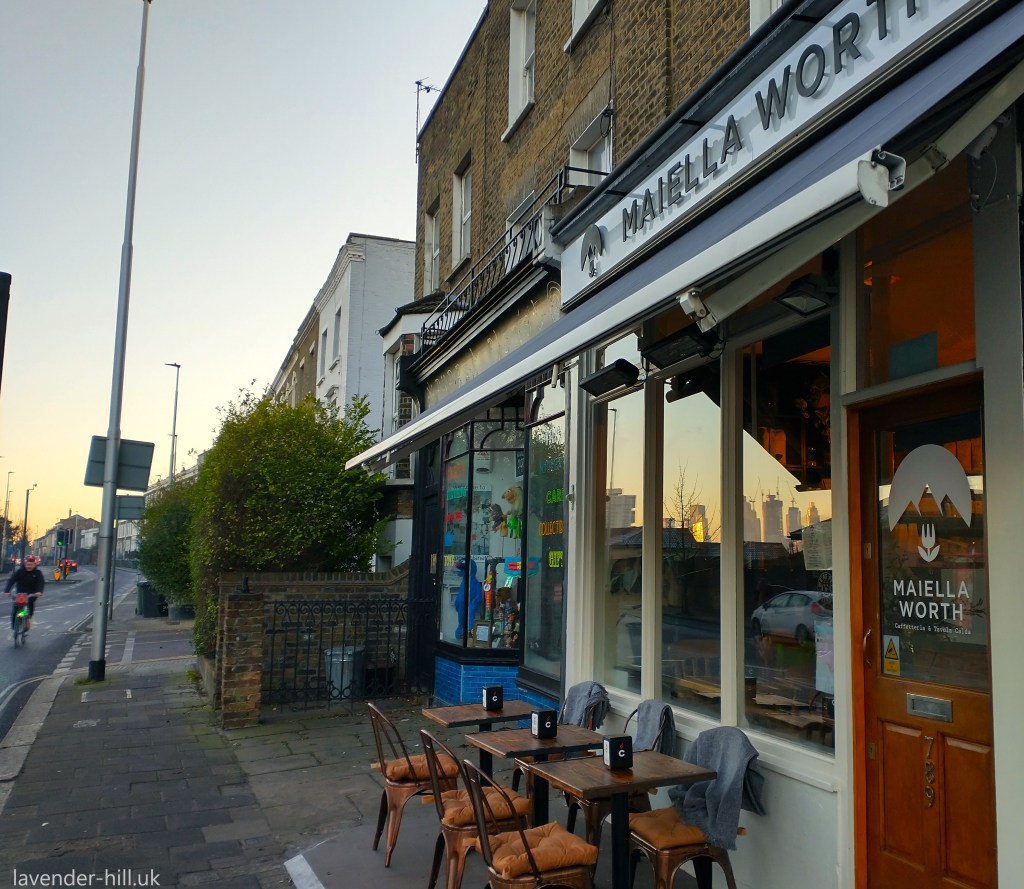
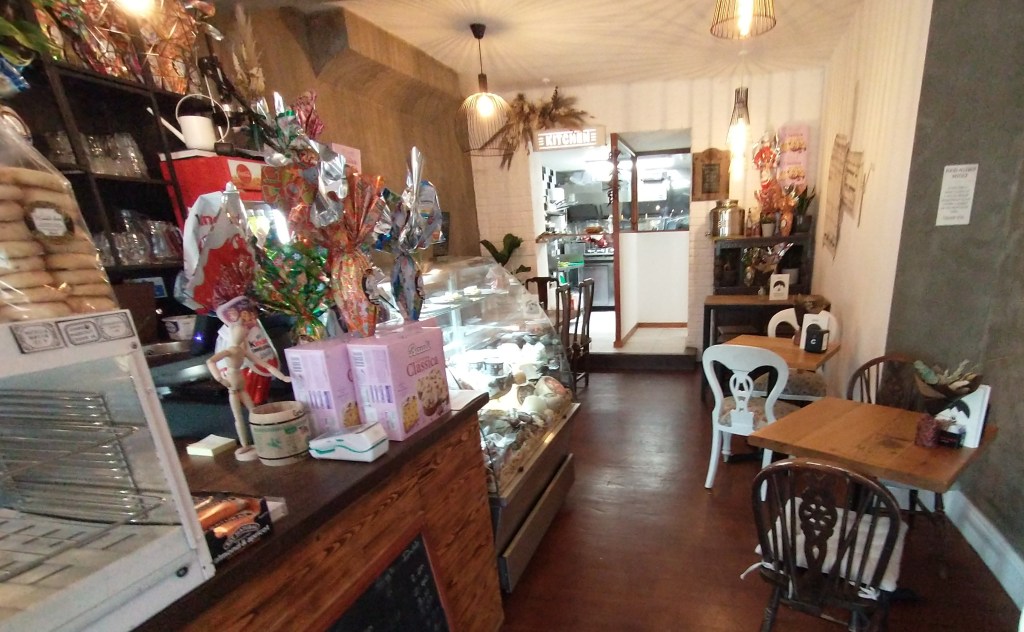
The new ‘Maiella Worth’ Italian cafe & restaurant is open again, after being mysteriously closed for three weeks. Apparently there was an unpaid electricity bill from the previous tenants (a very big one – years’ worth!) which they only found out about when the power was suddenly disconnected… cue a lot of cost and delay to get the power on again.
Do visit, for fresh baked croissants and pastries, good coffee and food from the Abruzzo region of central Italy (including pasta made on site), partly as it’s a really welcoming place but also because a sudden three week shutdown with a large reconnection bill is the sort of nightmare every small business dreads; it’s hard to get back on track. At the time of writing there’s also a £3 raffle with a pretty high probability of winning a large easter egg (as I understand they bought the stock in just before the unexpected closure 🙂 ).
Maiella Worth, 789 Wandsworth Road. Open from 7:30 most days; menu here.
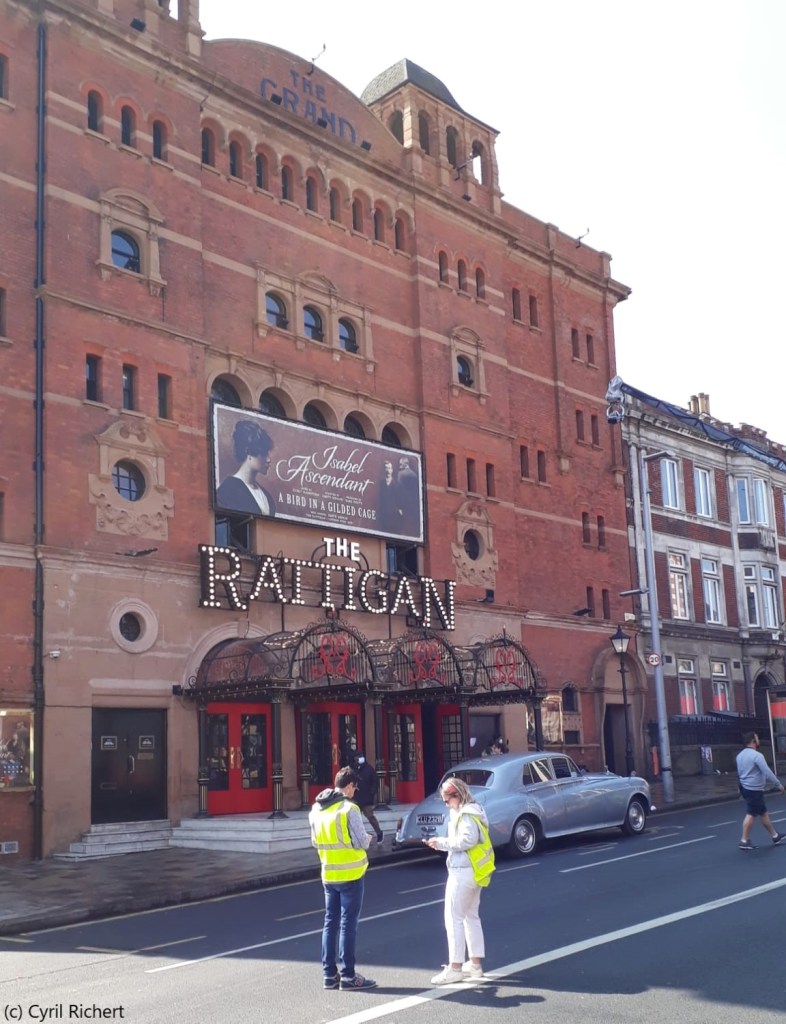
Update: The temporary sign, in use for filming, is now visible – revealing a bit of a clue as to what has been filmed for the last few weeks, with rumours of it being part of Magic Mike 3, aka Magic Mikes Last Dance (you can see the same rather smart Rolls Royce in this associated news article).
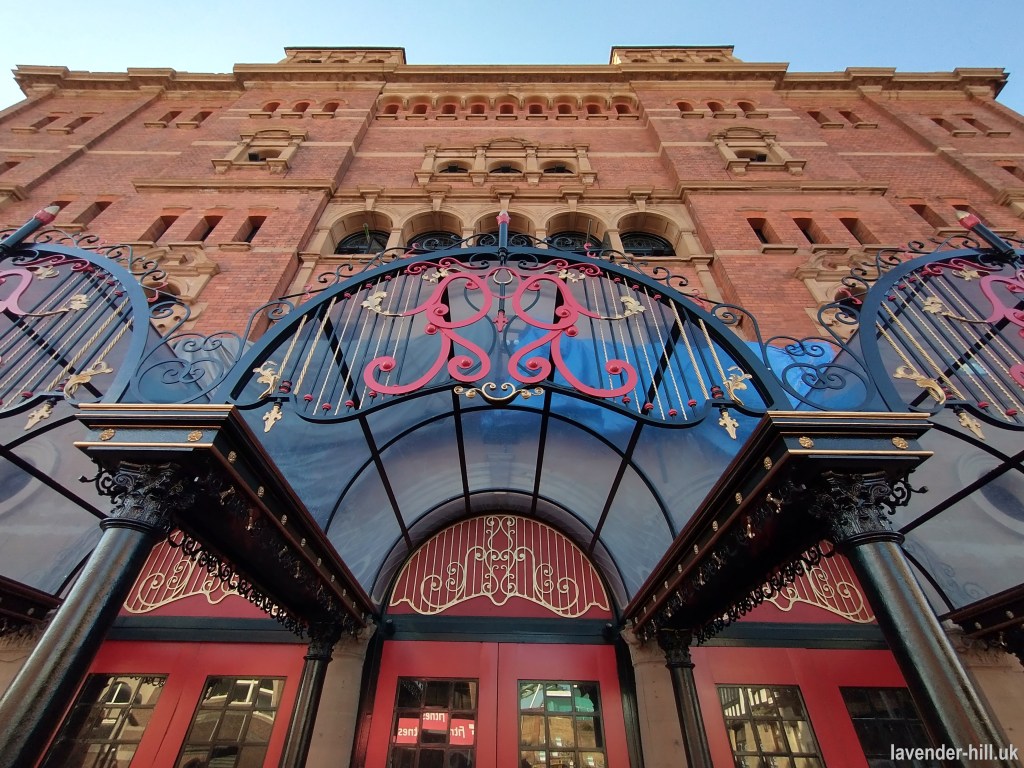
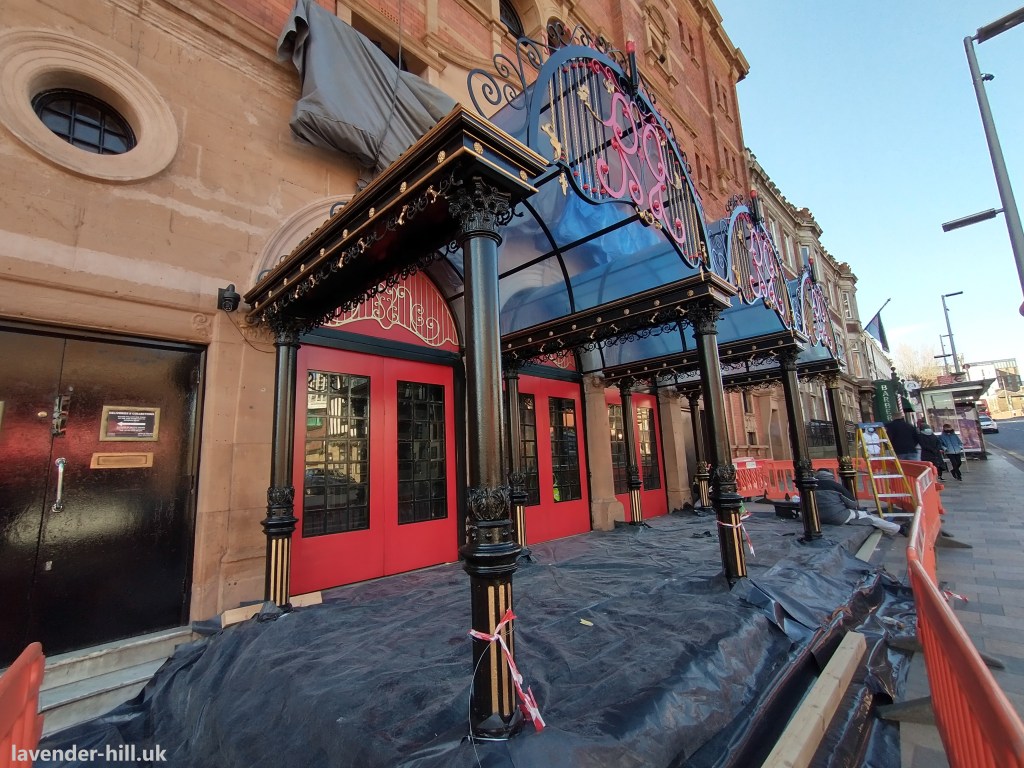
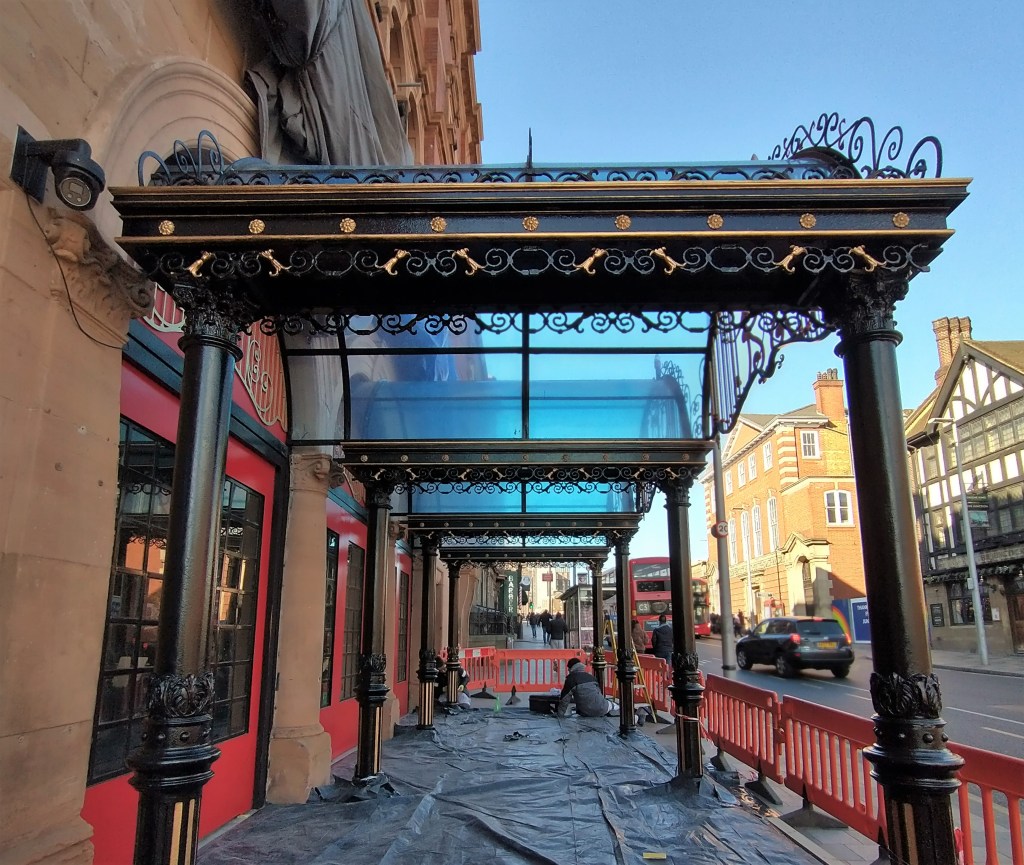
It’s hard to miss the Clapham Grand’s new front entrance. For a long time it has just been a series of doors, sometimes with a queue snaking down the road and round the corner. But in recent days it has acquired a platform, and a full replica Victorian cast iron entrance pavilion, complete with flamboyant ironmongery, ornate columns and glazed roof.
It certainly gives the Grand a bit more presence! The building has for a long time lacked any particular front awning, even though it had one when it was first built. This new front, which follows a careful cleanup of the brick and stonework and the windows right around the exterior of the building, gives it back some of its Victorian charm.
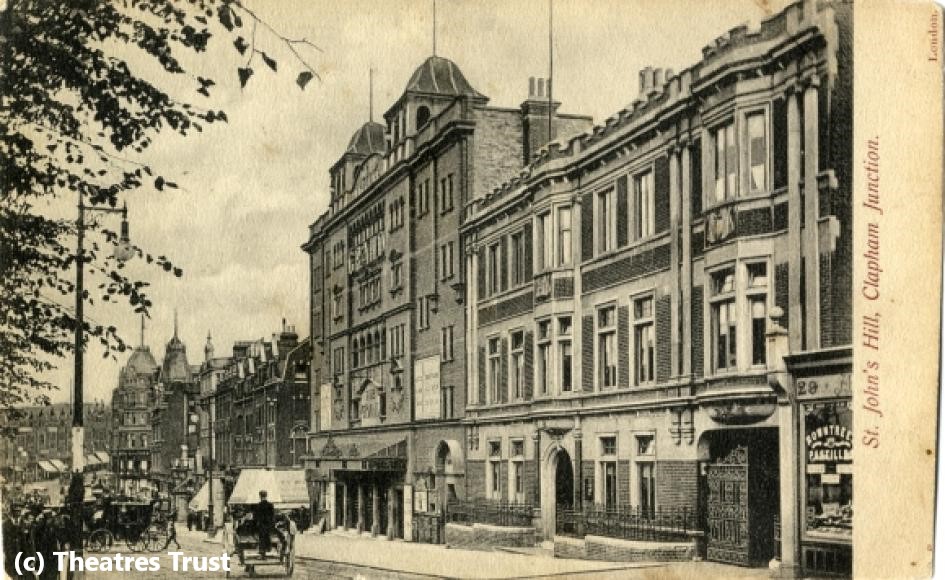
This pavilion echoes the shape of the front doors. It’s by no means the first pavilion the building has had over the years – the photo below from the Theatres Trust‘s database shows a glass & cast iron awning that was on the building from when it opened in 1900 as “The New Grand Theatre of Varieties”.
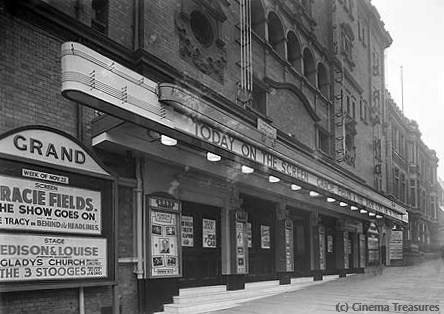
The original front was later altered to turn it in to something more akin to a cinema frontage, when the main hall was fitted out to also work as a cinema in 1927 – with a streamlined shape and neon lighting, as shown below. It was still called the Grand Theatre, as it continued to do theatre, music hall and cinema between 1927 and 1950, when it converted to a full-time cinema called the Essoldo Cinema.
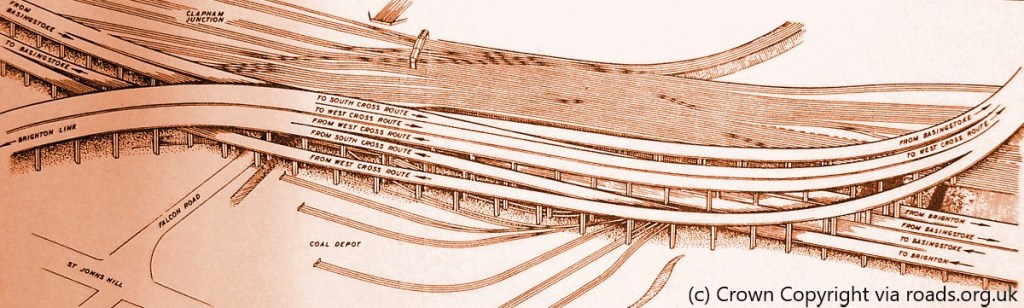
We don’t know when this awning was removed; it was still there throughout the life of the Essoldo Cinema – but in 1963 the cinema closed and the building went in to a rather sad phase which saw it stripped of some of its original features – including the front awning. For those interested in a little more of the story of the Grand their website is worth a look – it notes that one of the more surprising proposed new uses at the time was a attempt to replace the venue with a petrol station – a use which may not seem so strange if you have seen our previous article on the stuff-of-nightmares plans for giant motorway flyovers around and indeed on top of Clapham Junction station at the time, which were very nearly actually built and which would likely have seen both the station and the Grand demolished.
Luckily the petrol station plans, and the motorway plans, fell through. But like a lot of older cinemas, theatres and music halls, the building was converted for use as a bingo club under a series of owners, and gradually lost parts of its original design. This saw various bits of the building fall in to disuse and included the upper parts of the theatre being boarded off. The poor building wasn’t used at all between 1978 and 1991, but it was listed in 1978 which probably prevented its demolition. In 1990 the Mean Fiddler Group – who we have written about in their new guise as Festival republic, who run events on Clapham Common – took it on and (to their significant credit) got it back back in to shape and took it back to its roots by fitting it out as a live music venue. Unfortunately for Mean Fiddler the refurbished venue wasn’t especially successful, closing in 1997 and being sold to Wetherspoons at a point where they were opening enormous pubs around the UK. But even in the hands of Wetherspoons it proved a complicated venture: Wetherspoons failed to get a license even following a public inquiry, and eventually rather reluctantly accepted it would become a pub (though the location stayed on their radar as a good place for a pub, as we found with their opening of the London & South Western).
So it has stayed true to its roots as a club, live music venue, theatre and event space, and indeed while the business has had its ups and downs, including a rough ride through the Coronavirus as one of the sectors worst hit by closures and cancellations, there’s no doubting that it has a strong and enthusiastic team behind it and has done pretty well in recent years. This new work to recreate some of its long-lost Victorian flair, with a new entrance shows we’re nowhere near the end of the story for the Clapham Grand.
Thanks to some of our keen readers’ on-site observations we know some of these works are serving for a major film underway at the moment. Will the new entrance, which counts as temporary (and doesn’t have planning, but which is properly built to an unusually good standard for a mere film prop), survive? We hope it does.
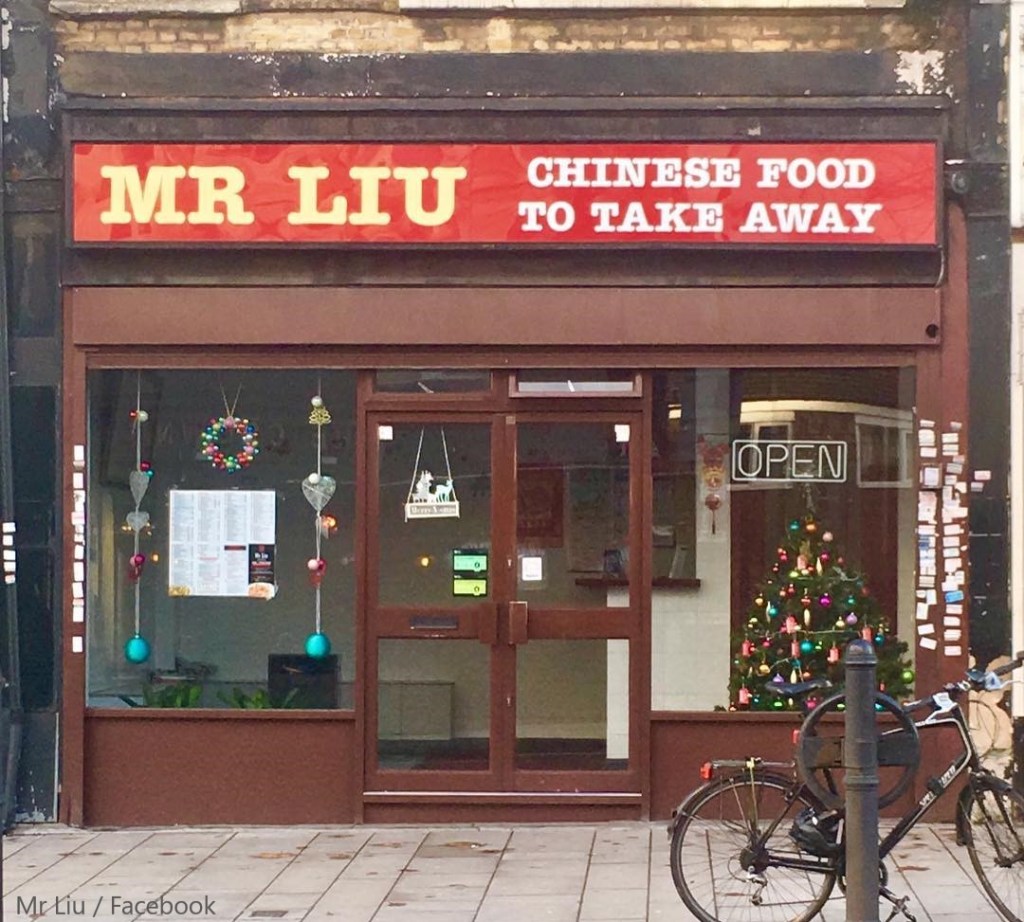
Mr Liu, at 115 Lavender Hill, was a Chinese takeaway from the old school, with all the hallmarks of the first generation of Chinese restaurants in the UK: tiled floor, tiled walls, kitchen just out of sight – it didn’t look like much from the street. There was no heating other than a portable gas burner, which meant the place could get quite distinctly cold in winter. It was cash-only too: this was never a place that was going to promote itself on Deliveroo or develop an app. There was no website either – but someone had helpfully uploaded some photos of the menu to Google.
But Mr Liu wasn’t seeking to compete with the fashionable takeaways elsewhere on Lavender Hill – and he didn’t need to. Because this was a place that was all about the food! Mr Liu’s cooking had a status few other matched – widely seen as one of the best takeaways for miles around. Family-run for as long as anyone could remember, everyone played their part – their student children would make appearances keeping things running outside term time. Service was friendly and efficient – you’d get a call back if they were busy when you called. And Mr Liu knew the regulars, who would be given a calendar around the new year. Unsurprisingly, word spread far and wide, which meant the business was never short of customers!
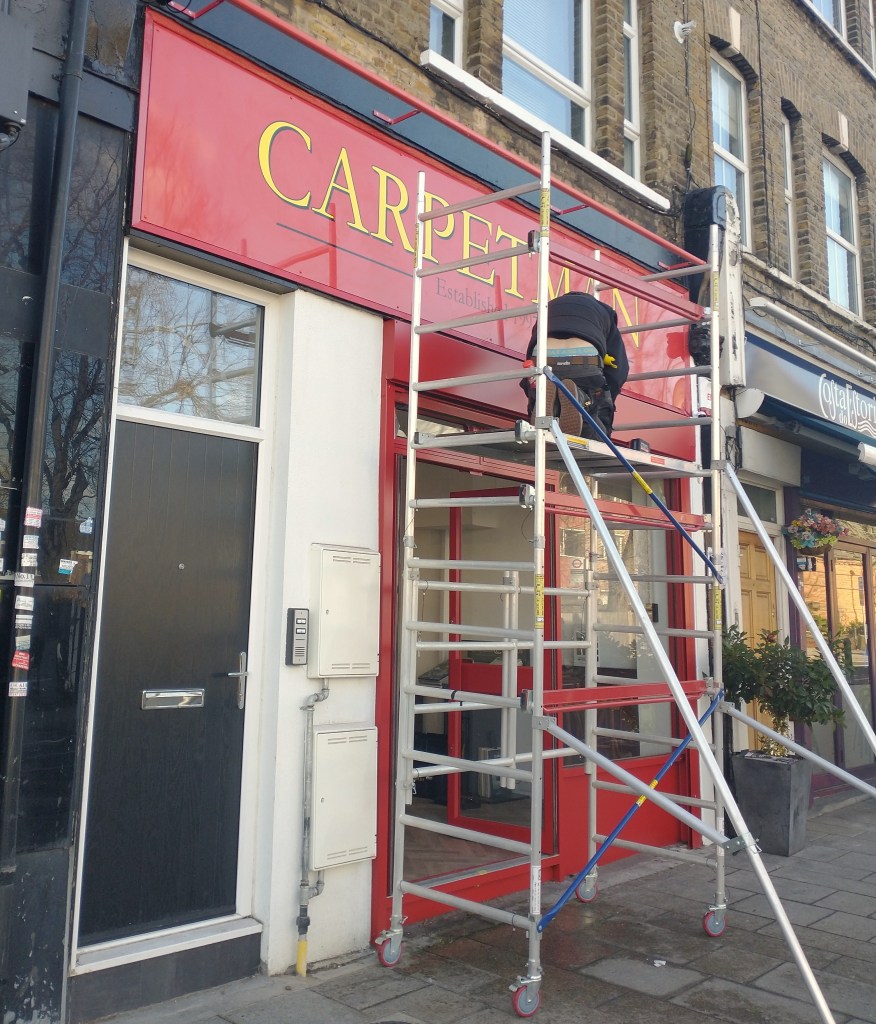
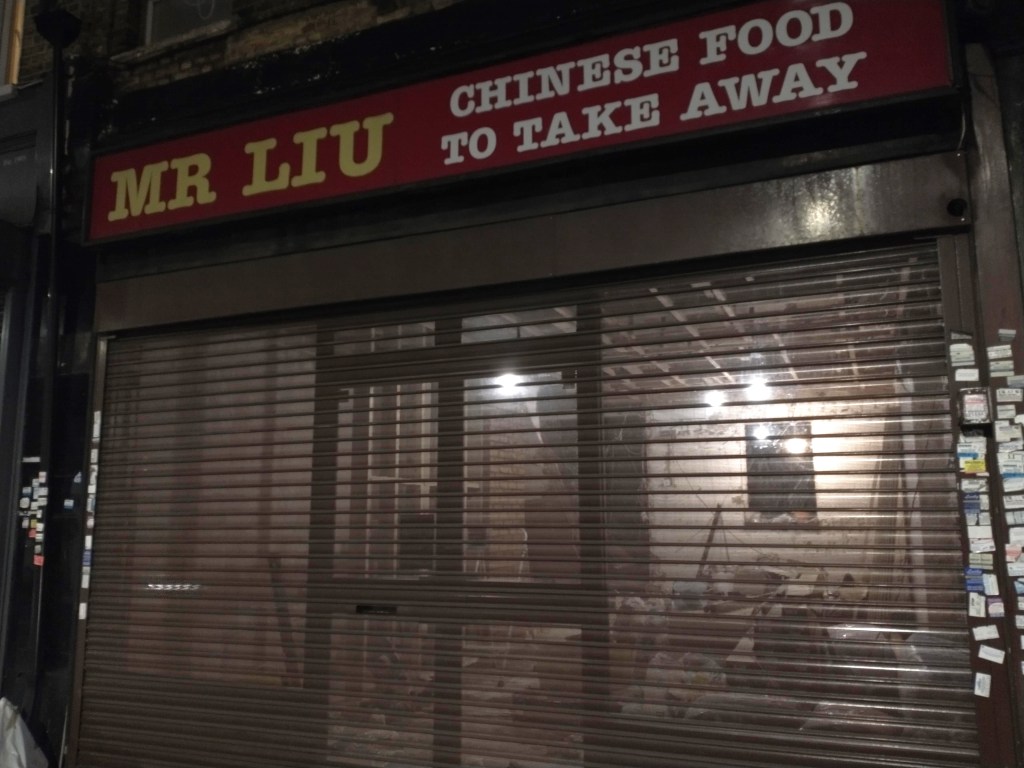
But all things come to and end and age and ill health were starting to catch up with Mr Liu, so in autumn 2019, after decades serving the people of Battersea, he called it a day and headed to a well earned retirement. This led to a couple of years of building works: the whole building was accessed through the takeaway, and the works instead created a separate entrance to the flat upstairs so that the shop could be let separately; the whole premises also had a substantial renovation. And it has now been let – to Carpetman, who sell and install carpets, rugs and wooden flooring. They are new to Lavender Hill, but they’re not new to the area – having been based at 7a Putney Bridge Road (just off the Wandsworth gyratory) since 1997. We presume the reason for this relocation so that Carpetman’s current site – a large warehouse which was originally a printing press – is set to be redeveloped: as a 545 square metre plot of land right in the middle of Wandsworth, with planning permission in place to demolish everything and build eight flats and a three-bedroom house, it is currently on offer with a guide price of 2 million pounds.
This will be Lavender Hill’s second carpet shop, with Braggins Carpets continuing to trade at the opposite end of the street. Carpetman run a wide range of carpet types, from smart custom designs for architectural houses, wood and vinyl flooring, and a surprisingly large range of seagrass carpets, all the way to cheap and resilient wall-to-wall beige carpet for rental properties, and by the standards of the carpet sector they are well reviewed. So it’s a warm welcome to Carpetman, as they start to trade from their new home at 115 Lavender Hill.
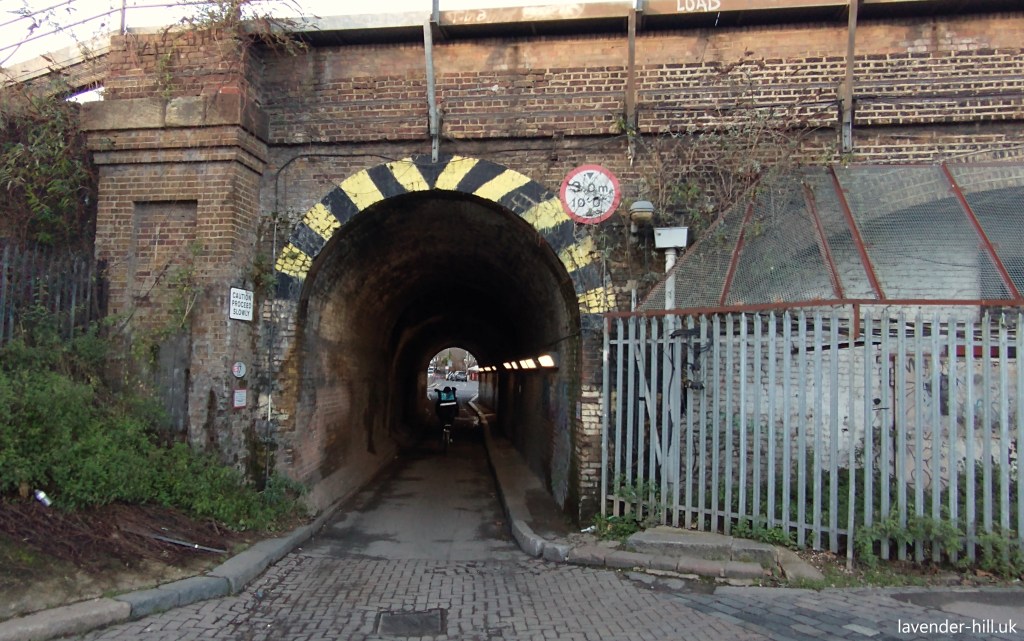
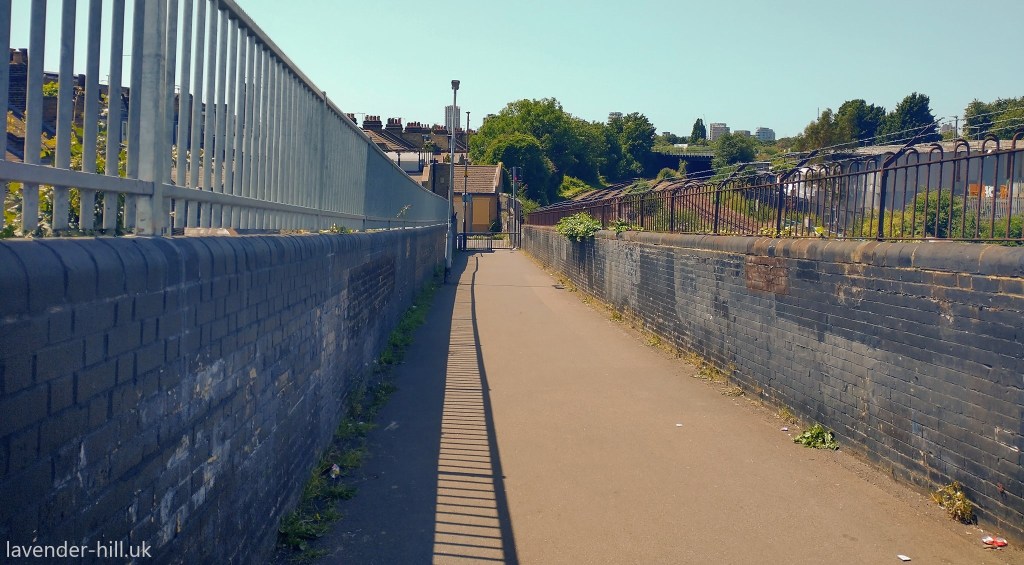
It’s best avoided after dark. A winding footbridge, with suspicious yellow puddles and high walls either side that are hard to see over, followed by a big and somewhat muddy yard with stacks of flytipped debris, where you’re completely on your own, a long, dark, narrow tunnel with no pavement, and a final section that smells of pigeons.
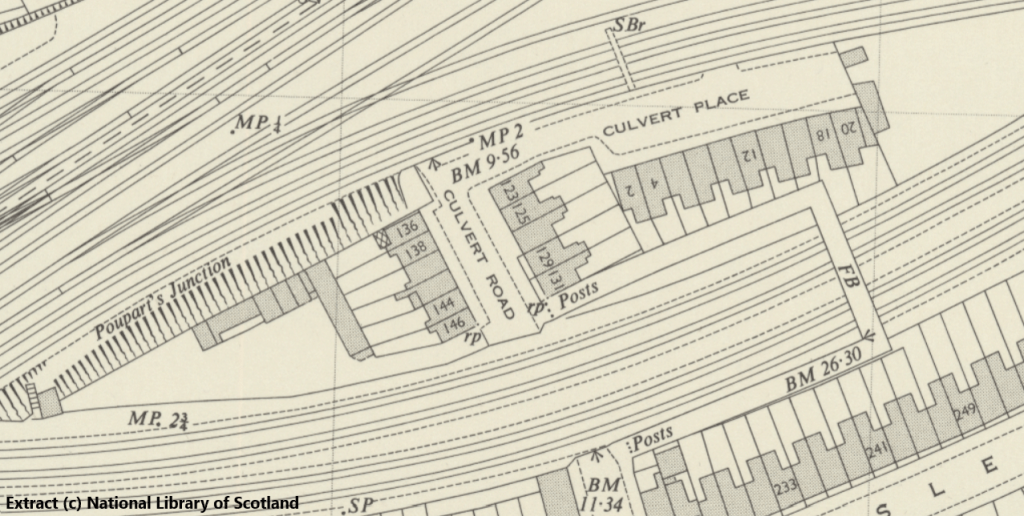
No-one likes the bit of Culvert Road between the railways. But it wasn’t always like this – and it turns out there’s quite an interesting history to this forgotten corner of Battersea. For starters – there are no houses there now. But as the old map below shows, there used to be 21 houses here!
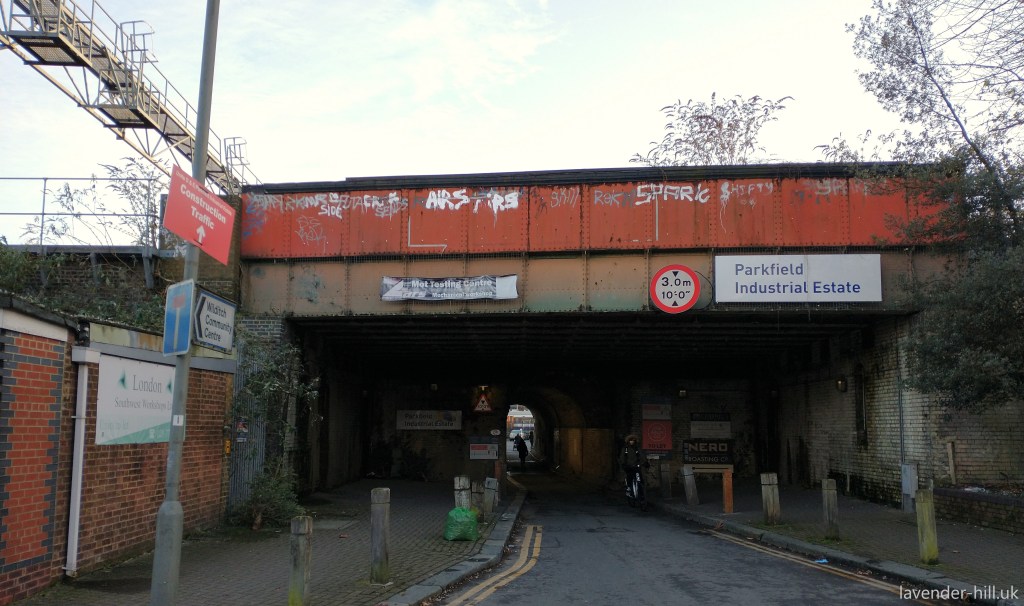
A small community lived here for nearly a century, in neat terrace houses along both Culvert Road (the road that heads on through the tunnel) and Culvert Place (the road that heads east, before diving back under the railway arches to the Parkfield Industrial Estate – home to Caffe Nero’s UK roastery, which incidentally is why the whole of Lavender Hill occasionally smells of roasting coffee beans in the morning).
Victorian researcher Charles Booth famously walked round the whole of London and mapped out the relative wealth of the inhabitants, with a view to identifying where the poorest and most marginalised populations lived. He visited Culvert Road in June 1899, accompanied by Police Constable Edwards (of District 36 – Battersea East), and as his colour-coded map above shows, he reckoned that Culvert Road’s residents were ‘Mixed – some comfortable and others poor’ (about the middle of the scale overall), while Culvert Place’s inhabitants were “Poor. 18 to 21 shillings a week for a moderate family”, which suggested the district was slightly less well off than the Shaftesbury Estate to the south.
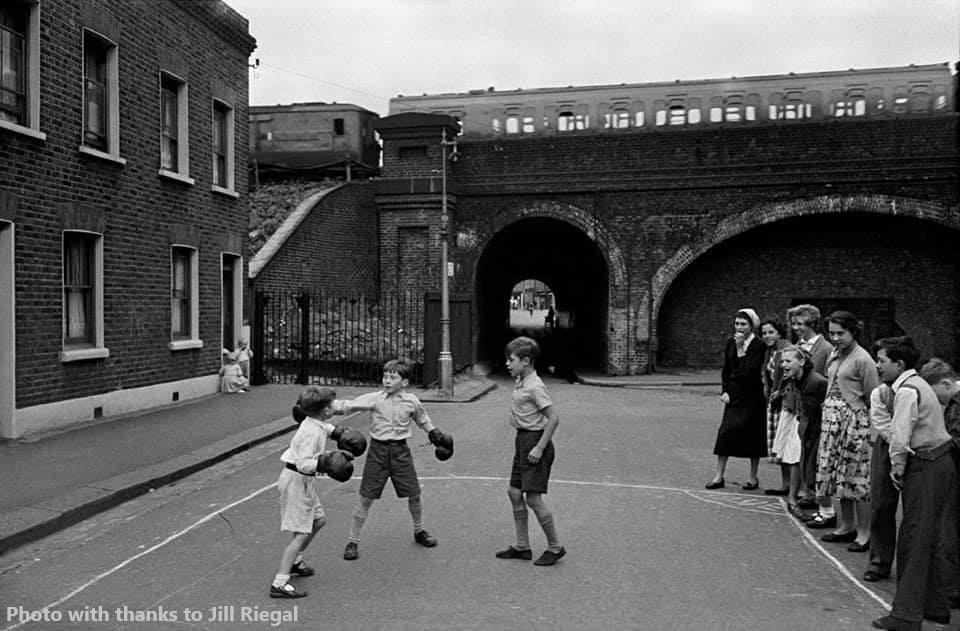
The photo above – via the ever resourceful members of the ‘Battersea Pictures’ Facebook group – shows two of the houses & several of those who lived there. This was a happy little community by all accounts, that just happened to be in the middle of a series of railway lines. The photo below, taken slightly further along Culvert Road in front of another set of now-demolished houses, shows much of the street celebrating VE day.
The houses between the railway tracks on Culvert Place were also known for having a small memorial to the many loved ones that the small cluster of families living there had lost in the war. This stood out among memorials, for its modesty – a simple wooden affair – and for the loving care that it received from the community for over 20 years.
And it wasn’t just the terrace houses who brought this area to life, as the area between the railway the western end of the land was also home to a long established Romany Gypsy community – as pictured below in a photo taken in 1900. The 1911 census lists members of the Winter, Lee, Wheeler, Smith, Botton and Anderson families as residents, as well as the Mills who owned the yard.
The photo below is one of a collection assembled by the Romany & Traveller Family History Society, one of whose members was passed a few photos of the yard and residents by a friend who was a documentary film maker who had researched a possible film about the Mills family, who had been in the area for some time and had an involvement with the local boxing club.
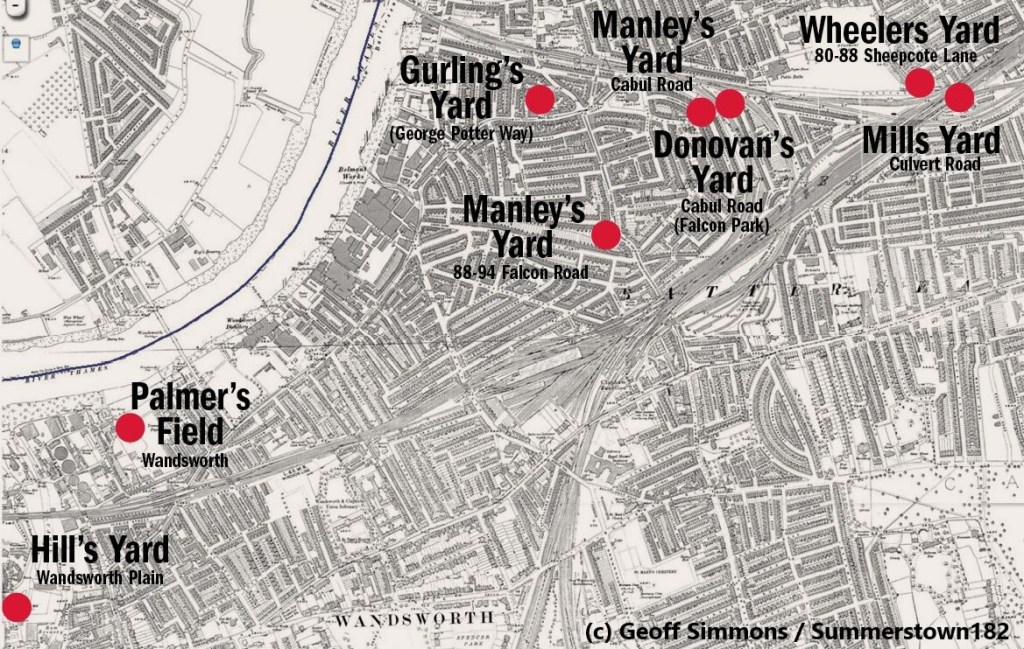
The society put out a call for information about the old yard and the family, not being quite certain where it was in Battersea but assuming it had long since been redeveloped like many other similar sites that were once scattered through Battersea and Wandsworth, and to their surprise (given the amount of change this little corner of Battersea has seen) Tony Mills promptly got in touch confirming that the yard is still there many decades later – and still owned by the Mills family! It’s tucked away behind what is now Culvert Tyres, and is still very much in use, also being home to The Field Kitchen Company (who hire high-quality mobile kitchens to events). Mills Yard was just one of the many parts of Wandsworth’s rich Romany Gypsy & Irish Traveller heritage – with the map below showing many of the other now-lost sites around the Borough.
We didn’t draw this map, it’s from Summerstown182, which is one of the other sites we consistently recommend – and which really puts our occasional efforts at local history reporting to shame! They have just run a walk visiting many of these sites, to explore and celebrate this little-known part of Battersea’s past – the photo in the flyer below is of course taken from Culvert Road bridge, albeit not directly facing Mills Yard.
But this little community between the tracks was about to be torn apart. The houses were all, we understand, demolished by the Council between 1968 and 1972. Exactly why remains a bit of a mystery, although there was a deliberate policy at the time of clearing out ‘old’ housing – especially when it hadn’t been upgraded with the modern kitchens and bathrooms expected at the time – and replacing it with the giant estates that were very much in vogue. We suspect that this little cluster of houses was just thought to be too isolated, and too close to the railway.
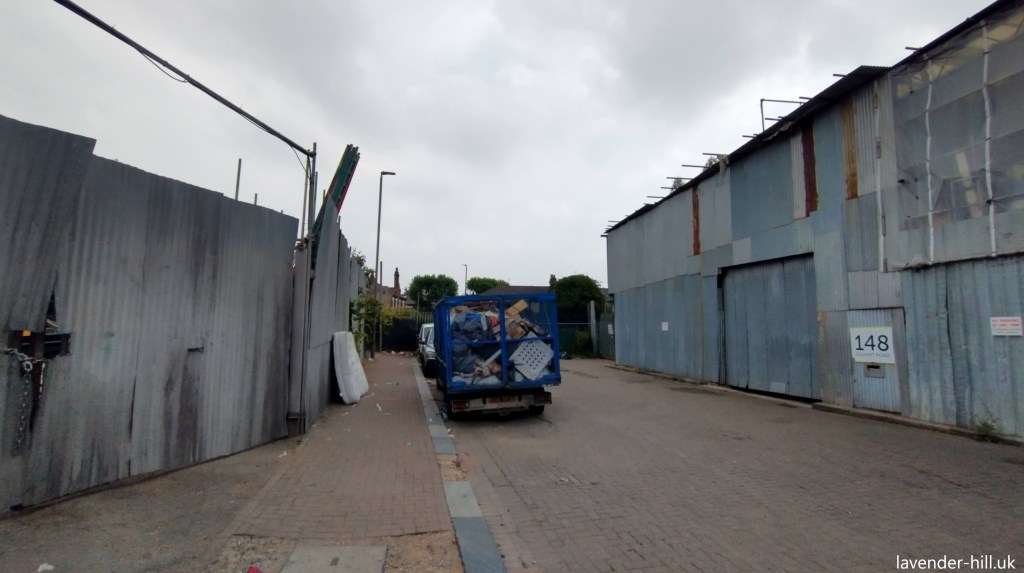
Culvert Road and Culvert Place weren’t the only bits of Battersea to meet the wrecking ball. Another set of similarly railway-centered houses a short walk along the railway met a similar fate, and became what is now known as Banana Park. But while Banana Park has gone on to become a reasonably successful green space, no-one can really say that the destruction of Culvert Place improved matters: the contrast with the same spot today – pictured above – is quite marked, and unfortunately it’s all become bit of a mess. The footbridge & tunnel – technically known as “Poupart’s Crossing” – is too indirect, narrow, and hidden away to really feel safe at night, and having a load of corrugated iron structures and rutted paving along the route does nothing to help the sense of abandonment around the place.
It used to be even worse: the tunnel was created as a private access route to what was, at the time, a large market garden owned by Samuel Poupart in what is now the Shaftesbury Estate, but the southern set of railway lines were for many years crossed by a level crossing; which were so busy that they had to be staffed by a gatekeeper. When the Shaftesbury Estate was built the railways rather grudgingly built a footbridge, but it was a cheap and flimsy affair – five feet wide at and with steps that were too steep. Soon after this mediocre bridge was opened, a 1877 survey measured 4,372 adults and 1,725 children a day crossing the bridge; 420 people an hour – which was hugely overcrowding it with frequent accidents. A combined effort by the railway inspectorate, the Battersea Vestry, the Metropolitan Board of Works and the London County Council eventually managed to get the current bridge built, at public expense, in 1892 (and it was rebuilt in the same layout in) 1945 – and while better than what came before, this rather unappealing route across 400 feet of railway lands is still a significant barrier between North and South Battersea.
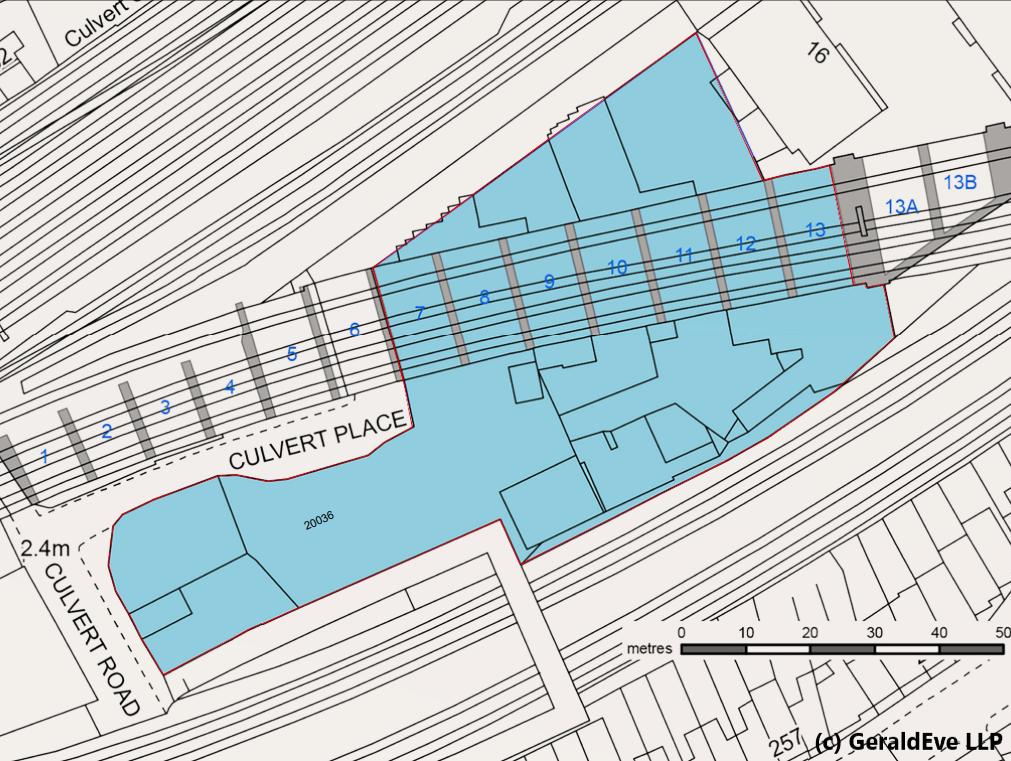
For many years, the larger of the two areas of cleared land was used as a store area by Metro Waste. Metro’s yard was always somewhat disorganised affair, overgrown at the edges, but with a substantial amount of space overall including no fewer than seven railway arches under the main railway, and two more miniature arches under the ramp up to the footbridge. These images from Geraldeve, the letting agent show how the yard actually runs under the railway through the arches, and continues on the other side.
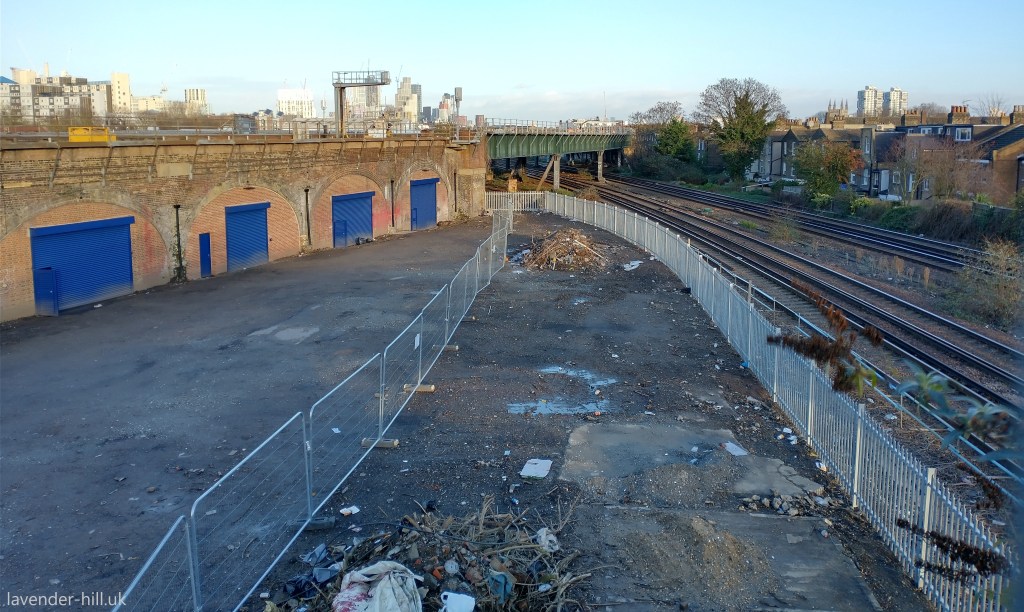
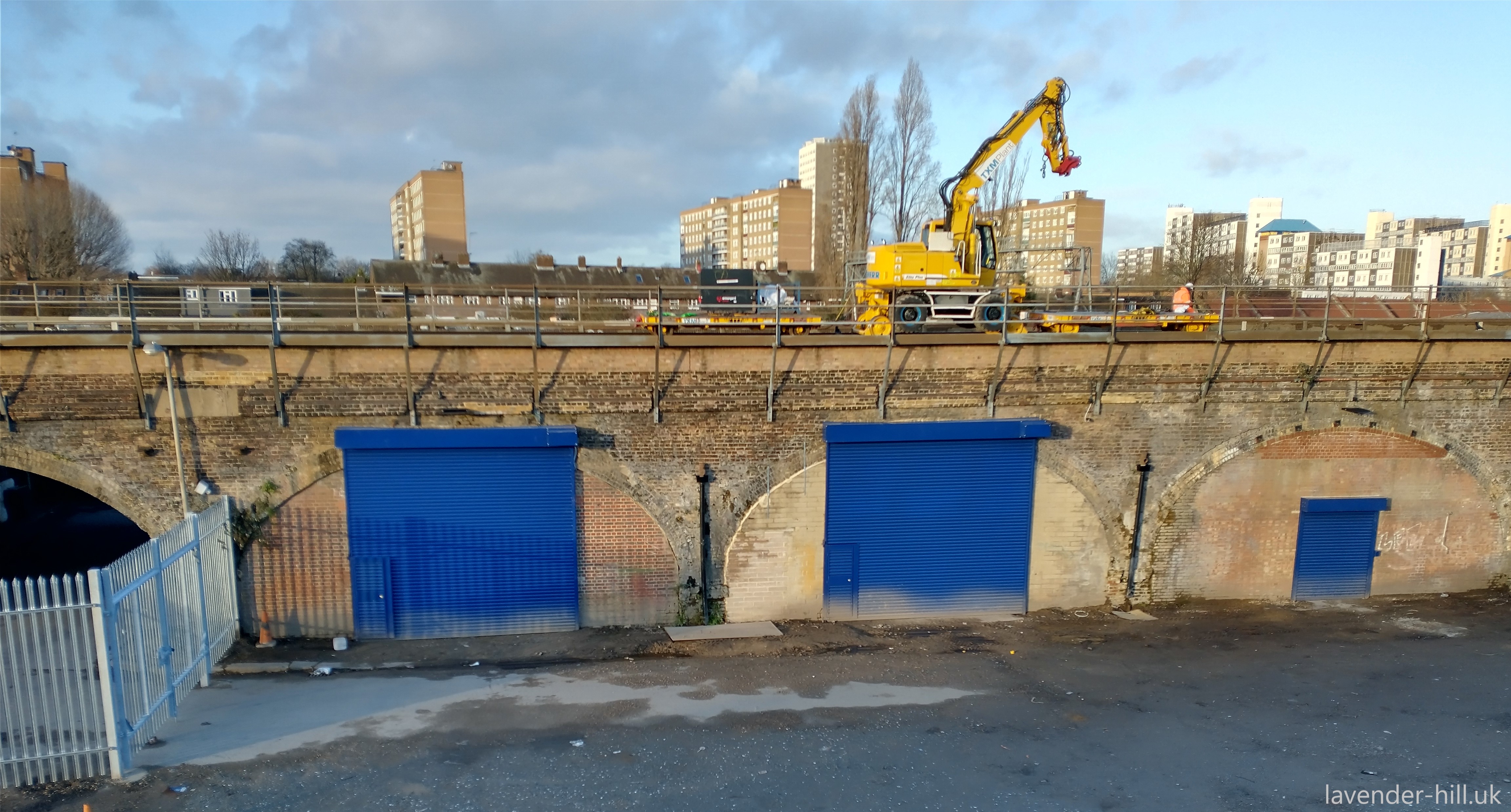
Metro Waste’s lease has recently ended, and the landlord has set about tidying the whole place up with a view to finding a new tenant. The photo below shows the yard from the footbridge, now that it has had a major clearout.
A proper fence has been put up around the site, replacing the previous ‘corrugated iron and scaffold poles’ assembly with something a bit more secure and somewhat tidier, and new roller shutters have been fitted to the railway arches. A vast amount of buddleia has been cleared away, and works are underway to level the ground.
It’s a huge space – with 11,789 square feet of arches, as well as 39,743 square feet of outdoor space! It’s likely to be quite in demand, as the sort of parking / delivery / vehicle storage dept that is becoming rarer and rarer in inner London. The landlord is also installing three-phase power and plans to pave the whole surface as well. It’ll be interesting to see who leases this – with an eclectic mix of neighbours including the Caffé Nero roastery, a large number of ‘dark kitchens’, motor repair shops and Chesneys almost any commercial or industrial use could fit in here; provided they don’t need lorries to large to fit through the rather slim tunnel.
But while the new tenants, whoever they are, are bound to modernise the place further, there is one set of people who’d rather like to preserve the rather down at heel nature of Culvert Place: Film makers! Because this motley set of backstreets and railway arches has had far more than its fair share of film appearances over the years.
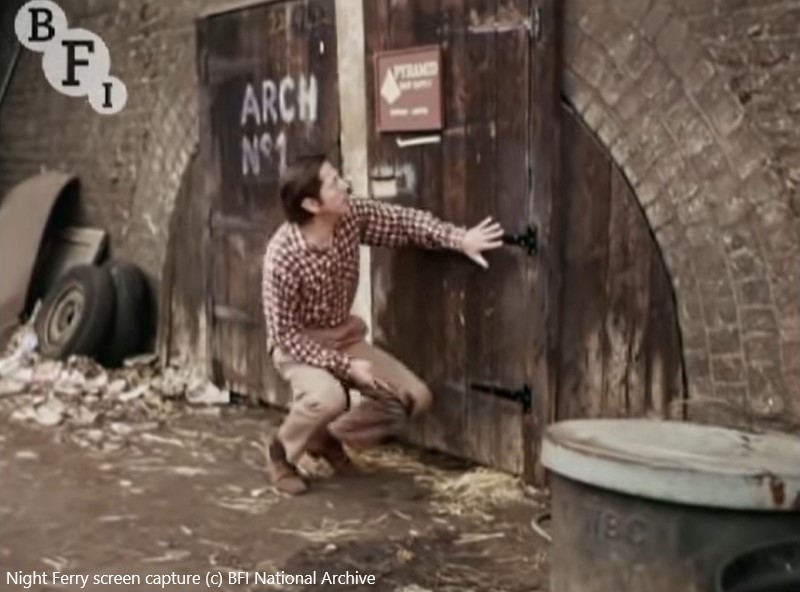
Maybe the one that makes the best use of the area is Night Ferry, which was filmed in 1977, five years after the houses were demolished. The screenshots above and below are a few of the large collection on Reelstreets, which show how the railways, the roads and the arches were used extensively – in these shots Engin Eshref (yellow top – working in a small tea stall) and Graham Fletcher-Cook spot the film’s villains hiding a stolen Egyptian mummy in the odd-looking railway arch right next to the tunnel.
The stills below show the stolen Mummy later being brought out of the arch and loaded in an ambulance, as they try to smuggle it out of London.
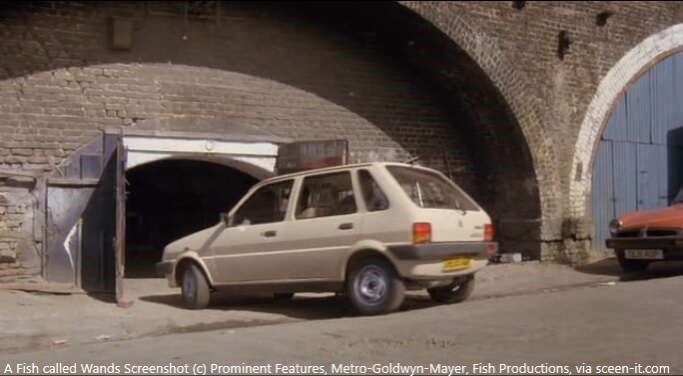
The rather curious-looking Arch 1 – with a miniature arch within the larger arch (which seems to be unique – we’ve never seen any other like this) was clearly in semi regular use as a film location for dodgy dealings, as it also features in 1998 classic A Fish Called Wanda, as the hideout place where the team hides the diamonds – here a getaway car enters the arch:
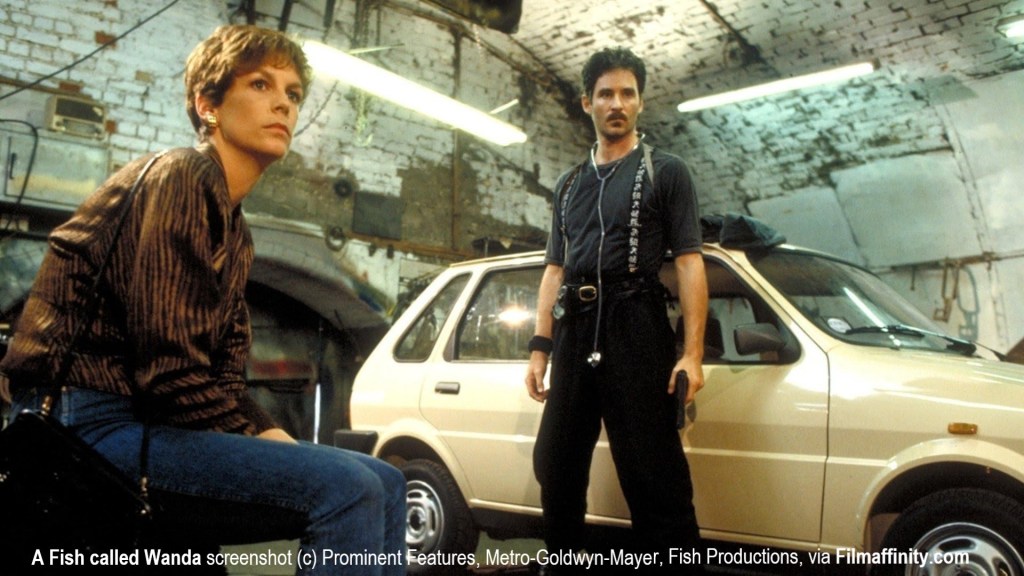
And almost uniquely, A Fish Called Wanda also gives us a shot of the interior of the arch, where we see Jamie Lee Curtis & Kevin Kline in a space looking much as you would expect an unloved railway arch in the late 1980s to look –
This spot has also featured in Villain, Minder, The Saint, numerous episodes of The Bill, and many more – more often than not in the context of some sort of Heist, and always as a suitably atmospheric and run down spot for dodgy activities! Arch 1 belongs to Network Rail, and according to an obscure list Wandsworth occasionally publish on business rates that shows which commercial properties are unoccupied, it and its neighbour been empty since February 2011.
Now that a large part of Culvert Place looks set to be converted in to a modern delivery depot, both its days as a tight knit community, and its days as a run down spot for stolen goods to be stashed away in movies, may be behind it. But we have to say – what started out as a short post on an unusual piece of land to let, turned in to a rather more interesting story of how Battersea has changed over the last century – and even our quick look has shown there’s more to Culvert Road than we expected.
It seems Culvert Road hasn’t been photographed much before the 1970s, but it’d be a shame for its past to be forgotten. If you have any more photos of the area when it was still lived in, that you’d be happy for us to publish here – or detail to add on its history – please get in touch.
We’ve written at some length on the redevelopment of Arding and Hobbs building at Clapham Junction, following the collapse of previous tenant Debenhams. The plans will see the upper levels converted to offices, with a two-storey rooftop structure replacing the various service buildings that used to be on the roof, and the ground floor and basement split in to smaller retail units (more on the plans here).
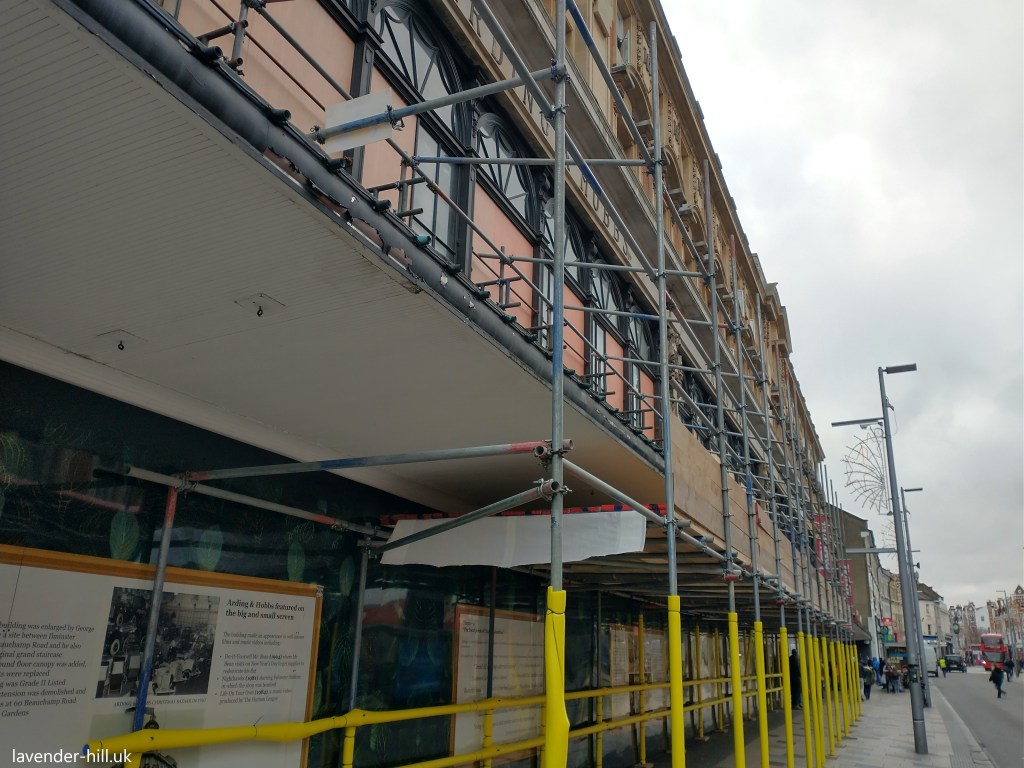
W.Real Estate, the owner of the building (who were happy to discuss their plans with us and the Clapham Junction Action Group in some detail) appointed Knight Harwood as the main contractor to deliver the project, and to their credit have forged ahead in the midst of the pandemic and got the construction well underway: anyone who has been in T K Maxx recently (who are set to remain open more or less throughout) has probably heard the sound of some fairly heavy duty construction coming from the rest of the building. The scaffolding is also up around the building, with the awning over the pavement (which was not part of the original design) likely to be removed in the near future.
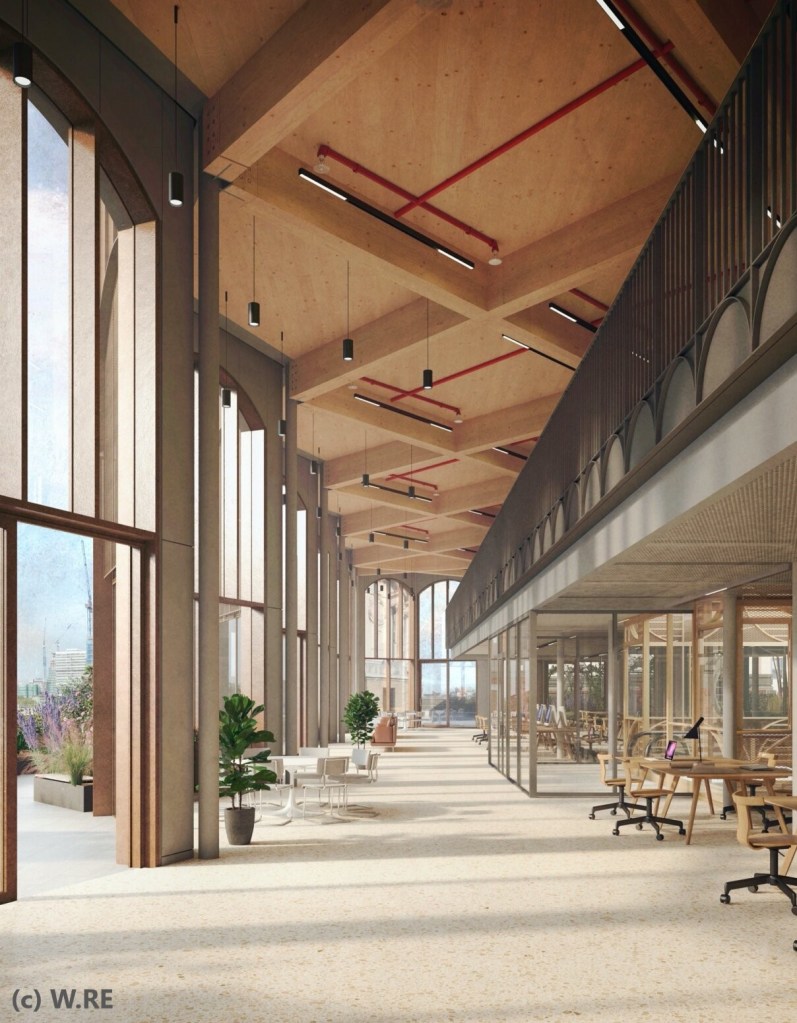
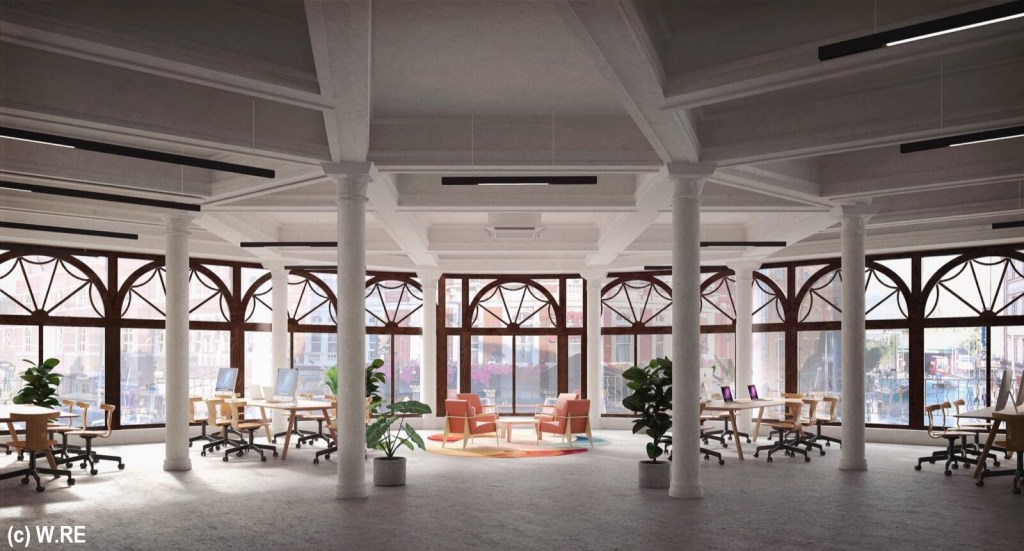
W.RE have also released some new images of the planned interiors, shown here – with the former first floor (latterly Debenhams’ mens formalwear section) opened up as a modern workspace – shown at the top of this article. And a view inside the under-construction rooftop pavilion structure, which is a timber framed structure in a relatively modern style, designed to create a large and open workspace. To help understand what this photo’s showing – this view is standing on the roof of what was Debenhams (which was previously a mess of various small buildings, water tanks and air conditioning units), looking along St Johns Road, with the cupola at the corner of Lavender Hill just about visible in the middle of the picture.
W.RE appointed Green and Partners s their agent to let the retail part of the new development – a company that has a fair bit of local experience, for example selling no fewer than ten shops further along St John’s Road back in 2015. And they’ve clearly made good progress – as with building works still at a fairly early stage, the first two tenants for the new development have already been identified.
The first is Albion & East Limited, who run a collection of neighbourhood bars, described as “Open all-day & late-night with early-morning coffee, brunch & hot-desking in the day to cocktails, wood-fired pizza & DJs at night and everything in-between”. This would be their seventh venue, with locations already open in Hackney, Crouch End, Old Street and (opening soon) Ealing. In Brixton they also run both Canova Hall and Cattivo, which offer someshat similar combinations of cocktail bar / coffee / pasta and wood-fired pizza / gin distillery, and are on two sides of the same road; with bread supplied from their own bakery in the Old Street branch.
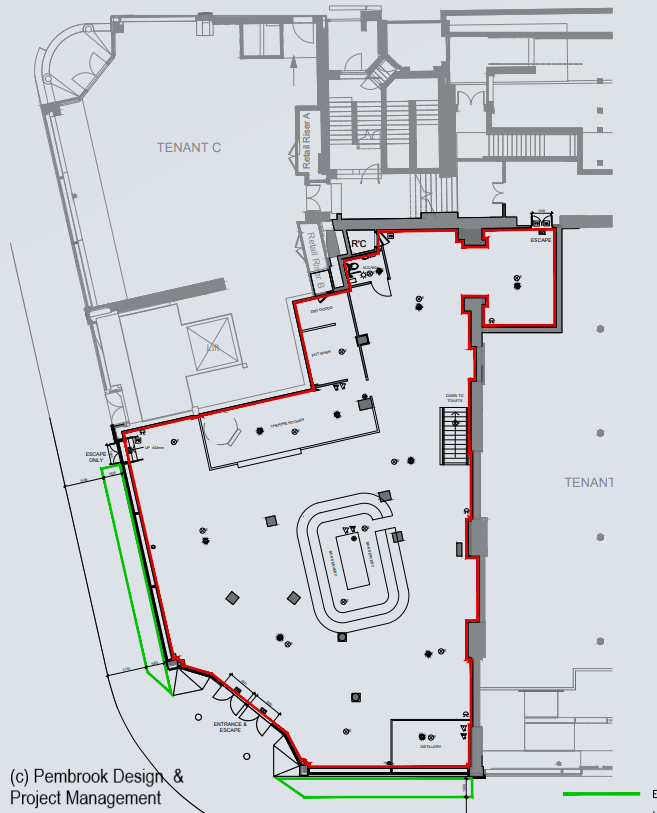
Albion & East have taken on ‘Unit A’, which is the corner directly opposite the Falcon, more or less half of the old beauty section of Debenhams – shown in the plans to the right. They also have a small section of the pavement outside that is owned by W.RE and counts as part of the premises – though the toilets and kitchen facilities are ingeniously down the stairs in a more central part of the basement that would otherwise be quite hard to let. They have applied for a fairly late license, from 8am to 12:30 (and 2:30am on weekends).
The second tenant, in ‘Unit B’ – which is the next one along St John’s Road (after which there will be the entrance to the offices above and then the existing T.K.Maxx) – is completely different – and of course, it’s a branch of AmazonFresh. These stores are Amazon’s big new push in to selling food, and they work on a ‘just walk out’ basis: you need an Amazon account to enter, scanning a code at the entrance. In store technology automatically detects when you take products from (or return them to) the shelves and keep track of them in a virtual basket. When you finish shopping, you can leave the store – receiving a receipt and your Amazon account is charged. Although these stores do not have checkouts, the premises (which will be open from 7am to 11pm) will have employees, assisting customers, doing stock replenishment, and managing access to the age-restricted section of the store with alcohol and other restricted produce.
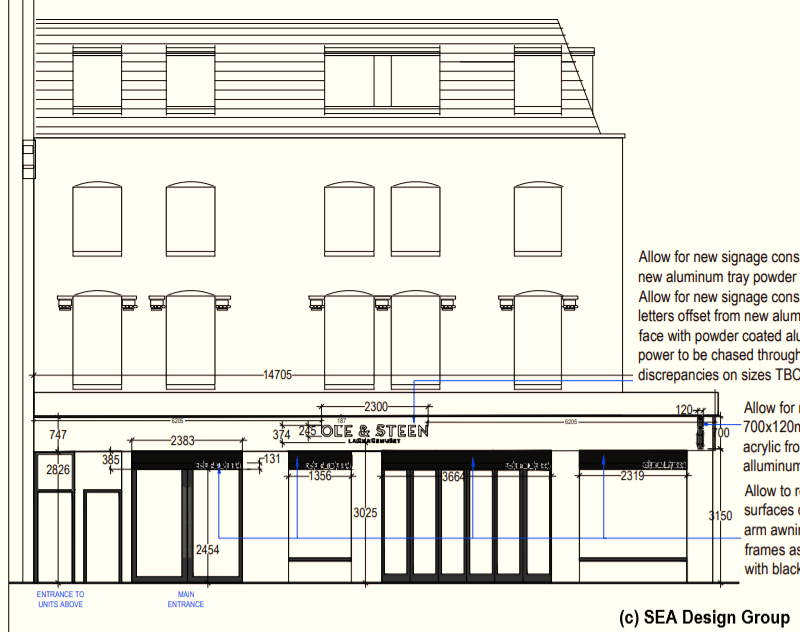
It’s no secret that Amazon (who have already opened a branch in Wandsworth) have been keen to open in Clapham Junction, and there had previously been local rumours that they were taking on the former Byron at 53 Northcote Road. That building is certainly having some fairly substantial works, to increase the internal area and sort out the general layout. But that is instead set to become a branch of Danish bakery chain Ole & Steen – with the plans illustrated below.
We’re not too sure what this means for Whole Foods Market just around the corner, which is also owned by Amazon (and which – as we reported some time back – has also been extended). We suspect it;s a different product for a different market, and both will carry on as usual – but we’ll keep you posted if we hear otherwise. Update (March 2023): Amazon pulled out, as part of a slowing down of their UK expansion plans! The unit is up for letting again. Read the full details in this more recent post.
Unit C is the one that opens on the Lavender Hill, that does not yet have a confirmed tenant. And it’s a huge unit – with a lift connecting the smallish ground floor area to a vast area in the basement. This could become all sorts of things – and there are quite a few businesses, like Decathlon, who really like this sort of premises because of the larger areas available at below-average cost – but we would not be at all surprised to see a gym take up this space. Update (March 2023): Thanks to one of our readers, we can confirm that this unit has indeed now been let to a gym: Third Space will be taking it over, and in an interesting move they will be taking space on three levels: the basement, a small section of the ground floor, and some of the first floor – adding up to a huge 28,000 square feet! As well as a wet spa and fully equipped open gym space, Third Space will be opening a reformer Pilates, hot yoga, high-intensity training and cycle studio.
And of course, the main event is the five floors of office space above. There’s a healthy interest in office space outside the centre of London at the mlmemt, we we’ve reported on recently – but details of Arding & Hobbs’ future occupiers remain under wraps for now. We’ll keep you posted if we hear more – but for now, it;s good to see this project forging ahead, and we’re reasonably impressed by W.RE’s early success in signing up new occupiers.
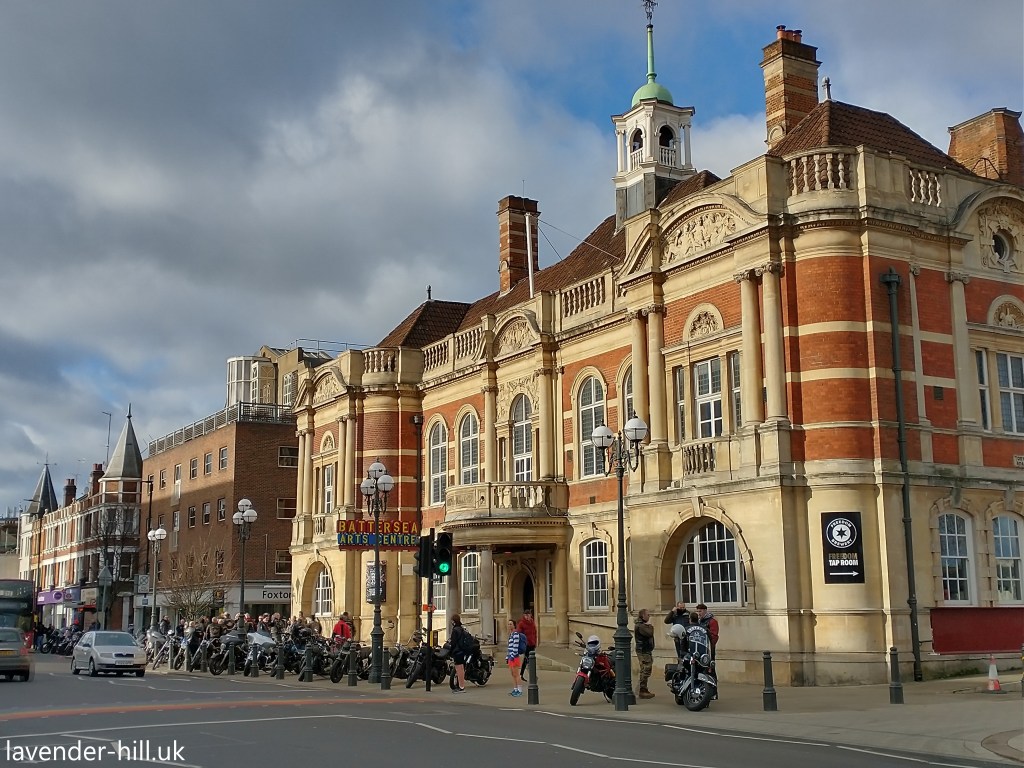
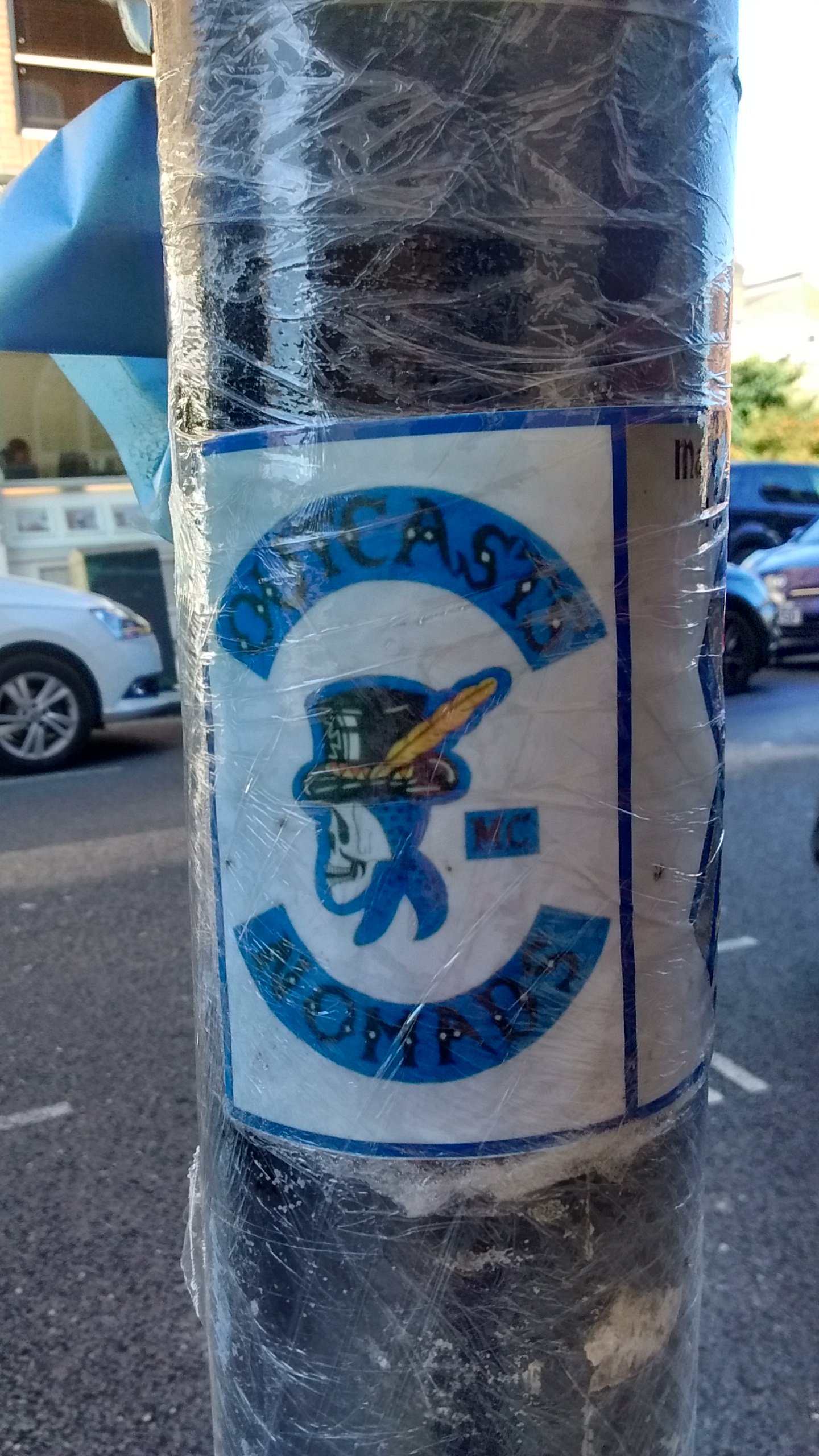
This week 24 years ago on Lavender Hill, about 1,700 people were at a Rockers Reunion concert at Battersea Arts Centre when a feud between two motorbike gangs took a dramatic turn – and ended up in a brutal double murder. The gangs in question were the Hatchet Crew (an Essex chapter of the Hells Angels) and the Outcasts. Their relationship had until then been fairly peaceful – but there were growing tensions about who was the dominant gang, tensions that were about to explode. The Outcasts were gaining members, and and about six months before they had tried to integrate The Lost Tribe gang from Hertfordshire – which would have made them equal in size to the Hells Angels. The Hells Angels responded by making the Lost Tribe honorary members – but by now, American branches of the Hells Angels were pushing the UK side to resist these rival groups.
And an otherwise unremarkable gig in Battersea was where it all came to a head. The event had a good number of Outcast attendees (including some of the security) and it had been going well – until a group of about 40 Hells Angels who had infiltrated the event approached the dancefloor and launched an oganised and brutal attack. The ringleaders reportedly came equipped with microphone headsets and walked through the crowd spotting Outcasts, pointing out targets to the rest of the group.
But while chaos ensued on the dancefloor, the murders would be outside. Keith Armstrong, who had one leg and was known as Flipper, was parking his bike in Theatre Street down the side of Battersea Arts Centre when he was attacked by five or six men with an axe, iron bars, coshes and at least one knife; he was stabbed between four and eight times in the abdomen and left leg, and his lung was punctured. His friend Malcolm St Clair, known as Mal, tried to help, but was heavily outnumbered – so when he was attacked with a hammer and an axe he also collapsed and died on the spot. A witness said that they saw one of his attackers walk off calmly and droving off in a Volvo – so calmly that he even wrote down the number plate. Several others were wounded but survived; Flipper was rushed to hospital, but succumbed to a heart attack that evening.
Witnesses said that the Hells Angels involved in the attack had appeared calm and pleased with what they had done. One of them was heard to say ‘I got the bastard. I got him. I did him.’ And with over 1,000 people at the event, there were plenty of people who had seen what happened (both in the gangs and the general public), and dozens of arrests were made. But there was such fear of retaliation at the time that few dared testify in court, and when the judge declined to anonymity to those who would testify (and in one case, a witness’ identify was accidentally revealed), witnesses quickly faded away, with the cases being dropped. The vice-president of the Essex chapter of the Hells Angels was eventually convicted for organising the attack, and sentenced to 15 years imprisonment, with the judge saying ‘You took an active part in conspiring to cause grievous bodily harm, a conspiracy which led to the death of two men. In truth they were executed in a manner that was as ruthless as it was arrogant.’ The prosecution said that the attack was brutal, planned and premeditated – and aimed at making the Hells Angels the main bikers gang in the country. But no one was ever convicted for either of the murders.
The Battersea incident was a dramatic step up in what had until then been a low key turf war, and it kicked off a violent nationwide feud between the gangs that continued for years, with shootings, arson and attacks, backed by an impressive array of weaponry. Nearly a decade later, in 2007 Hells Angel Gerry Tobin would be shot dead on the M40, with seven Outcasts convicted over his murder. For those with an interest in this largely forgotten part of Lavender Hill’s history, Melanie McGrath’s contemporary article Riders on the Storm is a thoughtful and much more detailed account of the fateful night in 1998, and the wider culture of the biker gangs.
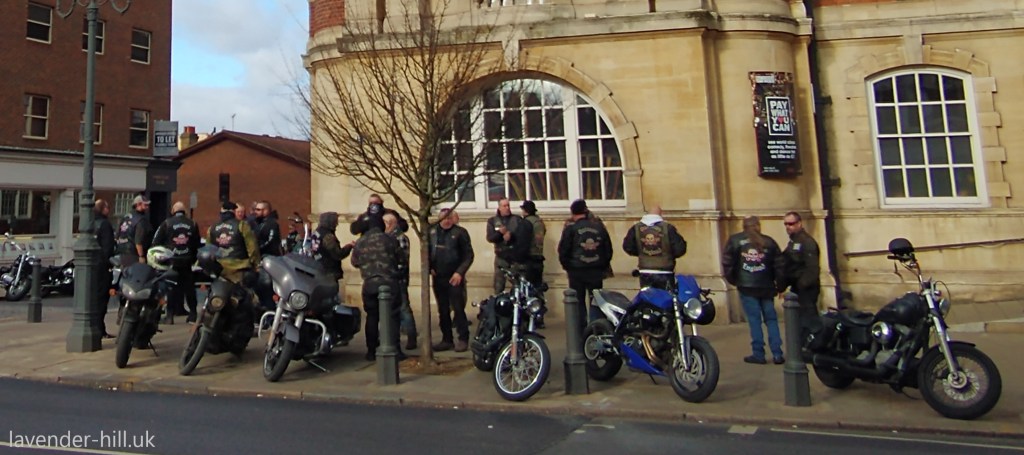
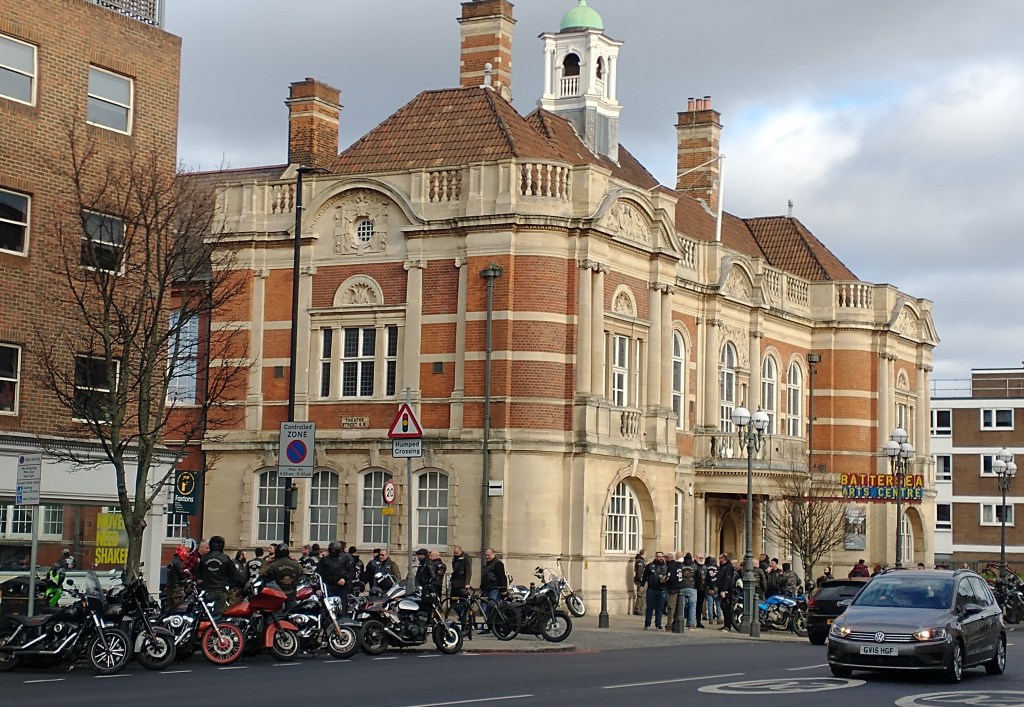
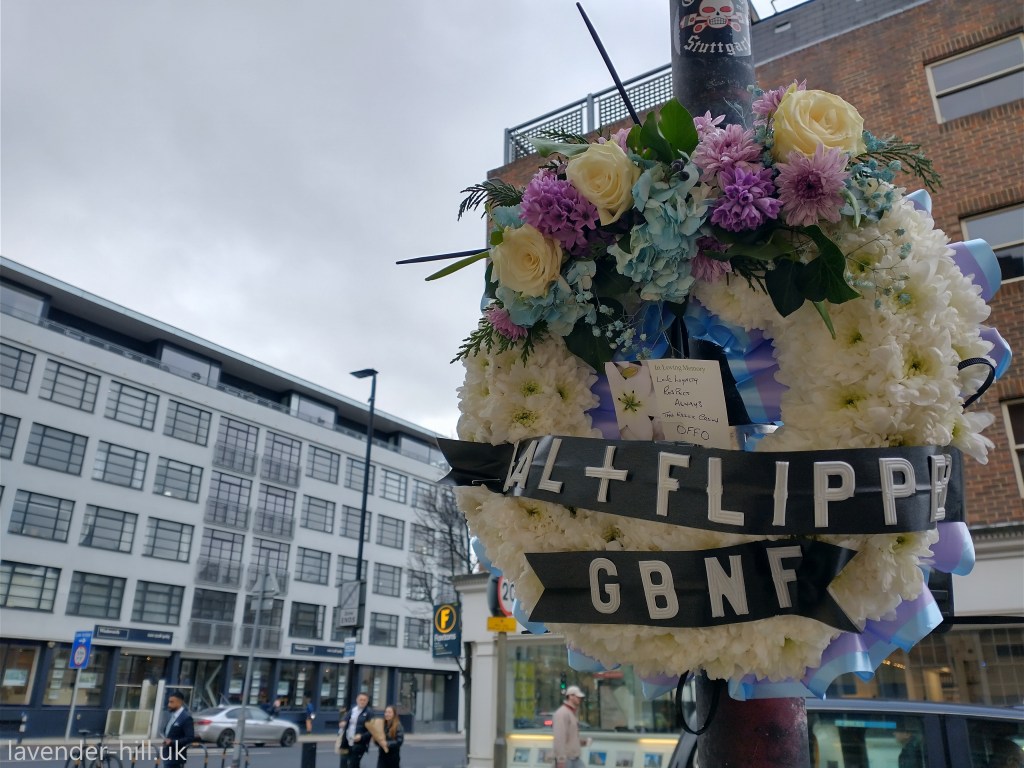
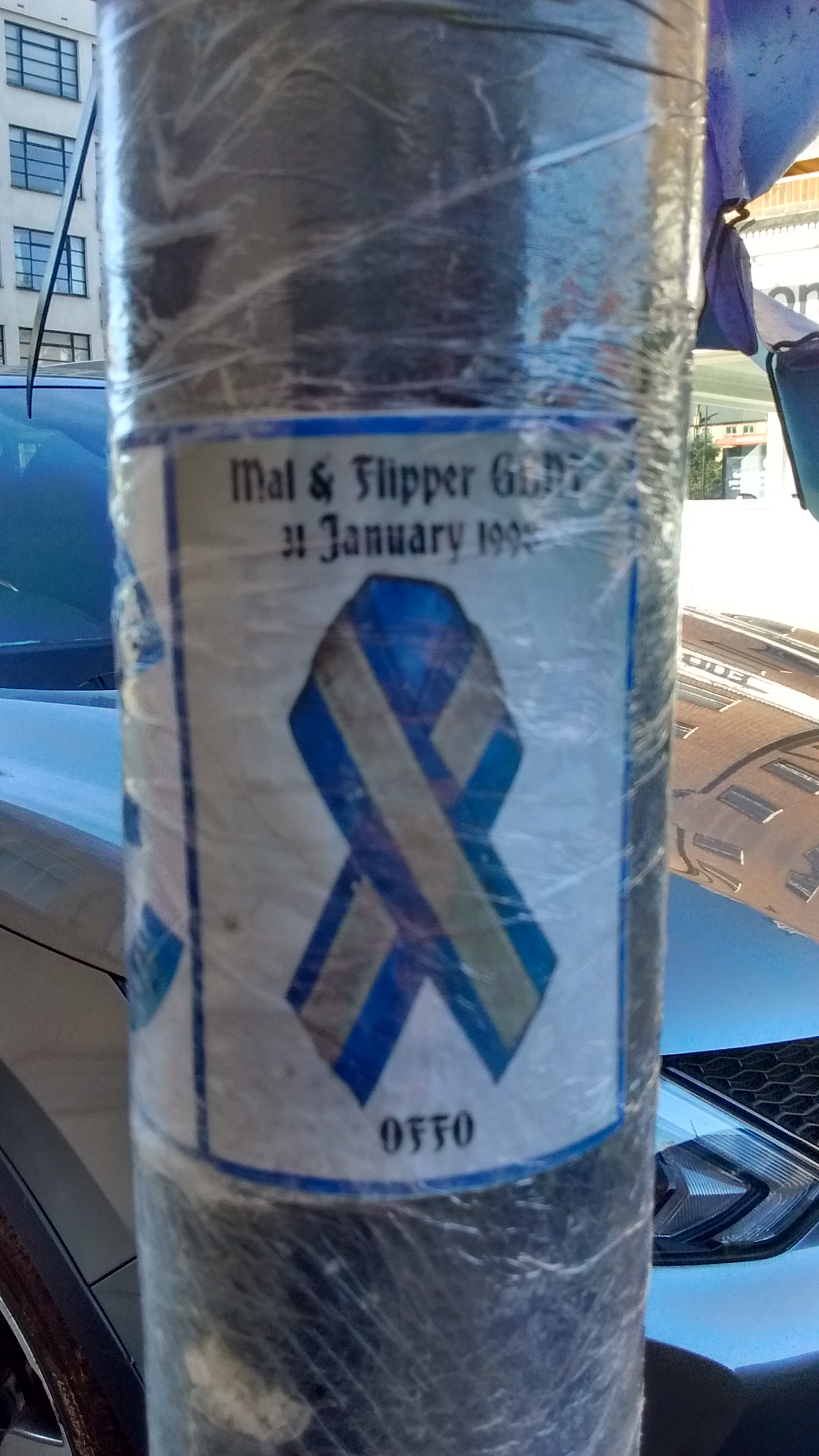
But Mal and Flipper are not forgotten, and last week saw a large group of Outcasts, with an impressive set of motorbikes, assemble early on Saturday morning at Battersea Arts Centre to pay tribute to their fallen comrades. The sign post where Mal died always has several small tributes attached to it, and for a few weeks after the anniversary, like every year, it also has a wreath in their memory.
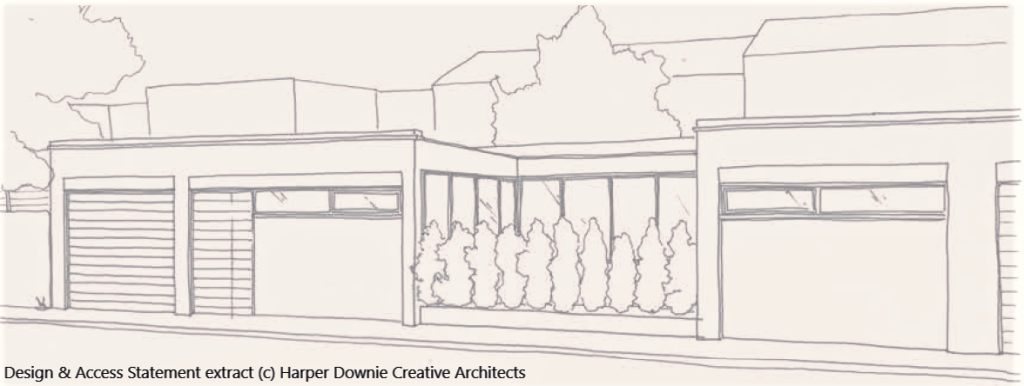
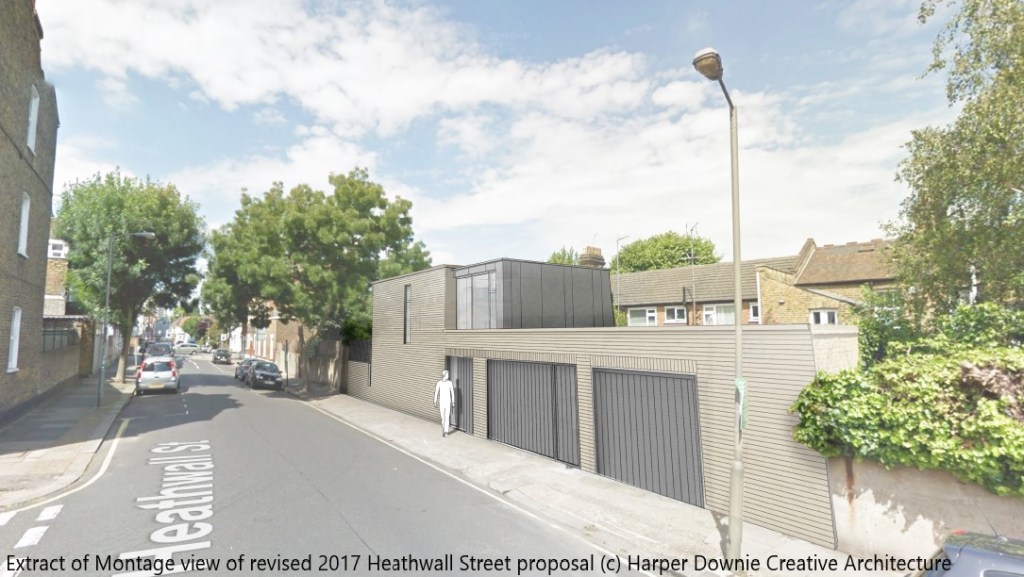
We regularly write about interesting and planning applications – and this one on Heathwall Street below Battersea Arts Centre certainly makes a change from the usual run of bi-fold doors and mansard loft extensions. The site is currently a row of six garages on Heathwall Street, and the plans are to knock down five of them and build a two-bedroom house that has at least a passing ressemblance to row of garages.
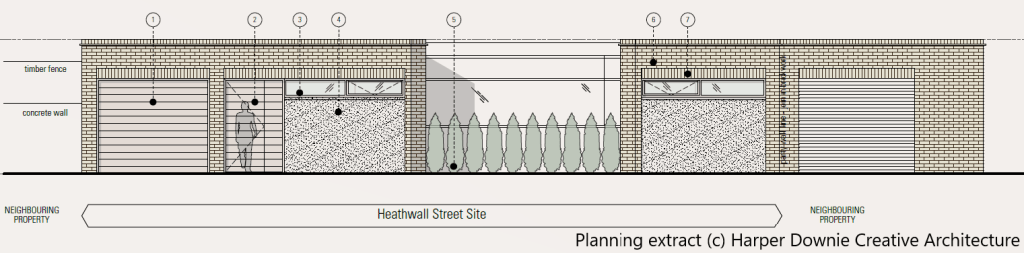
It’s obviously a complicated and unusual place to want to build a house! Two of the four walls look directly in to private gardens (so no windows allowed there), the third adjoins a garage that is owned by someone else (so not part of the development), and the fourth looks directly on to the pavement. Some of the terrace houses on Elsley Road behind the development are also listed buildings, which limits what the developers can do around them (and as we’ve posted on before – extensions in the Shaftesbury Estate can be complicated!). The developers’ approach is to make the few windows facing the road quite high level (as shown above), but also to create a large notch that is set back from the road, to make a fairly generous internal courtyard lined with large windows that provide light around the house but also provide some degree of privacy.
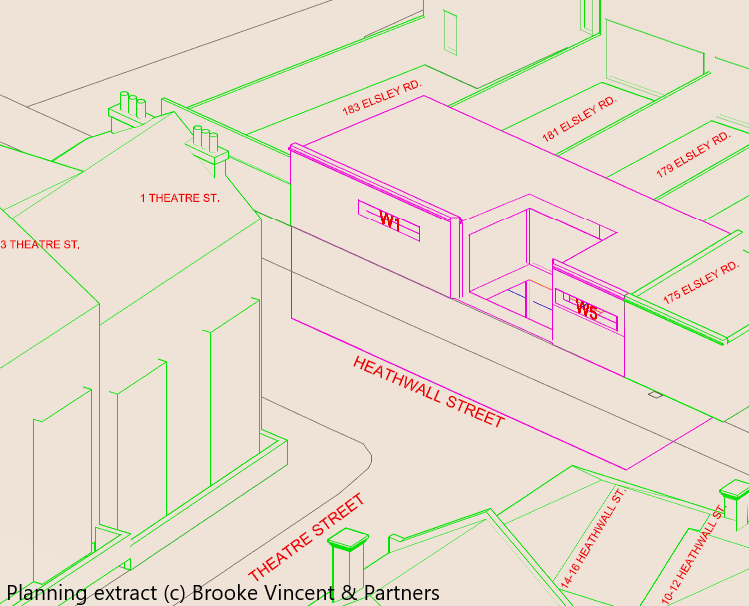
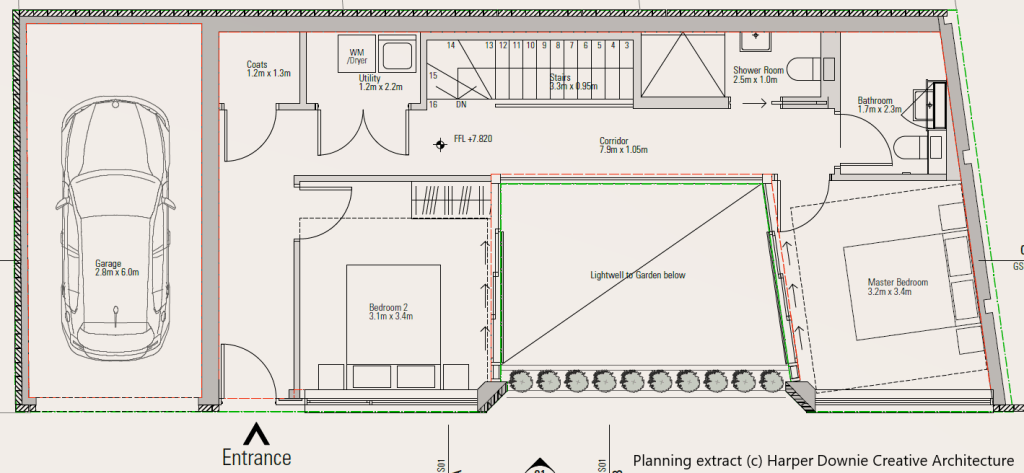
The ground floor includes two bedrooms, as well as a one-car garage – and the developers also plan to dig a basement level, shown in the perspective diagram of the site below, to substantially increase the space.
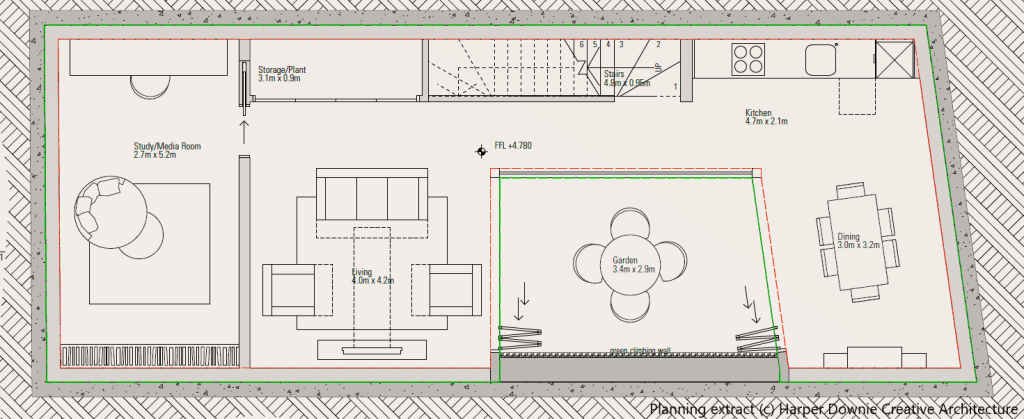
The basement level (whose floorplan is shown below) includes most of the living space, with big windows facing in to the lower level of the courtyard / garden. The house is respectably large at 1,300 square feet (about the same as a typical Shaftesbury Estate house) and the developers aim for it to have a modern design, with plans for lots of glass around the courtyard, and a mostly open plan layout – using brick, wood and polished concrete floors. The plans will lead to a small increase in the overall height of the building, compared to the existing garages. In theory, there will be some greenery at ground level in the form of integrated plant pots along the street side of the courtyard that can accommodate a hedge (though as we have seen elsewhere, such as the flats on Taybridge Road or on Avery Walk, plans for greenery included in planning applications are rarely delivered in practice – so in reality we’re maybe more likely to see a fence.
Unusually, this is not the first time these proposals have been in the planning system – as more or less the same plans were put forward (and approved) in both 2014 and in 2018, in both cases the permission timed out before the building work was started. In 2017 the developers also applied for permission for a larger variation of the scheme, with two storeys above ground (shown below), but this approach – which would substantially affect the houses behind and the street as a whole – was refused.
Now it’s fair to say that having already let the permission lapse twice without building anything, the developers here don’t seem to be in a rush to get shovels in the ground. We can also surmise that having got planning permission twice before, it is likely that they will be approved again! Plans for the site have previously been a bit controversial, with objections to the application on several grounds including that the design was bland and not really appropriate for a conservation area; but above all linked to the challenges of actually building the building and the likelihood that this could affect neighbours – including concerns that building the house would require the destruction of some of neighbours gardens, concerns about whether the developers’ assessments of the light impact on gardens and neighbouring properties were correct, including trees right next to the current garages; that the building seemed vulnerable to flooding; and that the garages weren’t as unused as was maybe implied so their loss would harm the area.
Planners approved the previous more-or-less-identical plans partly on the grounds that they were only a small change in overall scale of development and an improvement in appearance compared to the garages (which is hard to argue with), and that the overall scale of change was small – but they did apply several conditions including the reinstatement of pavements and parking spaces in front of the building at the developers’ expense, and various design, sustainability and waste management issues to ensure that the impact of the development was minimised. As ever, if you’re interested you can see the detailed plans (and, if you wish, make a comment for the planners to consider) – by visiting Wandsworth’s planning website and searching for planning case 2021/1236 .
Lavender Hill for Me is a community website working to support Lavender Hill, a neighbourhood in Battersea, London and a home to about 250 shops, restaurants and small businesses. We take an active interest in developments that could improve Lavender Hill for residents, traders and visitors.



















 Lavender-Hill.uk : Supporting Lavender Hill