
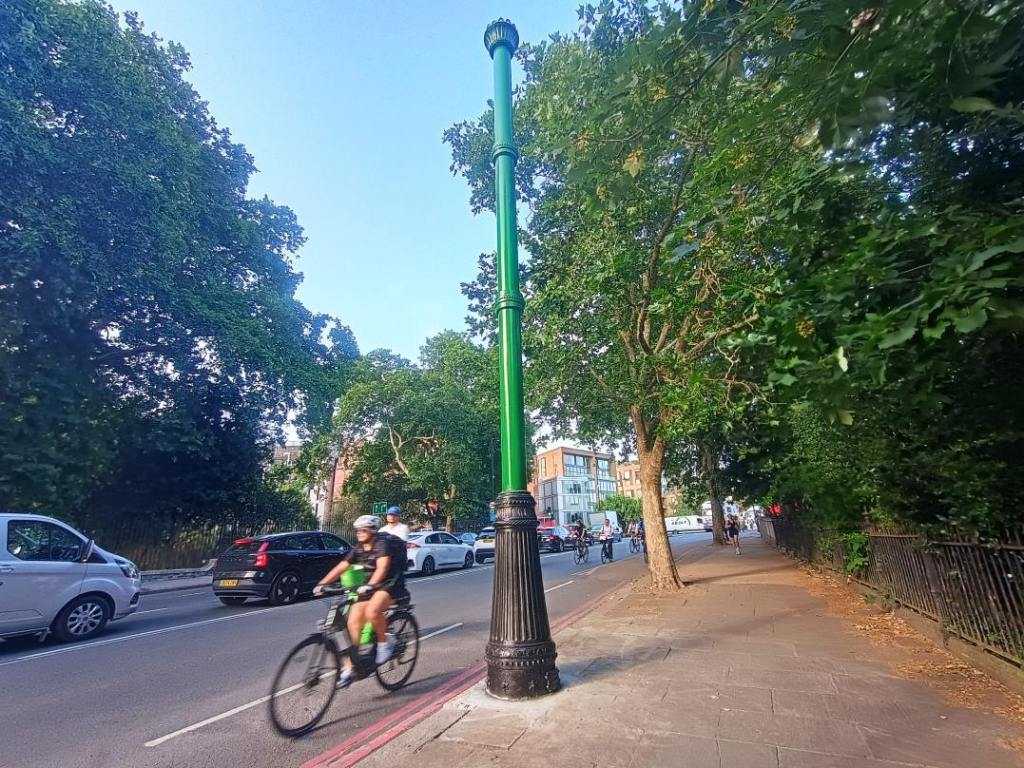
They’re a bit of our streets that pass unnoticed, even though there are hundreds of them scattered across Battersea: ornate columns with no obvious purpose. Some people assume they’re left over old street lighting posts, that maybe got missed in some previous modernisation. Some suspect more eclectic origins – maybe cable supports for long-lost tram lines, or old telegraph poles. But these lonely bits of street infrastructure are actually part of the sewer infrastructure – and they are relics of one of the most transformative infrastructure programmes in London’s history.
It all goes back to the development of our sewer system. Big sewers were pretty much invented in London after the Great Stink of 1858, when a blazingly hot summer, a fast-growing population, and the rapid spread of newfangled flush toilets all spectacularly came together to transform the Thames into a foul, putrescent miasma of stinky sewage. Awkwardly this was a river of sewage running right outside the windows of Parliament, and more worryingly it was linked to a bundle of virulent and deadly Cholera outbreaks. The sewage issue couldn’t be ignored any longer, and engineer Joseph Bazalgette kicked off an immense project to build 85 miles of huge ‘interceptor’ sewers along the north and south side of the Thames, to intercept the flow from loads of smaller sewers that had, until then, drained in to the river.
These interceptor sewers would transport the waste out to the east London marshlands, where it was pumped up to ground level in a pair of huge cathedral-esque pumping stations and dumped in the river to – hopefully – make its way out to the sea. This was a big improvement on the previous approach of dumping it in the river in the middle of London, but as anyone living in Battersea will know, the river spends quite a lot of the day flowing west as the tide comes in. Just dumping the poos further downstream doesn’t necessarily deal with the issue of the water being full of sewage and disease, as the incoming tide may bring a lot of it back within a few hours.
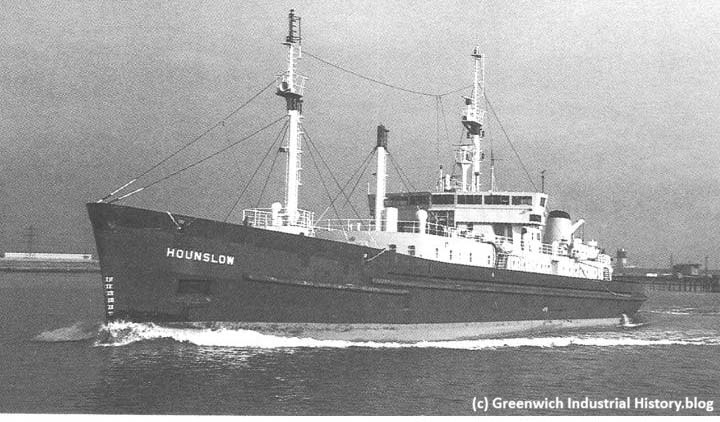
People living downstream weren’t exactly overjoyed either, now that they were suddenly seeing the whole of inner London’s sewage dumped in to the river right next to them. This led to a curious system where the solid parts of the sewage were filtered out and put in a fleet of ships – nicknamed Bovril boats because of their dubious brown content – that would sail further out to the sea, and tip it overboard, beyond the reach of the Thames tides. This process carried on for a surprisingly long time (not just in London – similar arrangements were used in several other cities), but it was banned in 1998 on the grounds that by then there were much better technologies available to deal with sewage, and too much poo was washing up on beaches. The picture below from Greenwich Industrial History is of the Hounslow, the last of the fleet of Bovril boats, that retired from the role in 1999. Later efforts would see increasingly sophisticated filtration plants, sewage treatment works, sewage gas power stations and sludge incinerators developed, to make sure what was being put in the river was reasonably clean.
London builds a wonder of the industrial world
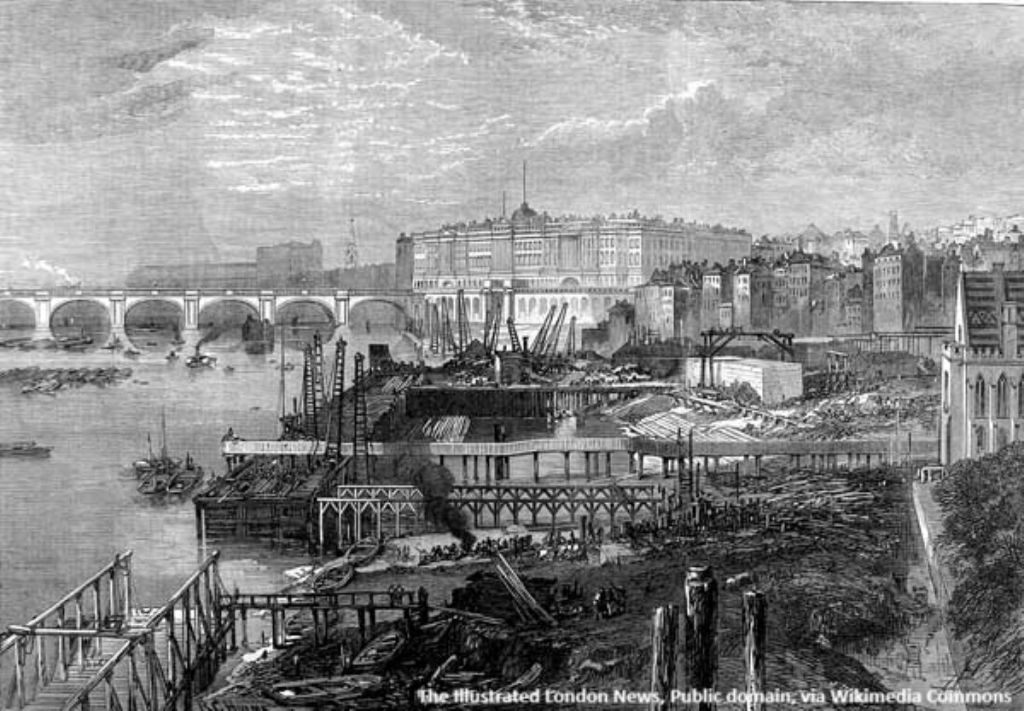
Bazalgette’s sewer project was immensely ambitious – it took about 15 years to complete, which by the standards of the Victorians (who didn’t hang about when they saw a big project) was a remarkably long time. The engraving below shows the building site at the Embankment, where the new sewer was being built along what would be the future shore of the Thames. But it was worth waiting fifteen years, because the end result – in 1870 – was a wonder of the industrial world. It’s hard to overstate the importance of the sewer network – it cleaned up the cist for once and for all, and hugely reduced London’s exposure to cholera, and it set the standard for modern sewer systems right around the world.
The big interceptor sewers also fundamentally changed London’s relation with the river. The Victoria, Albert and Chelsea embankments were built along the shores of the Thames to house the sewer, but in doing so they turned the riverfront from a series of individual wharfs that were accessed from a series of back alleys, to a big open roadway open to the public – as shown in the early postcard below, when the embankment would have been about 25 years old.
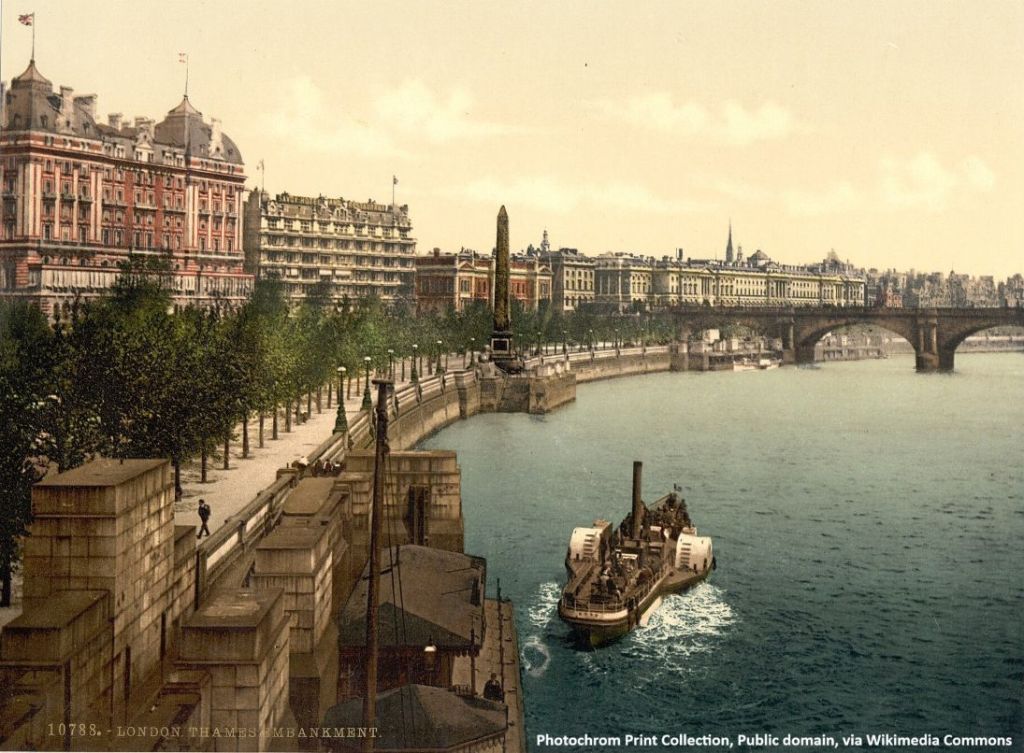
These new streets connected London with the river, but also protected it from it: they were specifically designed to reduce the risk of flooding at high tides – a job they carried on to do pretty much single handedly until the Thames Barrier was built to strengthen the city’s defences almost a century later.
Bazalgette really left his mark on the Thames – having also designed Battersea bridge, which happens to sit at the very end of the northern sewer – as well as Putney Bridge, Chelsea bridge, Hammersmith bridge, aspects of Albert bridge and the early design for tower bridge. There’s a small and little-noticed memorial to him near Embankment station (shown below) – though his main memorial is maybe the road the memorial is stood on, the sewer under it, the wall behind it, and the embankment on the other side of the river.
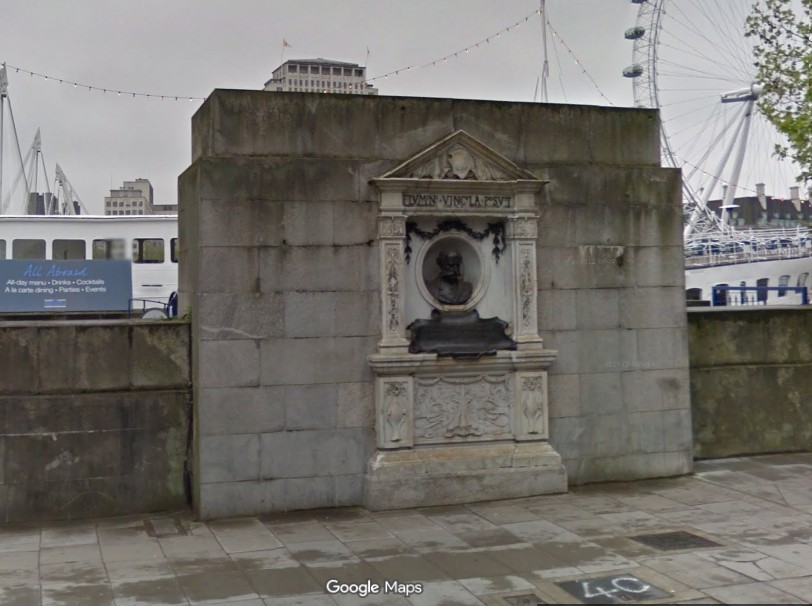
But Bazalgette’s mega project wasn’t just about the Thames embankments – it also saw changes right around the city. The 85 miles of ‘interceptor’ sewers were undoubtedly the most visible part of the project, but they were only a tiny part of what Bazalgette built. To get the sewage to the big sewers, he also designed a complete city-wide network of over a thousand miles of smaller street sewers, to collect sewage from individual streets and channel it to the big new sewer. This would hugely upgrade the patchy local sewer network that had, at least in the smarter bits of town, previously carried waste away to a mixture of local streams.
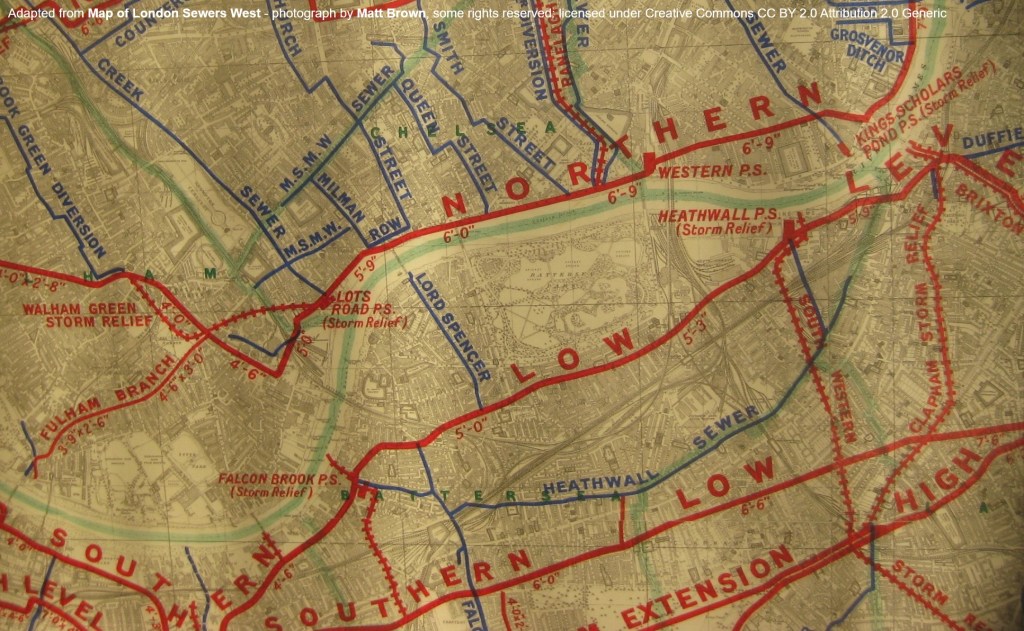
This meant the end of a system of filthy cesspits that were scattered around less desirable residential areas – which were notorious for being exceptionally smelly, and which would contaminate local wells and water sources, and of the muckiest neighbourhoods having what were in effect local open sewers running along gutters. These new sewers were a huge development at the time, and got global attention. The city immediately became a lot cleaner, and in slightly slower time, the city also got healthier – because a proper sewerage system went a long way to reducing the number of cholera outbreaks caused by sewage getting mixed in with water supplies.
Other cities started similar schemes. Paris built a comparable network but managed to spend five times as much on building theirs, despite covering a smaller area – which is mostly because they built much bigger tunnels for their street sewer system, that were initially focussed on dealing with rainwater and capable of handling washed-away street debris, with tunnels that could also accommodate other utilities, with household sewage being fed in much more gradually. One benefit of the Paris approach is that some of the huge tunnels in their sewers had walkways in them, and some could accommodate small boats – so they quickly became open to curious visitors. To this day you can visit it as a tourist, for an interesting if mildly malodorous experience (there’s even a gift shop down there).
A problem emerges – of smelly, but also lethal, sewer gas
London’s sewers were – aside from the giant interceptor sewers – mostly rather smaller. And this introduced a new technical challenge: the build-up of methane and hydrogen sulphide (rotten egg gas) within enclosed underground pipes. The old cesspits were notorious for exploding because of methane building up, while the early sewers before Bazalgette’s big project also had a recurring problem of toxic gases building up. The Pimlico sewer disaster in 1849 led to five people dying in a poorly-designed and badly ventilated sewer under that had been built in 1847 under the streets of Pimlico – three workers who initially went in to undertake maitenance, and then one of two rescuers, and then another person who tried to rescue one of the rescuers. After that the bodies were recovered by digging more holes in the sewer rather than going in, leading to ‘another escape of pestiferous gas’ – and an inquest that would conclude that a lack of ventilation in the sewer, coupled with poor maintenance, had led to the tragedy.
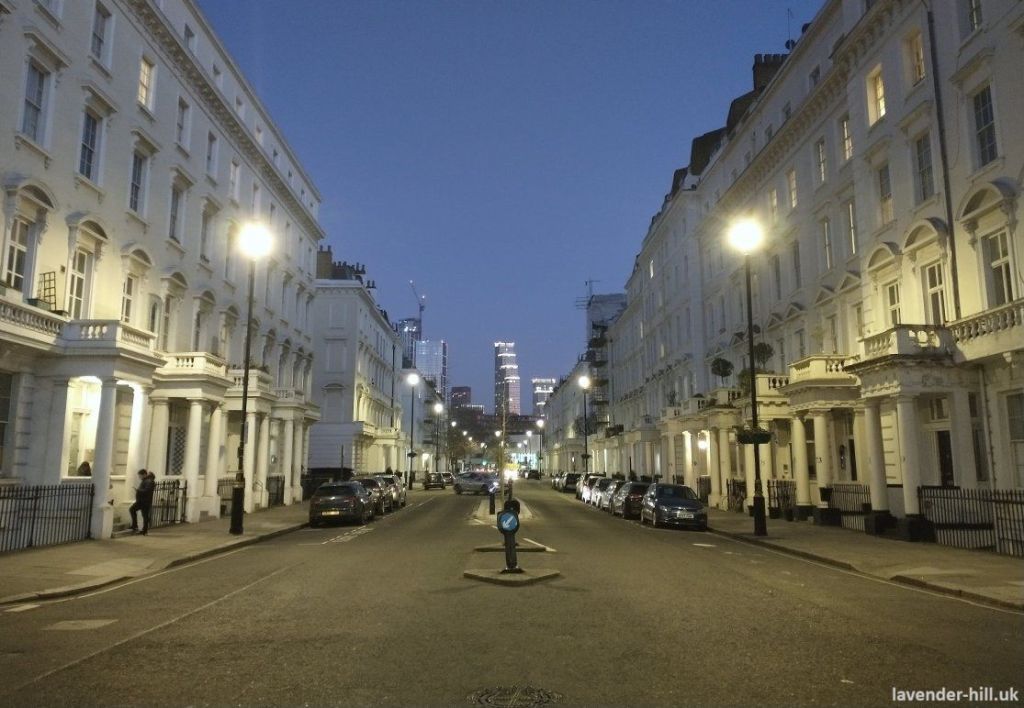
And this is where our mysterious neglected street columns come in. If you look at the front centre of our photo of the fateful street in Pimlico you can just about make out a drain in the middle of the road, that’s right at the highest point of the roadway. It isn’t going to be particularly effective at catching rain water from the gutters. Its aim is, rather, to provide some ventilation for that troublesome and badly-built sewer – and avoid it filling up with methane and other troublesome toxic and maybe even explosive gases.
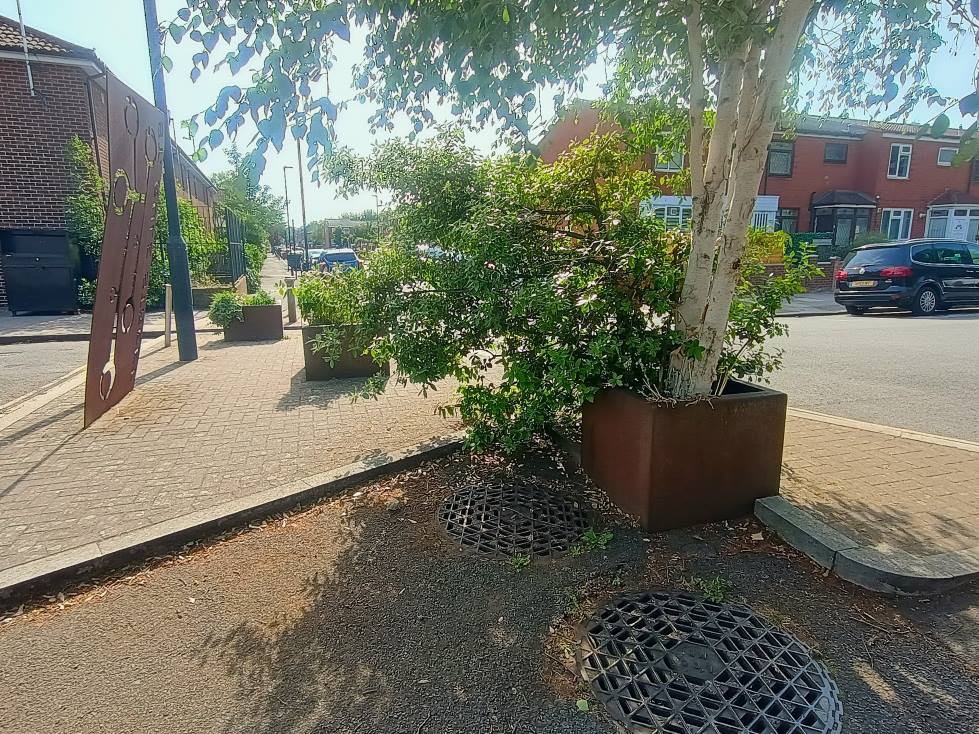
You can see plenty of similar drains round Battersea – maybe most famously along the course of the Heathwall, that we have reported on before. Once a stream called the Heathbrook, running along the very edge pf what had once been the Thames estuary and which the local school is named after, it is now a long sewer that runs from near Clapham Junction all the way to the Heathwall pumping station in Nine Elms, where the sewage is pumped up to Bazalgette’s interceptor sewer to be taken off along the Thames to east London. We can only assume that this was once a particularly smelly and problematic sewer – because the drains here are unusually large and often come in pairs; peering down in to them some have access ladders for maintenance.
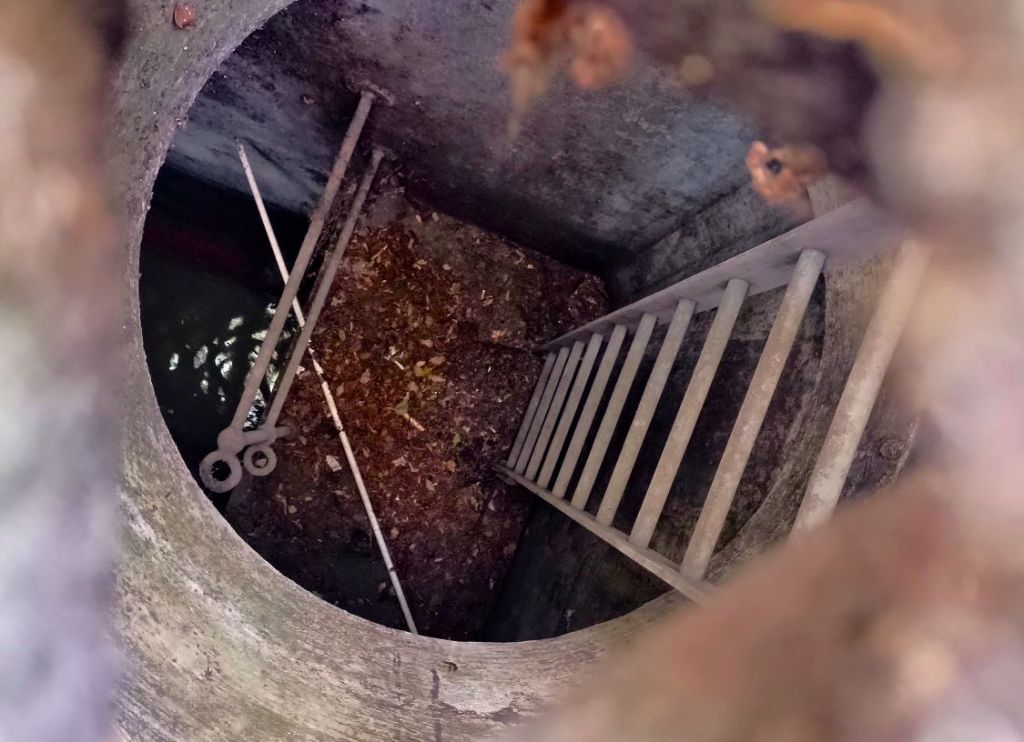
Drains like this went some way to solving the issue of toxic sewers, but they weren’t ideal. In the 1850s disease was widely believed to spread through miasmas, or ‘bad air’ – if you could smell it, you could catch it! Improving air quality was seen as really important – and smelly sewer ventilation grates might have made the sewers safer, but they worried people on the streets that they were now also exposed to horrible smells and foul gases.
Stink pipes come to the rescue, and clean up the sewers
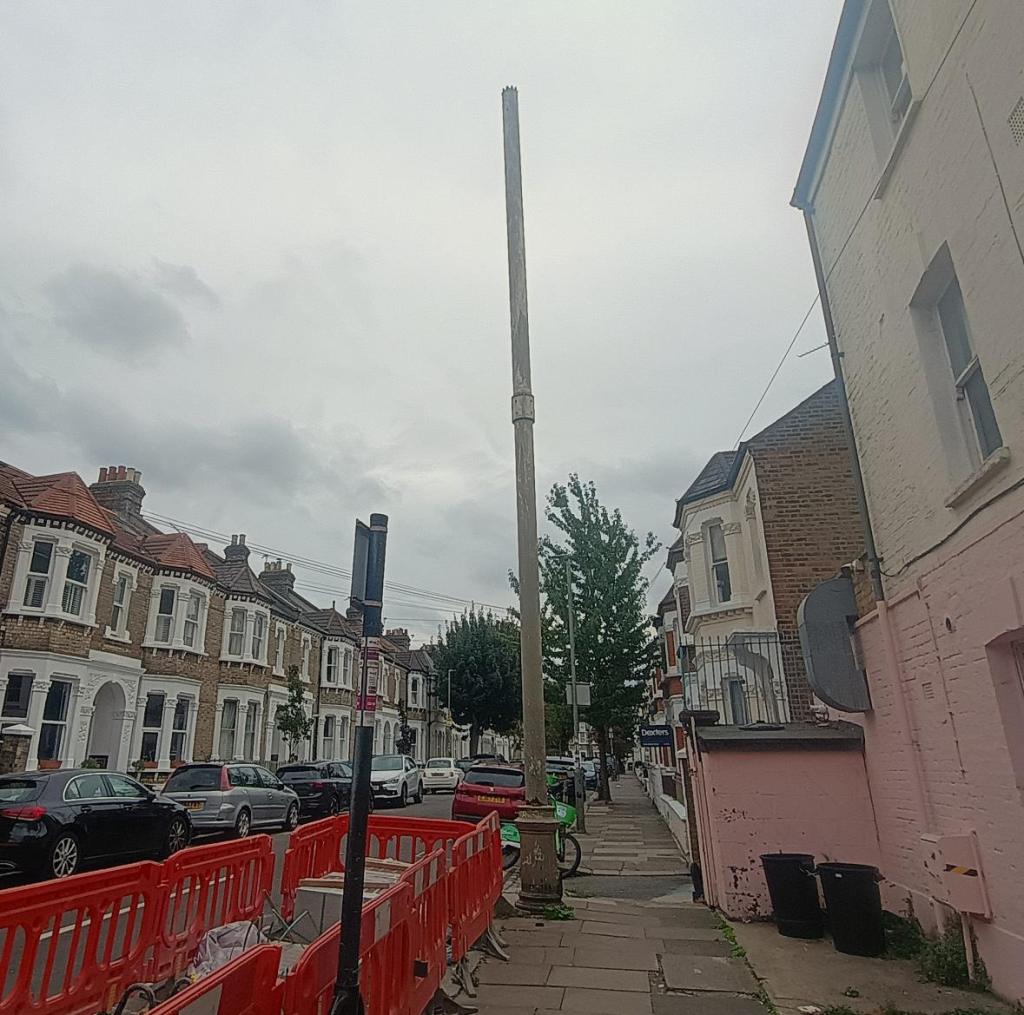
The answer was stink pipes, designed to reach down to the sewers to provide an escape for sewer gases – and extend above roof height so that the fumes would get scattered away by the breeze, rather than getting in to people’s windows. The basic concept of the stink pipe was designed by Sir Goldsworthy Gurney, who was a classic Victorian inventor, scientist, surgeon, chemist, steam engineer, who was working closely with Bazalgette. He had form in the area: he was already responsible for lighting and ventilation at the Houses of Parliament during the Great Stink, and had plenty of expertise in managing air quality and bad smells.
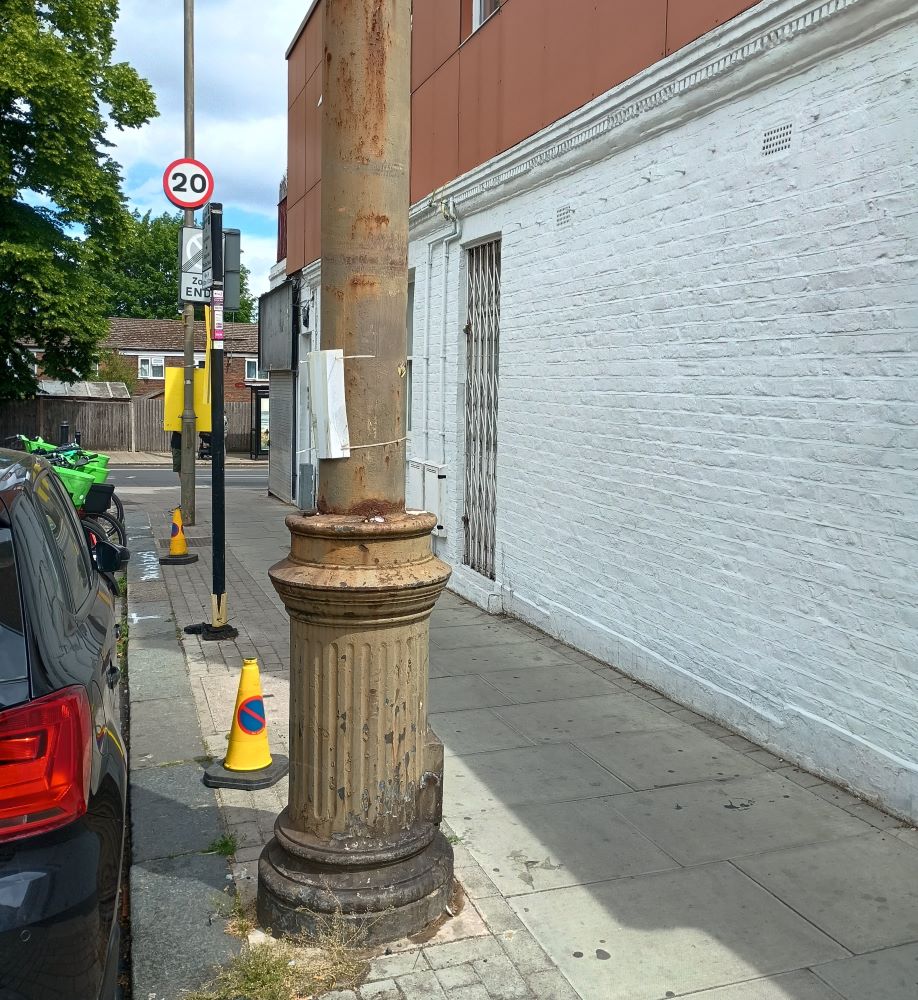
Our photo above shows one on Longbeach Road, which is fairly typical of what was installed in Battersea, and one below shows one on Stormont Road. Both date back to around 1870, the year the streets were built – and also the year the Bazalgette sewer project was completed.
A symbol of Victorian civic pride
This was long before the era of mass-produced steel and aluminium tubes that go in to today’s lamp posts; these stink pipes were usually made of cast iron, which meant two things: one, they were heavier and thicker, and two, they could be much more ornate.
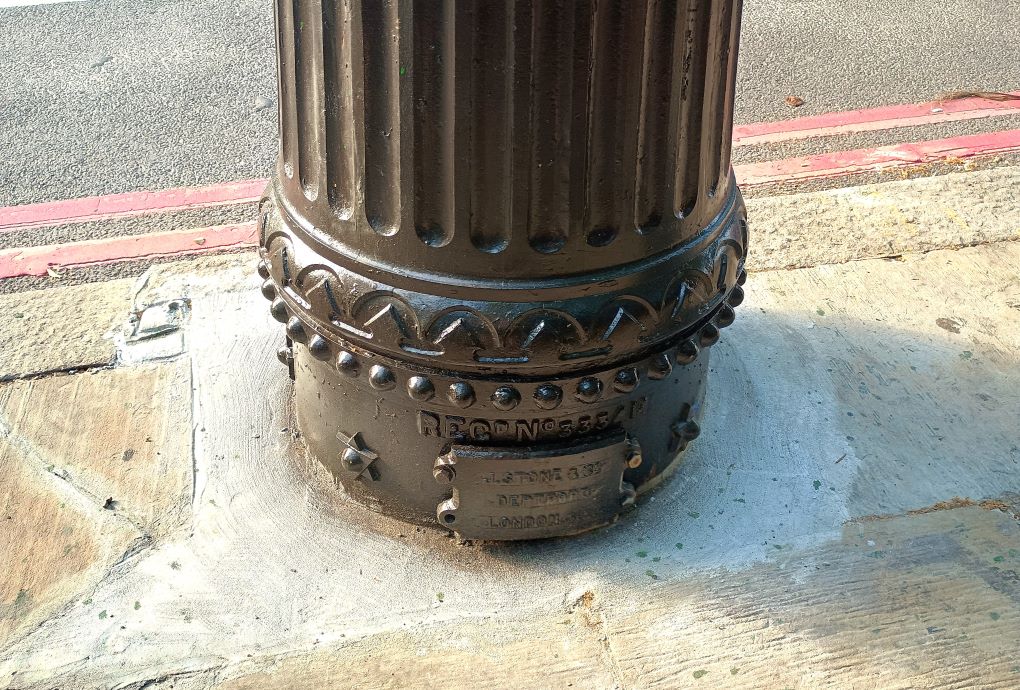
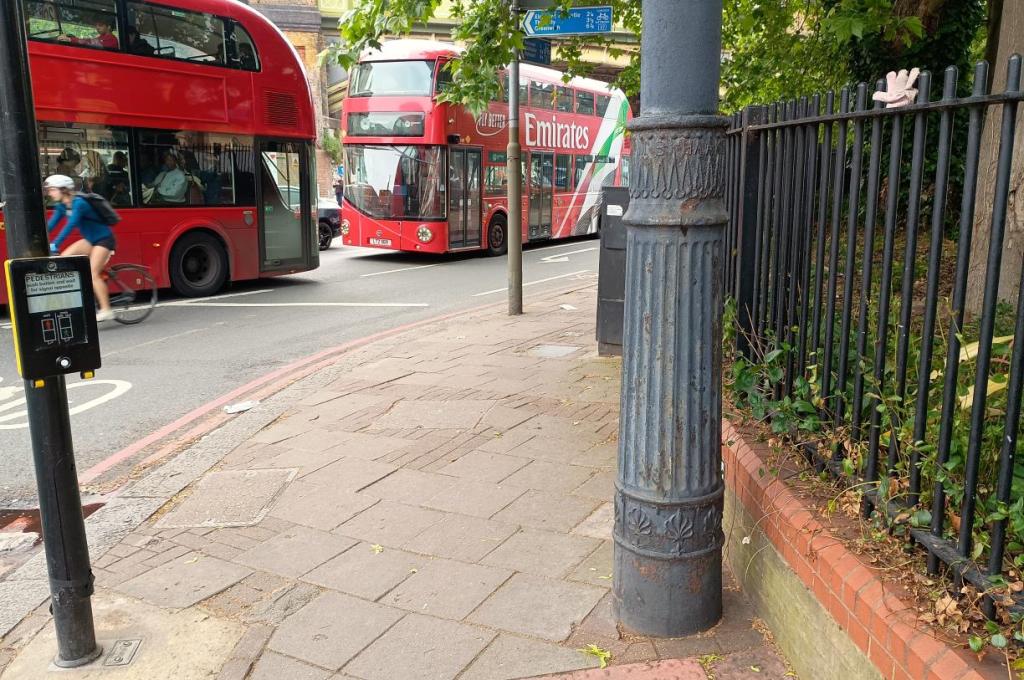
Victorians rarely missed an opportunity to add a bit of decoration and make something look the part, especially when it was connected with a glamorous new world-leading bit of sewer engineering, and stink pipes were no exception – you could see fluted columns, ornate bases, and crowns up at the top to deter birds. The example below at the junction of Queenstown Road and Battersea Park Road, which has survived huge changes including all the buildings next to it being completely replaced, is a typical example of ornate Victorian decoration contrasting with the more utilitarian modern street lights and traffic lights.
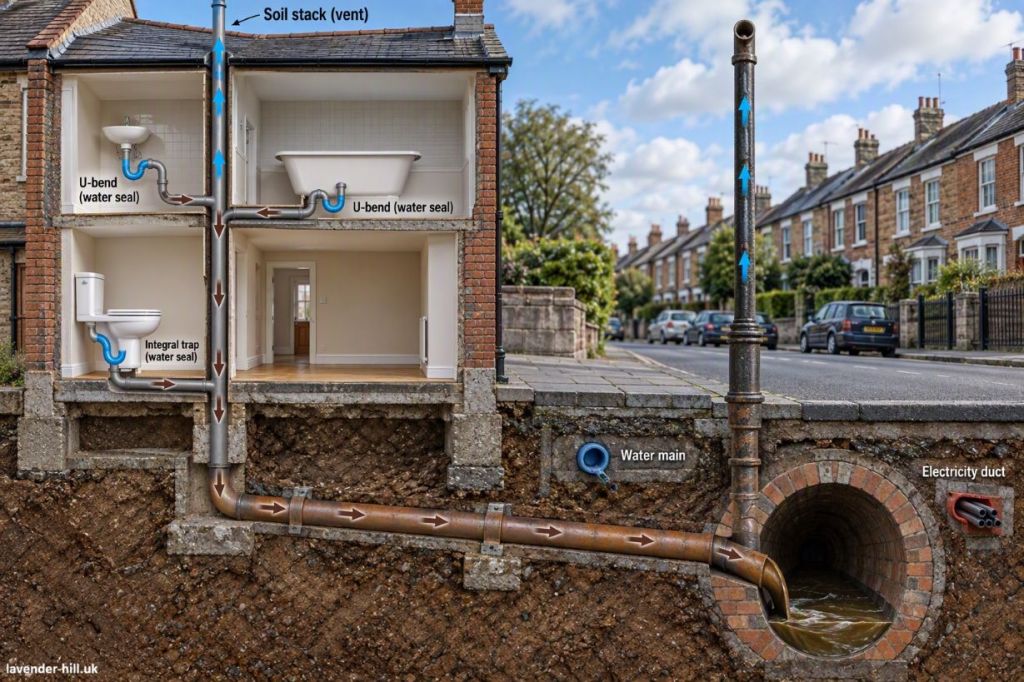
With time, stink pipes were supplemented by more ventilation. From the 1880s, as more and more houses were fitted with interior bathrooms, we started to see houses fitted with an external ‘soil stack‘ pipe that ran from the drains up to roof level, designed partly to ensure that flushing toilets didn’t pull the water in the U-bend down after the flush and so allow sewer smells in to houses, but partly also as a further air vent from the attached sewers. This means the ventilation has been moved from being a tall pipe on the street, to be a load of smaller pipes running up the back walls of connected houses, or hidden inside buildings and peeking above the roof.
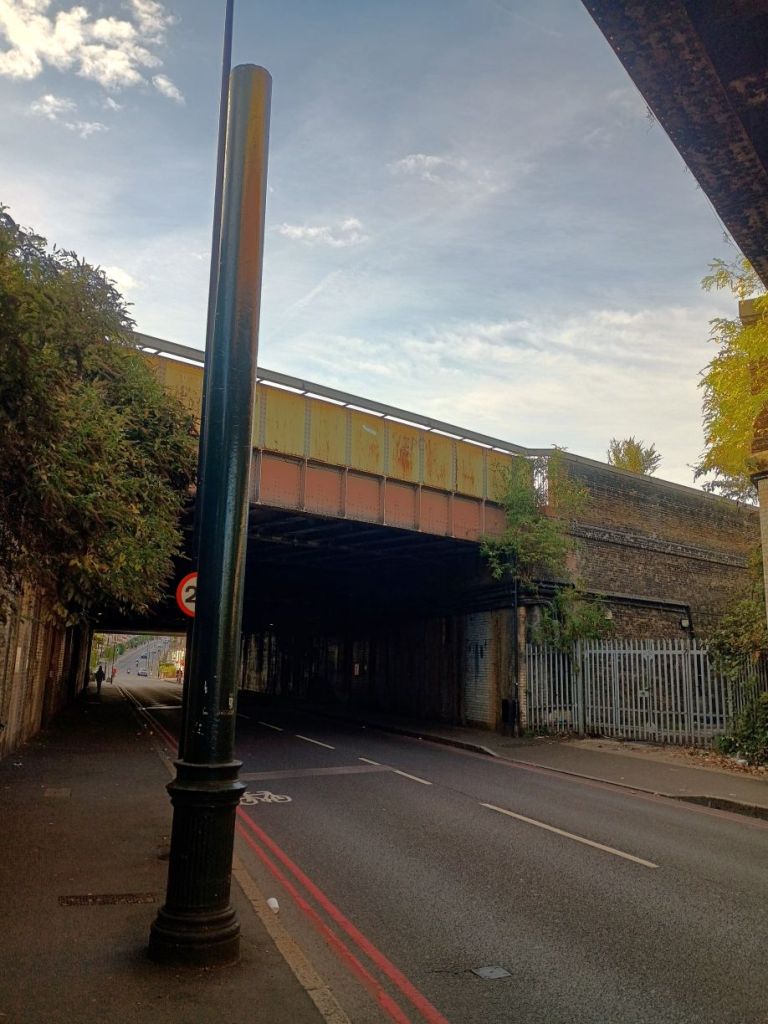
The primary rule of thumb for their height was to reach high enough that winds could safely catch and dilute gases well above street level and away from pedestrians or nearby windows. The standard design guideline championed by Gurney and adopted across municipal projects (and later reinforced by local public health acts like the Public Health Act 1875) was 20-25 feet – but heights could vary depending on surrounding building elevations and local board of health specifications. In Battersea, the stink pipe height tends to follow the local roofline fairly precisely – to get the gases just to the level where breezes would carry them away. Our investigations suggest the shortest is this one on Latchmere Road, which is surrounded by railway lines, so only needs to peek over the height of the railway viaducts to do the job.
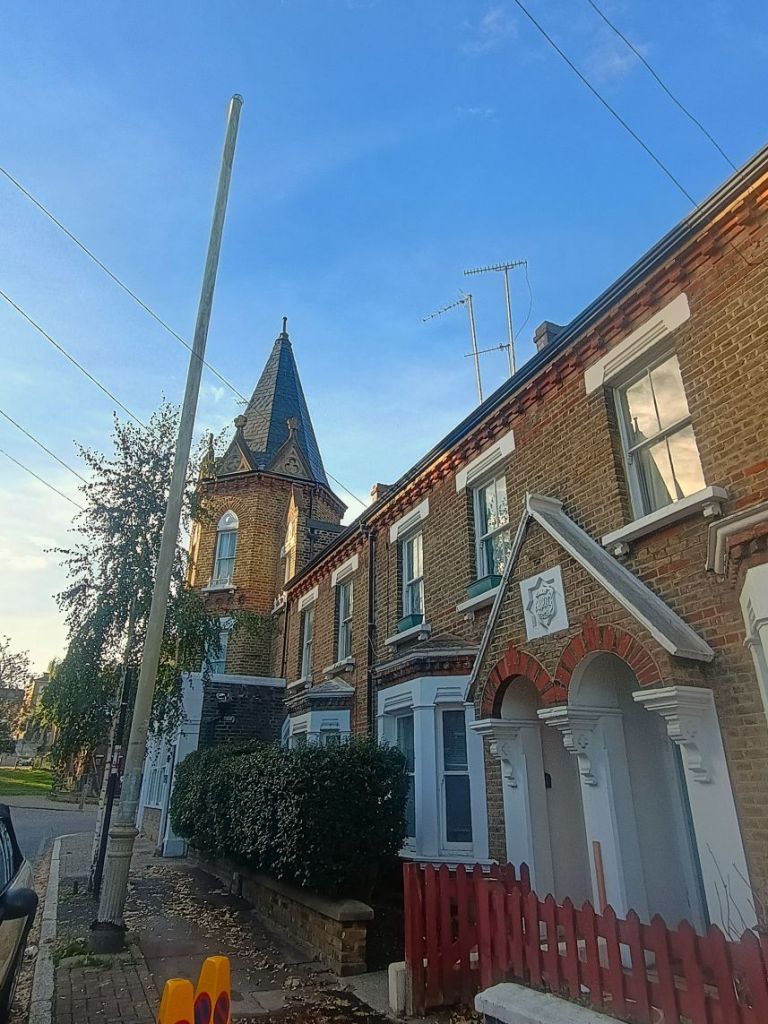
However they could be enormously tall, over ten metres in some cases! Not far away from Latchmere’s mini stink pipe is this XXL stink pipe on Grayshott Road, which seems to have needed to be extra-tall because the house next to it has an unusual turret, and the whole street is at the bottom of a slope.
Going further and using the sewage gas
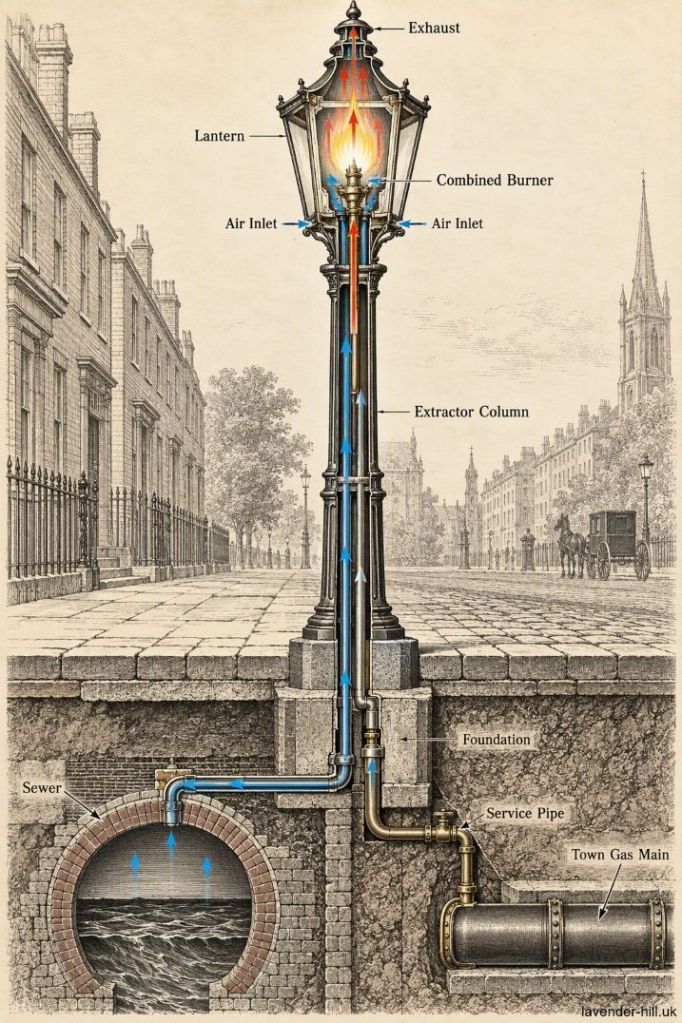
Another inventor, James Webb, designed a street light that would be powered with sewer gas. The original aim was for the lights to be powered solely by burning methane collected with a small dome or collector in the sewer ceiling. It turned out that while there was a reasonable amount of methane in the sewers, it wasn’t concentrated or reliable enough to sustain a constant flame on its own. Webb therefore modified the design so that it would have a gas-powered light fed from the mains gas supply, which created an updraught that would draw out sewer gas that could also feed the flame. There’s still one of these in operation, on Carting Lane close to the Savoy Hotel (as well as a few in Sheffield).
The widely-assumed link between smell and illness didn’t last long (something we’ll be covering in another article imminently – because there’s a little-known but important Battersea connection) – meaning that the need to avoid smells faded pretty quickly. But the need to avoid dangerous and flammable gases building up remained a concern for a long time, and the stink pipes did their job of improving the safety of our sewers.
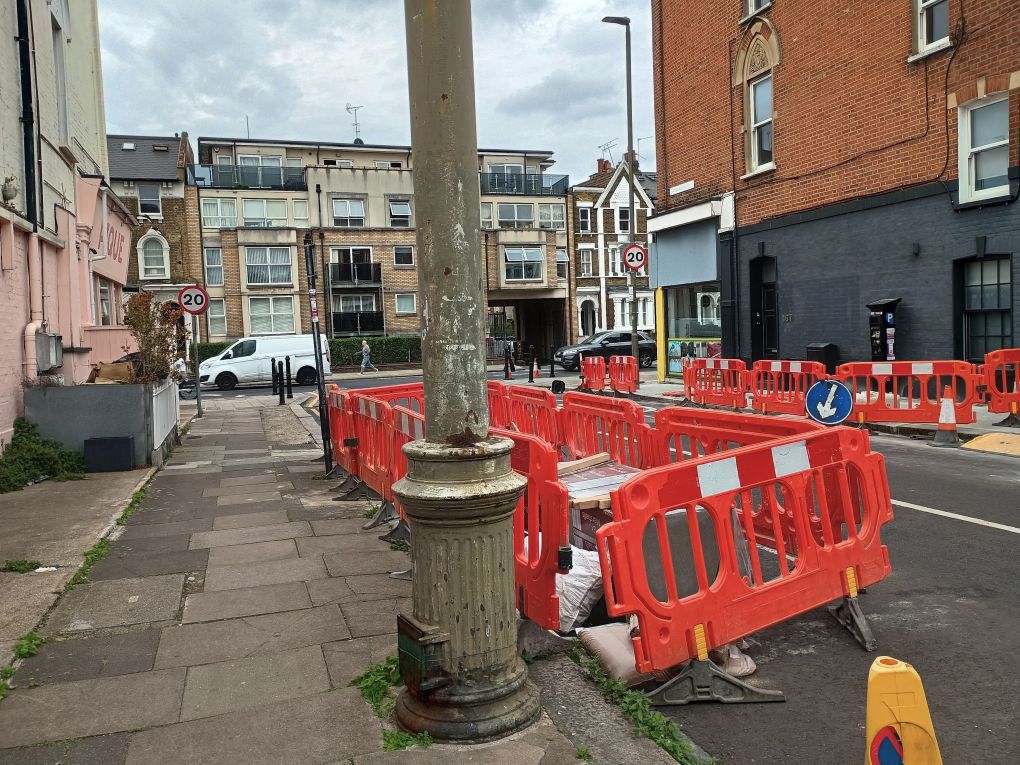
Stink pipes become an orphaned, abandoned bit of street infrastructure
With time, everyone took clean streets and not dying of cholera for granted, and started to forget about the stink pipes. As generation after generation lived alongside them they went from a symbol of civic pride at what had been achieved, to a core bit of infrastructure, to a mysterious old post that of uncertain purpose.
No one really knows who looks after these now – but more often than not, it’s no-one. It’s probably Thames Water, but they don’t seem to care. As our reporting on the neverending series of leaks from their water mains noted, with the whole company on the brink of collapse, stink pipes probably sit fairly low on their priority list. The Stormont Road one is typical of how their condition has decayed – it looks to have last been repainted at some point in the 1980s, there’s lots of deep rust pitting, and the base is full of debris which means it’s unlikely to be doing much sewer ventilation.
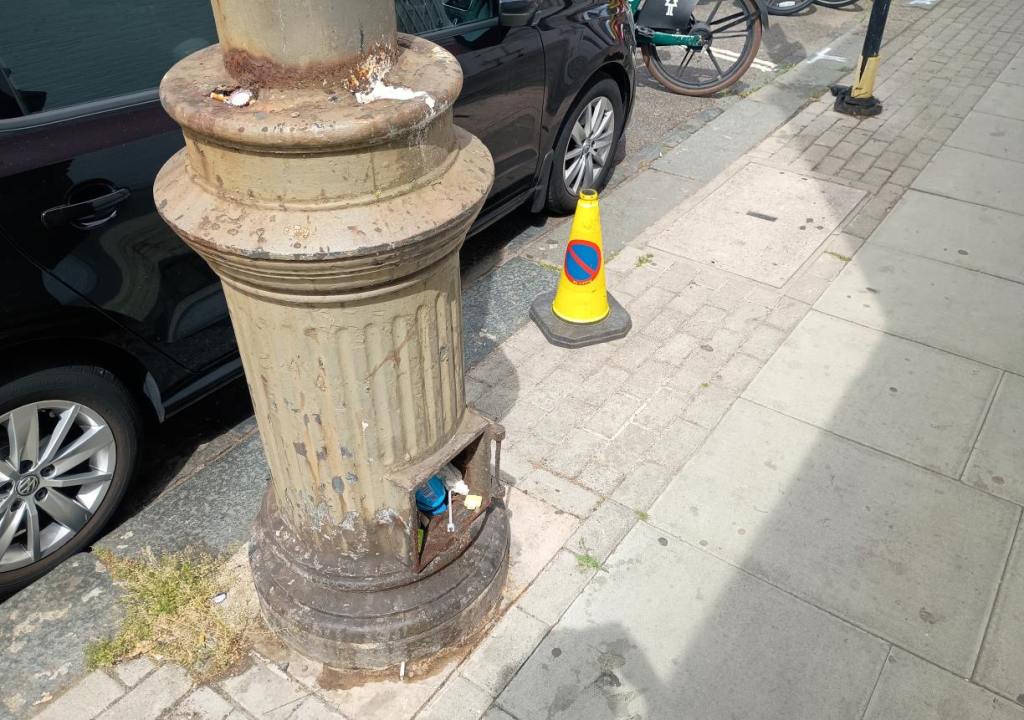
And the stink pipes are proper originals. Street lights are a local Council responsibility – and in the 150 years since the stink pipes were built, we could easily have seen four or five generations of street lamps come and go. Traffic signals and road signs have maybe seen two or three generations (or rather more for the ones that get crashed in to all the time). But the stink pipes have remained in their original form – just as they came out of the Victorian foundries, and aside from a few specially preserved heritage gas lights, they are the oldest bit of street furniture that is still standing.
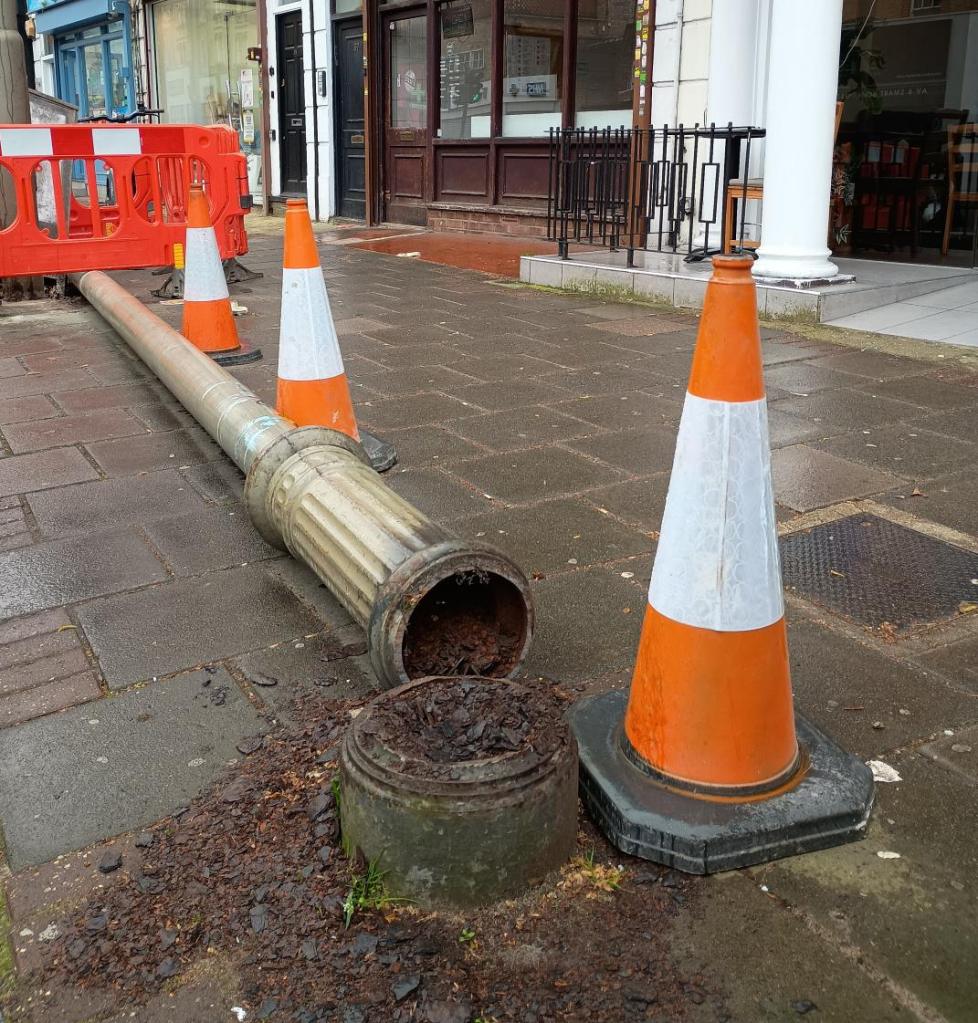
Or mostly still standing. Because the neglect of the stink pipes has got to the stage where even these cast iron stalwarts of the Victorian era are starting to give up the fight.
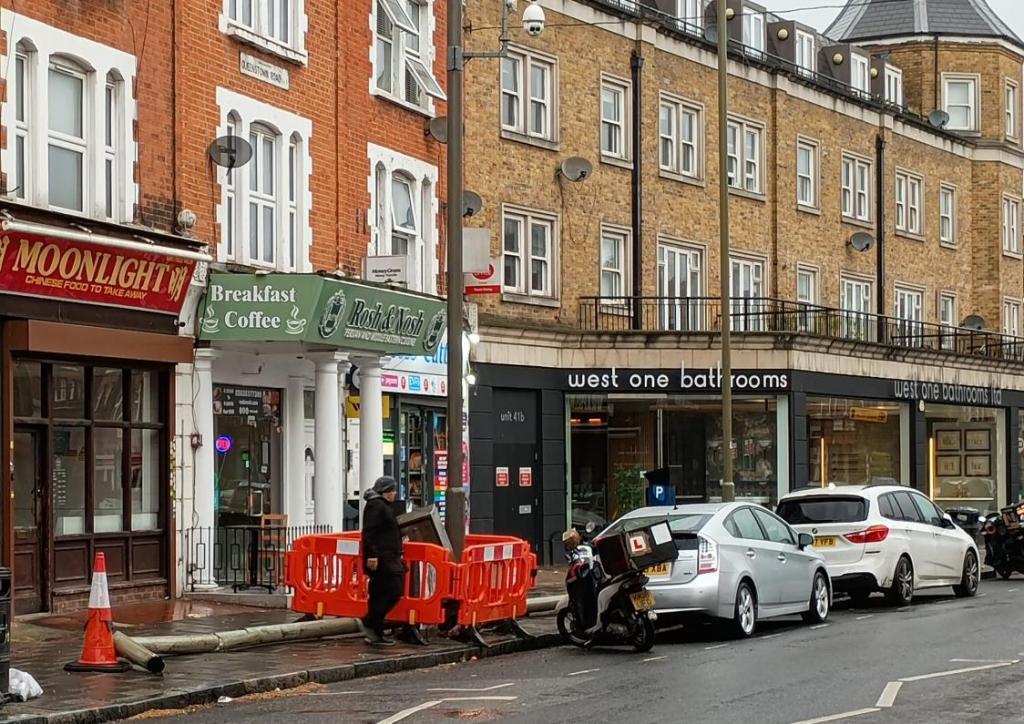
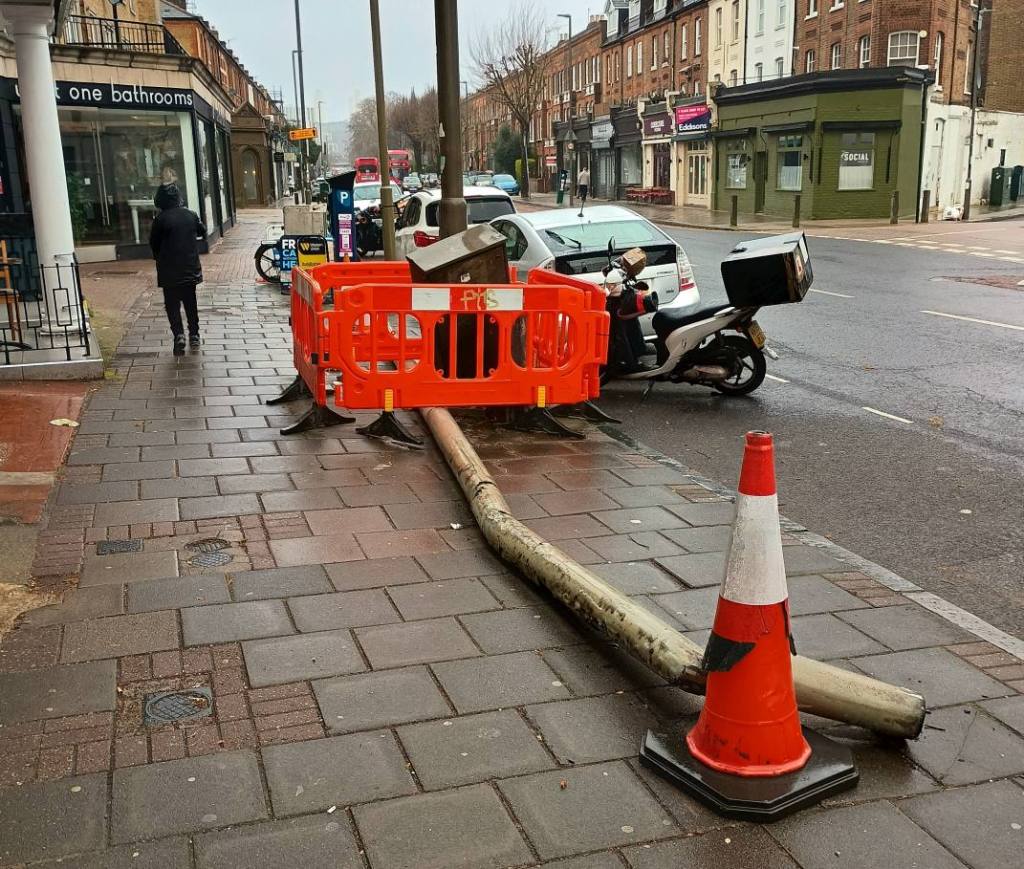
Our photos here show the tragic end of one at the southern end of Queenstown Road, which came down on a stormy evening a couple of months ago. Fortunately its final journey happened to be in the perfect direction – in falling to its grave it missed passing cars, pedestrians, parked cars and the houses next to it – the only casualty was the projecting sign at the Moonlight Chinese takeaway, which was summarily destroyed in the collapse.
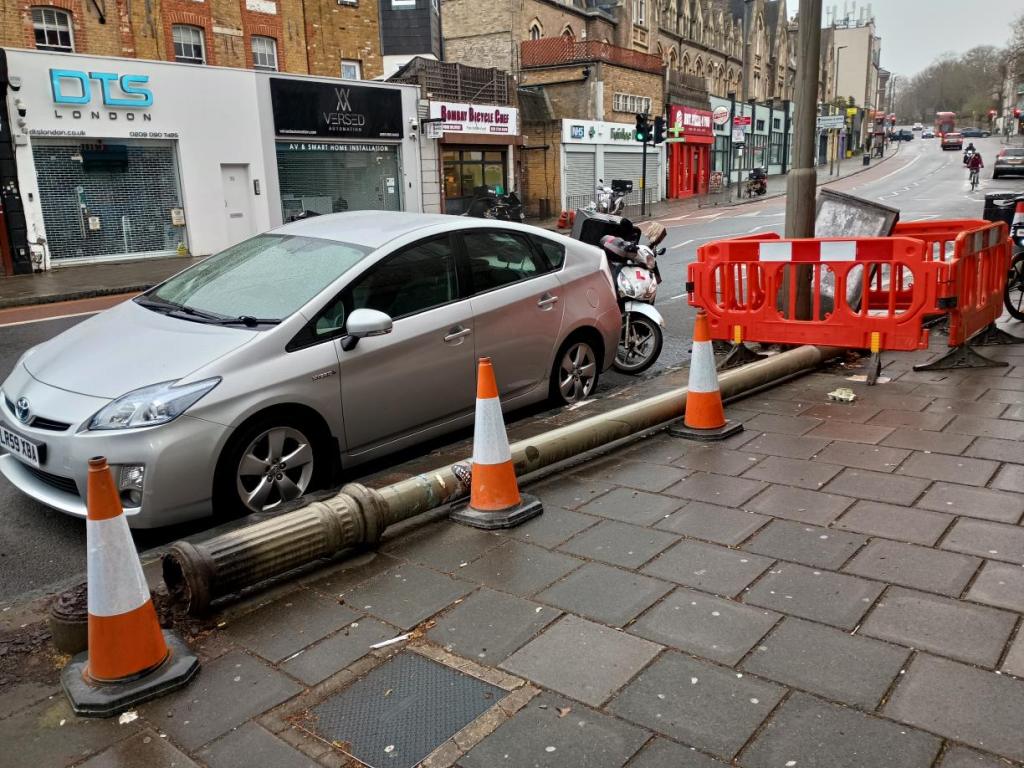
A close look at the wreckage showed just how bad the condition of the pipe was – the interior was a mass of shards of rust, and the cast iron had rusted through so much at street level that it could no longer take the strain. It’s a sad and unceremonious end, after 150 years. We suspect more will see a similar fate – it took quite some time before anyone even worked out who was responsible for clearing up and removing this stricken stink pipe.
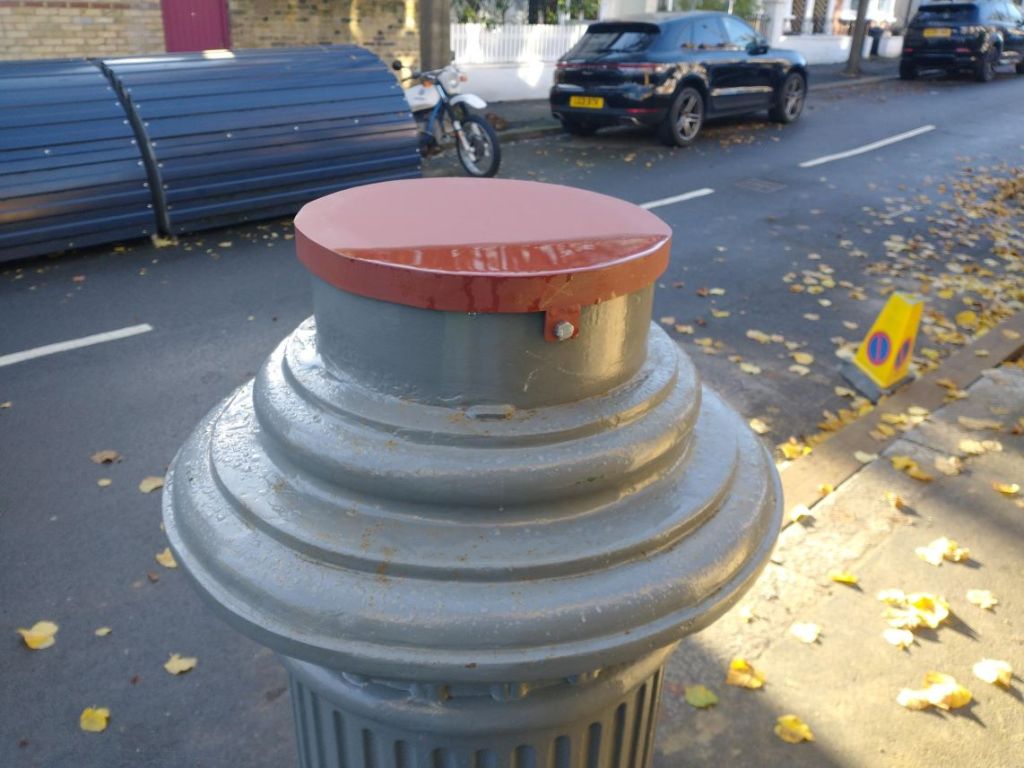
A few others have been reduced in height, seemingly for safety reasons. This extra tall one on Fontarabia Road was recently chopped down to a stump, although the base was cleaned up and repainted at the same time to at least preserve some of the old pipe.
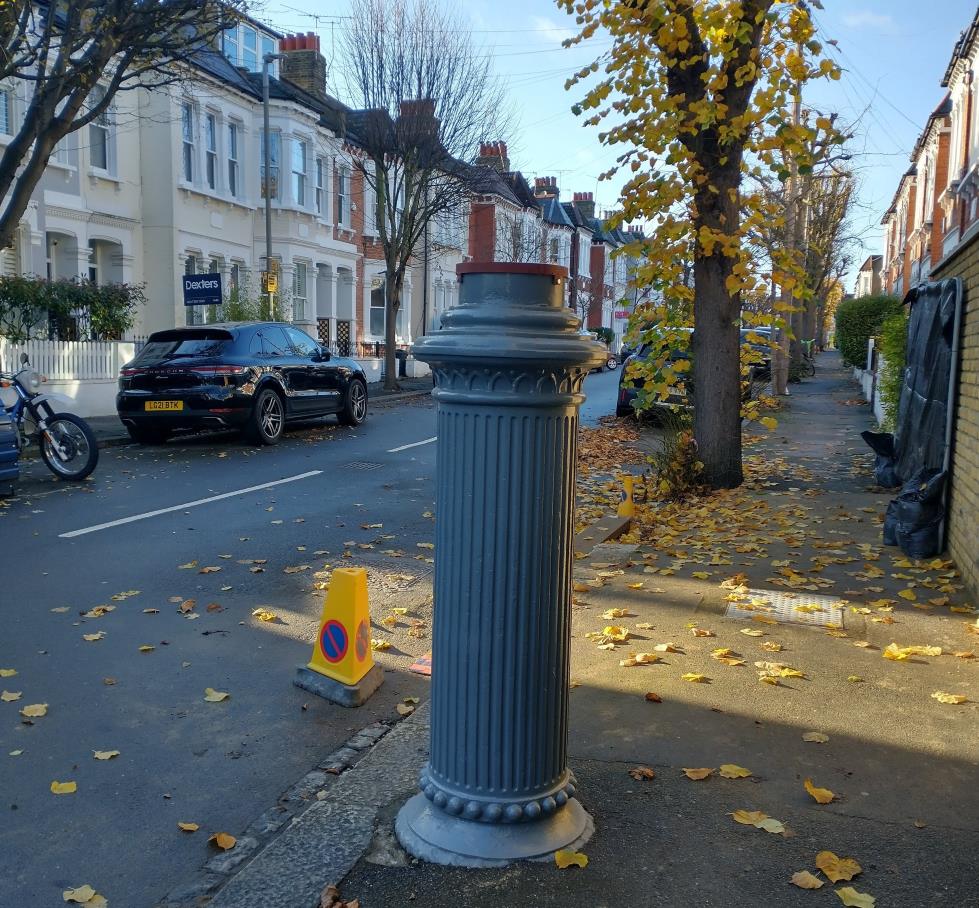
The pipe was also fitted with a cap – recognising that most of these stink pipes are not really doing any ventilating duties any more. This is the only example we’ve seen of this being done, and we believe it was a locally organised effort, rather than something done by Thames Water.
Is the era of the stink pipe coming to an end?
Maybe. A few people make a hobby of tracking down the ones that are still standing. Surviving stink pipes are gaining recognition as artefacts of a heroic Victorian cleanup and public health exercise – three years ago one of them was listed – though as oprphaned infrastructure, there’s not even a reliable database out there of where they all are.
One thing we’re seeing is that as the stink pipes get clogged up with debris and fail, and as house plumbing increasingly also removes the soil stacks in favour of air admittance valves (which let air in, but stop sewage gases emerging – and whose installation is allowed as long as enough traditional soil stacks remain on any particular street), the stink level in sewers is starting to creep up again. Occasionally this seems to be starting to cause headaches – for example in the last week a bike shop in Herne Hill has found that a presumably faulty part of the sewers connecting to the long-lost River Effra, that runs up to Vauxhall, is causing business concerns by emitting horrible sewer smells under the floor of their building.
But things are happening in the world of London’s sewers.
Bazalgette certainly built big, and the sewers handled a tripling of London’s population in the 150 years since they were built. The fact that they’re still running is testament to Bazalgette and the Victorians not doing things by halves. But with the city now heading towards ten million people, the sewage load was getting to be too much even for a heroically visionary sewer system, with overflows becoming a regular occurrence
Over the last decade London has spent five billion pounds building the Thames Tideway Tunnel, or ‘super sewer’ – which is a further 16-mile extra tunnel running up to 70 metres under the river from Acton to Beckton. It catches overflowing sewage from the 34 most polluting discharge points – the places where if Bazalgette’s interceptor tunnels get full, they throw in the towel and overflow in to the river – and takes it directly to Beckton.
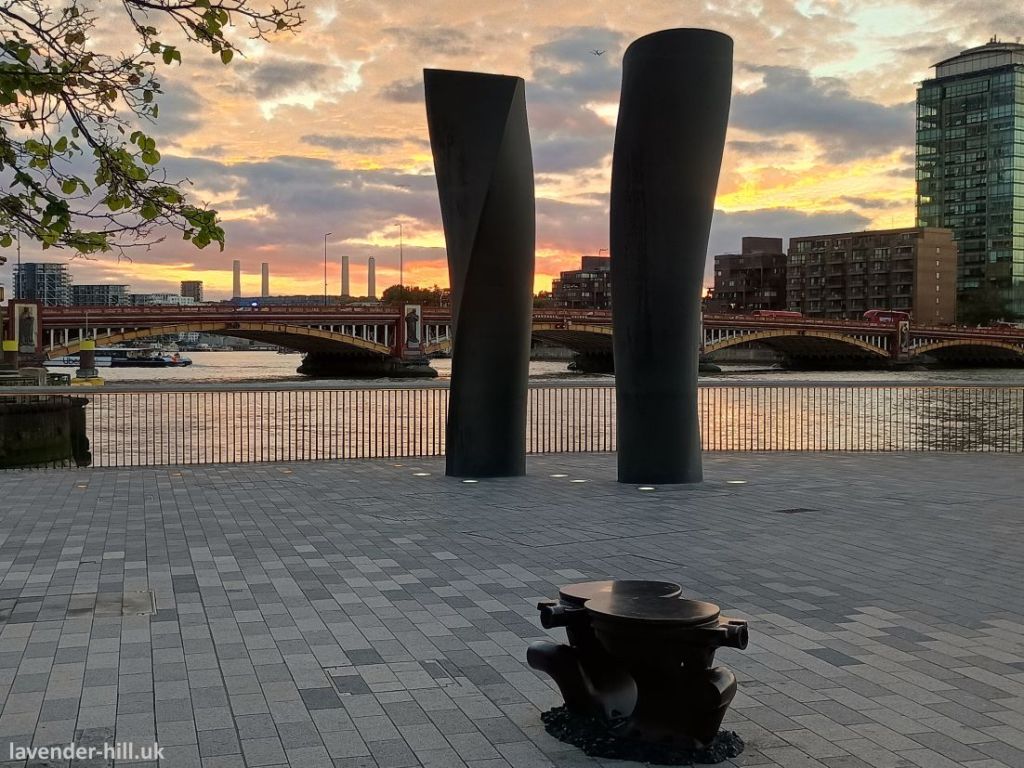
And a deep sewer tunnel is bound to generate some methane – and you all now know how to deal with that problem – it means new stink pipes! With the new sewer mostly running deep under the middle of the Thames, most of the new five-metre-high stink pipes are on little peninsulas built out in to the river, often accompanied by sewer-relevant artwork (the one above is at Vauxhall, and the stink pipes are surrounded by brass replicas of vintage toilet bowls). Where the Victorians went for floral patterns and fluted cast iron, these stink pipes are generally curvy bronze tubes. Nineteen of these new ones have been installed, and there are also some plainer ones also hidden away here and there that look like unusually wide lamp posts.
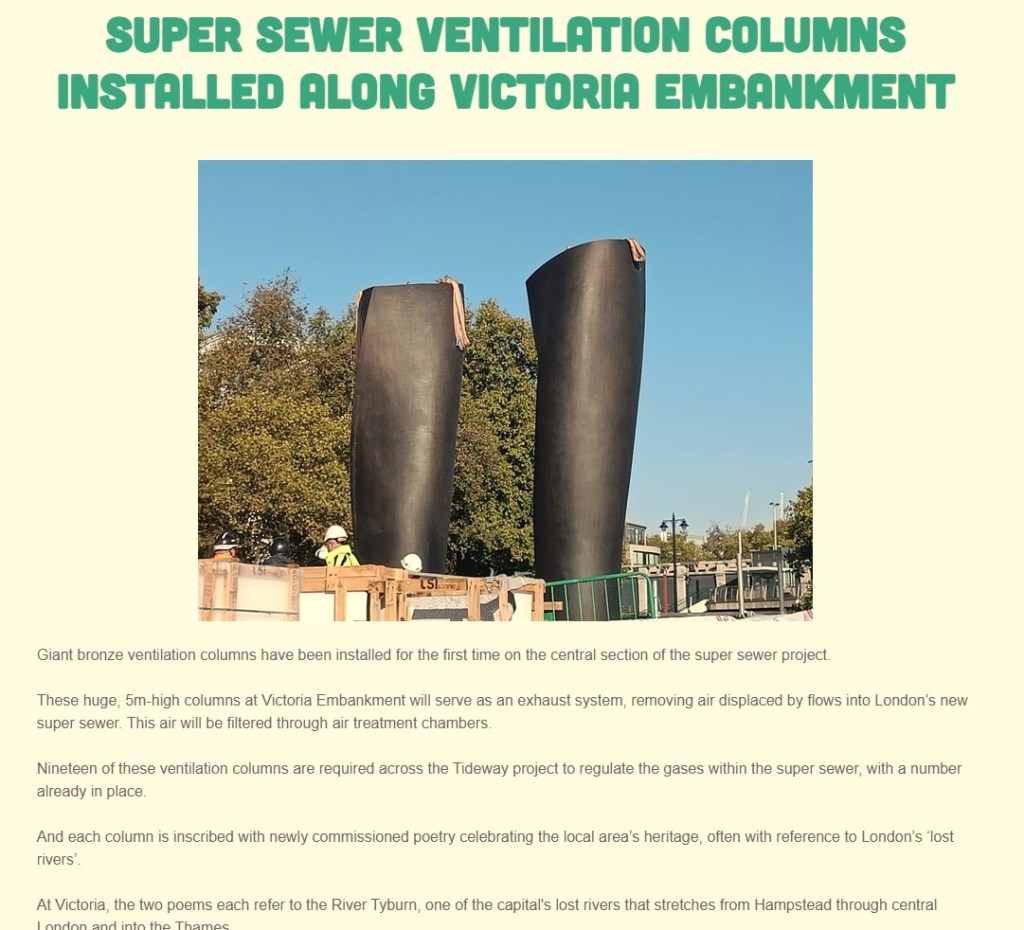
These 21st century stink pipes are more sophisticated and complex ones than their 19th century ancestors, with specialised air treatment chambers containing activated carbon filters and chemical scrubbers designed to strip out as much of the methane and hydrogen sulphide as possible. But at heart they are doing the same thing as the ones dotted around the streets of Battersea. Perhaps fittingly, one pair of these new 21st century stink pipes is at Embankment, next to Bazalgette’s memorial.
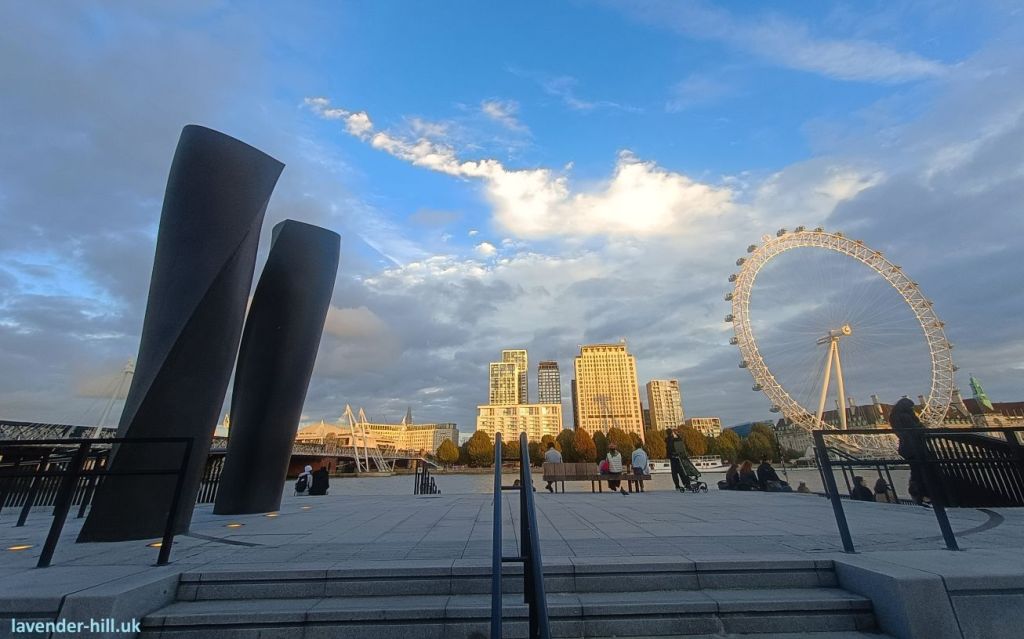
If Bazalgette or Goldsworthy were around today, they’d recognise these architect-designed new stink pipes as doing just what their originals were doing, just with a bit more technology attached – and they’d probably be quietly impressed that it took 150 years and a tripling of the city’s population before we had to make a major addition to their sewer system. Walking round Battersea they might be disappointed at the lack of care we have taken to maintain their stink pipe network. Or maybe, just maybe, they’d be pleased that thanks to their work we’re now living in an environment so free of sewage-linked diseases that almost everyone has forgotten what the stink pipes are for.
This is one of a pair of posts on the rarely covered niche topic of sewage management! Stay tuned for the next one, which is about how one of the biggest ever advances in understanding how to manage sewage and prevent horrible deaths kicked off right here in Battersea. If you found this interesting, you may want to see our article on the similarly worn out network of water pipes that runs under our streets, and increasingly bursts through them. Lavender-hill.uk is a community site covering retail, planning and development and local business issues, centered loosely on the Lavender Hill area in Battersea, with more occasional more detailed articles like this one on local history, and other subjects of community interest. If you found this interesting you may want to sign up to receive new posts (for free) by email – and if you have tips and leads to share, get in touch.


