
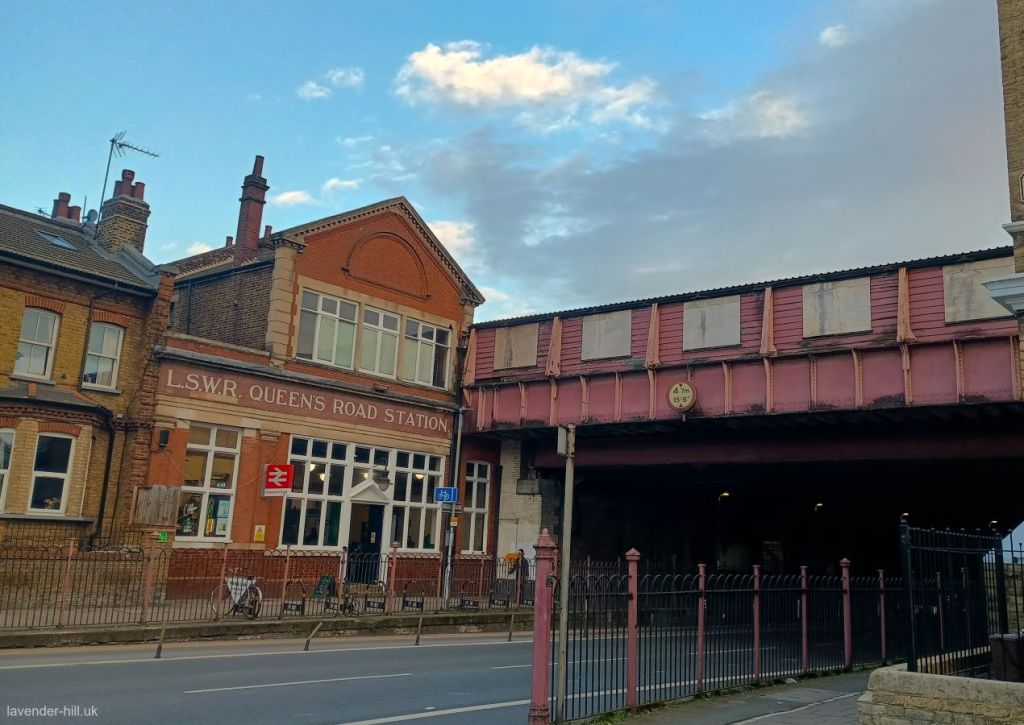
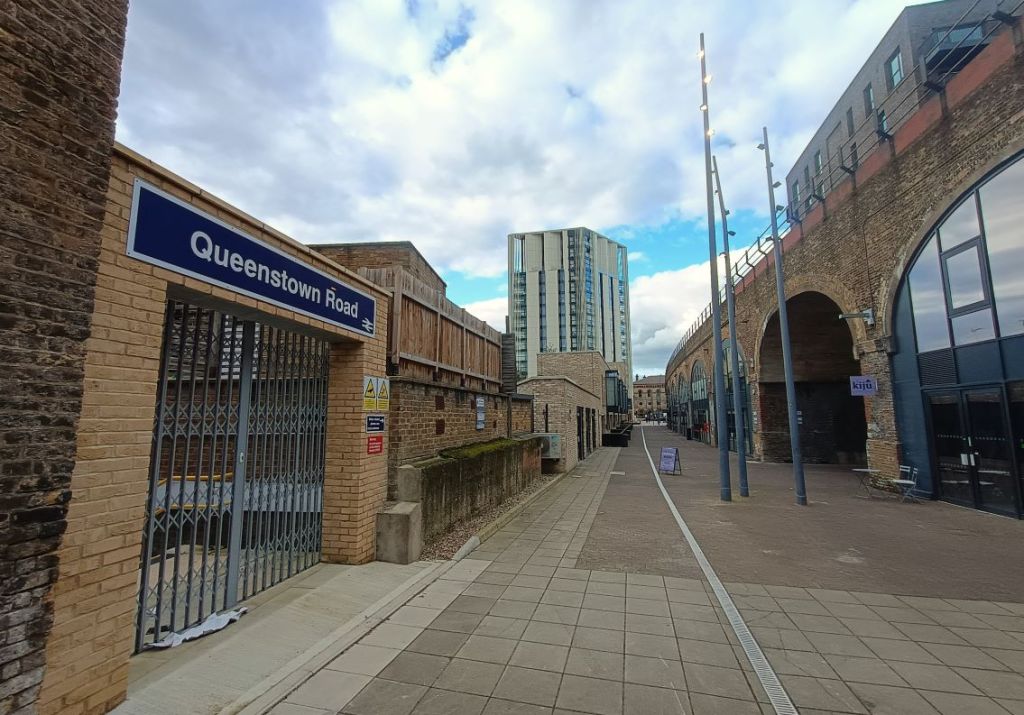
It all seemed so simple. A great big new housing development was going up in Battersea, which would bundle lots of little sites together to create new flats, a completely new building for St Mary’s primary school, shops, restaurants. It would open up lots of previously locked-away space to the public for the first time, including the back wall of Queenstown Road Station. A new road would lead from there to the front of Battersea Park Station – so why not open a new door to give access to the new development? The new entrance would also provide a handy route from Queenstown Road station and the areas around it to the new shops and restaurants, and a handy pedestrian shortcut from Queenstown Road to the areas to the east including the power station and new tube station.
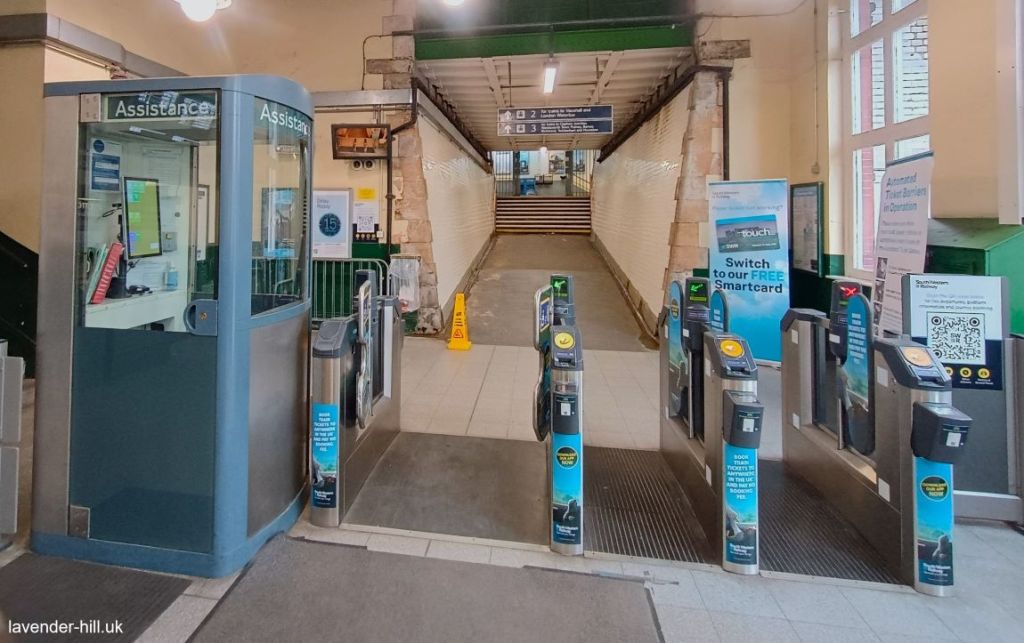
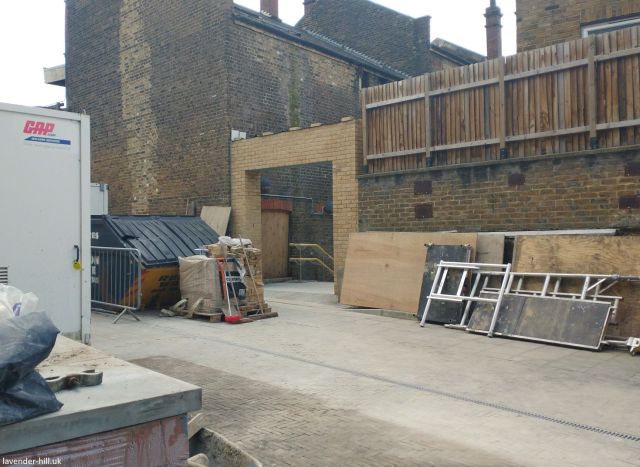
The works were minimal – a low brick wall at the back of the station needed to go, some steps needed building, and an existing door at the back of the station needed to become a bit more access friendly. Taylor Wimpey were leading the housing project, and as one of the country’s biggest builders they know what they’re doing. This was going to be a breeze, everyone would see benefits from the plans – what could possibly go wrong?
Well, in the end, it seemed quite a lot.
The second entrance became a part of the overall development agreement, as a way of ensuring the residents, businesses and school had decent transport access, and also providing some benefit to the wider community. The station is a listed building (which even affects the messy back walls, even though these weren’t really the reason it was listed), but planning permission proved uncontroversial and was granted back in 2014.
The housing development, which was the complicated bit, went very smoothly. And that’s despite it needing a tricky process of assembling dozens of scraps of land, three separate railways, a bundle of different existing buildings some of which needed to be retained, a dozen operational railway arches, and several roads and paths – while also rebuilding a school without disrupting its day to day operations. Someone behind the scenes at Taylor Wimpey did a very good job getting everything together! It sold quickly – everything was gone by 2020 – and from what we hear, residents are happy with what was built. It even made the shortlist for New London Architcture’s award for the best mixed use development.
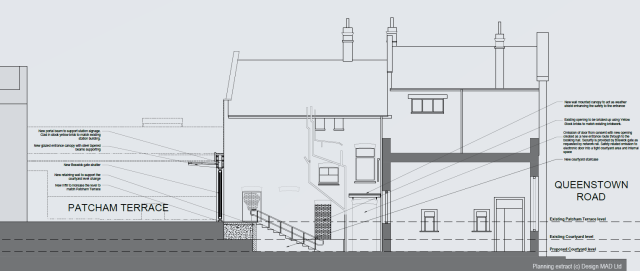
Things went rather more slowly on the second station entrance. Nothing is ever simple on the railways, and working out the details of who would deliver the works took quite some time – the station is managed by South Western Railway, the railway belongs to Network Rail, the rest of the development is Taylor Wimpey, and the funding was partly organised via Wandsworth Council. The 2014 planning application timed out, with no action whatsoever on site, so Taylor Wimpey submitted a new one in 2019 with small tweaks. Still no action followed, but in 2021 another planning application went in with some more tweaks, partly aimed at reducing costs (the planned lift disappeared) and meeting Network Rail design standards (the stairs were made wider), and in 2022 yet another with some more small tweaks.
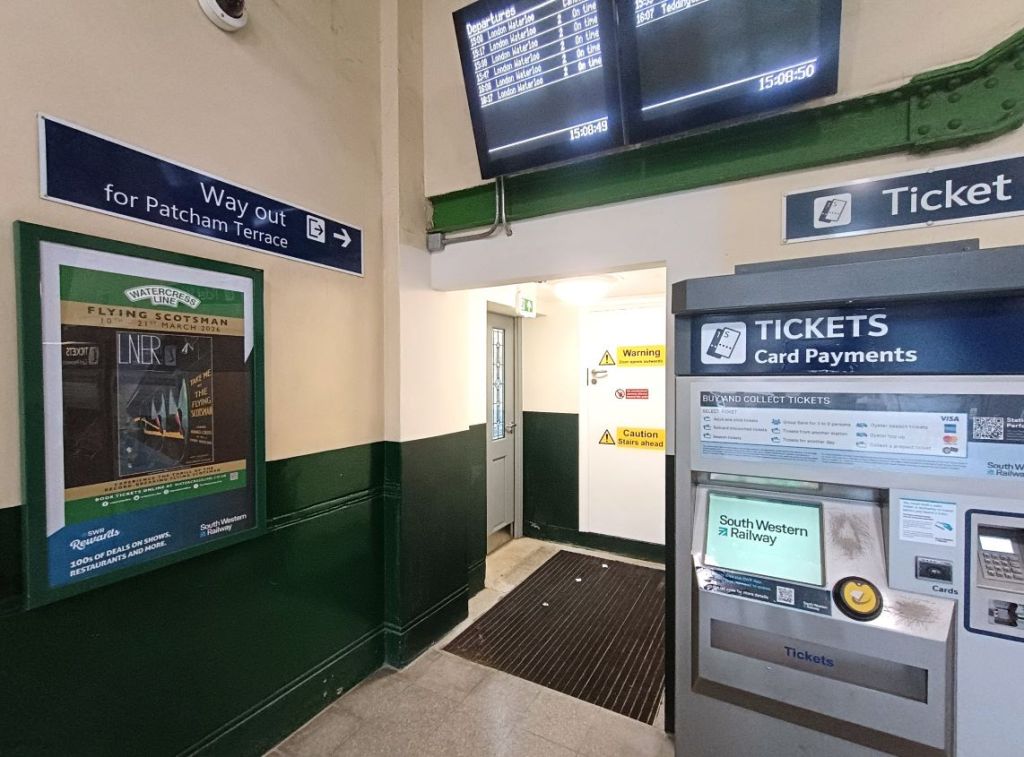
Three years later, in May 2025 (five years after the rest of the development was finished), we reported that building works finally started – and a couple of months later it was all complete. The works are tidy and it was clearly all done to a good standard. The builders, M Group, celebrated completion in July last year – noting that they had been working on behalf of Taylor Wimpey, and had used the expertise of their rail and access team and mechanical and electrical teams to deliver works to the busy station on time – which has included changes to CCTV, moving one toilet and improving an accessible one, changes to drainage and electrical systems, and lowering the ground level outside the back door of the station.
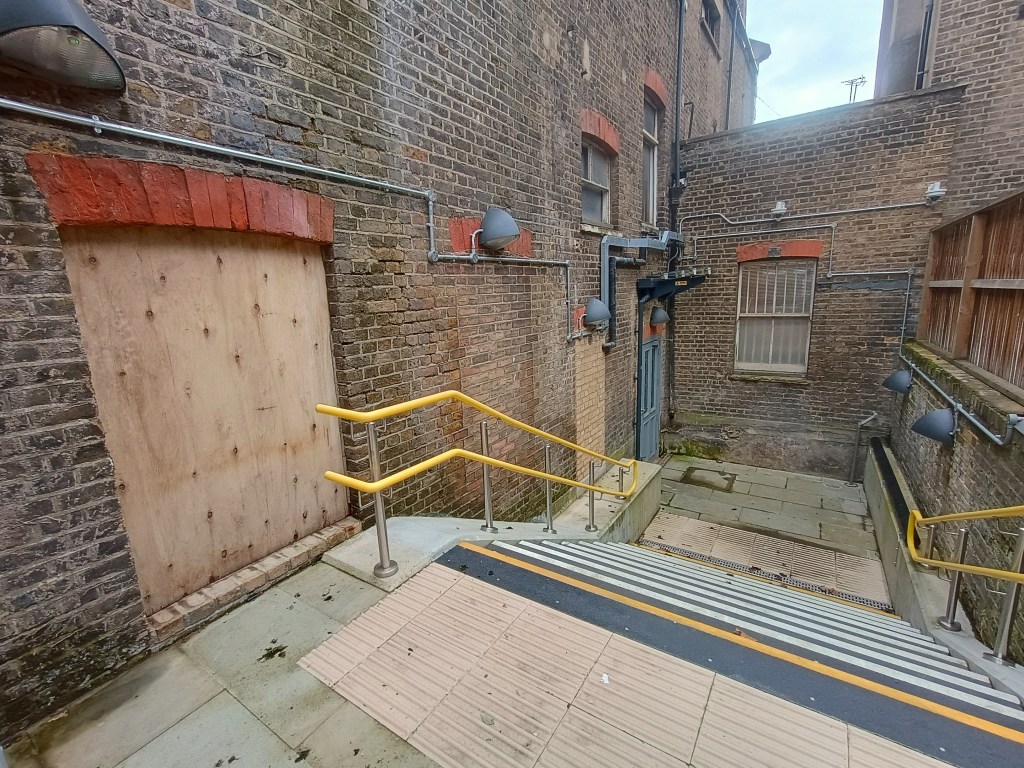
William Carter of M Group, who knew this was a project that had been a long time in the making, commented at the time that ‘We know that the second entrance to the station has been highly anticipated by the public and we hope that the improvements make the station a more enjoyable experience.’ Things would be opening swiftly, and this decade-long project would finally be complete. Yes, it had taken way longer than expected, but at least we were there now – right?
Except that it didn’t open. And more than a year later – well over a decade after the second-entrance plan was first given planning full permission – it still hasn’t opened.
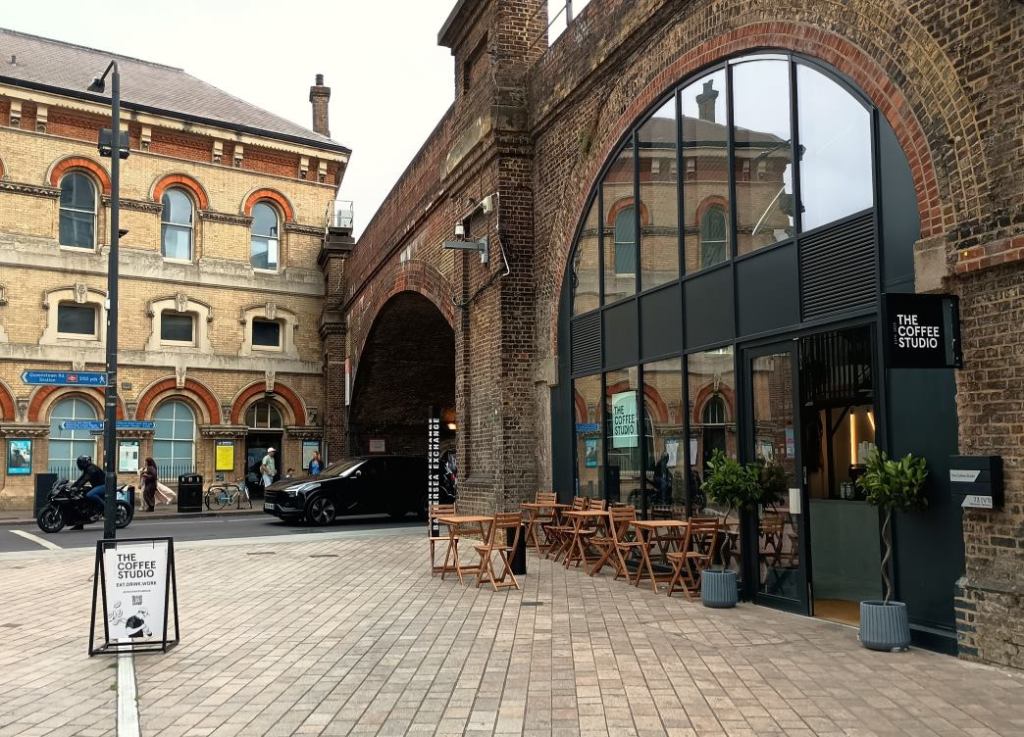
What has opened, though, is a whole row of small businesses in the arches – as the Arch Company (who manage them) – having taken several years to properly get going on leasing here – finally agreed leases on all the arches, and they all went from empty to occupied at more or less the same time. This was arguably the missing ingredient for the development to come to life at street level, and has seen a dozen businesses, most of them independents, det up shop along Patcham Terrace- including the Kutchenhaus kitchen showroom, the Pilates Studio, La Vie clinic, and OnPrint design and print studio. Two cafes at the Battersea Park end of the arches have brought activity to the pedestrian square – with The Coffee Studio opening their second site, after making a success of Greenwich, and Not Another Jungle combining a cafe with an impressive range of less-commonly-seen houseplants.
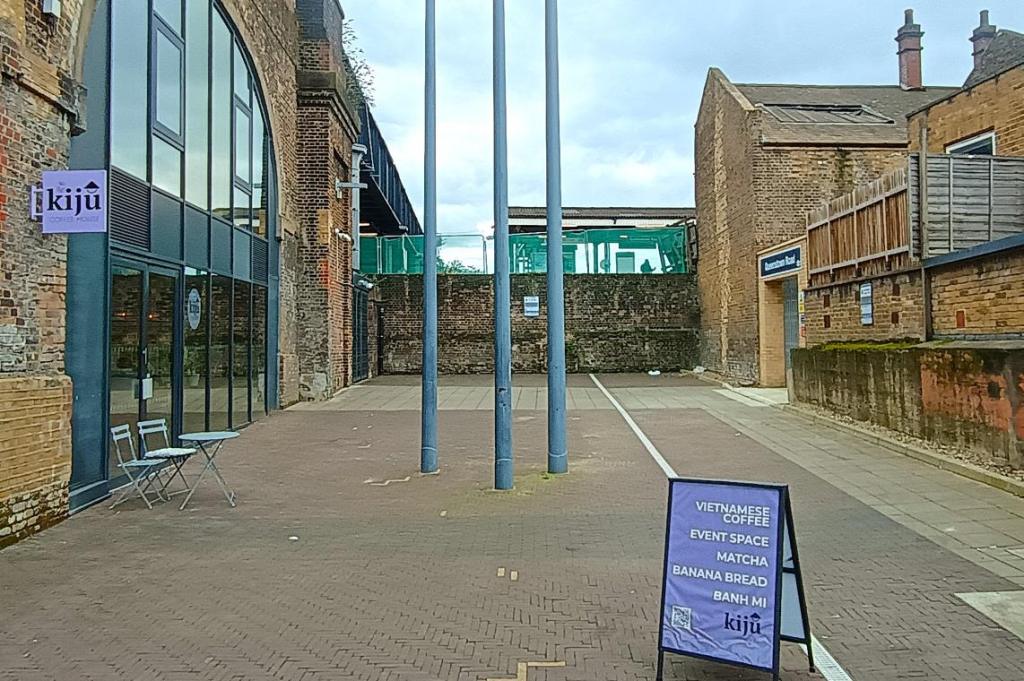
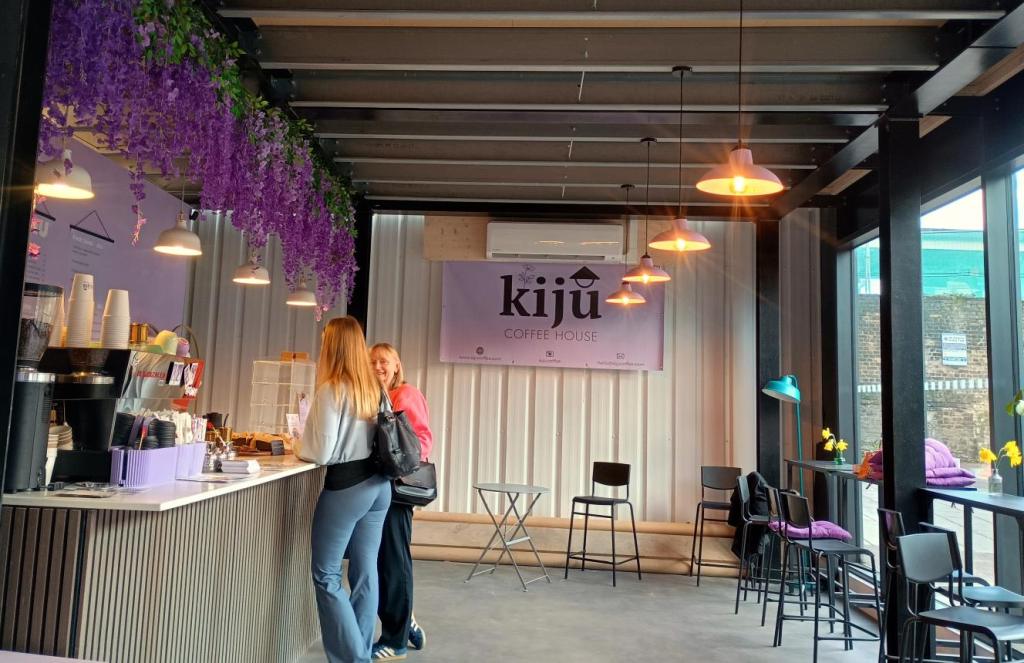
The trouble is, while it’s good to finally see Patcham terrace in business, most of it remains a dead end for pedestrians – which really holds back its potential. Maybe the worst affected is Vietnamese coffee house Kiju – which is something quite different and unique to Battersea, and worth a detour.
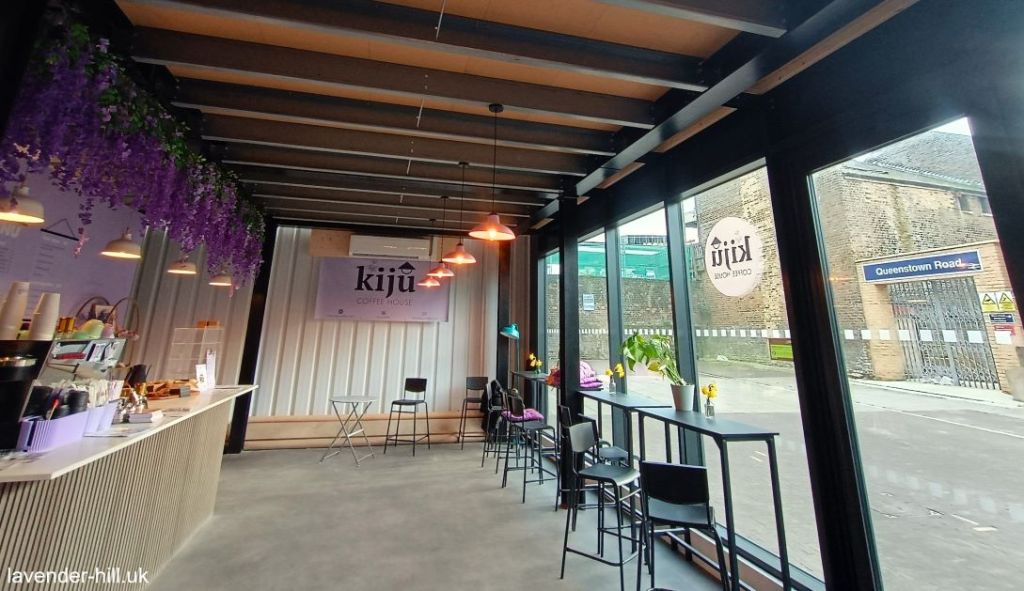
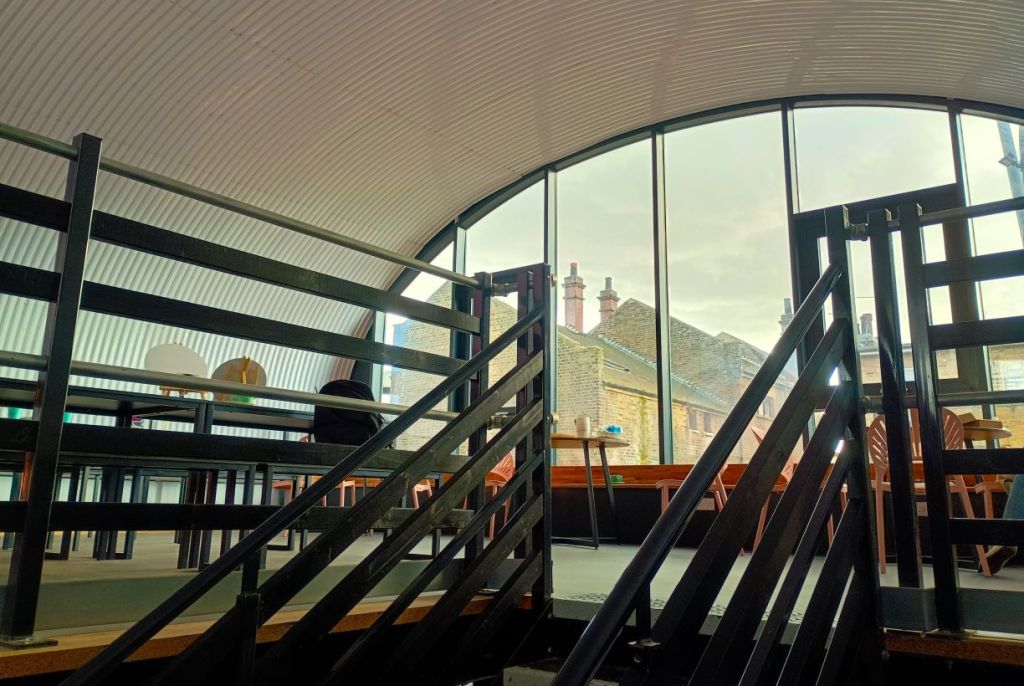
It’s a great space, with a large upper level that is perfect as a quiet workspace, but also hosts art classes and gatherings of all sorts – with excellent natural light and sunset views across the rooftops. As well as direct views of the station and the route through to Queenstown Road that ought to be a source of customers!
So why are we seeing even more delays, after a decade of delays? As far as we can tell, there was an element of paperwork and process involved, which is maybe not surprising: there are usually a lot of management signoffs needed, and everything involving the railway costs more and takes longer than you expect.
But the final sticking point is an unexpected one – and it relates to the concerns of a neighbouring property that the new way in may make a window accessible to miscreants, that was previously less visible and exposed. The precise details are proving a little hard to track down but we think it’s the one on the right, above the wooden fence, in this photo:
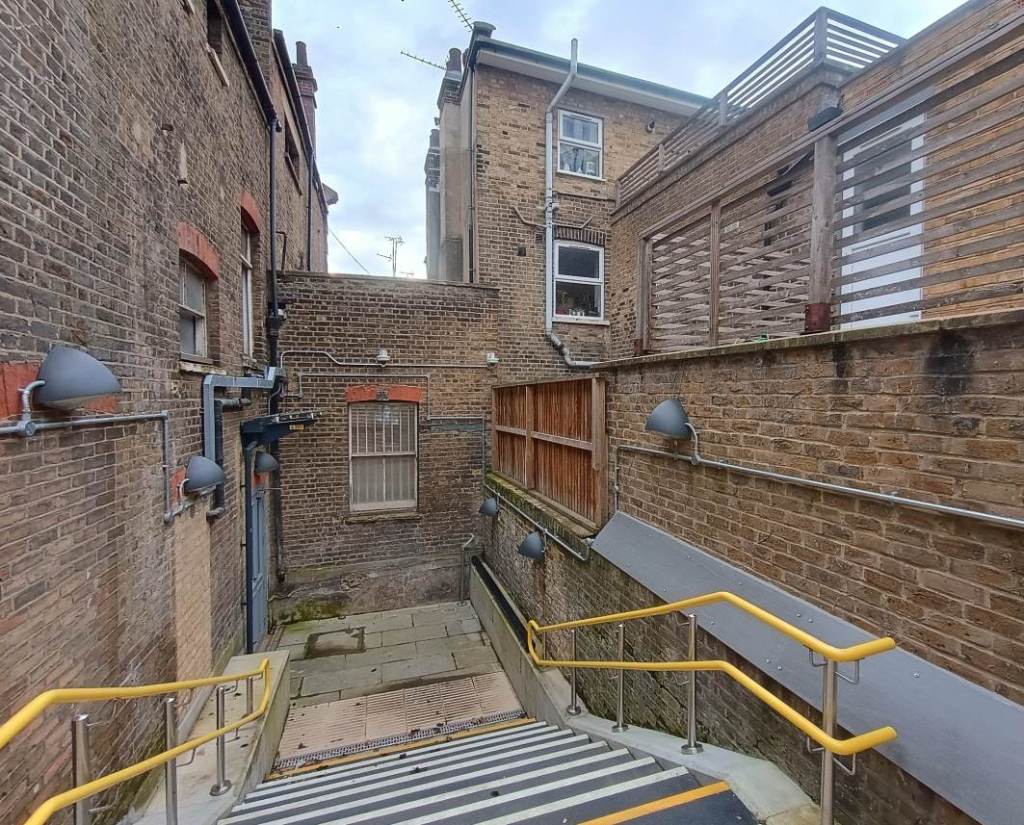
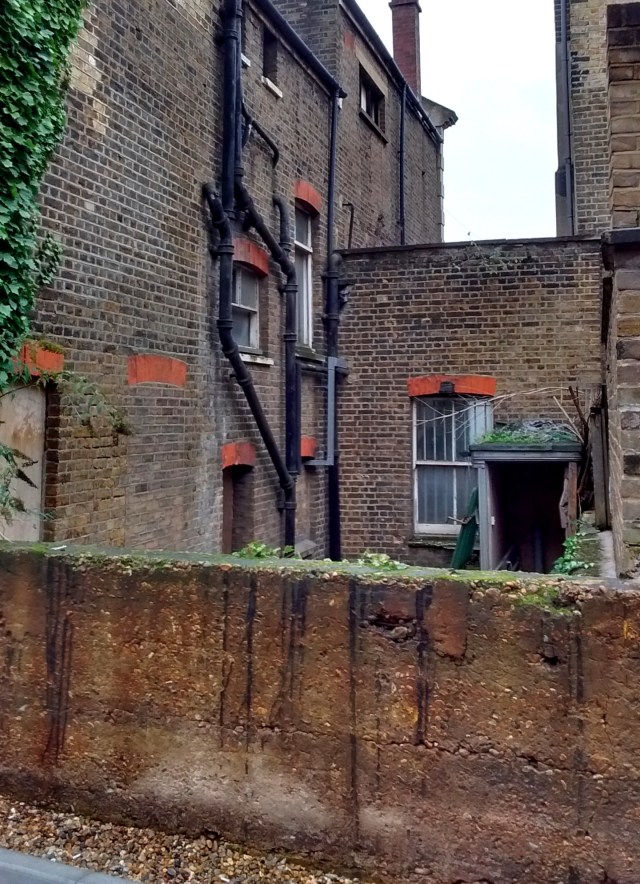
A variety of things have been done at the back to limit access from the new entrance to neighbouring properties, including “security trespass mitigation measures” in the form of a grey slopey panel on the part of the ledge on the right that might be ‘walkable’, and a black ‘roller’ on the lower ledge to make it neither walkable nor something that can be easily sat on.
You could argue that the understandable concerns here haven’t been made any worse by the works – the back wall of the station was previously only waist-height rather than being a large full height sliding gate (as our old photo shows), and the back yard of the station was a shambolic mess of overgrown vegetation complete with a long abandoned outhouse building (which gave rather good access to other houses) rather than a generally well overlooked modern entrance with CCTV throughout.
No one wants the house next door to suffer because of the new entrance, and more could be done if needed: adding a smoother wood panel to the station side of the wooden fence could make it less ladder-like, and a climbing deterrent could go at the top of the fence. All it needs are trip to Wickes and about 30 minutes’ work with a saw and a screwdriver, and boom, we’ll have a more accessible station and a commercial street that is not a strange dead end.
So why – after a decade of delays, and a whole year after the project was (barring maybe a few more burglar deterrent measured) complete – is it taking so long? A sobering thought is that in slightly less time it has taken us to build ten steps in the back garden of a suburban station, China built fifty thousand kilometres of railway and over a thousand stations. Even TfL, who aren’t known for speed, are faster – the Northern Line extension just down the road only started back in 2014, and opened for business seven years later. It does suggest there’s something a little wrong with the way projects like these are delivered: too many different organisations involved in the design, building and running of railway assets, slow and complex processes that slow things down rather than delivering useful outcomes, and maybe a lack of anyone with the mandate to keep things moving.
Will this project ever complete? At this stage it’s anyone’s guess. You can sense the frustration of residents, for some of whom this would be a rather convenient route – and now also of businesses who have invested in good faith and are finding themselves cut off from the station and isolated from a lot of their potential customer base. Information on this fiasco (and we think it’s fair to call it a fiasco now) has become harder and harder to get hold of, with a faint sense of everyone hoping it is someone else’s problem. Maybe someone will manage to solve this – or maybe this entrance will be forever locked.
But do visit the businesses on Patcham Terrace, even if it means going the long way round – it’;’s worth the detour.
Lavender-hill.uk is a community site covering retail, planning and development and local business issues, and sometimes posts like this one on transport, centered on the Lavender Hill area in Battersea. We sometimes also post more detailed articles on local history. We have reported on Queenstown Road Station a fair few times over the years. If you found this interesting you may want to sign up to receive new posts (for free) by email – and if you have tips and leads to share, and especially any insider information on what is going on behind the scenes at the station, get in touch.

