
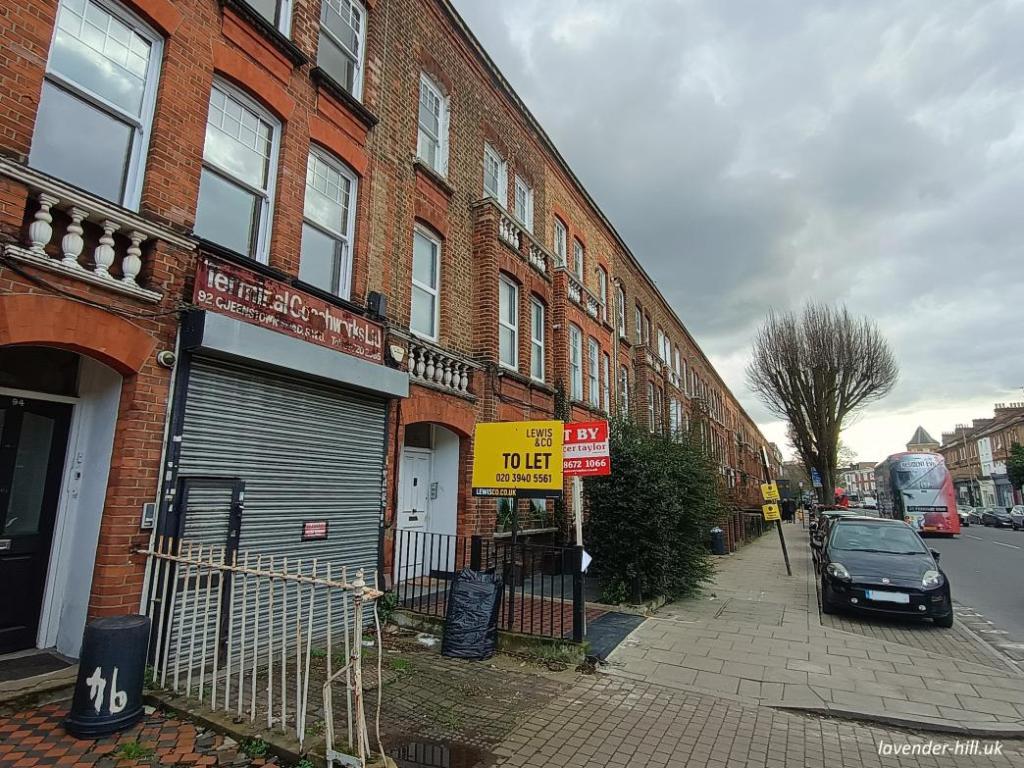
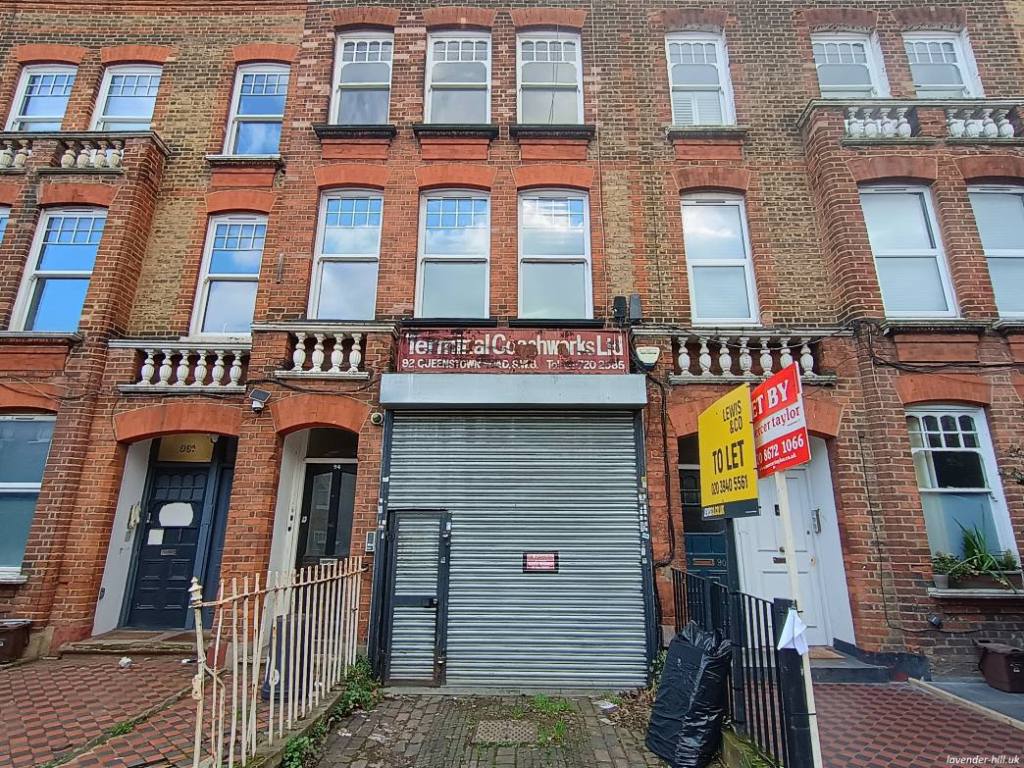
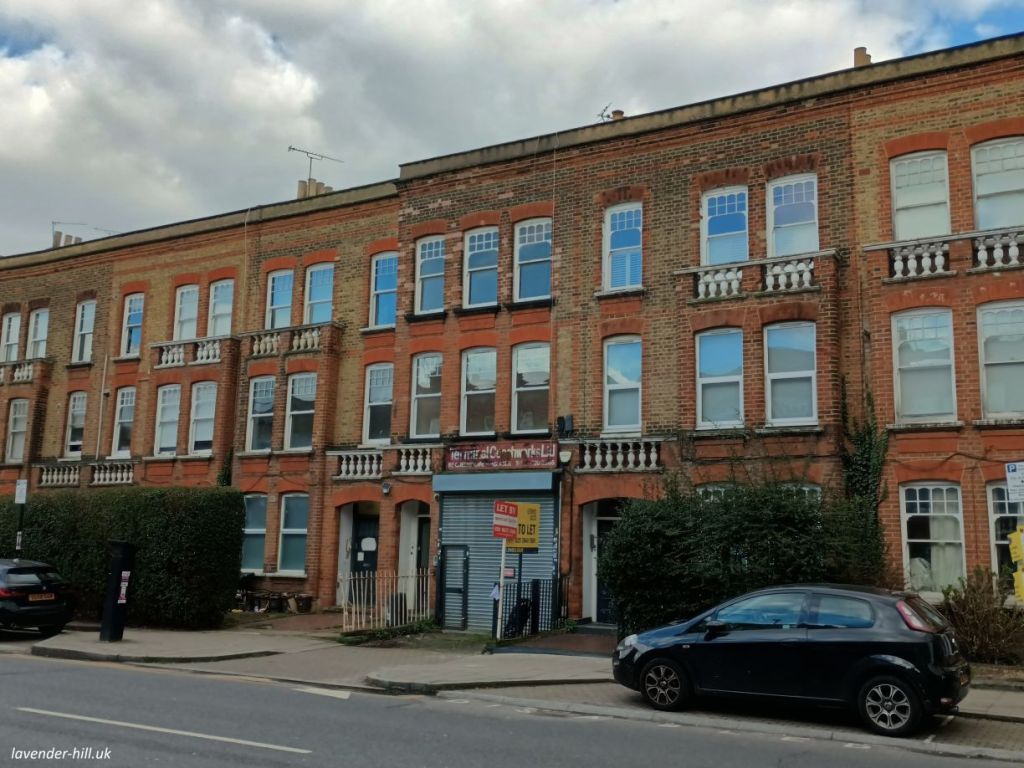
Part way along Queenstown Road, a grey roller shutter looks a bit out of place among the Victorian mansion flats. A faded sign for Terminal Coachworks hints to its former use, having spent many years as a vehicle maintenance yard, the home of Queenstown Car Restoration Ltd, run by Darrell Joseph who specialised in restoring quality classic cars – with a notable focus on early Jaguars.
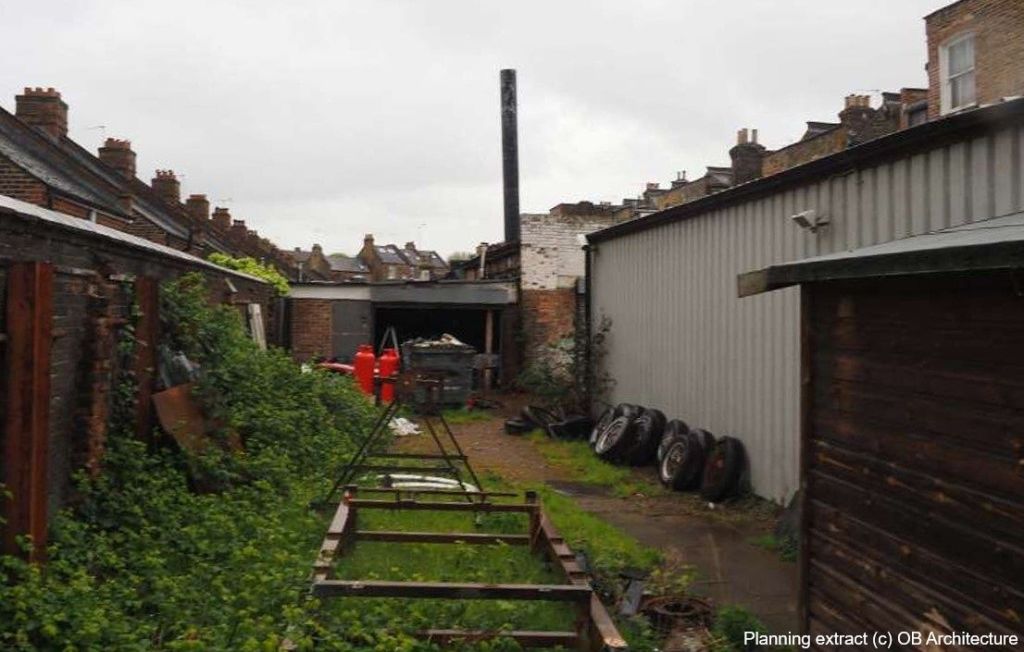
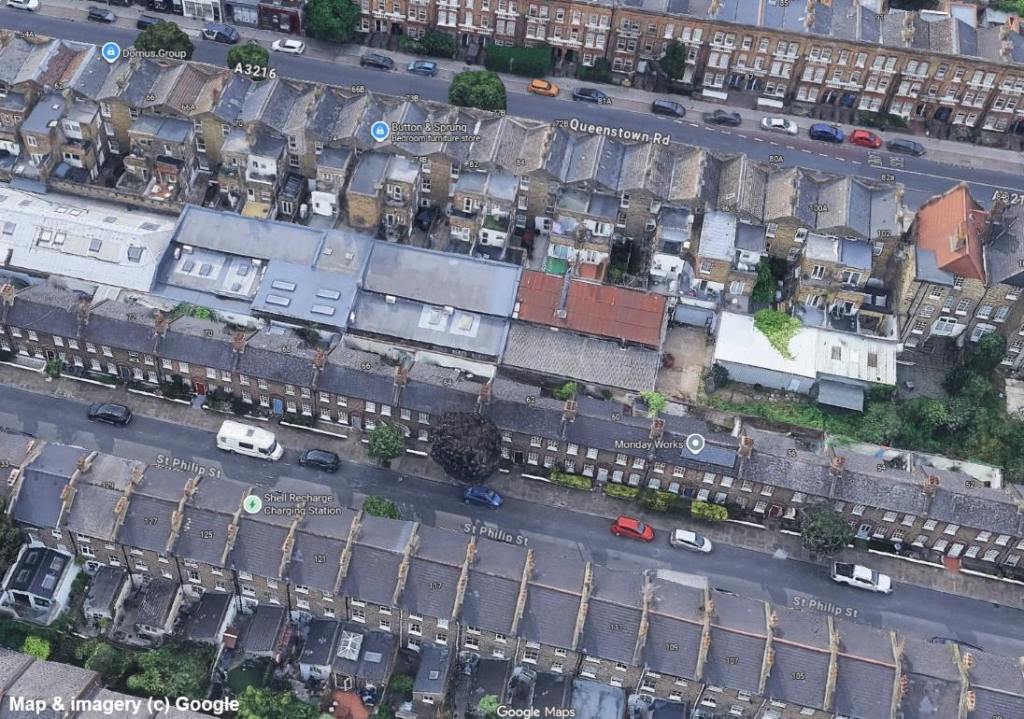
Behind the shutter, a narrow passageway opens up to a fairly large industrial area. These back yards have long seemed a strange choice when the area was originally built up – the spaces are awkward, completely surrounded by housing with only one fairly narrow access point, and would have been more usefully attached to the flats themselves which have very little outside space – but they do seem to have been a deliberate feature when these flats were originally built. There are several of these back yards along the street, the others have more modern buildings in them and are in use as the Domus (a tile showroom) and Button & Sprung (a bed and mattress showroom). Rather unusually, one of the yards is in use as allotment gardens.
After a century and a half of business use, plans are now in to build a terrace of six houses on the site. The developers note that they have tried for a while to let the site without seeing much interest, and it seems they also recognise that the rather basic state of the current buildings means it would need a lot of investment to really work for the sort of company that is currently looking to locate in Battersea – more akin to the development we have occasionally reported on in Culvert Road.
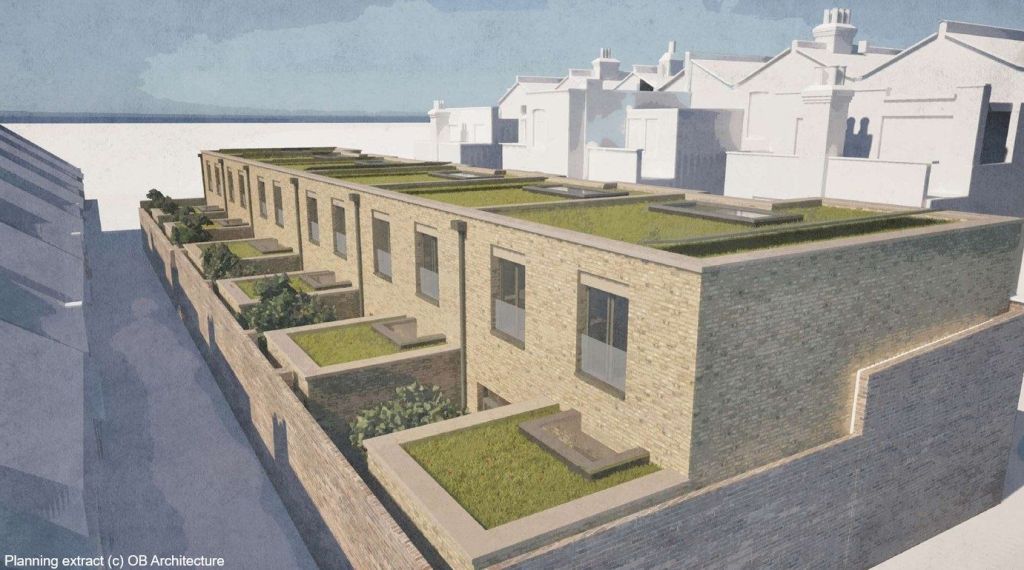
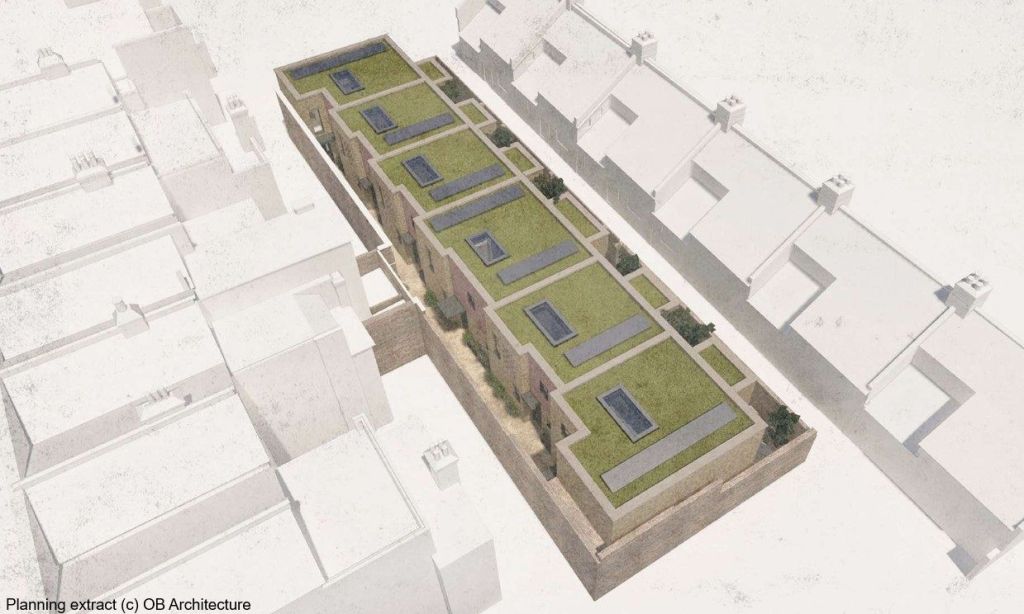
The artists’ impression below shows what the houses would look like; each would have a small courtyard garden (between ten and fifteen square metres), and there’d be a flat roof to try and minimise the effect on the light at the existing houses and flats either side of the development. Four of the houses are two bedrooms, while the ones at either end are slightly larger and have three bedrooms; the layout is fairly conventional with an open plan kitchen / living space on the ground floor and bedrooms above.
Access to the new houses would be via the existing archway, with a walkway running along to the houses. The plans say this walkway will include planters and shade-tolerant climbing plants to add a bit of greenery (though these aspects are, in our experience, usually ignored and not delivered once planning goes through – we have reported a few times on the battle to get the landscaping at nearby Avery Walk delivered to the standards the developers initially promised, which was ultimately successful, and similar issues arose at a development on Taybridge Road). Bin and cycle storage would go in the archway. One tricky design issue is fire safety, given the development is quiet hard to get to and only has one access and escape point; the plan is therefore to have sprinkler systems throughout.
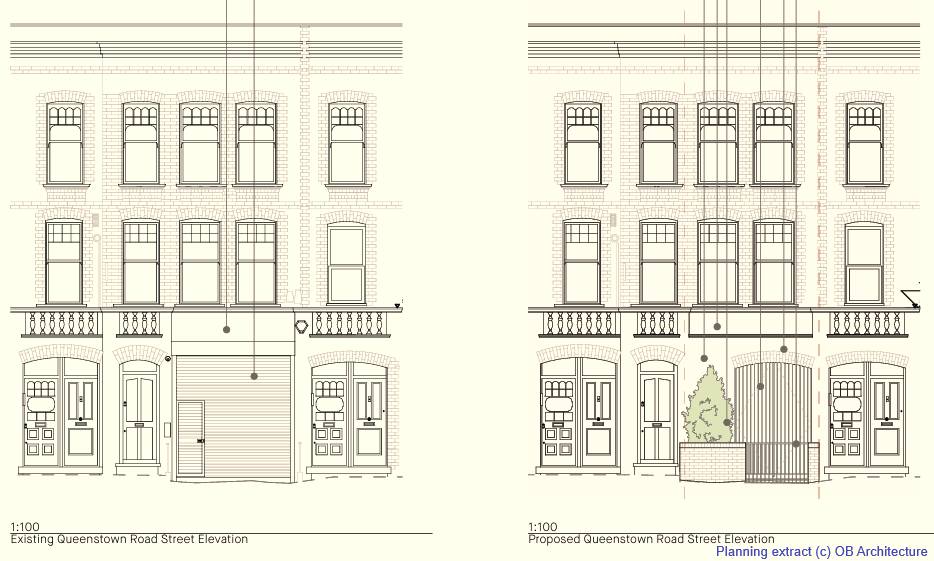
This development is not likely to even get noticed by most of us – and probably won’t be especially controversial. For those of us who don’t live right next to the site, the main effect will be a slight tidying up of the entrance – with a gate that’s more coherent with the rest of the building, and a small planted area. Adding six houses isn’t going to suddenly overwhelm local schools, doctors or wider services. A development this size won’t move the dial in terms of local housing need either – but these houses look broadly decent and at a time of significant housing pressure, where (as we have reported on estate redevelopments) larger builders are really struggling to make the sums add up in London, smaller and more deliverable projects like this can hopefully provide a good homes.
So far the plans have received a handful of comments, from neighbours who are the most affected – noting the need for clarity on precise heights and distances between properties, expressing concerns that the houses (which will be taller than the existing workshops, and include first floor windows) could overshadow neighbouring properties and reduce privacy, and asking for the proposed air source heat pumps to be designed to minimise noise in a tight urban context. Several also note that the demolition and construction in a context where lots of old and potentially fragile neighbouring buildings are connected to each other needs very careful handling.
The Battersea Society generally support the plans – but echo the point that careful thought needs to be given to the quality and maintenance arrangements for the proposed new boundary walls. Consultees also express concern about the development’s impact on car parking, and the plans here are frustratingly unclear: there is supposedly a transport statement as part of the application (which might suggest it is proposed to be ‘car free’ other than disabled spaces – a common approach for new developments) but we can’t tell because the transport statement seems to have been incorrectly loaded in to the planning database and generates a ‘server error’.
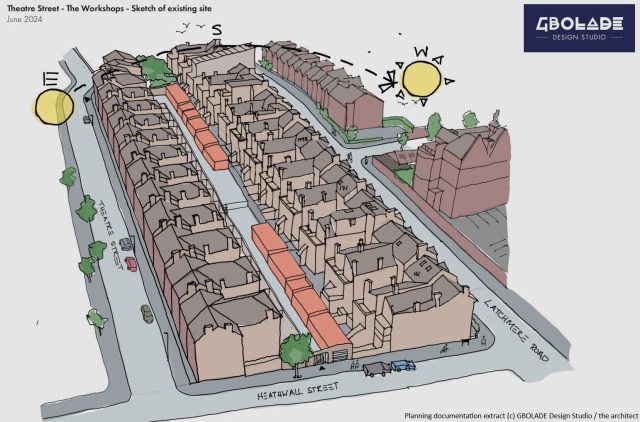
Building houses in a space as tight and hidden away as this is unusual – but increasingly common in Battersea. A year ago we covered a similar site next to Battersea Arts Centre that was in scope for conversion from a series of small workshops that are spread along a thin passageway, almost completely hidden from every angle, again to six small houses.
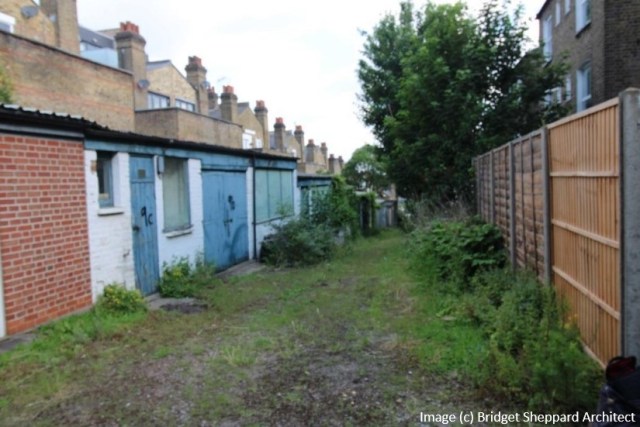
As we suspected would happen, this ended up being more of a ‘rebuild’ than a ‘refurbishment’ – because while it is generally a bit easier to get planning permission if you already have a building of more or less the same shape and size on site, there’s no way it would ever be cost effective to upgrade those old buildings – which were little more than garages and sheds – to current energy efficiency standards!
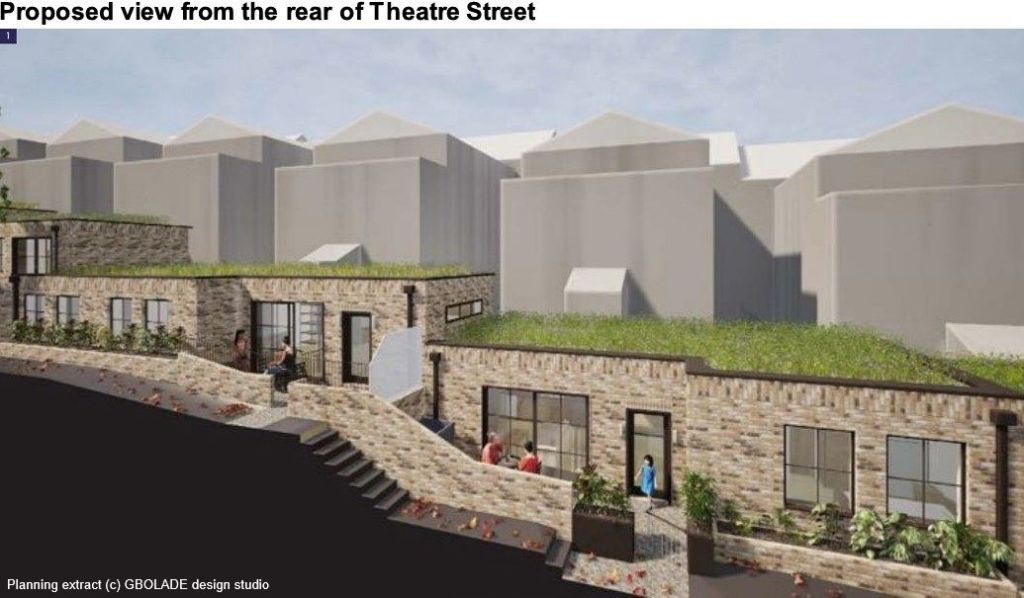
Plans to retain the structures were dropped as soon as planning was received, in favour of a new build effort with houses to more or less the same layout. In another more-or-less-expected move, the developers also put in another proposal to build two more houses in a space in the middle of the development that had not previously had buildings on it, pictured above, which was also approved.
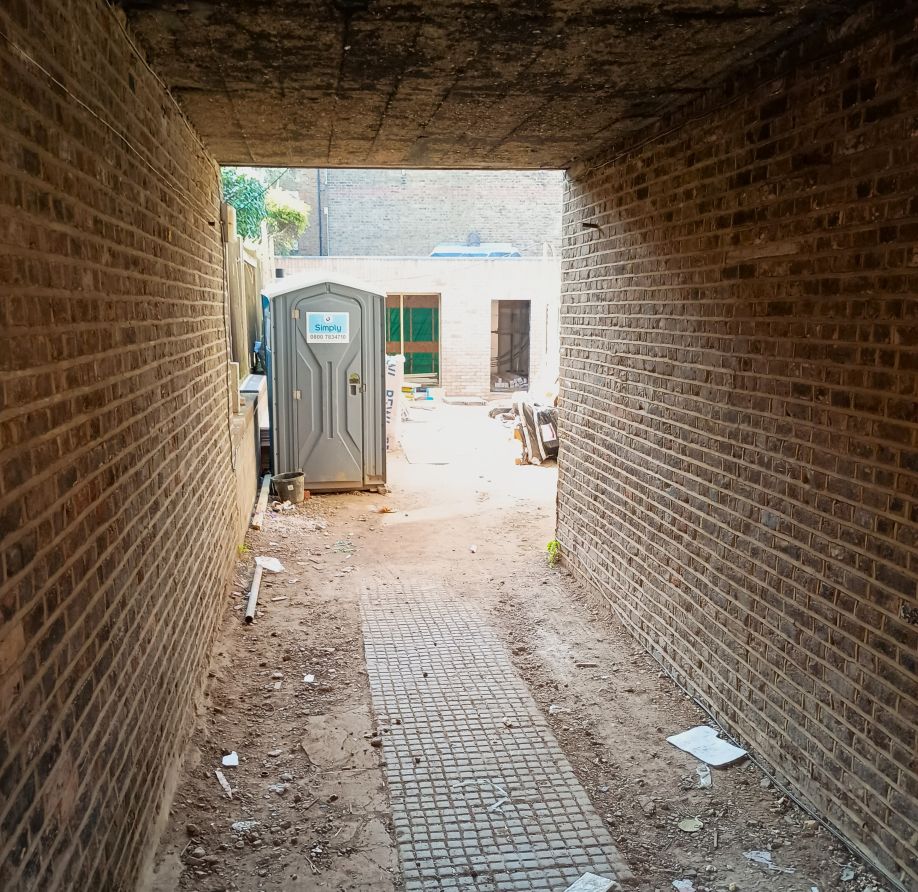
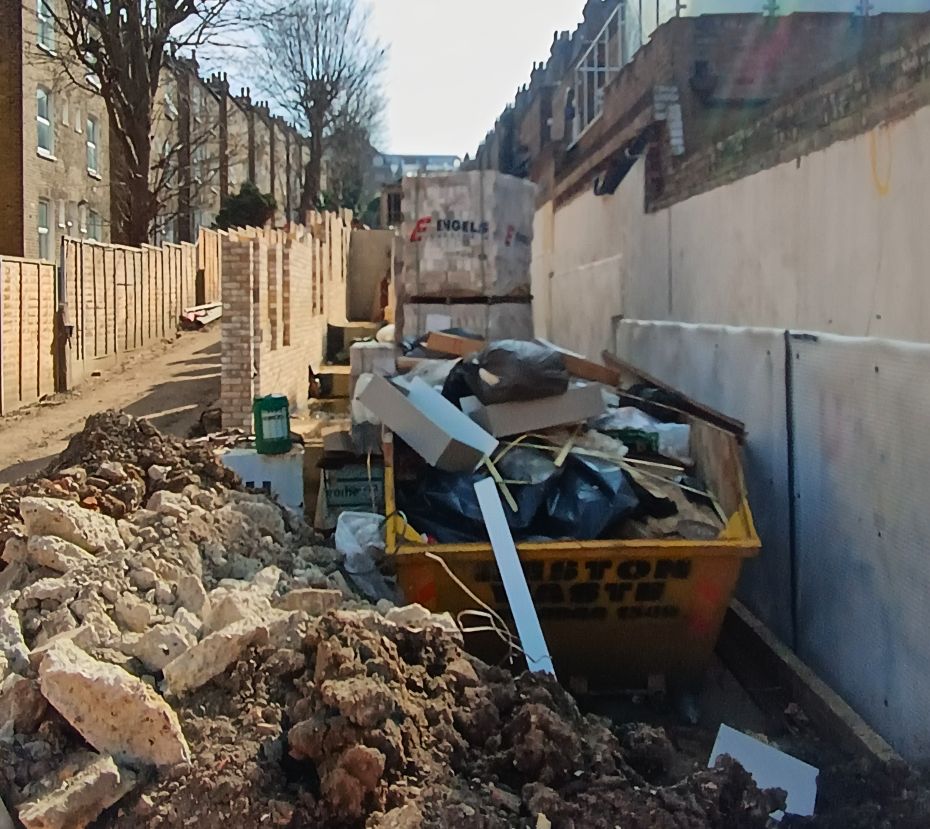
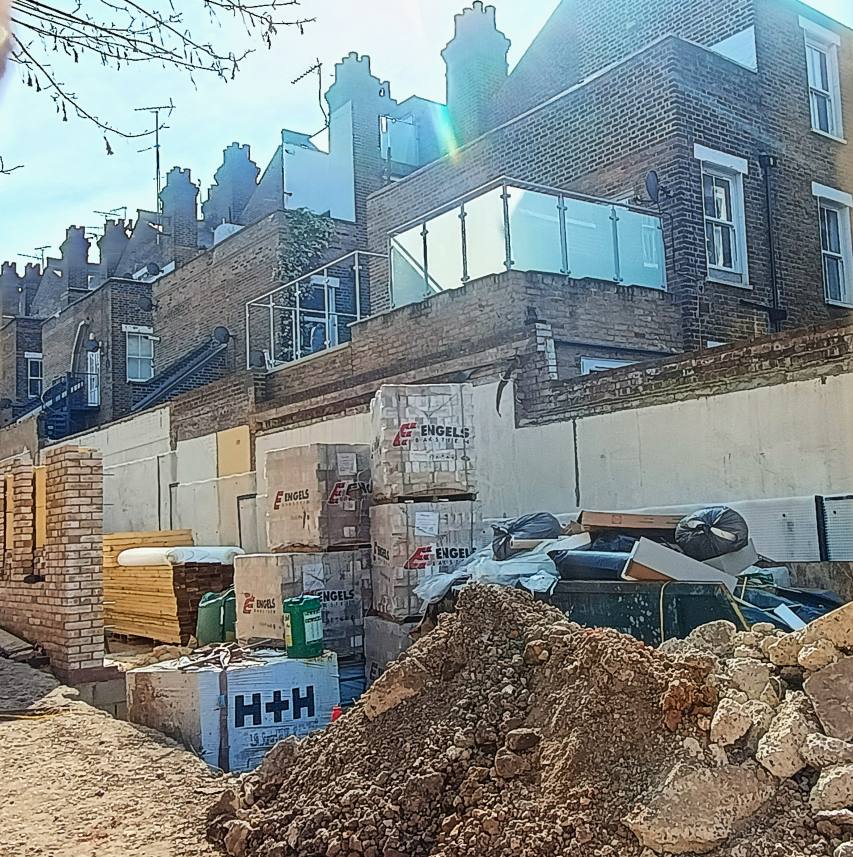
Construction at Theatre Street is now well underway. A bit like the Queenstown Mews development, this should make a small but helpful contribution to local housing needs, and will probably create quite an interesting and quirky set of properties, hidden away in a quiet little mews right in the middle of Clapham Junction that hardly anyone knows exists. There’s still time to comment on the plans for the proposal at Queenstown Road (details below) – and chances are it won’t be the last of these small developments in hidden away scraps of land.
To see or comment on the plans, visit wandsworth.gov.uk/planning and search for planning application 2026/0553. Lavender-hill.uk is mainly focussed on the Lavender Hill area of Clapham Junction. If you found this interesting, you may want to see our wider articles on local environment, planning and housing issues. Some of our favourite articles are on local history, and if you live near this site you may also find our photo story on the Shaftesbury Estate of interest, a recent report on plans to upgrade this part of Queenstown Road, or our post on a rather unusual house that was for sale near this proposed development. To receive new posts by e-mail (for free, unsubscribe anytime), sign up here.


Hi, I live on Latchmere Road, adjacent to the Theatre St. development, which I continue to support, overall. However, when the developers spoke to us before they obtained permission, they said that they would make it a car-free development i.e. future residents would NOT be able to apply for a parking permit on the streets nearby. However, when the planning permission came through, there is no mention of this. I am concerned that this is simply a way for developers to buy support from locals during the planning process. At the end of the day, the council benefits from selling more permits. We are now very concerned that we will no longer be able to find a parking space on the already overcrowded streets near our home.
Paul
LikeLike