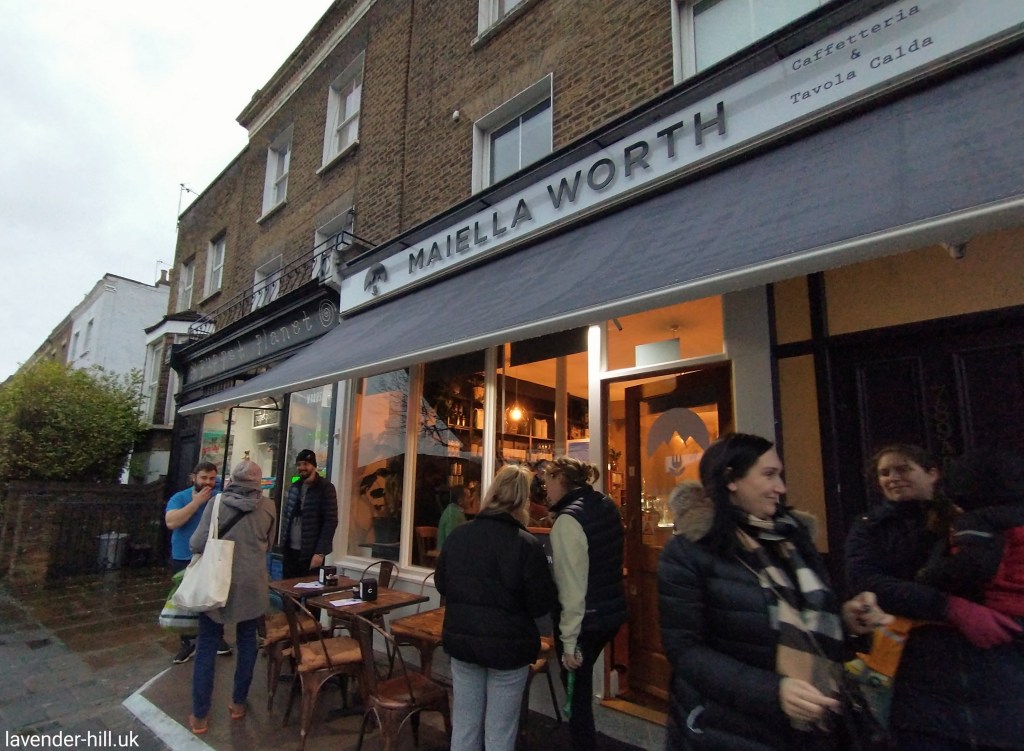
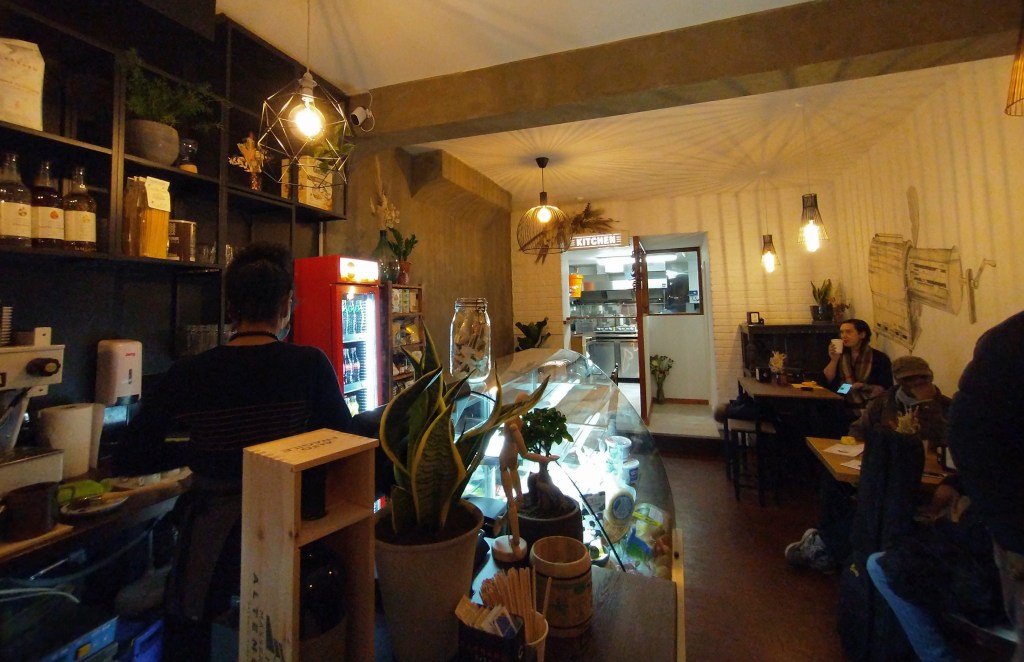
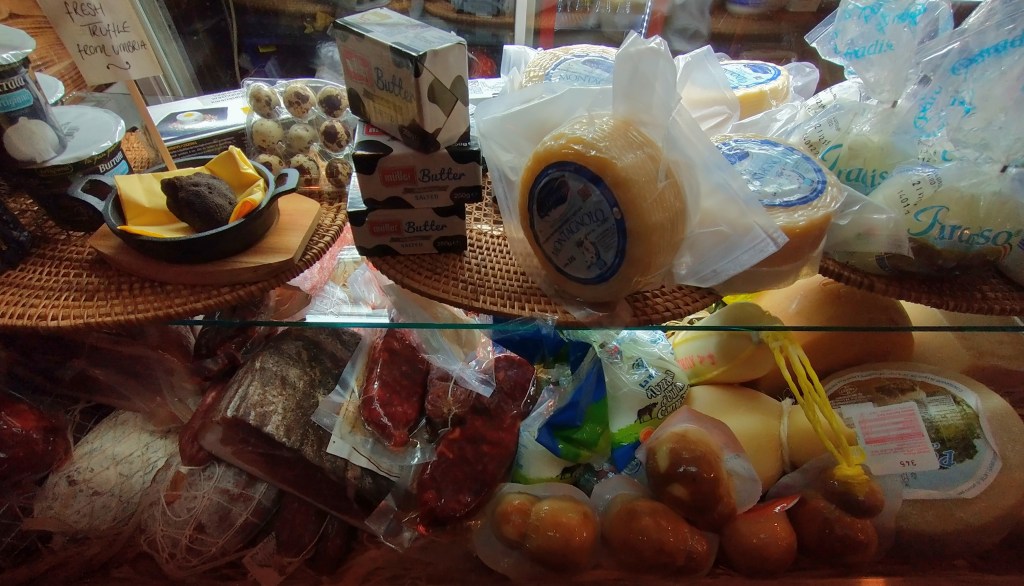
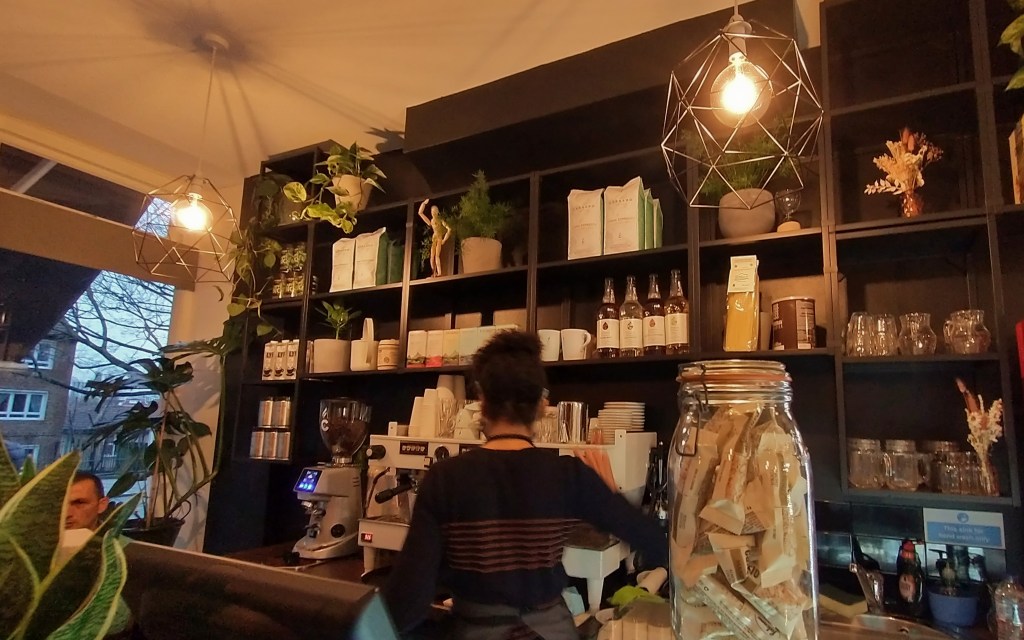
Update (8th January): Maiella Worth is now open, so we’ve added some updated photos. They’re offering a wide range of hot and cold food typical of the Abruzzo region in central Italy – including pasta they make on-site, as well as a broad mix of Paninis. If you are in the area, do drop in and say hello!
For the last few weeks, renovation works have been underway at what was Maiolica Cafe on Wandsworth Road, who we have mentioned a good few times over the last few years. Maiolica opened as a Sicilian cafe not long before the pandemic, and quickly diversified from coffee and cafe food to instead sell fresh fruit and veg and a wide range of Italian produce. Maiolica was popular and well-liked, and became a mainstay of this quieter neighbourhood right at the very end of Lavender Hill’s local centre. But getting through a series of lockdowns was clearly hard work and we were sad, but not altogether surprised, to see Maiolica hand the baton to new owners late last year.
Maiella Worth will continue as an Italian business – as a Cafetteria & Tavola Calda – but has had a complete makeover of the interior, to create more seating space in this small shopfront, and also to open up the back as a fully equipped kitchen. It’s looking pretty smart, and if all goes well, they hope to open up on Saturday 8th January.
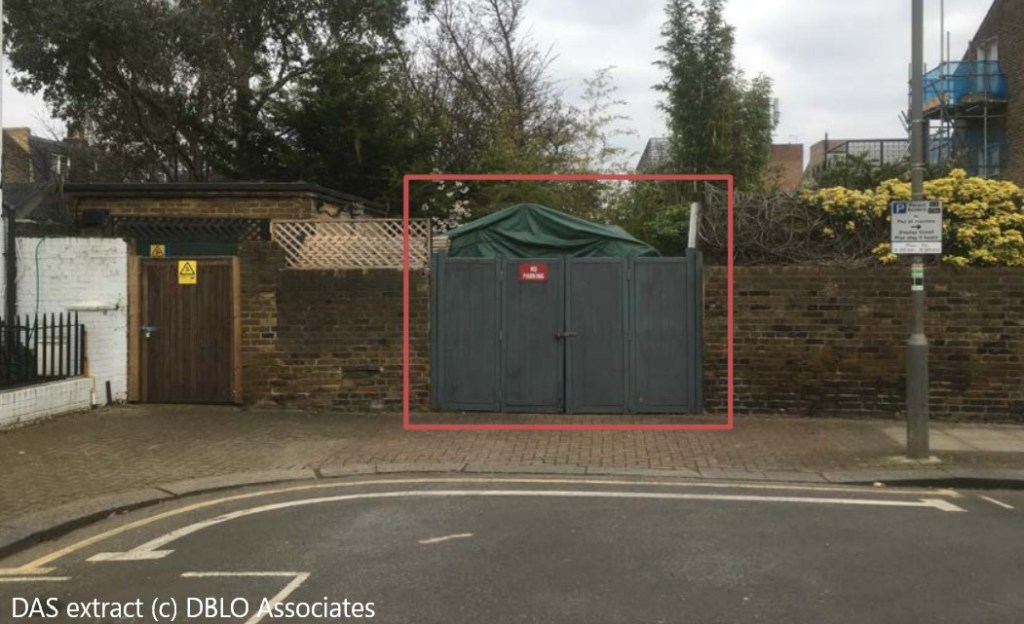
We have a curious fascination for tiny houses, fitted on to implausibly small scraps of spare land – and proposals crop up regularly in planning. We’ve previously covered tiny house plans on Sugden Road, and at what later became a hair salon on Latchmere Road. And here’s another – a three-storey-plus-roof-terrace project on what seems to have once been an off-street parking yard at the northern end of Marney Road, shown below – on a site currently known as “land to rear of 14 Stormont Road”.
The plans here essentially plan a kitchen / diner in the basement (with a lightwell at the front providing daylight), a living room on the ground floor, a bedroom and bathroom upstairs, and a small roof terrace (to meet the requirement that new developments have some private outdoor space) – all in a fairly modern style loosely reminiscent of the new-build house at 31 Stormont Road. The interesting thing about the plans here is that because they include a full basement, the overall indoor area would be about 670 square feet, which is quite a respectable space for a one-bed property, and maybe not really the ‘tiny house’ that might be expected on a site like this. The basement could be a bit of a headache to build given there’s a substation right next door, but it is key to making this site work as a comfortable property.
The neighbours at 12 Stormont Road may not appreciate having a two-storey building to the south of their back garden, but these plans are otherwise likely to be fairly uncontentious. There are a few precedents for this type of development, including the garage at the back of 33 Stormont Road which got permission to become a house. There aren’t any windows in the rear of the proposed building, and the roof terrace includes screening so it does not overlook the neighbouring gardens. There’s understandably some concern about parking with new developments, though this could be mitigated if (as is likely) approval of the development includes a requirement for the developer to fund the removal of the dropped kerb and reinstate a street parking space in front of the old off-street access gate.
To see full details (and, if you wish, make a comment to be considered by the planning department) visit the Wandsworth Planning website and search for application number 2021/5425.
Update: On the 25th January, this proposal was refused planning permission. The details haven’t yet been published but this maybe wasn’t surprising – the proposal saw many letters from neighbouring residents worried about overdevelopment with a building running right to the edge of the small site, overshadowing gardens, and the general effecton the street.
The middle section of Queenstown Road is changing! Until now it’s been a light industrial cluster, but the explosion of development that has taken place around the power station, the arrival of a shiny new Zone 1 tube station, and the imminent arrival of Apple’s UK headquarters, mean that buildings that were once the low-rent home for storage, logistics and catering, are increasingly attractive to media, design and technology businesses.
And for those lucky enough to own buildings in the area, this means that they have a much wider range of tenants than they did before, as these buildings move from being hard-to-let niche-interest affairs to actually quite desirable. This probably explains why there are a dozen or so new office developments at various stages of construction around Battersea and Nine Elms, including some of what had originally been planned as flats in the power station development, but which are now set to become offices instead.
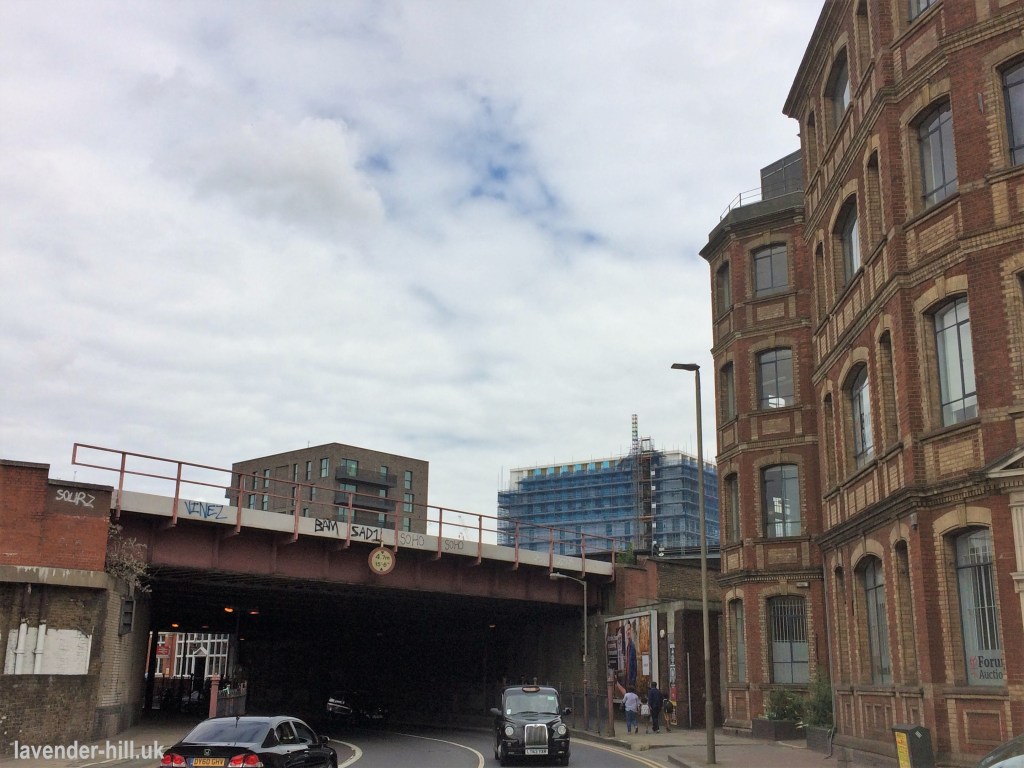
But these new tenants have high expectations, and are looking for workspaces that are up to the very latest standards. Take 220 Queenstown Road: this unusual pair of buildings right next to Queenstown Road station has been around since 1889, originally designed by architect Thomas Massa and built by Holloway Brothers as a factory and warehouse, and called Queens Road Works. The first occupiers were R.Z.Bloomfield & Co, who specialised in making caps for use in the army (and possibly also railway staff). The large building was the main factory, with the smaller next door used as administration offices.
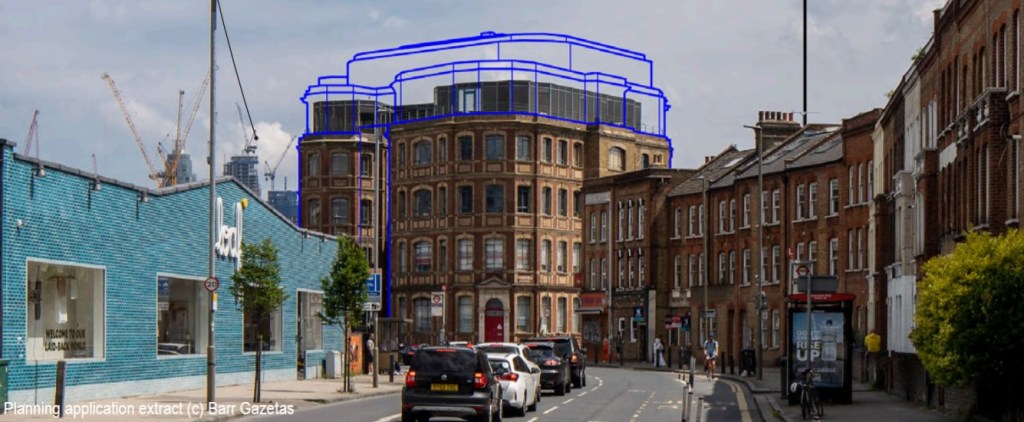
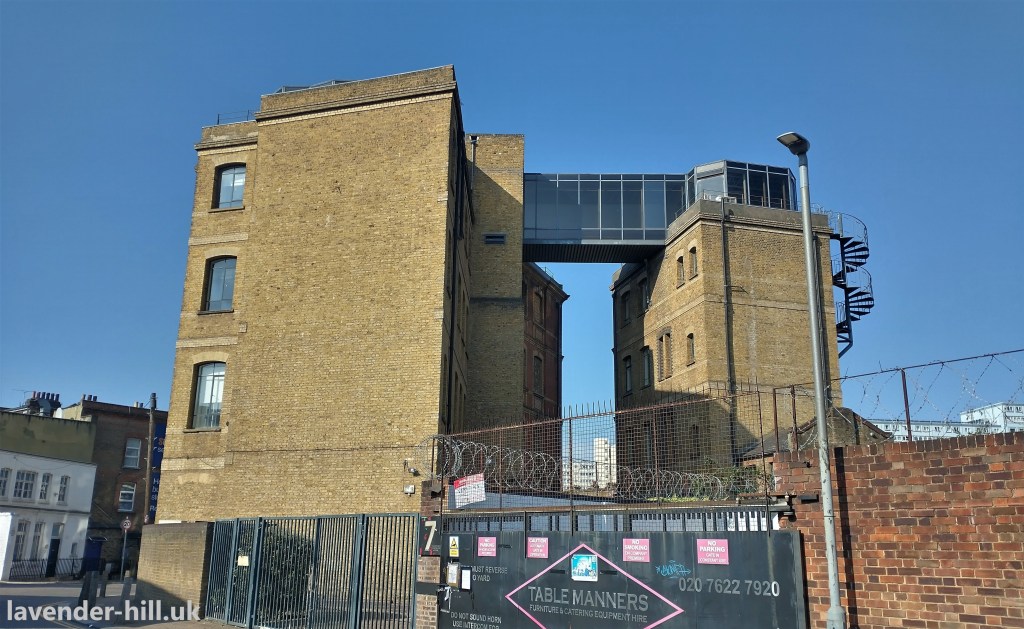
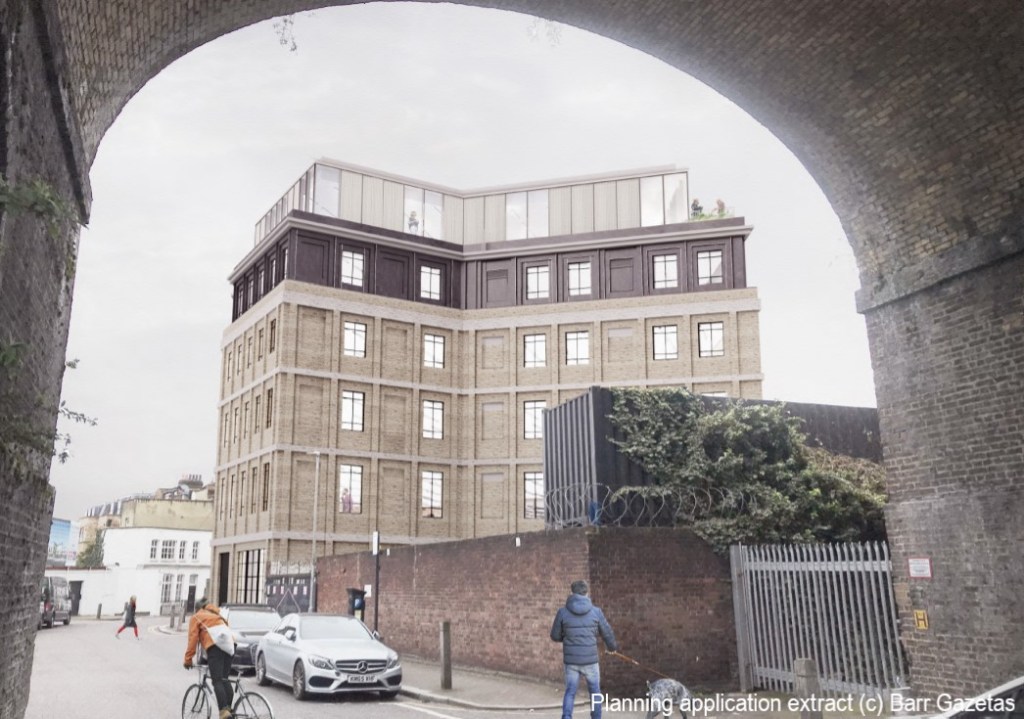
Back in 1988 a rooftop extension was added, with a bridge that links them at the roof level (and whose interior decor has a distinctly distinctly ’80s’ feel). The building hasn’t had much spent on it since and it’s fair to say it needs a bit of updating – which is exactly what its owners (the Medical Research Council’s pension fund) now propose to do. Their plans will see the dilapidated glass rooftop floor removed, and replaced with a new top floor more in keeping with the rest of the building, as well as adding smaller sixth floor which includes plant rooms. A large extension will also be built at the back of the building, which is currently a bit of a mess as our photo below shows:
The extension will connect the two buildings, and increase the overall floor space quite a bit, which is an important part of the plans. Both buildings combined have an area of just 14,600 square feet, which to make matters worse is split in to lots of tiny and inefficient spaces which are not properly disabled accessible – we can see how the current building will have become harder and harder to let (the smaller one has been empty since the current owners bought it in 2016, the larger one is partly occupied). These plans will create some decent flexible and open floorspace that is workable for a modern office.
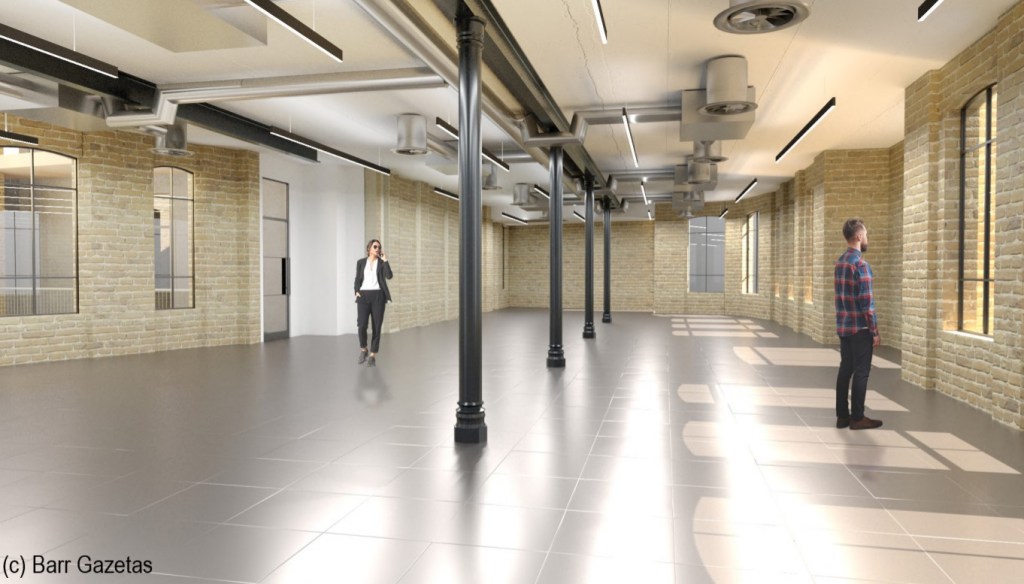
There will be a restoration of the heritage exterior parts of the buildings, as well as a comprehensive refit of the interior of the existing buildings, reflecting the industrial character of the building and bringing it up to the standard a new tenant will expect – an indicative illustration si shown below, and we can imagine the unusual shape of this landmark building and position right at the heart of all sorts of road and rail links could make quite an interesting workspace.
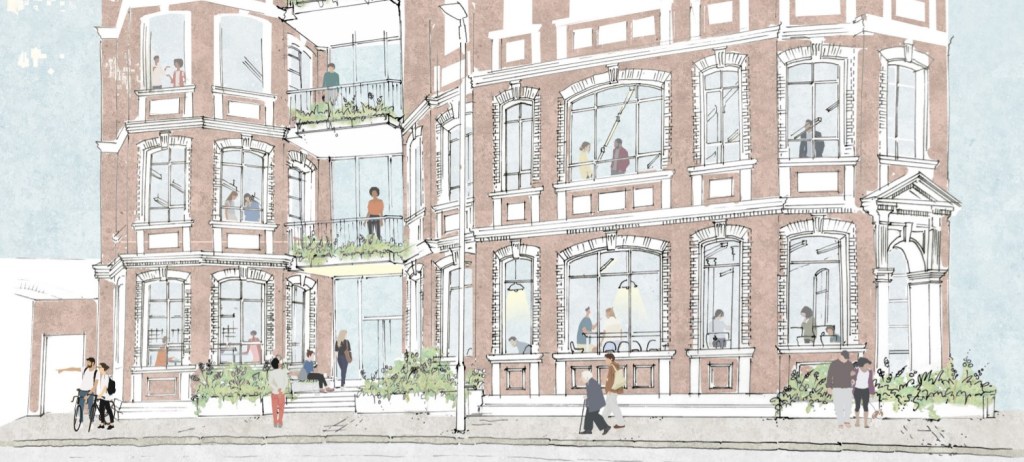
Another key change will be the entrance – which will move to the space between the two buildings, with a double height reception, with balconies above it, as shown below. This will make the building a lot more approachable, and is a clever way of linking the two buildings as a modern office without losing sight of their history as two structures. The target audience for the new office is small to medium size businesses, probably mostly in the technology, media and telecommunications sectors.
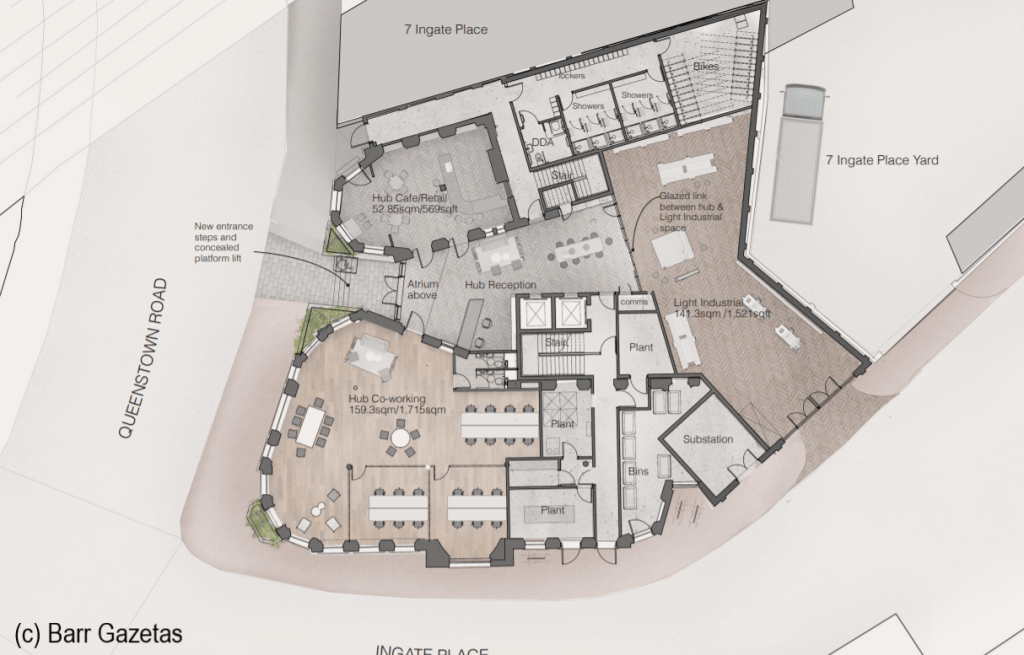
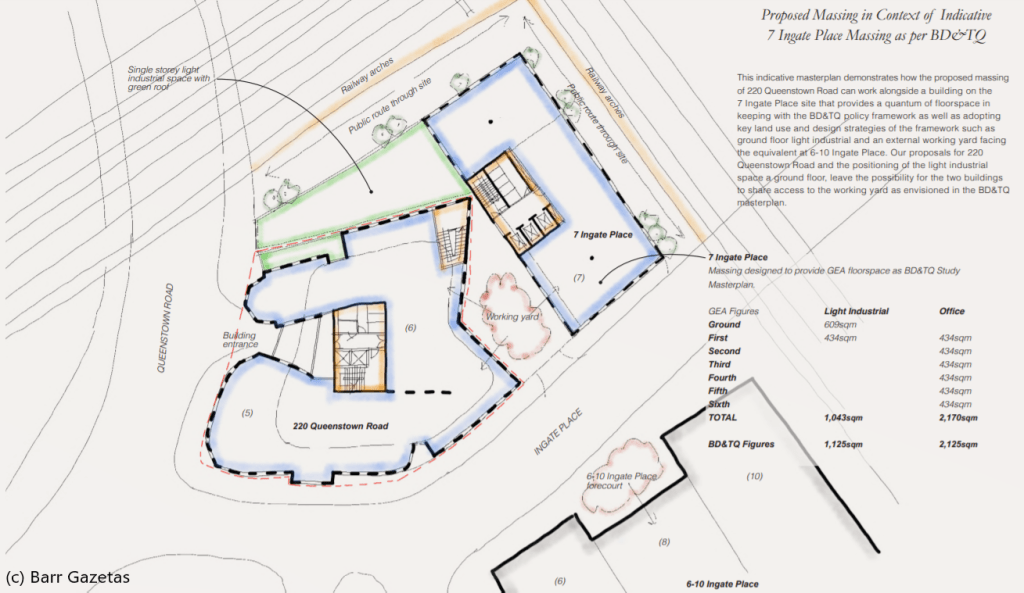
The floorplan below shows the ground floor layout, with a cafe space to the left of the new reception, and a co-working hub on the right. There’s a small light industrial workshop space at the rear of the ground floor (maybe designed to replace some of what will be otherwise lost in the conversion), with the upper levels more of a classic open plan office layout. The building has all of the reception space, showers, plant rooms, cycle parking, bin space and other stuff that a modern office needs – a real change from the current very dated setup! The developers are keen to make the whole thing sustainable, aiming for the updated building to meet the ‘Excellent’ standard for BREEAM sustainability, which would put it in the top 10% of new buildings.
These aren’t the first redevelopment plans for the building. In 2002 planning was approved for a six storey rear extension and three storey roof extension (but this was never built), and in 2015 plans were approved to convert it to flats (but this wasn’t taken forward either – which is just as well as this site is really more suitable for offices than flats). The latest plans are subject to planning permission, but as a sensitive updating (and fairly clear improvement to) a heritage office building we don’t expect this will face any particular planning issues – to see or comment on the plans, search for application 2021/3958 on the Wandsworth planning website.
But this is not the only office project on Ingate Place. Next door, Ingate Works is a recently completed new building, with 17,000 square feet of top quality office space over four floors. A real step up in quality over what went before, it is the first of a new breed of office building to actually complete.
The space is for rent at £49.50 per sq foot, which is well above the £35-40 per square foot that high quality ‘Grade A’ office space traditionally lets for in Battersea, but which remains an absolute bargain compared to the £70+ you can expect one stop down the railway line – and is hence pretty attractive to smaller firms wanting to be close to both the city centre and a large workforce, without spending a fortune. Ingate Works took a while to let amid the pandemic but a decent amount of the building is now ‘under offer’.
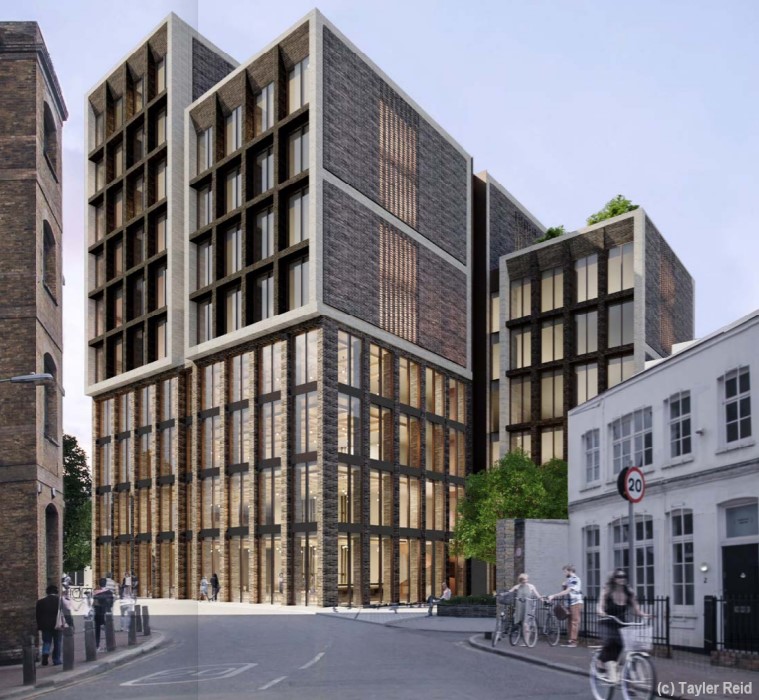
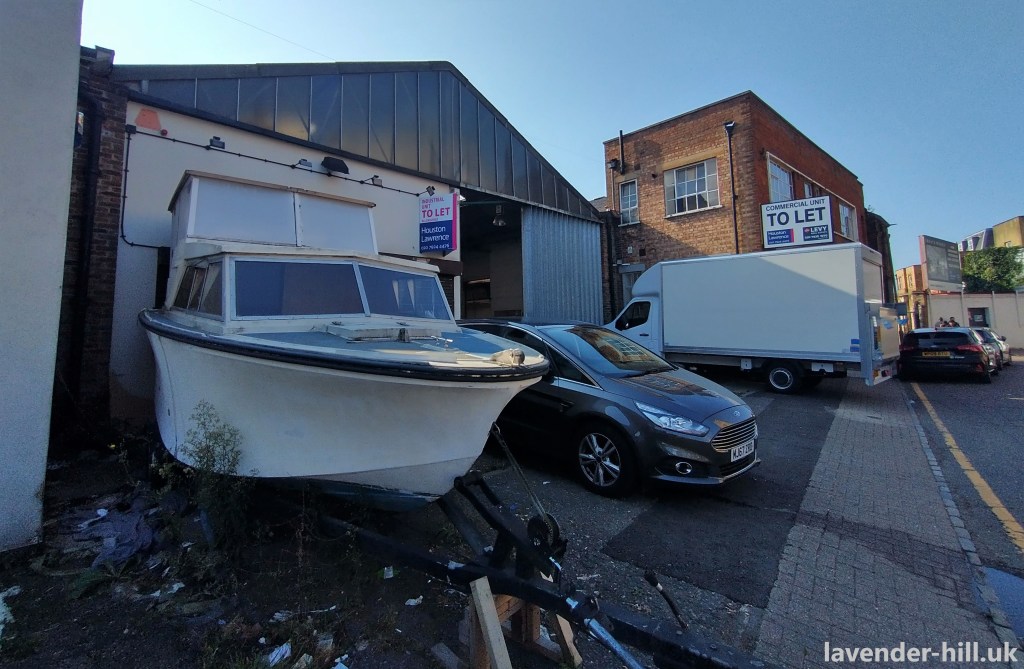
And that’s not all. In 2018 planning permission was approved for a 92,000 square foot ten-storey office building at 8-10 Ingate Place, pictured above – which will be built on what are currently a couple of warehouses, shown below.
The whole development has yet to start and is currently on sale for £13 million, with the sales notes pointing out that with each floor being an impressive 9,000 square feet, two south facing roof terraces, and being a five minute walk from a tube station and seven minutes from Apple’s new headquarters, it should be quite attractive to smaller businesses in the IT sector.
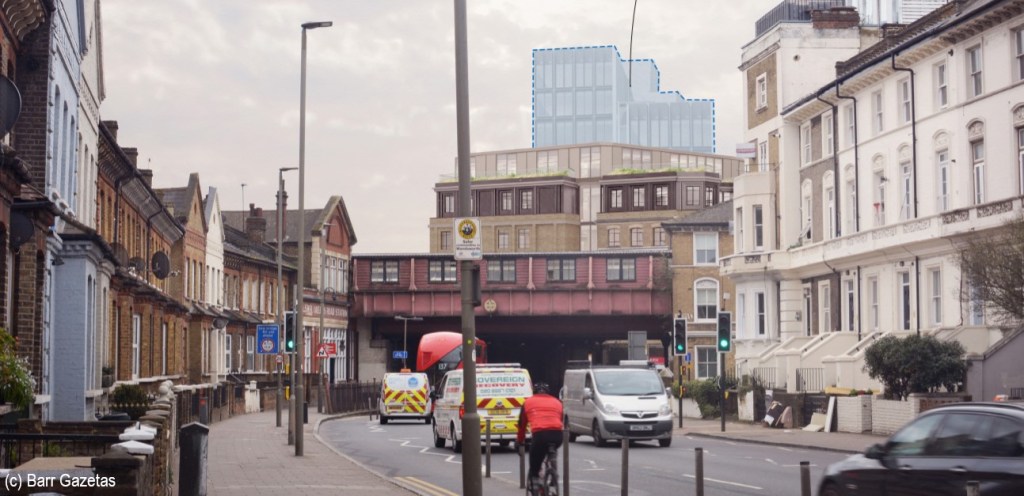
There’s a more to come too – as all these buildings are in the Battersea Design & Technology Quarter, a creative and technology hub which Wandsworth Council have designated that covers the whole of this area, essentially extending and increasing the density of the existing industrial area to accommodate more employment, in particular creative design and technology businesses that are likely to cluster around the power station and Nine Elms. As an example, the plans foresee a further six-storey building to be built at 7 Ingate Place (between Ingate Works and the railway), shown as a blue rectangle in the image below.
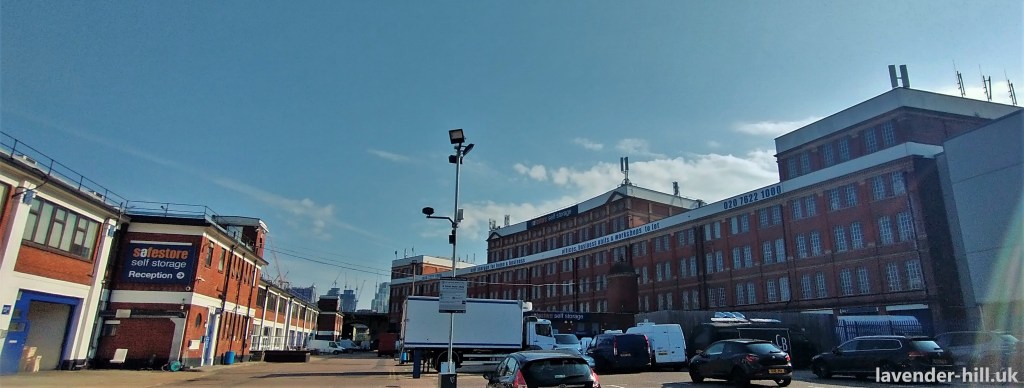
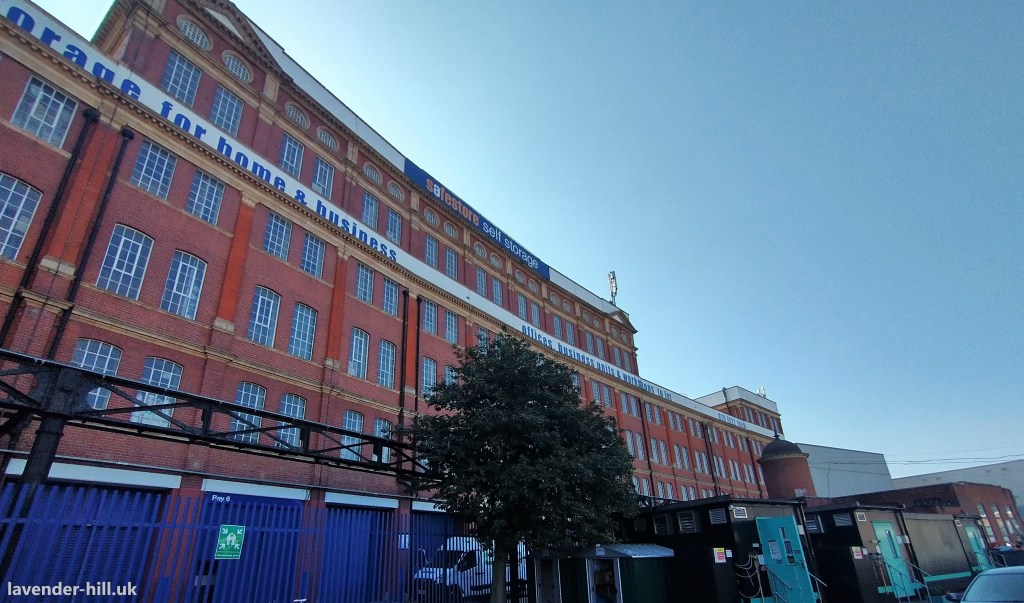
But these are all a bit of a sideshow compared to what lies further along Ingate Place. Because as anyone who’s taken a train past Queenstown Road knows, the showstopper is the huge curvy Safestore self storage building shown below. Originally built as a furniture depository by high-end furnishers Hamptons, it has an interesting past – so interesting that we’ll be writing a separate post all about the building in the near future! Its present is useful but not particularly exciting – being mainly a large self-storage base, and (in assorted sheds in the car park) a hub for a variety of delivery businesses and dark kitchens.
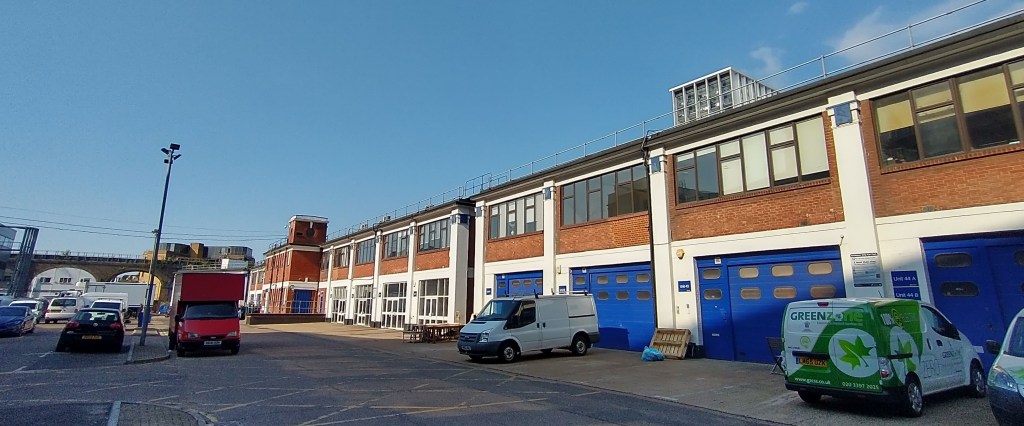
Tellingly, Safestore already know there’s demand for offices here: in addition to the storage options you’d expect, Safestore’s Battersea premises is one of relatively few Safestore sites that also operates as a business centre. The smaller building opposite the main depository (pictured below) offers office space on flexible leases. It’s a low-risk and fairly affordable way of hiring office space, with a straight all-inclusive monthly fee and no long lease terms, as well as conference room space and business support services, and (having run for over a decade, and housing dozens of local firms from upholsterers, cleaners and antiques traders to sushi makers and wine merchants) it seems to work.
But the huge increase in value of buildings round here means that the vast and elegant main structure – surrounded by various other buildings that were once Hamptons’ factory, and a lot of car parking – is becoming too valuable to be just used for storage. Safestore generally own the Freeholds or long leaseholds so will likely be pleased to be in control of this vast and increasingly strategic site. We understand that property consultants Houston Lawrence undertook some type of commercial viability study of the site for Safestore in 2018, and we’d hazard a guess that it is likely to see further expansion and development in the medium term. As yet, there are no development plans – but we’ll keep you posted. And in the meantime, we can expect Ingate Place to change quite dramatically as all these office developments start to take shape.
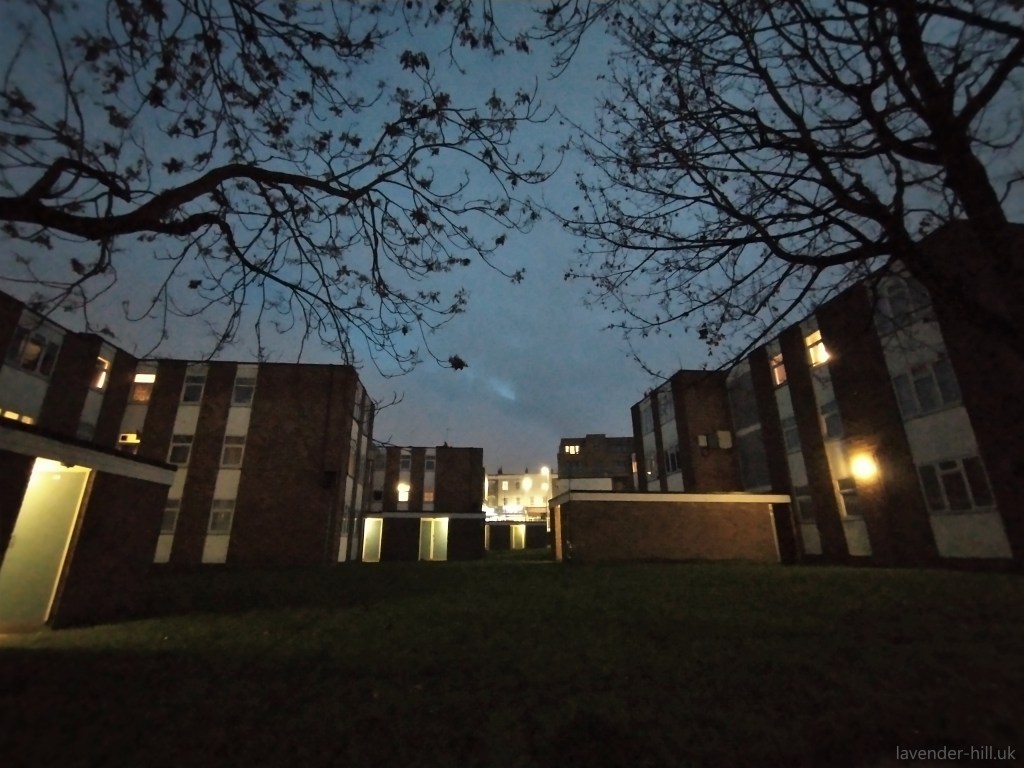
Dusk falls over the quiet green space between the flats on Ashley Crescent, with a glimpse of the brighter lights of Lavender Hill in the background. One of many estates of similar design, the architect of Ashley Crescent was L. Phillips, Borough architect for Wandsworth in the late 1970s (who also designed the Northcote Library). This was a simple design that worked pretty well, which explains why there’s another block of much the same design at the junction of Stormont Road and Gowrie Road, as well as clusters of similar flats in Halston Close off Northcote Road, and in Hanson Close and Hunter Close in Balham.
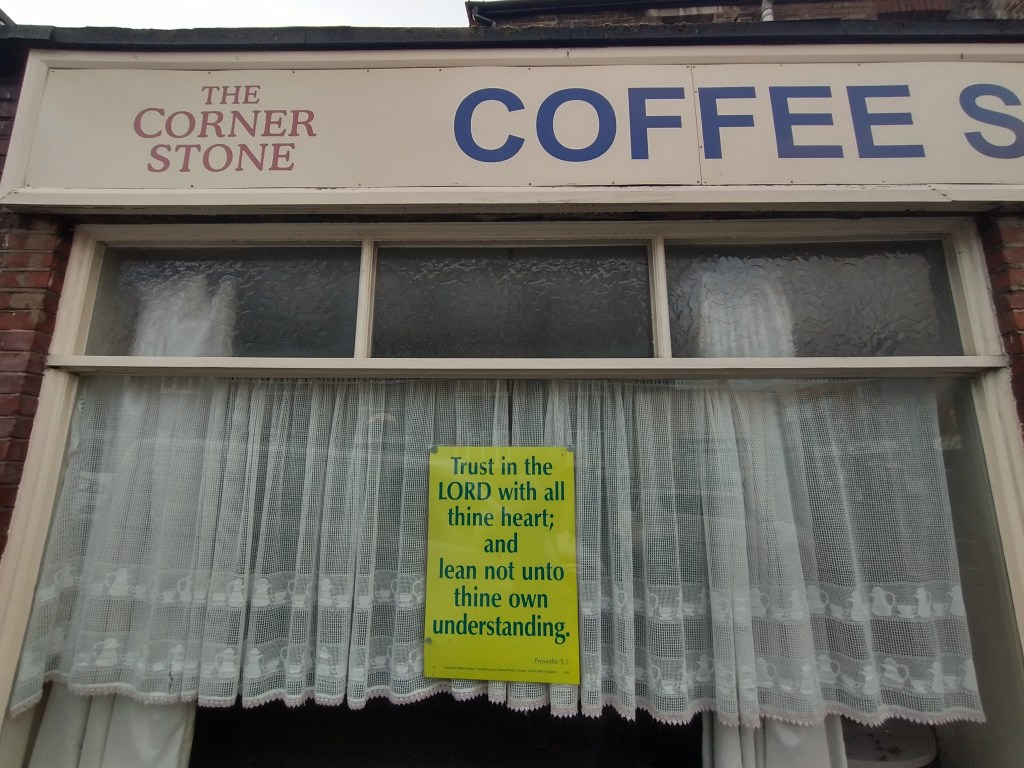
The Corner Stone, a very recognisable shop on Lavender Hill which became of the street’s longest running businesses, has called it a day. The shop opened at some point between the late 1980s and early 1990s, and sold a wide range of Bibles and Christian literature, as well as hosting bible lessons. It was run by a couple, Brian and Ulrike Warner, who we believe previously had a career in property with several businesses to their name (one of which changed its name to Cornerstone Bookshop Limited in 2005). After many years running the shop we understand that age and ill health finally caught up with the owners as Brian passed away in 2020, and his wife Ukrike has now brought the business to an orderly close and retired.
The shop was originally three separate businesses: the corner unit was a newsagents & sweet shopcalled Peter Grose. The right hand side was a television rentals shop, a branch of D|E|R (Domestic Electric Rentals Ltd). There was also a small shop at the back facing Beauchamp Road, which in the late 1960s/early 70s was a nice old-fashioned Italian deli with cheeses, cured meats and all sorts of Italian stuff, which seems to have been particularly reputed for salt beef sandwiches – all served by an elderly gentleman, presumably closing when he retired and later being incorporated in to the rest of the premises.
The Corner Stone reportedly had a narrow escape in London’s 2011 riots (which affected this short stretch of shops quite severely) as windows were smashed and a fire started, causing some £4,000 worth of damage. One of the rioters had a change of heart and returned to put the fire out, and another rioter about to set fire to the premises was apparently dissuaded by someone, whom the shop’s owners believed was an angel, shouting, “No, don’t do that, I live upstairs!”; the shop was able to resume trading after only one day.
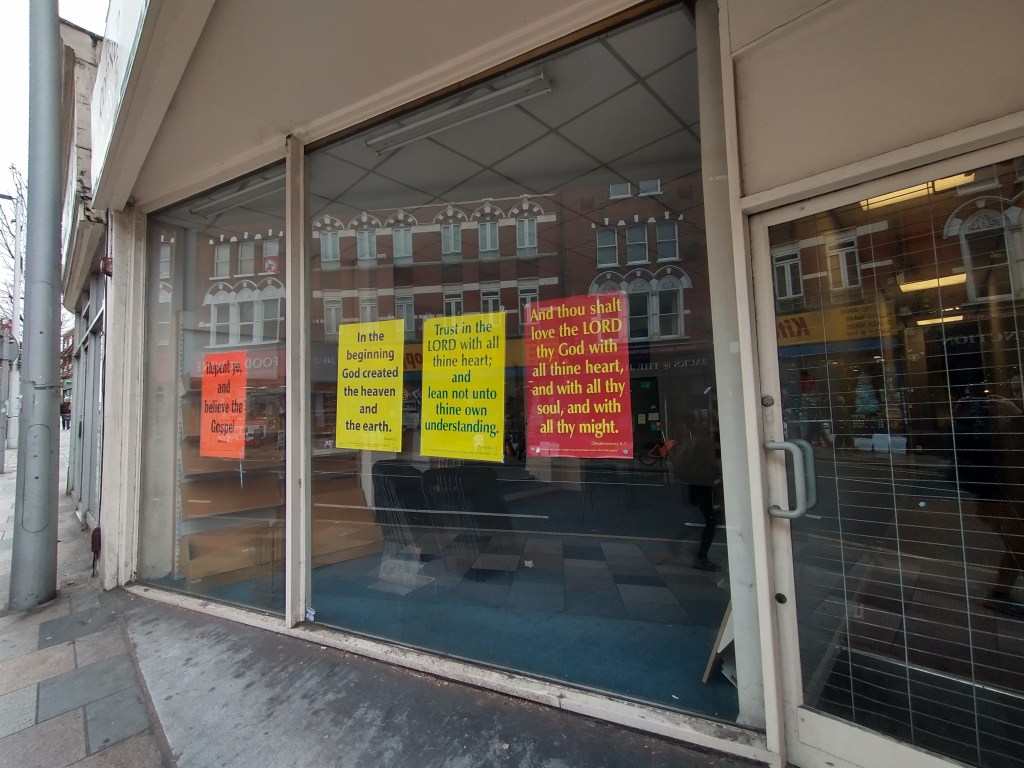
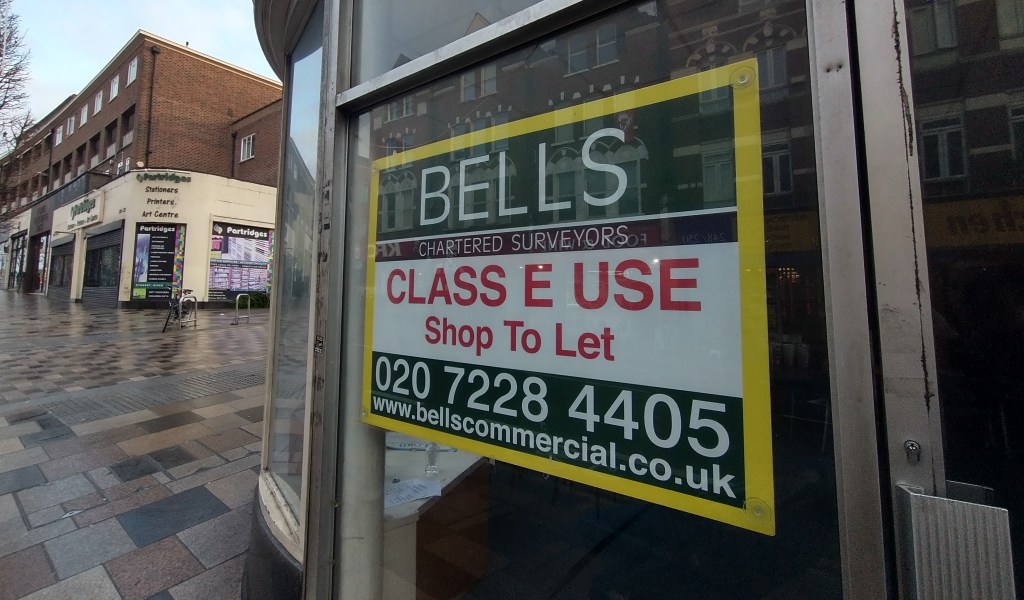
The ever-recognisable primary-coloured “scripture posters” so characteristic of Church noticeboards round the country remain in place, but the whole shop is now to let with local commercial estate agency Bells, which comes in at a pretty spacious 1,841 square feet including the cafe at the back. It’s a good spot with high visibility, and the asking rate is £90,000 a year, with business rates (essentially Council tax for shops) coming in at an additional £35,679 a year. The listing notes that the shop includes a front sales area, back office, multiple storage rooms and two bathrooms, and also that (maybe unsurprisingly after several decades) the property does require refurbishment throughout.
We know relatively few of our readers have a strong religious persuasion, but as The Corner Stone’s shopfront sits quietly and awaits a new beginning, we can all recognise the many years of commitment and effort that Brian and Ulrike dedicated to their bookshop, and wish Ulrike a happy retirement.
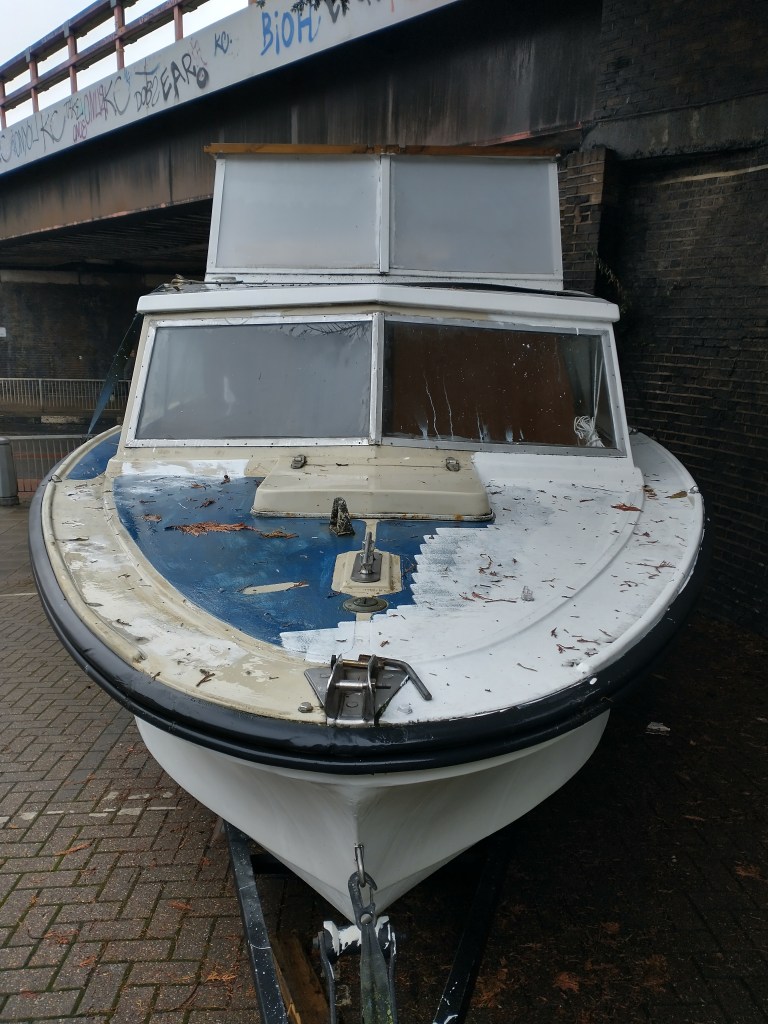
The prize for ‘abandoned vehicle of the year’ goes to… a boat that has mysteriously been abandoned on Queenstown Road! It’s all a bit of a mystery – it’s in reasonably good condition, it seems watertight, and it has even been abandoned with a fully functional tow frame.
There’s fresh paint and it has the look of a fairly careful and dedicated boat restoration project abandoned part way. There are tools and the start of a kitchen, with what looks like a new cooker inside.
It has a somewhat out of date mooring permit! Maybe someone with more knowledge of boats than us can confirm if this means the boat was once called ‘Christine’.
We have to say, this poor boat seems a long way from home! But it raises so many questions. How did it get here? Was this a case of ‘the boat goes or I go’? Did someone run out of cash or just decide they’d had enough? Did someone’s mooring permit expire leaving them with no choice but to dump it in the middle of Battersea?
Either way, the Arch Company who own the land don’t seem too impressed – as taped to the vessel there are CCTV stills of a gentleman driving up and abandoning it on the 16th December (seemingly without making much attempt to hide his identity), with a request “Please remove this boat within 24 hours! Alternatively we will arrange”.
Can you solve the mystery of the Battersea boat? Do you want a boat (one careless owner)? Can boats get parking tickets? Will this boat ever see the water again? We’ll keep you posted if we find out more.
Update: There’s a twist to this story!
While preparing an unrelated future post on office developments on Ingate Place, a couple of hundred metres away from the boat’s current location, we dug out one of our archive photos of Ingate Place (taken back on the 18th September) – and spotted a very familiar looking boat in it! It’s clearly the same boat, in the same trailer… but with a bit less white paint. So this boat is indeed local, and there has been some restoration work done while it was on Ingate Place before it was moved a short distance and abandoned. Whoever abandoned it didn’t take it far – and maybe it is indeed a Battersea boat…
London is perfect territory for murals. Wartime destruction, postwar estate development, and the occasional over-ambitious road project all conspired to leave a lot of Victorian terraces sliced in two, with large messy-looking blank walls – occasionally with the odd chimney or fireplace alcove remaining in place. And in the 1980s and 1990s, several talented artists duly stepped in to the breach, equipped with skill, vision and a large amount of paint, and created what became a rich south London tradition of murals, surprisingly many of which have a nature theme. The biggest concentration of murals is in and around Brixton – but we have several of our own here in Battersea, which we’ll be writing a short series of posts on.
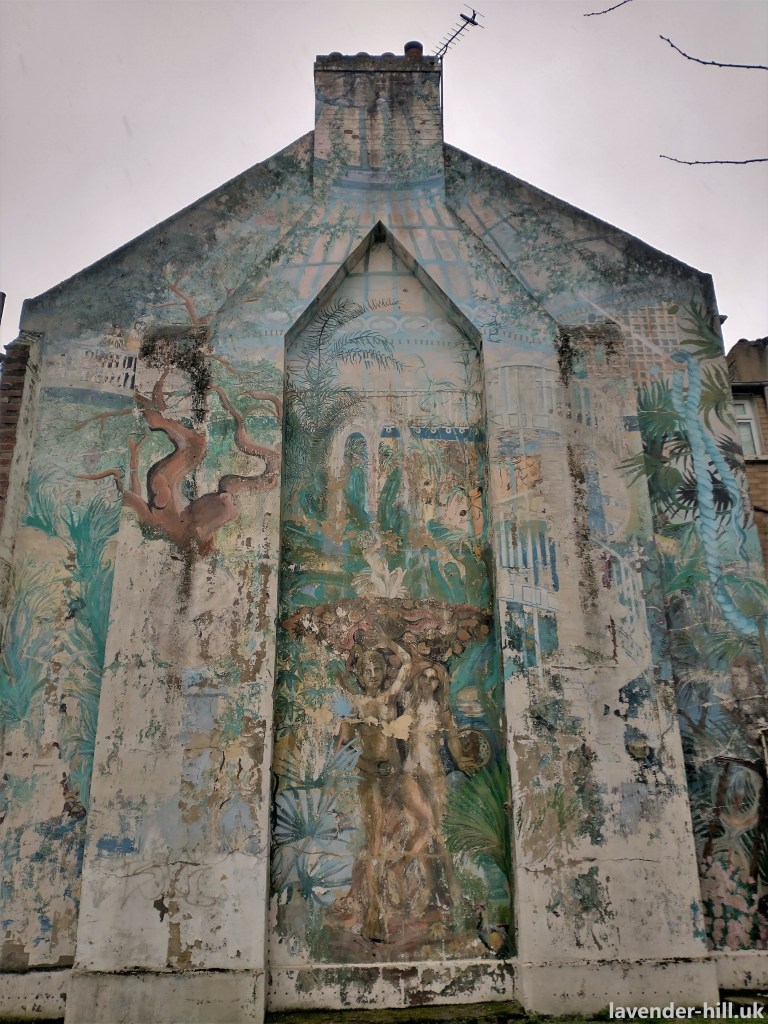
Starting, of course, with the one closest to home directly facing Lavender Hill. Hidden away at the end of Elspeth Green, the small park at the junction of Lavender Hill and Elspeth Road, a large mural covers the entire side of a house, called Tapestry of Life.
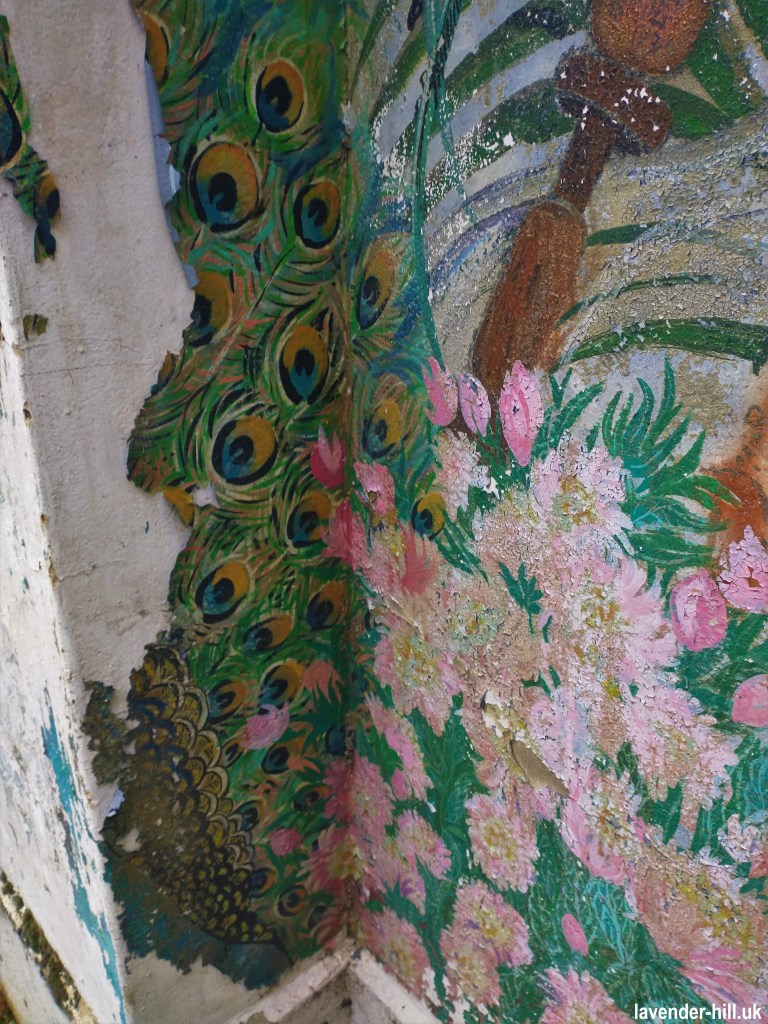
Sadly it’s not had the easiest of rides over the years – as the rich colours have become detached from the undercoat (which seems to be a layer of standard emulsion house paint), and some rainwater damage is visible at the top as well – meaning the overall picture has become hard to piece together from a distance. But looking more closely there’s still plenty of charm and character, as our photos show – and which give a feel for just how special this mural was when it was first painted. It’s based on the big greenhouse in Kew Gardens – hence the abundance of tropical plants and exotic wildlife, as well as the spiral staircase leading to the upper walkway – with an Adam and Eve sculpture at the centre.
The mural was painted in 1983 by Christine Thomas, who we understand was artistic director at Wandsworth Arts at the time. It was painted with support from the Wandsworth Arts Resource Project, and partly funded by the Greater London Council. This wasn’t Christine’s first local mural – she also painted the Battersea Puzzle just off Plough Road in 1981, which was lost in 2012 when the church hall it was painted on (and several neighbouring buildings) were demolished to make way for the new St Peter’s church and a large block of flats.
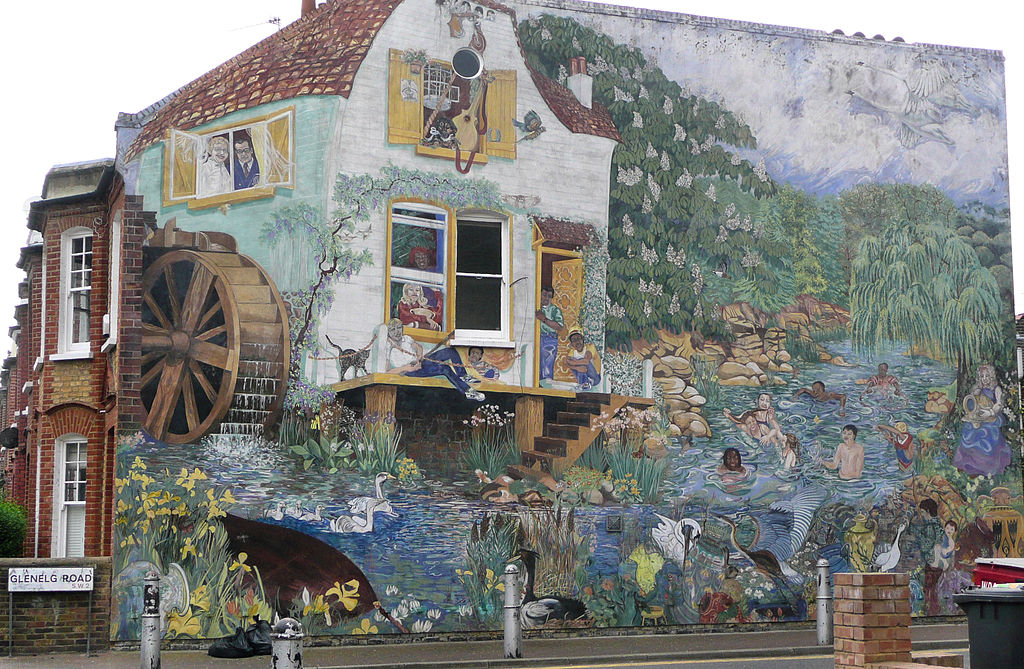
In addition to Lavender Hill’s mural and the now-lost Battersea Puzzle Christine painted five other murals in London, and fortunately some of them are in a much better condition. Christine painted Big Splashon Glenelg Road in Brixton – pictured below – two years after her Lavender Hill mural. It’s in excellent condition, and featured in Time Out’s top ten London murals.
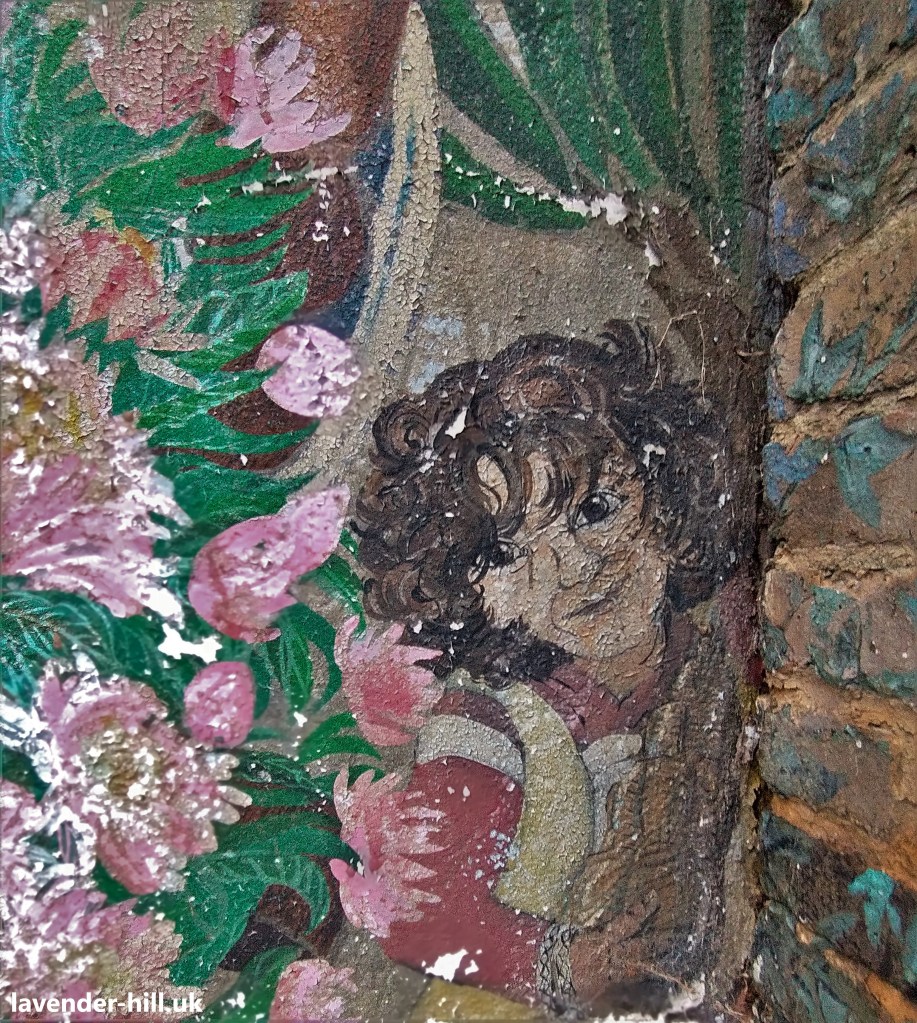
Big Splash notably includes a self portrait, and we do wonder if Tapestry of Life also includes a self portrait, at the bottom right corner:
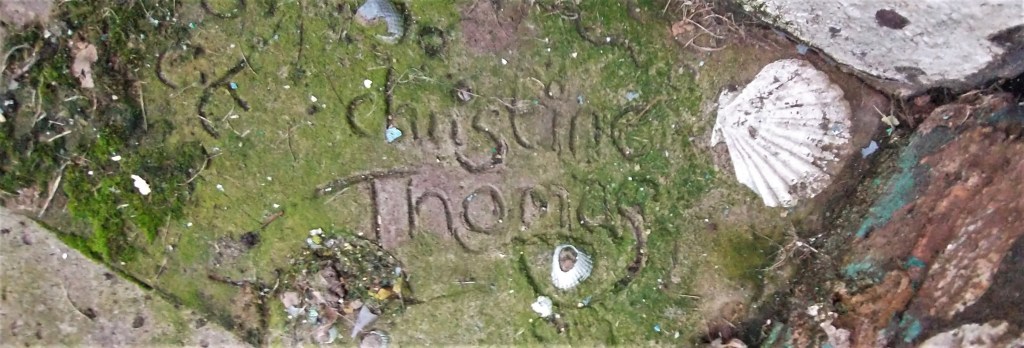
She’s just above Christine’s signature, which is in the concrete along the base of the mural, and inset with several sea shells –
The mural took several months to paint, and when it was complete David Bellamy formally opened it. It’s never suffered graffiti or damage, but the flaking of the paint means its days may nevertheless be numbered – but if you look closely there’s still plenty to see including a peacock, a tree frog, a cockerel, a snake and a monkey.
Christine later opened a studio at Lyminge in Kent, where she runs a variety of art courses including silk painting, as well as continuing to paint a wide range of other murals, banners and mosaics for schools and community groups, as well as several privately commissioned murals.
We haven’t been able to find a photo of the mural when it was new, but this 2011 article by the London Mural Preservation Society (who also have a handy map of many of London’s murals) shows it in slightly better condition – if you have one we can publish here please get in touch! As to what the future holds for our mural – who knows – maybe it can be restored to some of its former glory. But for the time being, enjoy it as a change from the usual plain gable ends and do keep an eye out for the many animals…
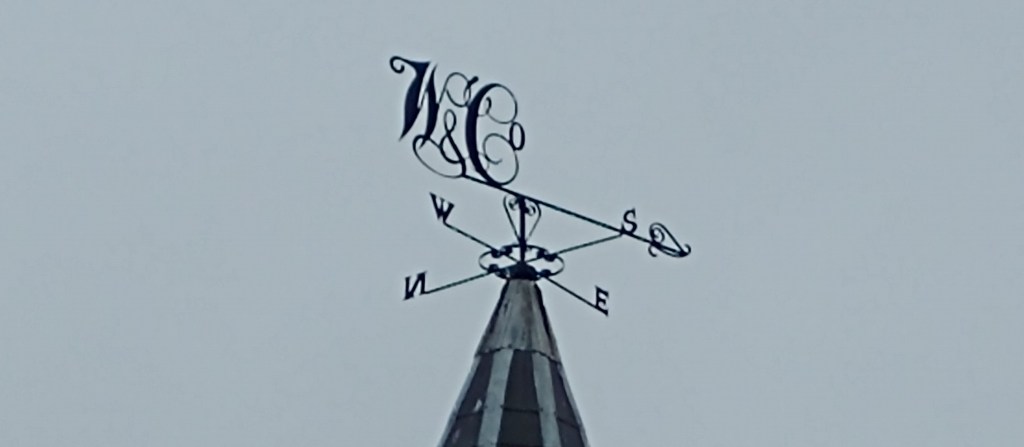
Perched on the turret roof of what’s now Dexter’s estate agents at the junction of Lavender Hill and Latchmere Road is a little-noticed weathervane. Once widespread and fashionable, and still quite a feature in the City of London where gilded weathervanes often reflect the trades and organisations that used to occupy the buildings below, weathervanes have fallen a out of favour and pass largely unnoticed.
This one still seems to be in decent working order should you ever want to know which way the wind is blowing. More intriguing is the elegant W&Co logo – it was presumably a reference to a business that used to occupy the building below (or, just possibly, the developer – given this was the most prominent part of the parade – though that sort of branding was rare among developers at the time), though our best efforts (and, it seems, those of others who had also previously spotted the weathervane) failed to uncover who W&Co were.
Update: we asked if our readers had any insight – and sure enough, the mystery was quickly solved! This was, going back a fair way, a branch of estate agents Winkworth, who have been around for much longer than we previously realised. They’ve been around in one way or another since 1835 and their ‘classic’ logo shown below (which seemingly hasn’t been used for a while by the business) bears a distinct similarity to the weathervane.
They haven’t moved far either, as there is now of course a much larger branch of Winkworth occupying almost the entire ground floor of the former office block opposite. We do wonder if Dexters (who now trade from the building) realise their rival’s sign is up on the roof…
On a sunny day back in May, Prince Charles and Camilla, Duchess of Cornwall visited Charles’ namesake the Prince of Wales pub in Clapham Old Town, pouring himself a pint of very locally brewed Sambrooks’ Wandle bitter. This was a short visit to celebrate thye resilience of our high streets, and they also stopped off at Trinity restaurant, having a chat with Moen’s & Moxons who supply the restaurant, dropped in to the Omnibus theatre, Birksen floorists, Rex & Wolfe pet shop, a barber shop and Clapham Fire station – where the crew stood to attention to welcome them.
And as chance would have it, this day was the precise day Google Street View’s cars decided to drive by and take their photo of the fire station for 2021. So if you look at Google’s street view image of the street by the fire station, you’ll see our firefighters in full regalia.
It’s tough being a local authority! Costs only ever go up, and the show has to be kept on the road with an ever smaller budget. Which is why we’re generally supportive of local authorities looking to find more creative ways to raise money than just an ever increasing Council tax. Lambeth has come up with a new idea – and has struck a deal with a company called Bay Media (who specialise in promotional banners on streets) to offer up most of the lamp posts on the Borough’s main roads for banner advertising.
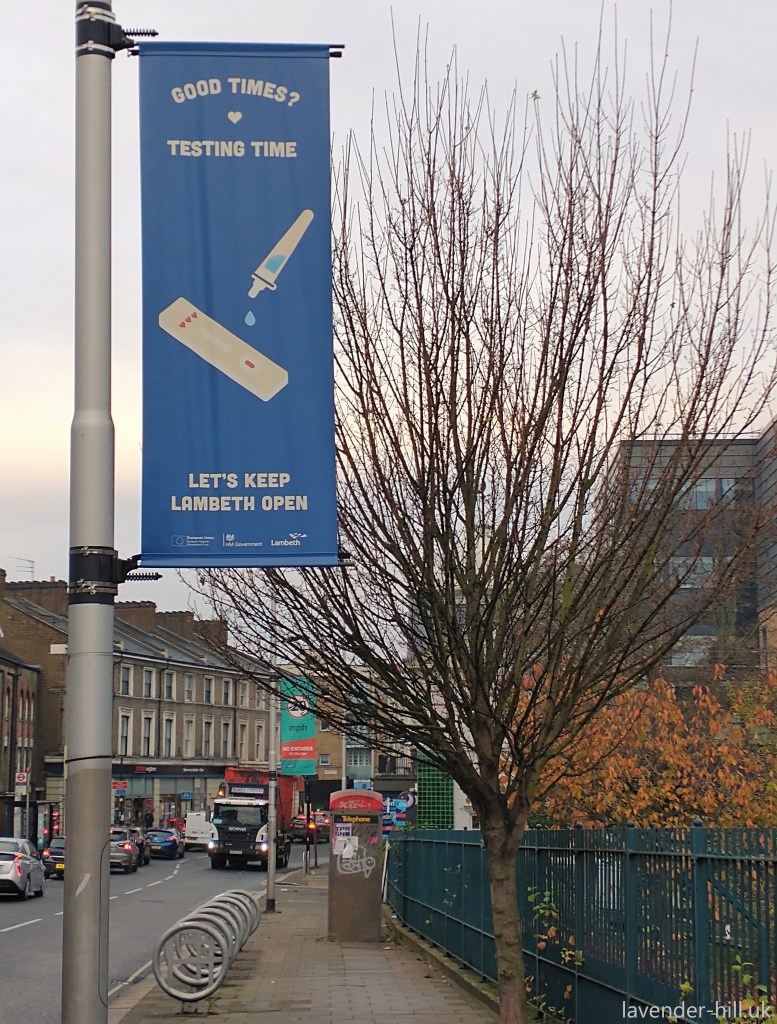
The deal runs for ten years, right up to August 2031 – and a look at the Lambeth contracts website suggests that it will pay Lambeth the curiously precise sum of £1,181,686 and 31 pence, so about £100,000 a year. The banners themselves won’t be a complete surprise, as anyone who’s been to Brixton town centre recently will have seen many similar ones promoting local shopping, locally-owned businesses, and Covid testing, that went up early in the pandemic. There are also a couple in place at the eastern end of Wandsworth Road promoting the Borough-wide 20mph speed limit and the need to get tested regularly – as our photo shows.
Maybe the bigger change is that these new banners will be much more overtly commercial in nature, aiming to make income rather than just conveying public service messages. Lambeth note that advertising on their roads and pavements to date hasn’t actually made any money for the Council, and now want to turn a profit on these activities. So we can probably expect these new adverts to be doing their best to grab our attention!
And rather than just being the odd one here and there, there will be vast numbers of them! Because these are quite large adverts, they need planning permission – so the company has duly put in a bundle of planning applications seeking permission to add adverts to the lamp posts along the main roads.
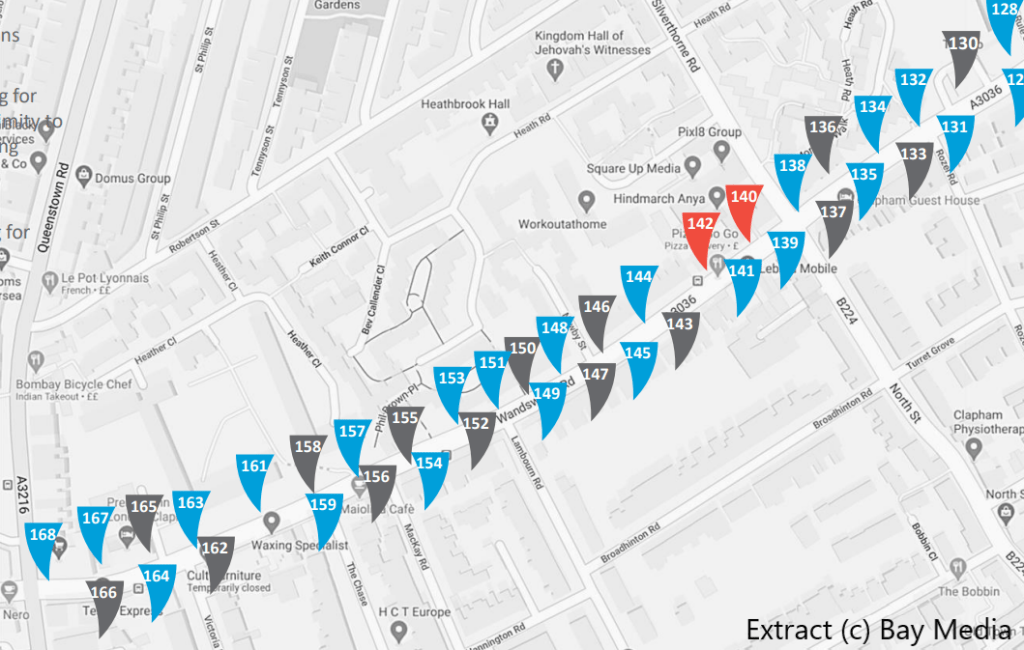
The map above shows one of many that illustrates which lamp posts they plan to put banners on, covering the western end of Wandsworth Road – the blue ones are planned adverts, the red ones are lamp posts they are avoiding because they’re in front of Listed buildings (in this case the Plough Brewery which we’ve written about recently). The grey ones are not planned for banners at this stage, seemingly because they’re awkwardly situated and / or too close to other structures. It’s not yet clear if the plan is to lease whole roads for specific campaigns, or to sell them on a post-by-post basis.
And while we broadly think this is as good a way of balancing the books as any, this is where our one key concern comes in: the western end of the Wandsworth Road, close to where it meets Lavender Hill, is an official conservation area. Lots of efforts have been made to not have loads of advertising, garish shop fronts, and other tat – specifically to let everyone appreciate a rare late Victorian streetscape that hasn’t been mucked about with too much. That’s why there are none of the pavement and gable-end advertising hoardings we see elsewhere, the shop signs are more muted than usual and follow a size and positioning that’s in keeping with the original buildings, and even the payphones are recessed. The conservation area is quite tightly defined, and focussed very specifically on the view along the street – as the conservation area map below shows, where the views of the original pre-1930 buildings are included in the boundary –
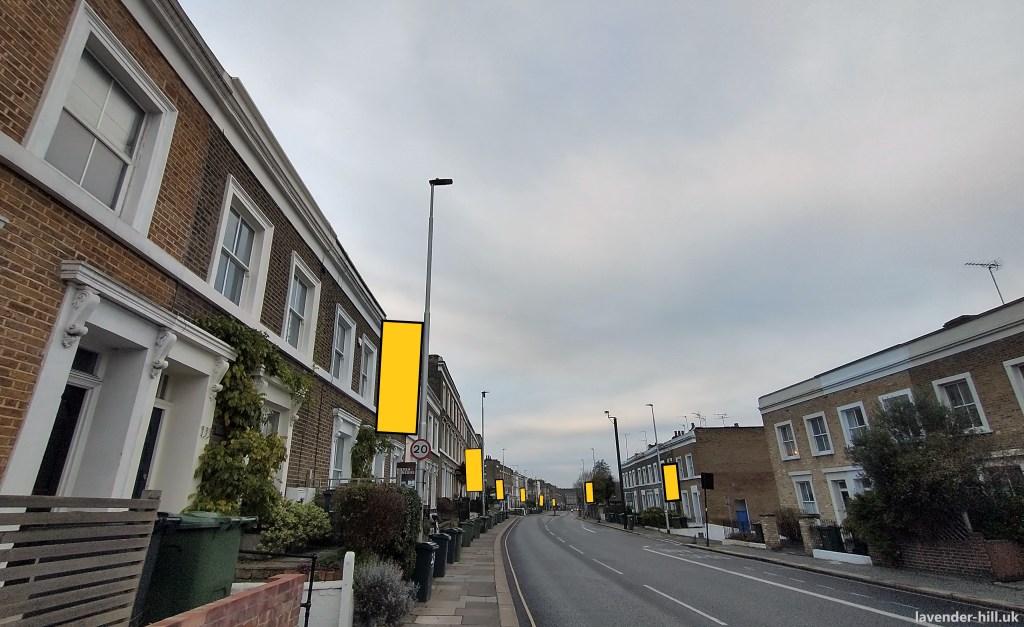
This would change rather radically if essentially permanent large advertising banners went up on this section – our (admittedly crude) artists’ impression below shows how these would pretty immediately dominate the view, and severely undermine the key view in this conservation area. Bay Media do acknowledge that their proposals ignore the conservation areas – saying in their application that “Although some sites may fall into conservation areas, a precedent has been set for advertising to be displayed within these areas – such as the use of digital 6 sheets, and larger billboards [both digital and traditional]. As such, we don’t feel this will have an impact on our site selection.“
In our view isn’t good enough: As our photo above shows, Lambeth ‘s planners have done a pretty good job in recent years in protecting this conservation area and it does not include digital size-sheets or billboards – and to be honest we think they have recognised that they will be causing damage to the conservation area but knowingly ignored it in the (optimistic) hope that Lambeth planners won’t spot the glaring inconsistency! We’re not too sure if Bay Media have even visited this actual stretch of the road. The shop owners and households on this stretch of the street have followed the rules on conservation areas, to protect the area as a whole, and it seems only right that third party advertisers should do the same. Sometimes the ‘temporary’ nature is also used as a get-out clause for otherwise unacceptable proposals, but these signs are going to be up for a minimum of ten years, and they’re far more prominent than a typical shopfront – so that doesn’t really wash here either.
So overall – a reasonable idea overall, but one that needs some changes to protect specific areas of the streets. Lambeth has already signed an agreement with the advertising company, so even though planning decisions are separately managed they’re not realistically going to reject this planning application. But they might at a push be willing to agree changes with the applicant.
In terms of the specific planning application, we reckon eight of the proposed lamp post banners should really be removed from the proposal (numbers 139, 141, 144, 145, 148, 149, 154 and 159) – which seems a pretty reasonable adjustment as it still leaves the company with half a dozen banners along this stretch which are not in the conservation area & right in front of designated buildings, as well as hundreds of others along the rest of the road and across the Borough.
If you want to view the proposals and comment, it’s on the Lambeth planning website where you need to search for planning application reference number 21/04194 . Lambeth is officially accepting comments up to the 17th December (and probably for a week or so after then – because local authorities always try to take any reasonable input in to account even if it’s a bit late). You can feed in comments online, by post or by email to planning@lambeth.gov.uk (making sure you include the reference number & your name and address).
Update: Lambeth’s planning officers seem to have agreed with us – the plans got sent back for revision.Helpfully, Lambeth’s Conservation & Urban Design officer had similar thinking to us, saying that “The buildings which line Wandsworth Road are relatively small in scale, largely restricted to two or three storeys. The scale, combined with the relatively narrow street frontages creates a fine visual grain to the area. […] The proposed banners would add unwelcome visual clutter and would harm the character of the conservation area, harm the setting of the various listed buildings and locally listed buildings and spaces. […] the limited information provided in relation to the actual appearance of the banners makes it very difficult to fully assess their impact. […] The number of banners proposed is considered excessive and unjustified, on almost every lamp post.[…]. If we are to support any banners, the number will need to be significantly reduced, with locations carefully considered and fully justified in terms of impact on townscape, visual amenity and any nearby heritage assets”.
In the revised version of the plans (extract shown below), banners 139, 141, 144, 145, 148, 149 and 154 – which is essentially all of the banners visible in our artists’ impression above – were removed.
The overall number of banners along Wandsworth Road was also significantly reduced from 73 to 19, mostly by taking away the banners that are on the residential bits of the street rather than areas of shops. The planning officers disagreed with us on banner 159 (which is in front of the Baptist church) on the grounds that it was not considered to cause harm to the conservation area. The amended plans were then approved. Overall this is a reasonable, and fair, outcome and it’s good to see that Lambeth’s planning officers shared our thinking and that the plans went back to the drawing board – and came back in a more sensible form – as a result.
Lavender Hill for Me is a community website working to support Lavender Hill, a neighbourhood in Battersea, London and a home to about 250 shops, restaurants and small businesses. We take an active interest in developments that could improve Lavender Hill for residents, traders and visitors.





















 Lavender-Hill.uk : Supporting Lavender Hill