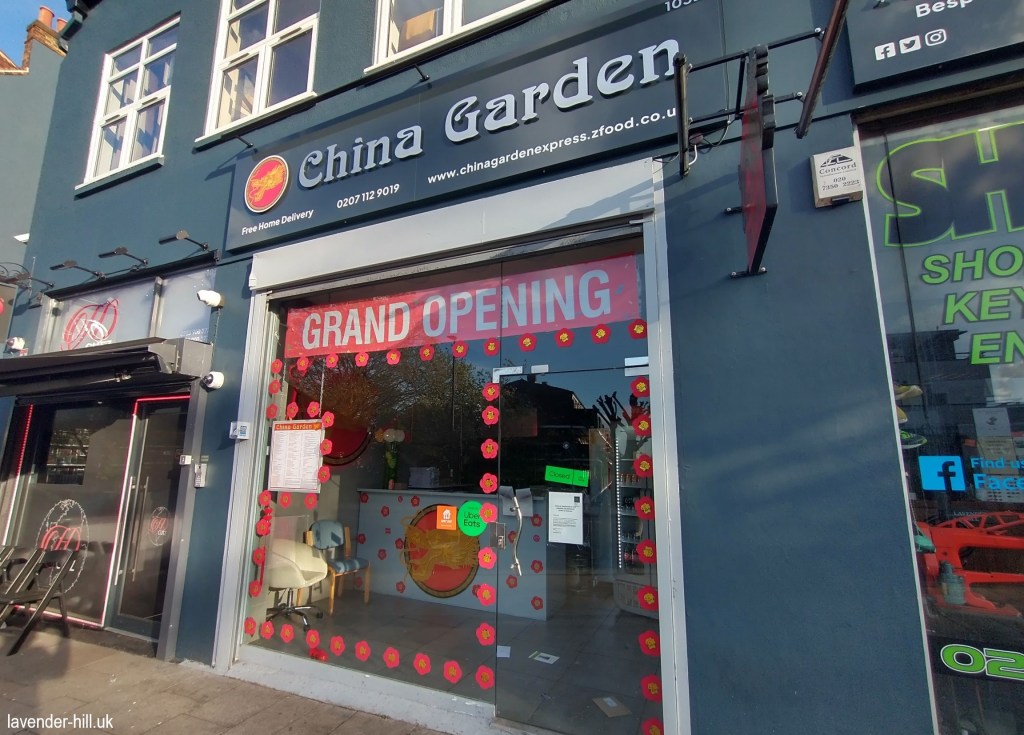
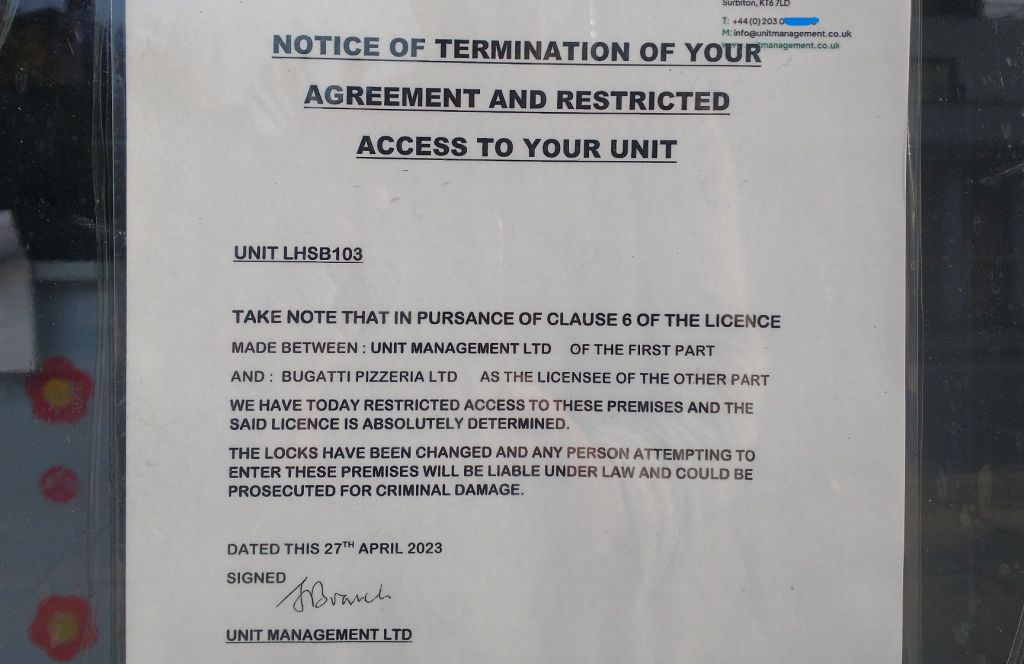
The grand opening banner is still up at China Garden, Lavender Hill’s newest Chinese takeaway. It had a busy few weeks, and was generally decently reviewed. A lot of effort (and money) clearly went in to fitting it out to create a clean and functional kitchen and service area. Indeed the business was already on to its second sign, as the initial red one was replaced with a black one as the building was smartened up. But look more closely, and there’s an eviction notice on the door – they’ve already closed down! Things have gone badly wrong here, and this looks like the fastest opening and shutting down we have ever seen.
What went wrong? No-one knows for sure, but summary termination nearly always means the rent’s not being paid. The new business is linked to an existing local pizzeria on the Battersea Park Road, and having distributed menus to the whole district, it looked to be making a pretty healthy turnover in the short time it was up and running. There were a few areas to refine to maximise profitability – for example, it’s always worth offering a 20% or so collection discount to encourage in-person pickups (because that’s still more profitable than the 32-35% cut that Deliveroo and the like typically take), which they didn’t do, and they weren’t great at answering the phone when they were busy – but nothing suggesting the business was struggling.
Maybe the issue is that there were months of fitting out work before the takeaway actually opened, as the unit had a comprehensive refit. There were several points where it sat empty for weeks and weeks with seemingly nothing happening (back in December last year we were already commenting on the slow pace of works) – maybe utility supply issues, maybe equipment stuck in the post, or maybe just a difficult build project. We suspect that the time the unit was ‘in development’ was significantly longer than any rent-free period initially offered by the landlord (which in this case is Unit Management Ltd, owners of the Battersea Business Centre), and that by the time the business started trading a significant rent bill had already stacked up and not been paid. This is a risky thing to do – particularly because the notice stuck to the door makes it clear that China Garden had a licence, rather than a lease – an arrangement which doesn’t give much security of tenure, and means they can be thrown out very quickly if they don’t keep to the terms of the agreement with the landlord.
It’s always sad to see someone’s project go wrong, and a lot of time and money involved have gone to waste here. This business had potential, as a well-equipped business and one of relatively few Chinese takeaways on Lavender Hill, and it was still in its infancy. Maybe things will be patched up somehow, but chances are this tidied-up unit is now going to be up for lease again.
China Garden Express Clapham, 103a Lavender Hill, London SW11 5QW
Battersea’s industrial spaces are an endangered species! Developers regularly go scouting around the lesser corners of the Borough looking for anything that looks a bit ‘industrial’, with a view to converting it to new residential development. This can be a bit of a problem – as we still have thousands of small and medium sized businesses, which create lots of local jobs and are an important part of the local economy – but which are finding it harder and harder to find locations as their unglamorous-but-useful premises are destroyed.
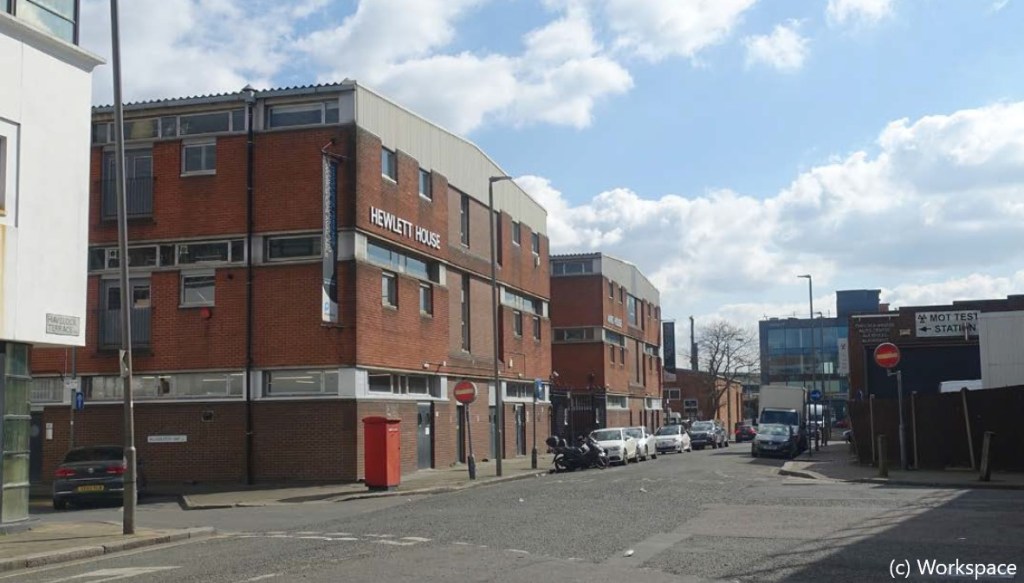
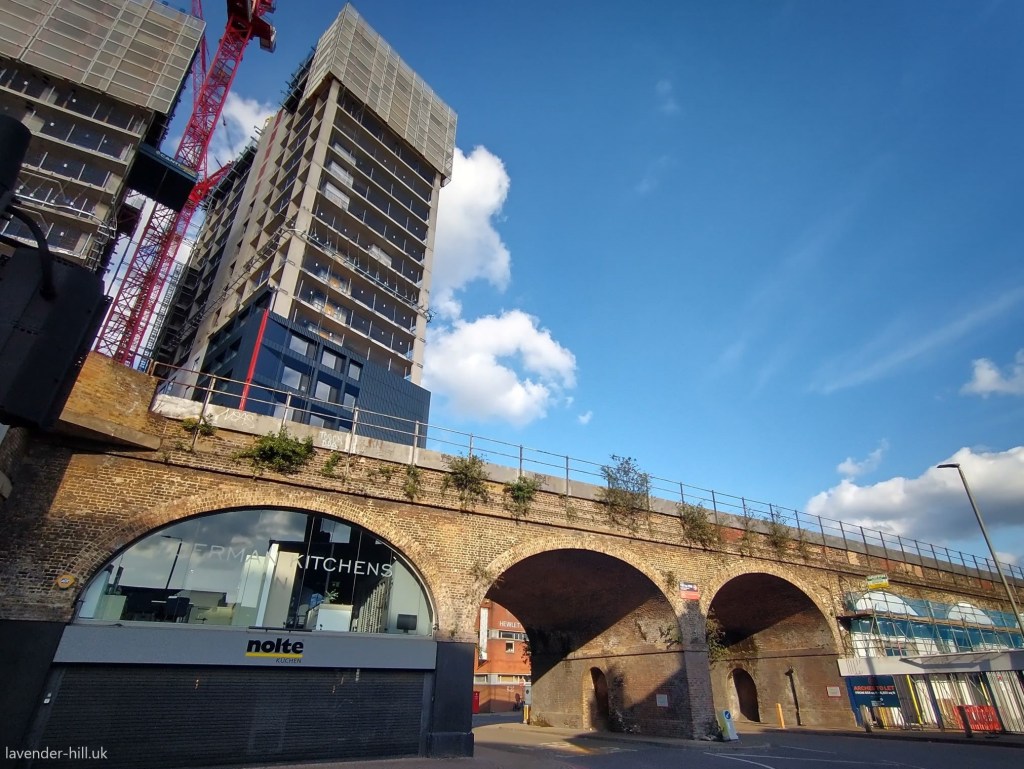
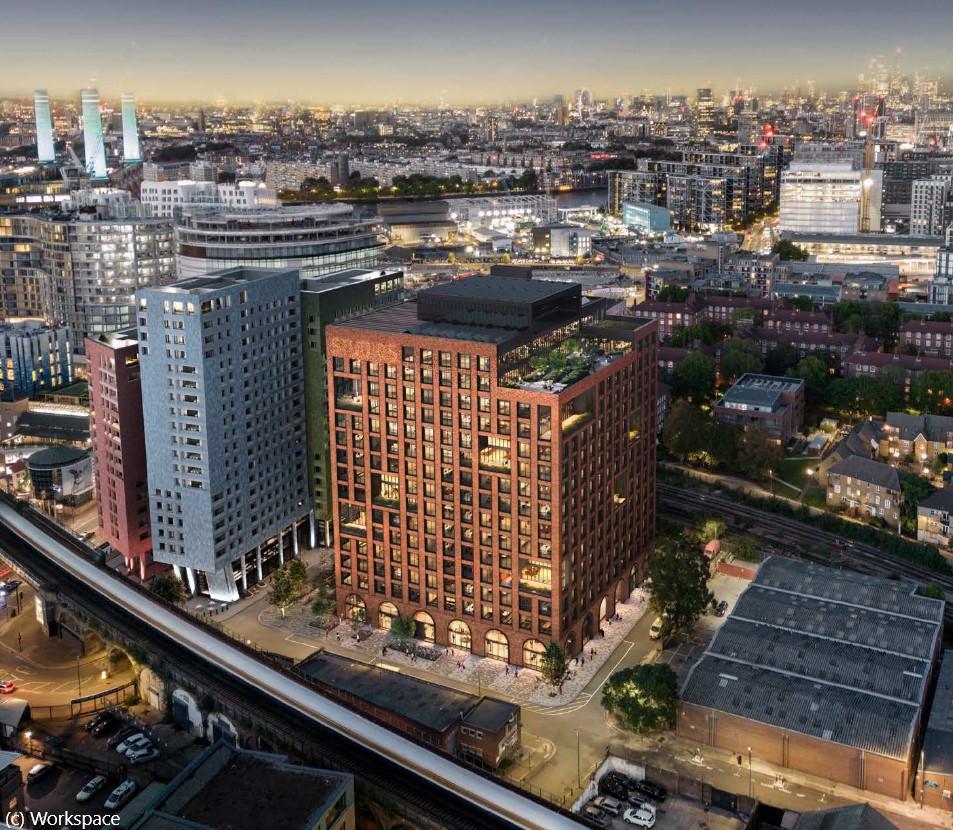
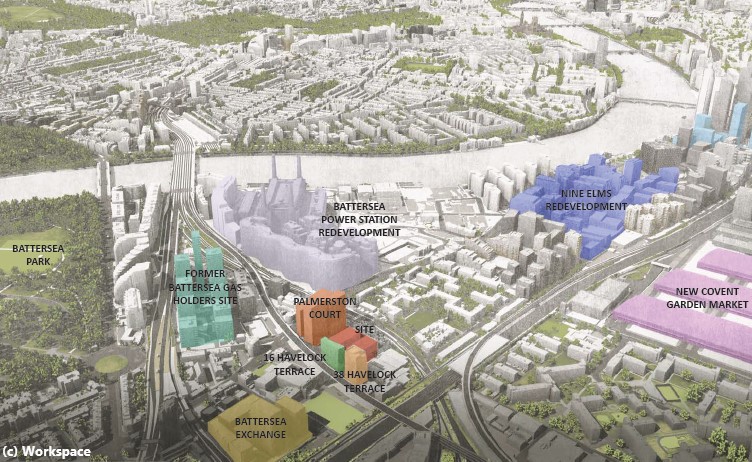
Which is why a planned development on Havelock Terrace is interesting. The location – pictured above – is a whisker south of Battersea Dogs & Cats Home. Chances are you won’t immediately recognise it, as it’s not the most exciting bit of Battersea – a pair of dreary industrial buildings from the 1970s, trapped between a variety of other light industrial buildings. Just the sort of site that is very much on the ‘endangered’ list right now – so much so that its neighbour is already being rebuilt by student accommodation specialists Urbanest to create 174 student flats and a large office building. That vast construction project is shown below, with the about-to-also-be-rebuilt industrial building just visible peeking through the railway arch to its right.
But this particular industrial building has proved a surprisingly successful one. It’s owned and managed as a business centre by Workspace, who own and manage 58 business centres across London – from converted factory buildings to co-working hubs and purpose-built managed business centres. They keep things simple and flexible with an ‘all inclusive’ approach where all bills are included, leases are short, and tenants can grow or shrink the space they need at quite short notice, which seems to be working as they now host around 3,000 small and medium-sized businesses.
Workspace’s Battersea business centre is home to myriad small tenants doing everything from IT startups to clothing design. It has particularly high occupancy levels, and they receive a steady stream of enquiries from new tenants, despite them not doing any active marketing at all. They expect demand to ramp up even further now the previously-somewhat-isolated site is about a minutes’ walk from a Zone 1 tube station. All of which explains why redevelopment is on the cards – but not for replacement with flats.
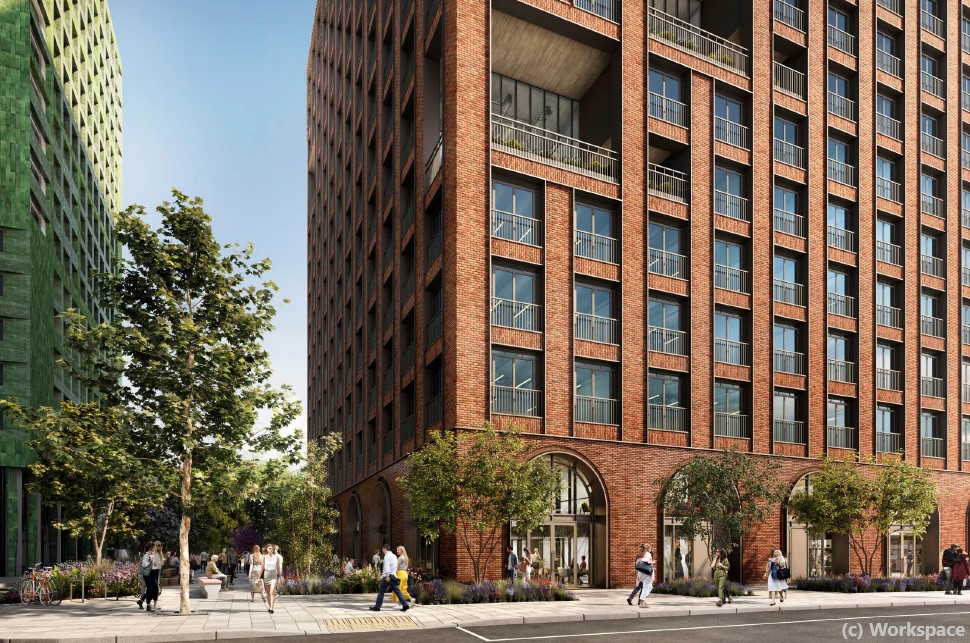
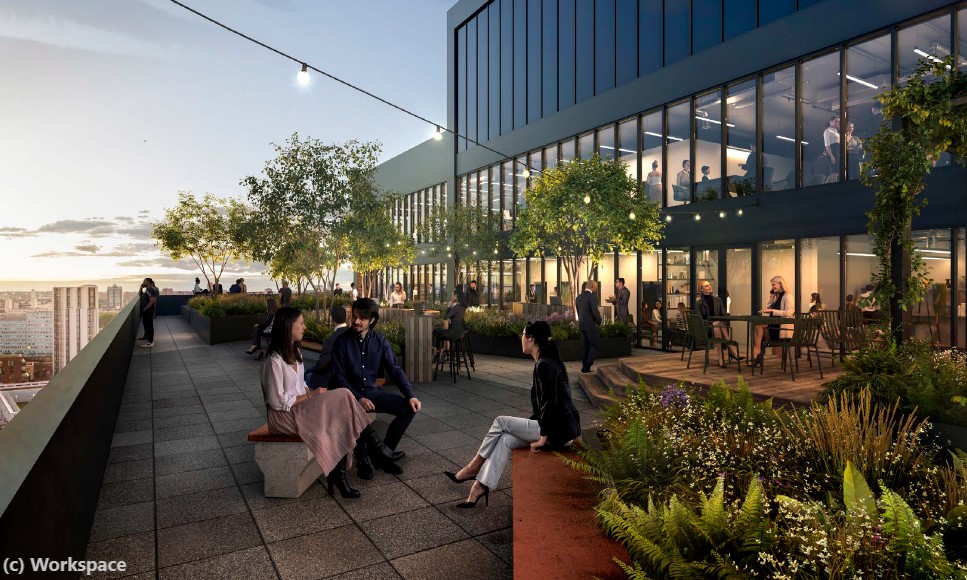
Workspace are planning to demolish everything and build a new 15-storey building specifically aimed at businesses and light industry – creating a lot more space and bringing it all up to modern standards, with generous high floor to ceiling heights. The planned new building pictured above, will have a mix of of unit sizes which have been designed to be flexible and good to work in – the smaller ones have double-height break out spaces with communal terraces and outdoor spaces, while the medium-sized open plan units have larger private terraces. The ground and first floor have the largest units, aimed at light industrial workshops that are likely to be moving big and heavy things around – so are equipped with access to a loading bay, directly or via a dedicated goods lift, as well as high ceilings, and extra-wide doors and corridors.
The new building will also include communal facilities – with a cafe, and meeting / reception areas, as well as a communal roof terrace. There will be a retail unit next to the main entrance, as well as cycle parking, showers and lockers in the basement. Workspace aim to start construction in the first half of next year. Obviously one question is what happens to the existing tenants during the works: in the longer them this will create more space, but for some time it will be a hole in the ground! Existing tenants will be given a minimum of 4 months’ notice before development starts, with the option to move to Workspace’s other local sites, which include Morie Street Studios and The Light Bulb (both in Wandsworth town centre).
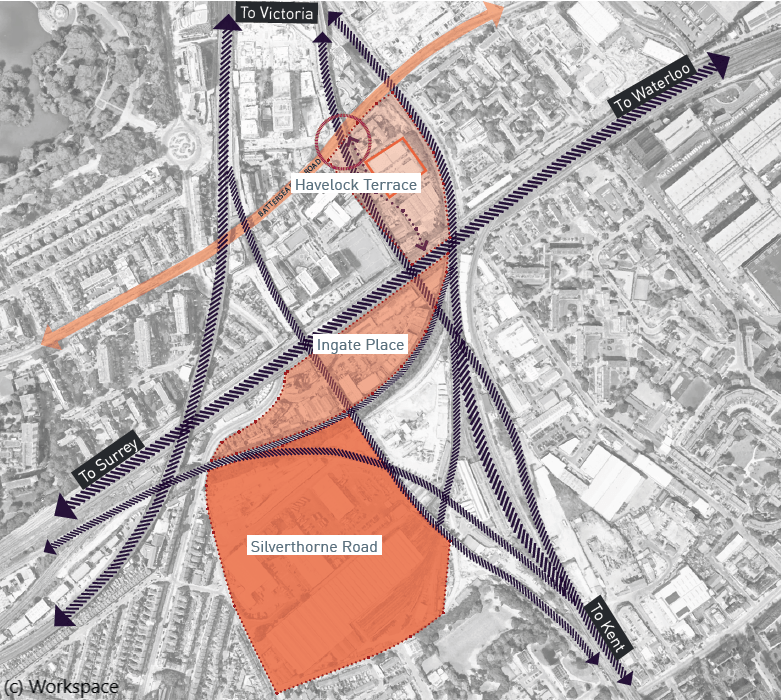
This isn’t the first proposal for higher-rise industrial use – maybe because the site is within the Battersea Design and Technology Quarter, an area shown in orange in the map above which is being deliberately developed as a home to business. We’ve written previously about some of the projects underway on the ‘Ingate Place’ part of the site, and two other similar proposals are also being developed in the Havelock terrace area, shown in orange and light green below –
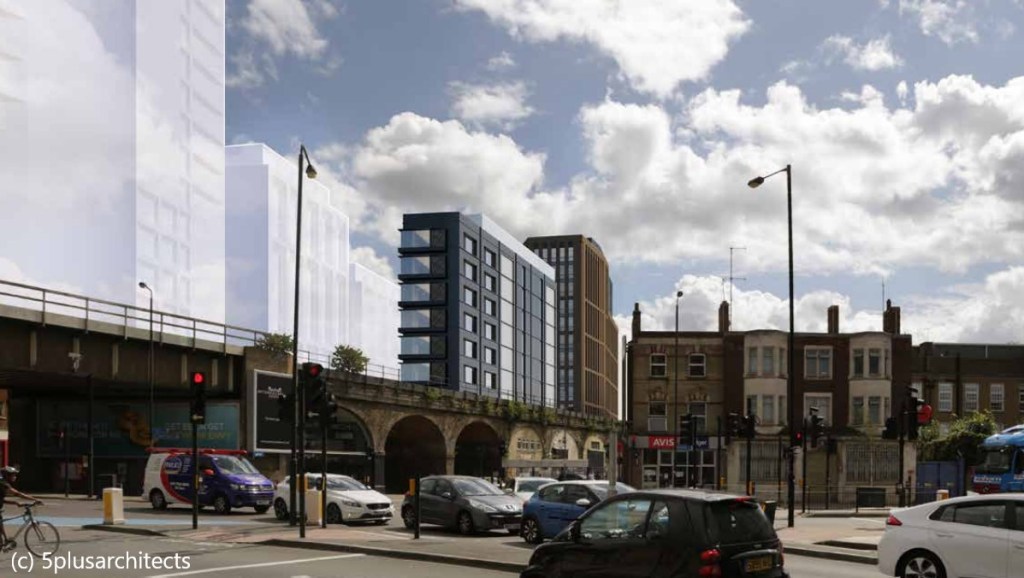
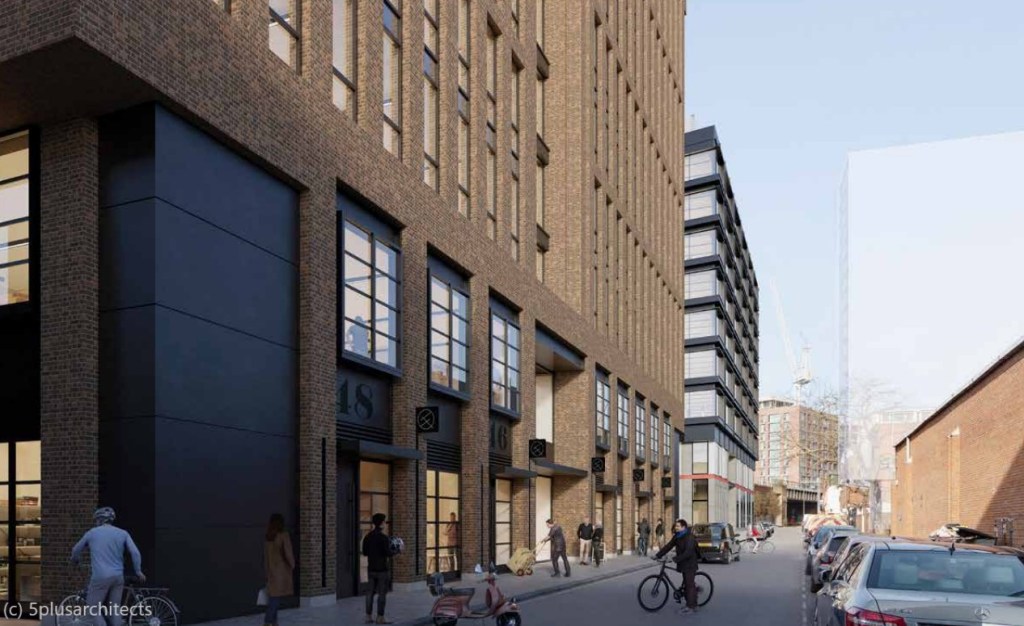
Another small industrial building at 16-48 Havelock Terrace, directly across the road from Workspace’s project, has planning permission to be replaced with a pair of new buildings – one of them thirteen storeys and one nine, which will together provide 15,000 square metres of flexible workspace as a ground floor communal facility. The approach being taken is similar to what Workspace are planning but on a slightly smaller scale – with scope for light industry at the lower levels, and flexible office and workspace on the upper levels.
The image above shows these two buildings from Nine Elms Lane, and the one below shows these two buildings on the left, with the planned Workspace building not shown but set to be built just behind the brick wall pictured on the right. It may take time for these buildings to take shape – but the future for this little-known corner of Battersea looks quite high-rise! This spot between the railway lines is a location where it makes sense to build upwards, and it’s good to see that we’re not losing the space for the businesses that create local jobs and opportunities. As ever, we’ll keep you posted on developments.
We’ve previously reported on the various projects to expand, or replace, Clapham Junction’s Lidl supermarket. It’s a busy shop, being a rare full-range branch in inner London, with car parking and right next to a major train station. Unsurprisingly, it’s one of their best-performing supermarkets, and whiel it always seems to be crowded, the success of the store has also proved to be one of the biggest challenges when it comes to improving or extending it.
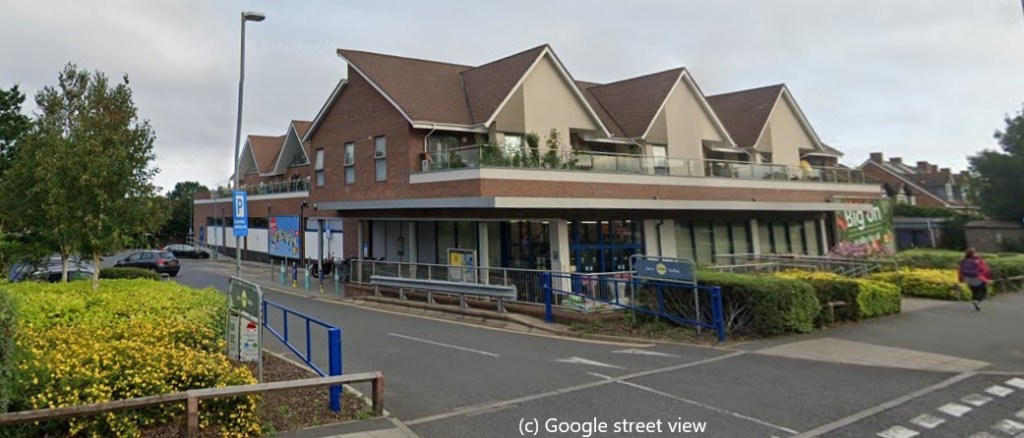
The store has seen a series of minor changes in recent years, to get as much out of it as possible – with a small extension that added one more aisle in 2006, followed by another small extension in 2012 to create an in-store bakery (pictured below – a venture by Lidl which has been quite successful, and given them a good point of differentiation compared to largely bakery-less rival Aldi).
But the store was still too small, and too crowded – it’s about half the size of their more recent store in south Earlsfield but rather busier. So Lidl thought big, and developed plans to completely rebuild the whole site – creating underground car parking with a much larger store on top – an artists’ impression of the view from Falcon Road is shown below. These ambitious plans would have seen the store completely knocked down, and a new building built that would stretch right up to Falcon Road, replacing the rather bleak brick wall that supports the car park with a proper entrance to an extended store, that would sit on top of two storeys of car parking. These got planning permission, but were never implemented.
Proposed view from Falcon Road
The reason wasn’t a lack of money or enthusiasm on Lidl’s part – but rather, the thorny question of where to put the store during the building works. The willingness to invest and upgrade this branch is there, but no suitable temporary sites could be found – and closing this flagship site for a major rebuild represents quite a cost to the business as well as a headache to the established customer base. As a sort of stopgap, a couple of years ago the shelving was all replaced to increase the height and density of stock, and self-scan tills were brought in to increase capacity.
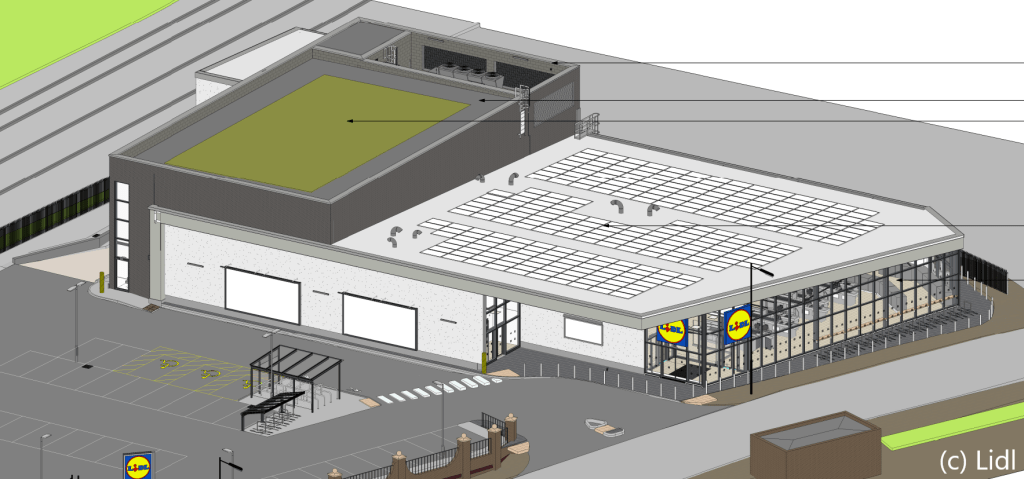
Lidl went back to the drawing board, and the latest plans instead foresee yet another extension to the existing building, but also a more general restyling and refurbishment. The current roof will be replaced with new one that will let more light in to the store, and a second storey will be added right at the back of the site near the railway lines, which will allow the staff back office section to be moved upstairs and free up a bit more space on the shopfloor. The store will be extended closer to Falcon Road – replacing the current paving and trolley storage area pictured below to create up to five metres of extra space.
The store will have better green credentials too: new glazing on the south side of the building means there will be more natural light inside the store, a small ‘green roof’ is planned on the two-storey section of the store, and there will be over 300 solar panels on the new roof. Four of the 61 current parking spaces will go, to create an extra 34 cycle parking spaces (compared to just eight current bike stands), and two electric vehicle charging points will be added. One interesting thing in the planning report is that the overgrown railway sidings between Lidl and the tracks are an officially designated “Grade II Site of Importance to Nature Conversation” – in the map below the green squares represent ‘scattered shrub, the brown circles are ‘tall herbs’, and while no actual animals were identified in the most recent site survey, these slightly wild spaces are part of the local wildlife habitat.
These new plans aren’t controversial, and this new investment, assuming it does go ahead unlike the previous set of plans, will make this a better store. It updates the general appearance of the place, which was built back in 1996 and is now looking distinctly dated. It gives a little more space to the store, partly by taking over the paved area facing Falcon Lane, and partly by allowing some of the back office / administrative space currently housed on the ground floor to be moved to the new upper level. The project as a whole creates an additional 720 square metres of internal floorspace (growing the store, whose existing surface is 1443 square metres, by about 50%).
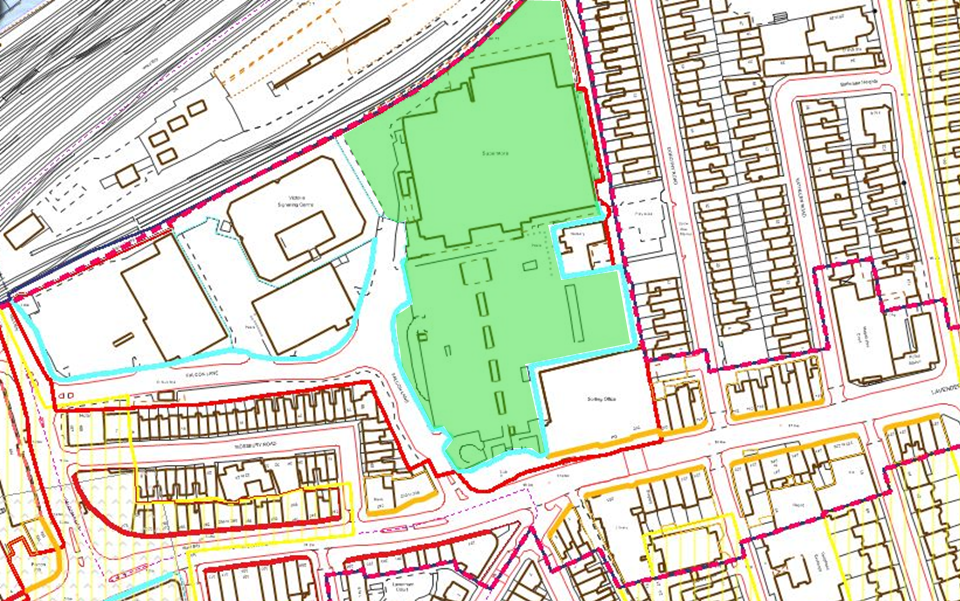
However it’s also fair to say that they’re not really taking advantage of the full potential of this site, which could be developed to bring this rather ‘suburban retail park surrounded by parked cars’ area in to being a proper part of the town centre it sits in the middle of, and which would improve the frontage along Falcon Road. Wandsworth’s planning policies – the ‘site specific allocations document’ – already has the whole area with a blue line around it in the map below earmarked for high density mixed-use development, and it’s one of relatively few similar sites in the Borough that has yet to see any action. The planning department’s report on the latest proposals does give the impression that they were hoping for something a bit more ambitious, noting that the plans “would not deliver the area’s aspirations in regard to a high density mixed-use development“, but that “the proposal results in an acceptable continuation of the existing use for when a more suitable and comprehensive re-development of the whole of the SSAD site comes forward in the future”. However Lidl’s plans are consistent with the local policies that favour retail in town centres (for the planning geeks out there – part (b) of policy DMTS1, and also the emerging Local Plan policy LP42 on ‘development in centres’).
The current project will no doubt see Lidl remain a single-storey store for at least a decade, although we suspect in the long term we will, eventually, still see a redevelopment to provide retail on the lower levels and either flats or maybe some office space built above. This would likely end up looking like what we have seen happen in the vast redevelopments at Sainsbury’s sites in Fulham and Nine Elms, or indeed on a rather smaller scale at some other Lidl sites such as their store in Chessington (below) which includes flats with large balconies designed to fit in to a more suburban location.
Maybe this sort of redevelopment will happen sooner with the other big supermarket buildings on Falcon lane. As our previous detailed article on the longer-term future of this site, the station itself and the other retail sites around it noted, in the longer term we’re likely to see the Asda site grow and accommodate far more within the space. The large branch of Boots next door’s lease also ends next year, so that site may also be coupled with the soon-to-be-redundant railway signalling site behind it (which is now under the same ownership) and see higher-rise construction work. We’ll keep you posted on these wider sites – but for now, while it’s a little disappointing that we did not get the full bells-and-whistles upgrade that was previously being considered for the supermarket, it’s good to see some probably overdue investment in modernising the local Lidl.
Very early stage masterplan for Clapham Junction station redevelopment – note that this builds in the Asda site. Note this is, at this stage, a very early design…
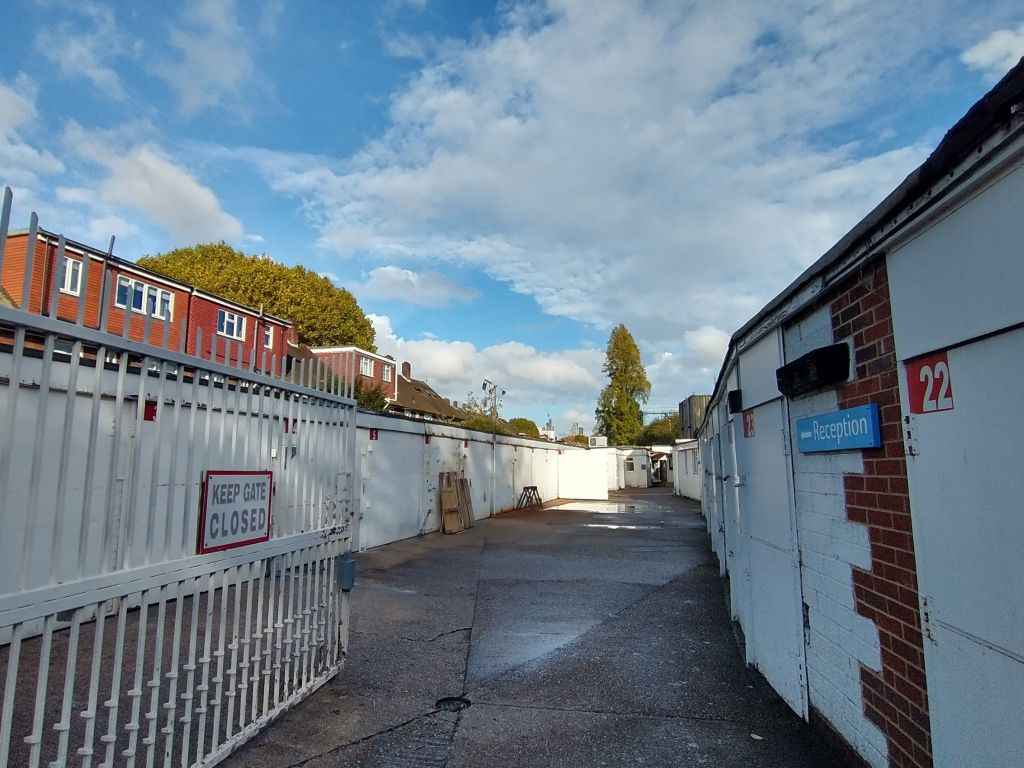
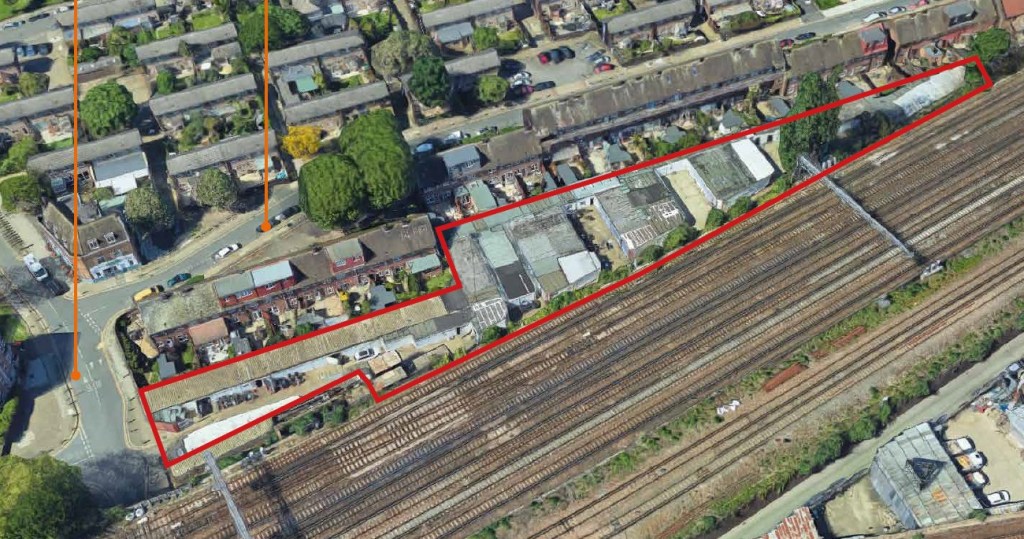
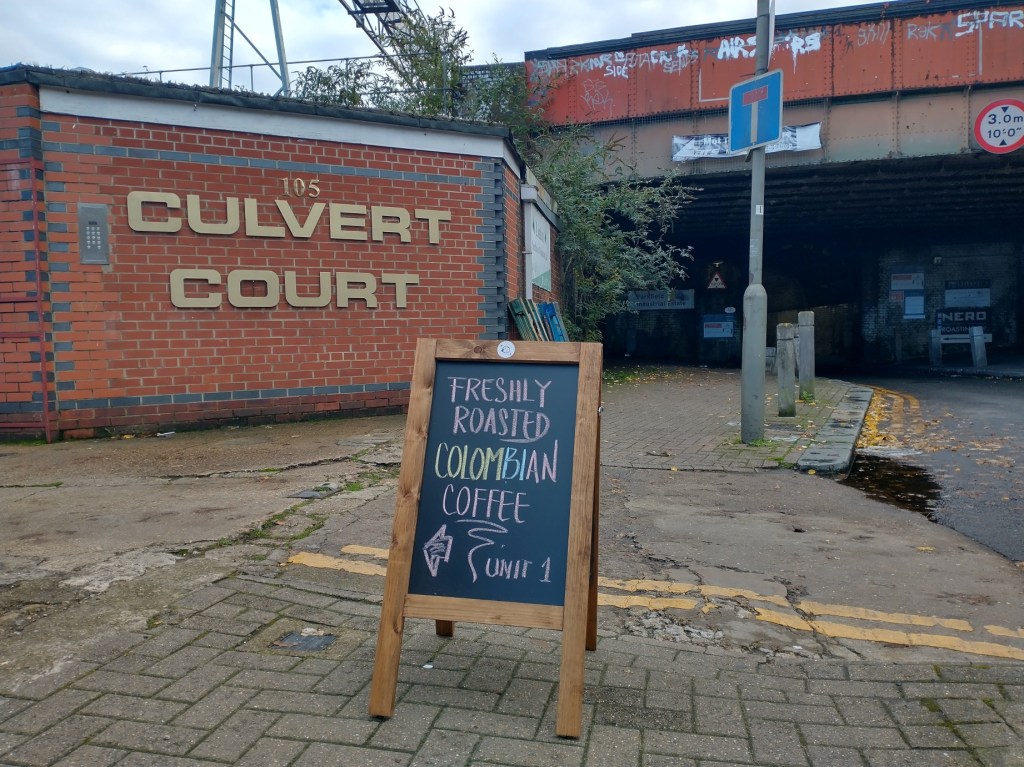
Local business premises are an important way of ensuring there are readily accessible jobs that don’t involve commuting across the city, but they’re also quite endangered, and always under threat of being converted to flats. That said, there are more pockets of light industry still going in Battersea than many people realise (as we’ve touched on before) – many of them in the somewhat hidden-away areas that don;t lend them selves to ‘luxury’ residential development. One particularly little-known local ‘industrial’ site is Culvert Court, a sliver of land trapped between the railway and the Battersea Park Etate, which is packed full of storage units and small workshops. There’s 22,000 square feet of space overall – not a huge area (for comparison, T.K. Maxx at Clapham Juntion is about 30,000 square feet) – but what makes it particulatly odd is that the space is split in to 128 tiny little units! The small size and really rather basic condition of most of these ‘micro units’ means that they are very affordable – which is probably why the site has ended up as home to a bewildering array of small local businesses (we wrote about one of these – AL Coffee Roasters – a few months ago). Useful as this site is, it’s fair to say that the buildings are tired and have definitely seen better days, so some sort of redevelopment was almost inevitable.
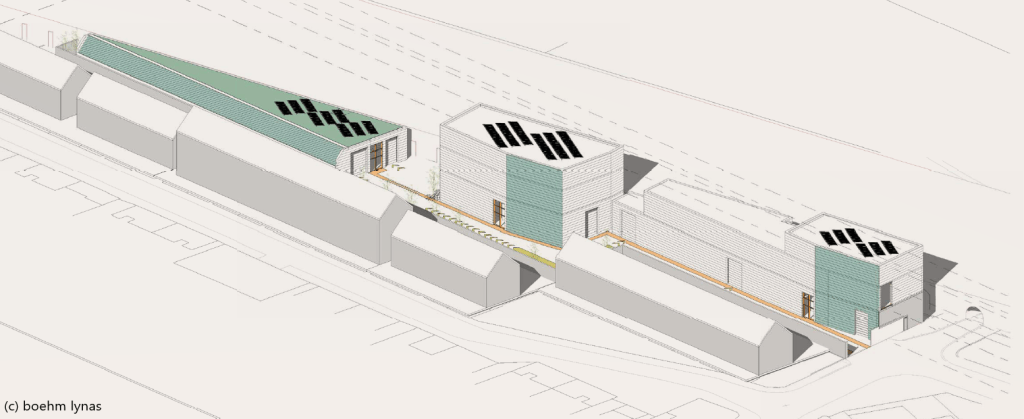
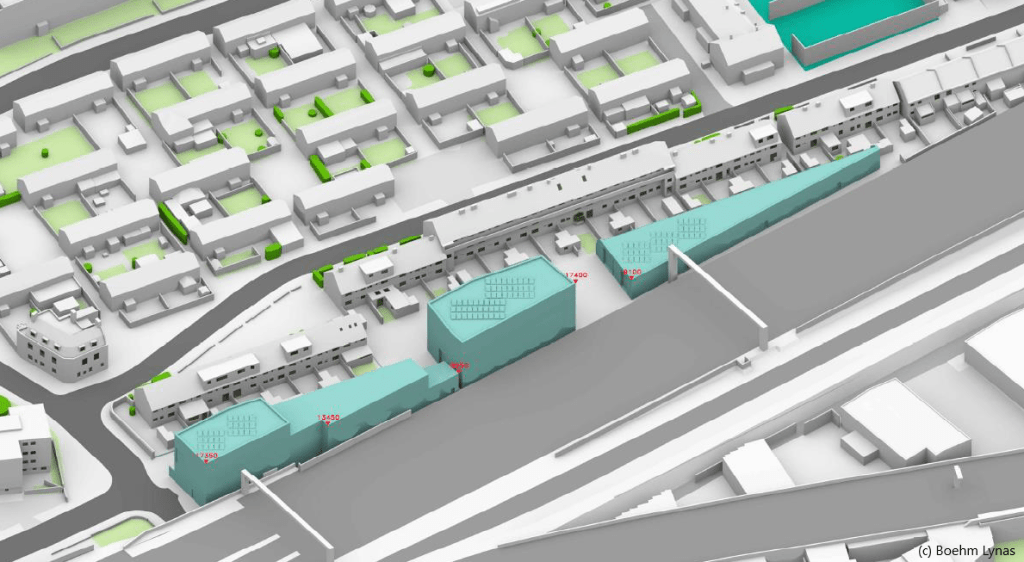
The site was bought by new owners in June last year, and proposals quickly emerged for a complete rebuild of the site. The plans will create a site worth about £30m, with the building floorspace growing by about 50% – to 36,500 square feet. But maybe more importantly, it will see a mass of rudimentary single storey lockups demolished, and replaced with three more advanced modern buildings that allow for larger spaces to be rented. By creating two- and three-storey structures more space will be freed up between the buildings, even as the development creates more overall floor space. It’s being developed by Avanton, who have developed two other notable projects in Battersea – the brand-new headquarters for the Royal Academy of Dance on York Road (which was accompanied by a large residential development), followed by the redevelopment of the Academy’s former site at Battersea Square to become an extension of Thomas’s school.
This project – whose layout is shown above – was very controversial when it went ion to the planning process. An impressive 48 objections were received to the planning proposal – many of them carefully written and very detailed, and mainly from residents of Rowditch Lane and Sheepcote Lane who are likely to be the most affected (indeed, some people objected more than once). A particular concern, which we very much agree with, concerned the proposed creation of a large cluster of new ‘dark kitchens‘ – which are hidden-away kitchens that make food that’s branded as coming from restaurants you will likely recognise, but aimed directly at serving the delivery market. Culvert Road has already got several dark kitchens run by market leader Food Stars, hidden away deeper in the Parkfield industrial estate between the railway tracks. While there’s nothing wrong with the kitchens in themselves which clearly serve a significant local market, the amount of trade there has led to an absolute explosion in motorbike traffic – with the noise and danger that that entails. In our experience, some riders are very considerate – but some very much aren’t! – and the road network here was never really designed with that level of traffic in mind. The route is also the only access road for students from north of the railway to the John Burns school, which creates particular dangers when a load of speeding motorbikes are added to the mix. Problems with antisocial behaviour by the occupiers of some of the existing units at Culvert Court are also frequently mentioned. Concerns were also raised about the effect of a three-storey development on daylight in the houses immediately to the north of the site.
Sensing the level of concern about the initial proposals, the developers went away and changed the plans. The height of one of the buildings was reduced from two storeys to one, and the other buildings were slightly lowered as well, reducing (but not removing) the overshadowing of neighbouring houses and gardens. And maybe most significantly, the large cluster of proposed new ‘dark kitchens’ was completely deleted and replaced by a building providing standard industrial floorspace instead. The revised plans didn’t resolve all the concerns – and still saw another 17 objections – however the changes were actually quite significant, and this is maybe a good example of a situation where local concerns can actually lead to changes.
Following these changes, the development went to the full Planning Application Committee (rather than being decided by planning officers – which is how less controversial ones are usually decided), and it received planning permission – with 36 fairly detailed conditions that need to be met before the development can be occupied and while it is in use, stretching from evidence being needed on urban greening and rules on opening hours, to a ban on any telecoms antennas or roof terraces. It is worth noting that the planning department’s 54-page-long report was quite impressively thorough and detailed – going through the impact on houses along Rowditch Lane on a house-by-house basis and looking at the daylight impact for each property. Avanton have started work to appoint a lettings agent for the new development, and now plan to get going as soon as they can – aiming to finish by early summer 2024.
Now there’s frankly no getting away from the fact that these will not be particularly beautiful buildings! The image above shows what the entrance to the site will look like after the works are complete. They are mostly clad in grey metal, with few windows. The plans include ‘green walls’ on the northern side facing Rowditch Lane – the greenish area in the image – that could soften the industrial appearance the building when viewed from neighbouring houses. However anyone with some familiarity with the planning process will conform that these ‘greenery’ plans usually vanish from the plans once building work gets going – indeed Wandsworth is littered with planned green walls that never got delivered!. Maybe this will be the exception to that general rule…
However these non-beautiful buildings will be modern, efficient, functional ones – that are well suited to their planned use. All the new buildings will provide a good standard of flexible workspace and be easy to subdivide to a mix of unit sizes, and so be ready for use by a wide range of occupiers. The plans meet Wandsworth’s requirements that new business spaces should provide suitable loading facilities, ceiling heights of at least 3.35m, space on site for commercial vehicles, and goods lifts with a minimum loading of 500kg. In this case the plans provide flexible floorplates that are mostly free of awkward columns, and decent size doorways. The new buildings will also be up to modern energy efficiency and insulation standards, meaning that they can be heated (which was a real challenge with some of the old structures, that are a mix of old fashioned garages and repurposed shipping containers) – with both solar panels and air source heat pumps helping keep energy costs down. The second floor of ‘Building Two’ – the tall one about half way along the site – would be designated as 329 square metres of ‘Affordable Workspace’, rented out at a minimum discount of 20% to market rent. This would be backed by a legal agreement with Wandsworth Council to ensure that the space remains affordable and is properly used.
This will be a big change for Culvert Court, and it won’t please everyone as even the revised plans do not address all the neighbours’ concerns. However a redevelopment of some sort was long overdue at this useful but increasingly tatty site, and this is clearly good for business and creating local jobs. There has been quite a sharp rise in demand for warehousing and business space in central London, driven partly by the huge amount of delivery activity that we now see – at the same time as London lost almost a quarter of its industrial space over the last 20 years, mostly to housing development which tends to be willing to pay higher prices for land. This site right by the railway is well suited to business use, and we suspect that these units will be easy to let, given they are now a short walk from Battersea tube, and close to the established Parkfield industrial estate. Chances are we’ll see a similar mix of businesses as the nearby industrial areas – albeit those are bewilderingly wide, and include breweries, furniture makers, coffee roasters, gyms, builders, fashion designers, all manner of local services, and of course the rapidly growing ‘last mile’ delivery services. We’ll keep you posted as this project develops.
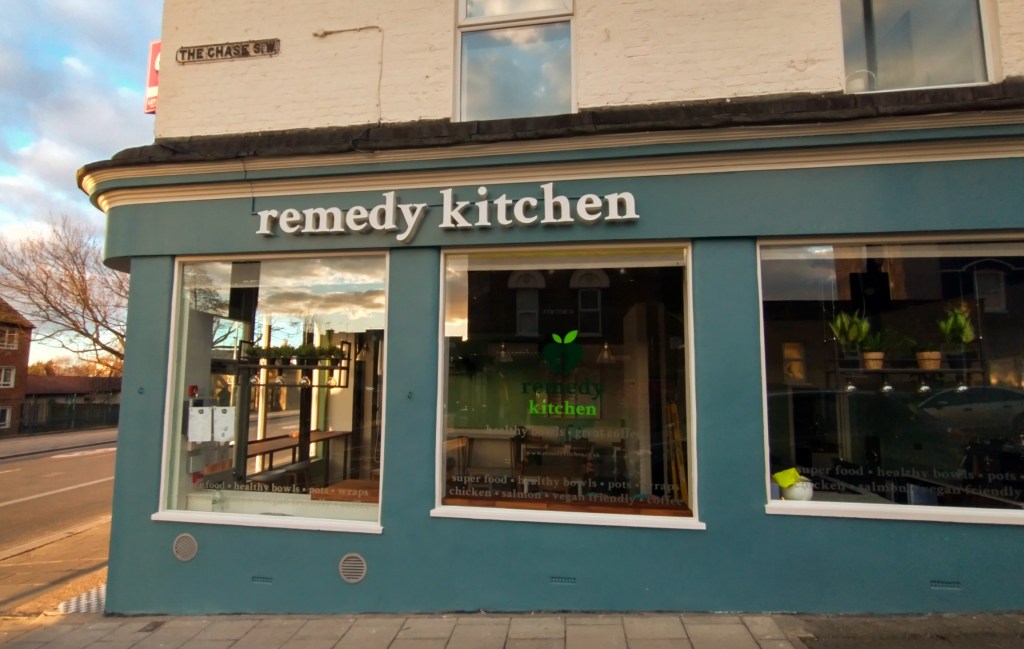
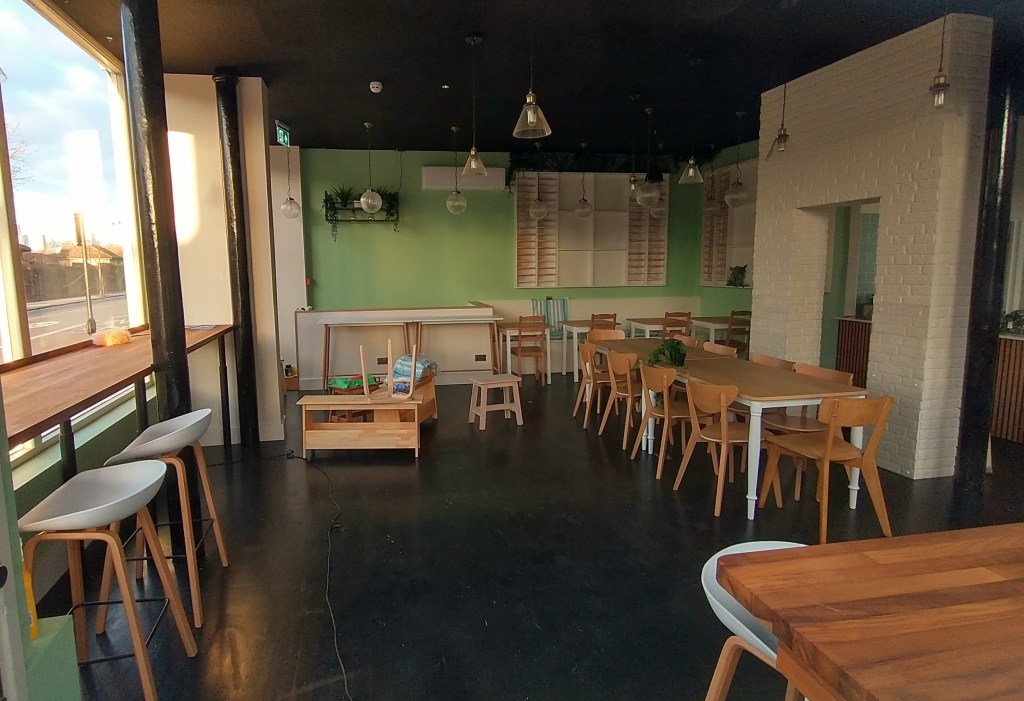
At the very eastern end of the street up on the Wandsworth Road, the big and beautiful corner unit that was home to Sinclair Till’s collection of carpets, fabrics and furnishings (until they moved to a new store that was somewhat smaller – but with the advantage of being right in the heart of Chelsea’s interior design heartland at Pimlico Road) has opened for the first time today – as Remedy Kitchen. Remedy Kitchen specialises in food that’s fast but also fresh, colourful and healthy – with a keen eye to the environmental impact of the business. Expect a mixture of healthy vegan & vegetarian bowls, wraps, soups and stews, including a range of breakfast pots.
Owner Fadi Chafi founded the business in 2020, as a delivery-only kitchen based in the huge complex of kitchens next to Battersea Heliport, before expanding to open an actual branch open to the public on Haverstock Hill near Belsize Park the following year. It’s clearly been a success – being shortlisted by Deliveroo for a ‘best newcomer of the year’ award, and Fadi is now returning to Battersea in a bigger way with an actual branch. The last few weeks have seen quite extensive works to the site, which has had everything restored and repaired, as well as a repaint from grey to teal that works rather well. The business has a local following thanks to the delivery operation, and this very visible new branch will bring Remedy Kitchen’s offering to a whole new audience.
It’s also good to see the new activity up at this end of the street – complementing Maiella Worth‘s recently refurbished Cafe/restaurant next door, which has found considerable success with freshly cooked Arrosticini, to the point where prebooking is definitely wise in the evenings. Further to the east, after a fairly long pause, work has now also got well underway at the former Lost Society / Artesian Well buildings, which we wrote about quite some time ago – which should bring a new Cafe and one other commercial unit back in to business. We’ll bring you an update on that site in a future post.
Battersea Park railway station just keeps getting busier. It was never a quiet station, thanks to a steady stream of traffic from the Doddington & Rollo flats and the mansions around Battersea park, and some weekend traffic to the park itself. But it got a lot busier from the late 2000s, thanks to rapid development all around the station – with passenger numbers climbing by 10% every year. Pre-Covid the station had hit 2.2 million annual passengers, and was on the brink of breaking in the the top 10% busiest stations in the whole country – creating the rather surprising situation where this fairly little-known local station was somehow getting more passengers than than the grand central stations for entire regional cities such as Lancaster, Swansea, Middlesbrough and Halifax! The pandemic briefly cut those numbers in half, but Battersea Park rebounded fast, and things are set to accelerate even further as the area around the station quickly becomes a forest of new flats, with vast developments on the site of the old Battersea gasholders, in the railway arches immediately opposite the station, and along Nine Elms Lane. And it’s not just flats – at least four large office buildings are also being developed within a few minutes’ walk of the station, as well an 850-bed student hall of residence opposite the Dogs Home, which will heap more demand on the station.
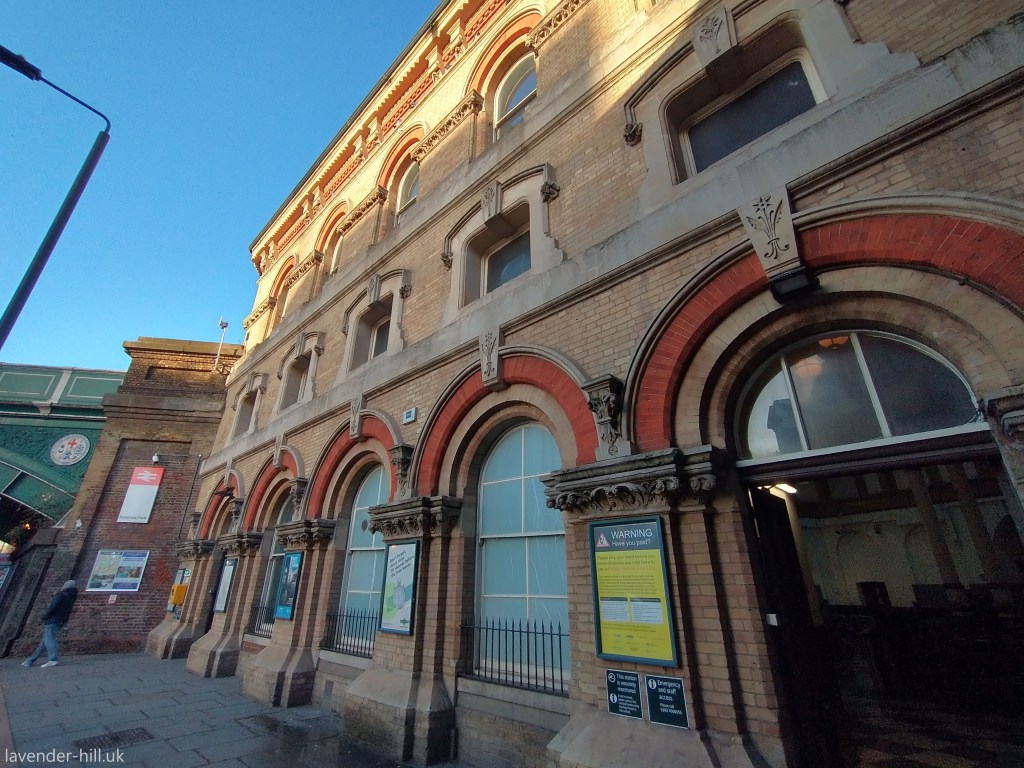
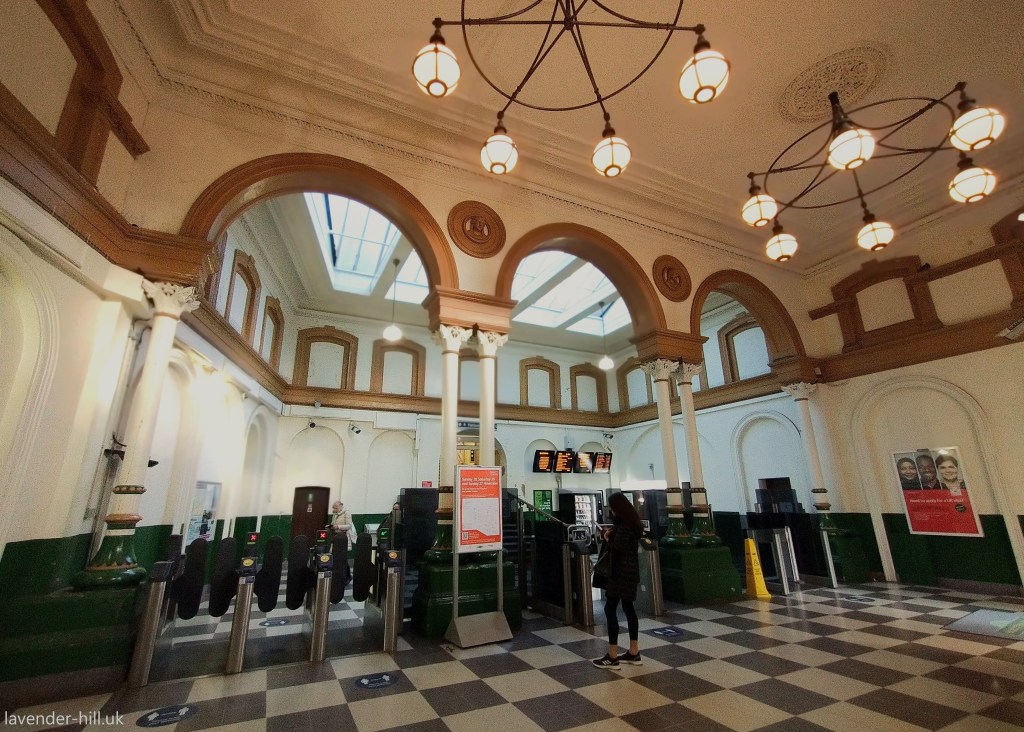
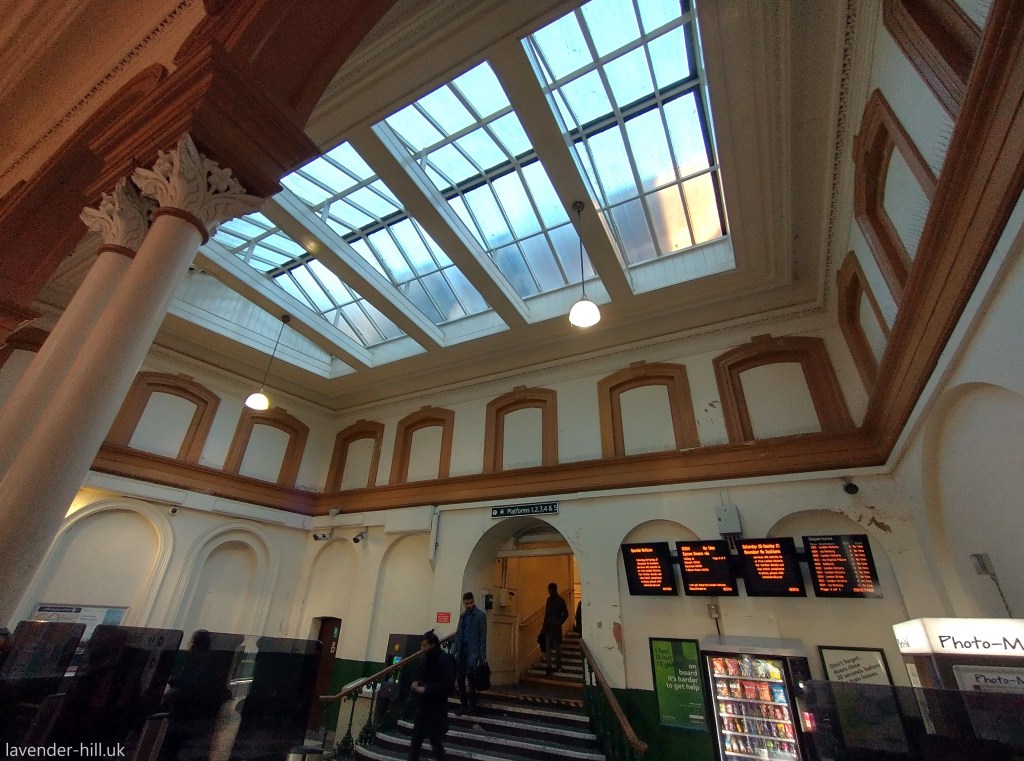
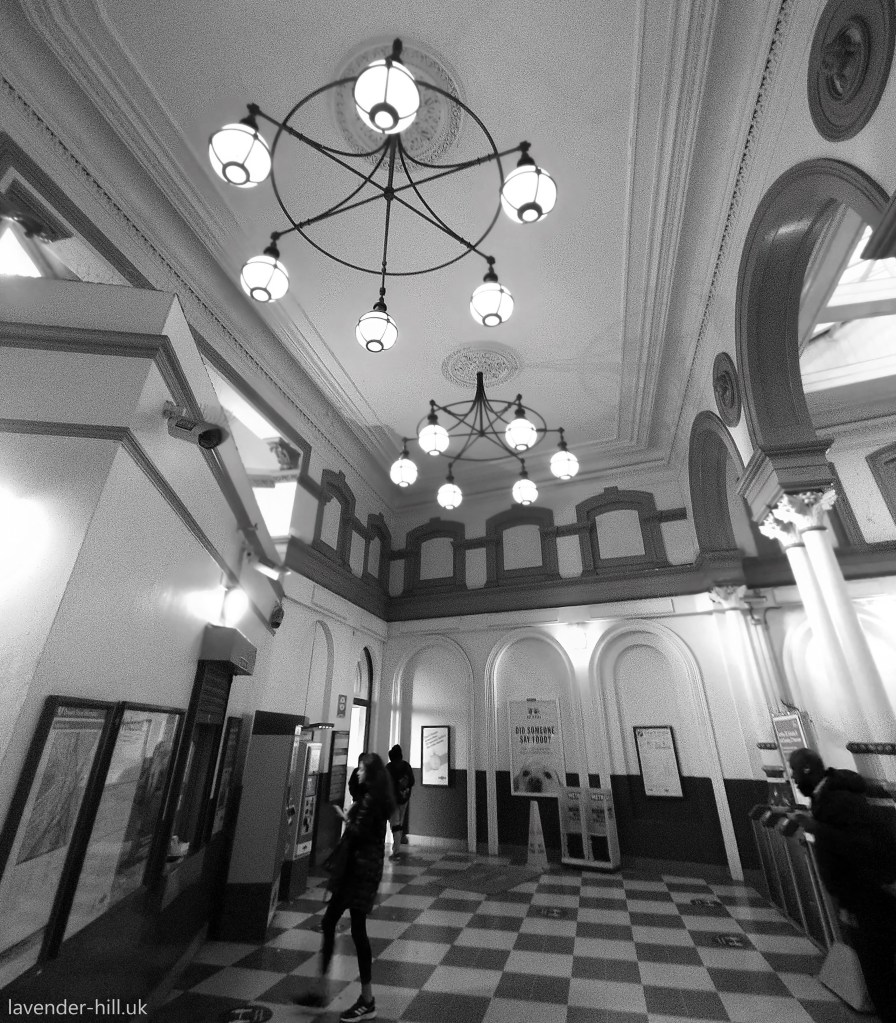
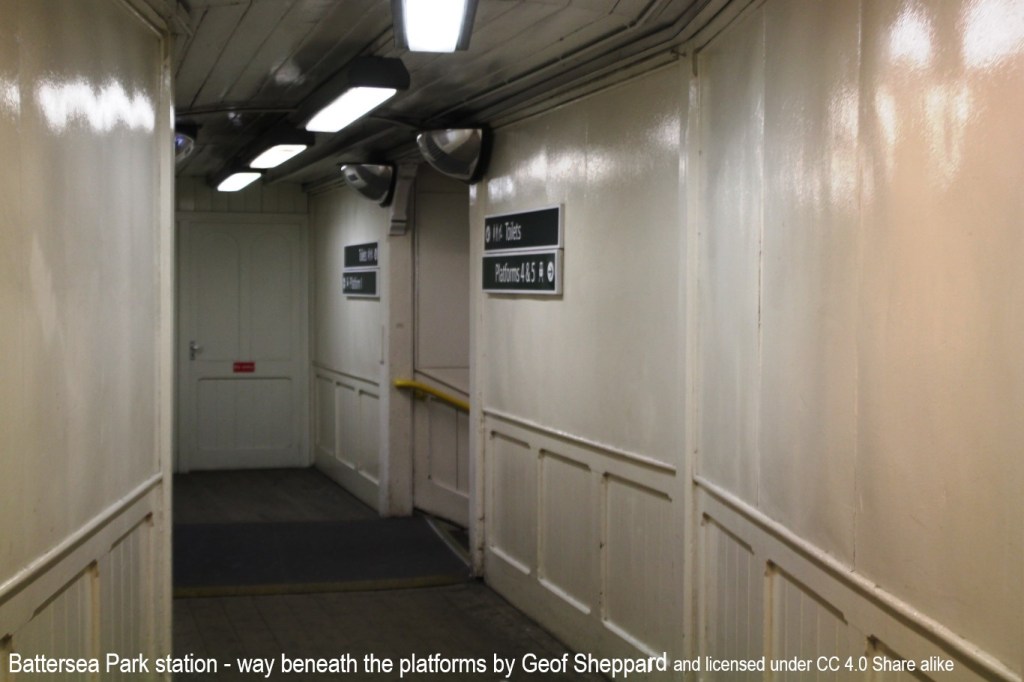
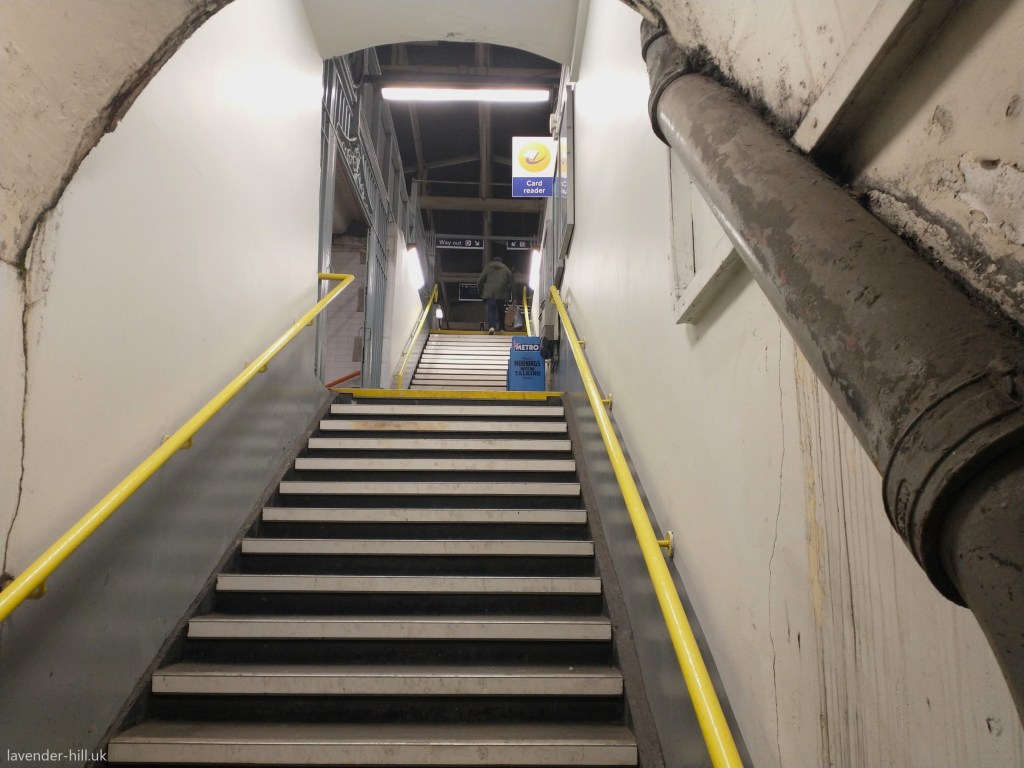
Despite originally being built in a gap jammed between viaducts in an industrial area, rather than an upmarket outer suburb or prominent city centre, Battersea Park is a beautiful and carefully-crafted station that seems to have been designed to impress. And even as Battersea all around it changed beyond recognition, the station kept all of its historic charm – as our photos of the carefully restored ticket hall show, with archways, ornate plaster ceilings and ornate lighting. Unfortunately, in some respects it may have kept a little too much of its historic charm, as access to the platforms relies on a series of distinctly Victorian-era staircases. Rickety, steep, wooden steps – and lots of them! As the railway experts over at London Reconnections note in their very readable article about the station, “the steps leading to platforms 4 and 5… must be just about the steepest and narrowest set of steps leading to any station platform in the country“. And this is where our story starts, because put bluntly – this station is a hazardous nightmare for anyone with mobility issues, and not much fun for those with prams either.
Fortunately there’s a long running project called ‘Access for All‘ to make the UK’s stations more accessible – which ought to see this station improved. The project has been running for years, starting with the most well-used stations with the highest demand – which was why Clapham Junction acquired nine lifts way back in 2011. The particularly poor accessibility of Battersea Park, and the fact that it was in a rapidly growing area with both a significant elderly population, an above average proportion of residents with mobility difficulties, and a quite rapidly growing number of young families, is probably why it was selected in the programme way back in 2014, alongside 41 other stations (that included Streatham, Peckham Rye and Blackhorse Road). These would see funds allocated during ‘Control period 5‘ – which is railway jargon for planned investments over a five-year period between 2014 and 2019. The Government press notice confirmed that ‘subject to a feasible design‘, the station would see a step-free access built from street to platform.
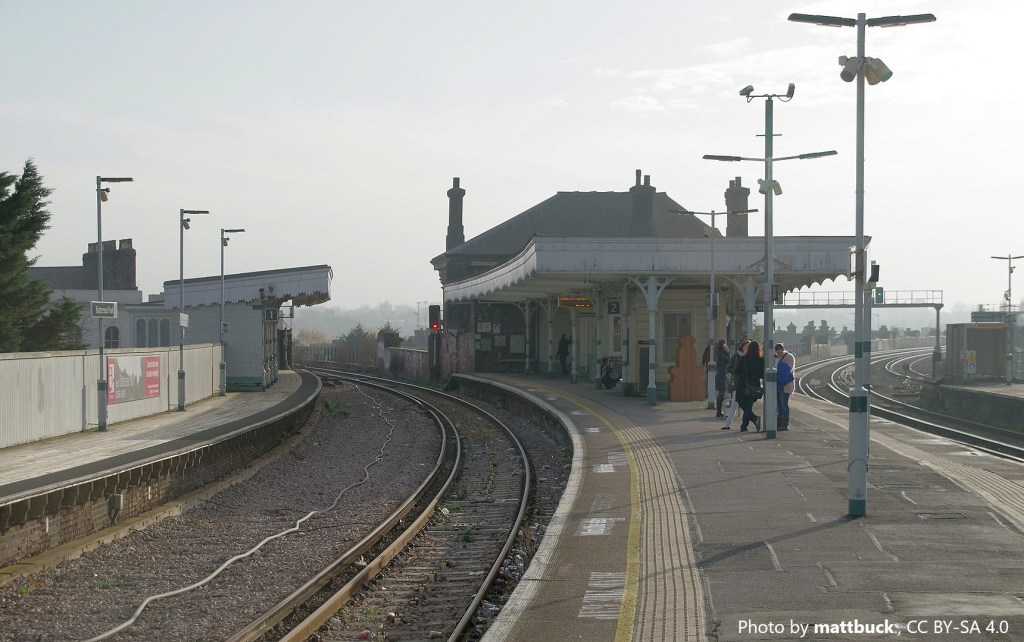
Now you may be thinking – 2014 is ages ago, and so is 2019 – so what on earth happened after that big announcement? The station is just as inaccessible as it was back in 2014. The problem with all government funding announcements is that it’s one thing to announce funding, but quite another to actually follow through and deliver the goods. And that ‘subject to a feasible design‘ caveat in the original announcement mattered, because Battersea Park is really not a particularly easy station to add lifts to! Platform 1, the unusual one that’s made of wooden planks, doesn’t matter as it was permanently closed a few years ago. Platforms 2&3 – the central ones, pictured above, are fairly manageable as the platforms are immediately adjacent to the station building. A lift would emerge at the very end of the platform, more or less in the middle of the photo above, and somewhere to the right of the stairs in the photo below.
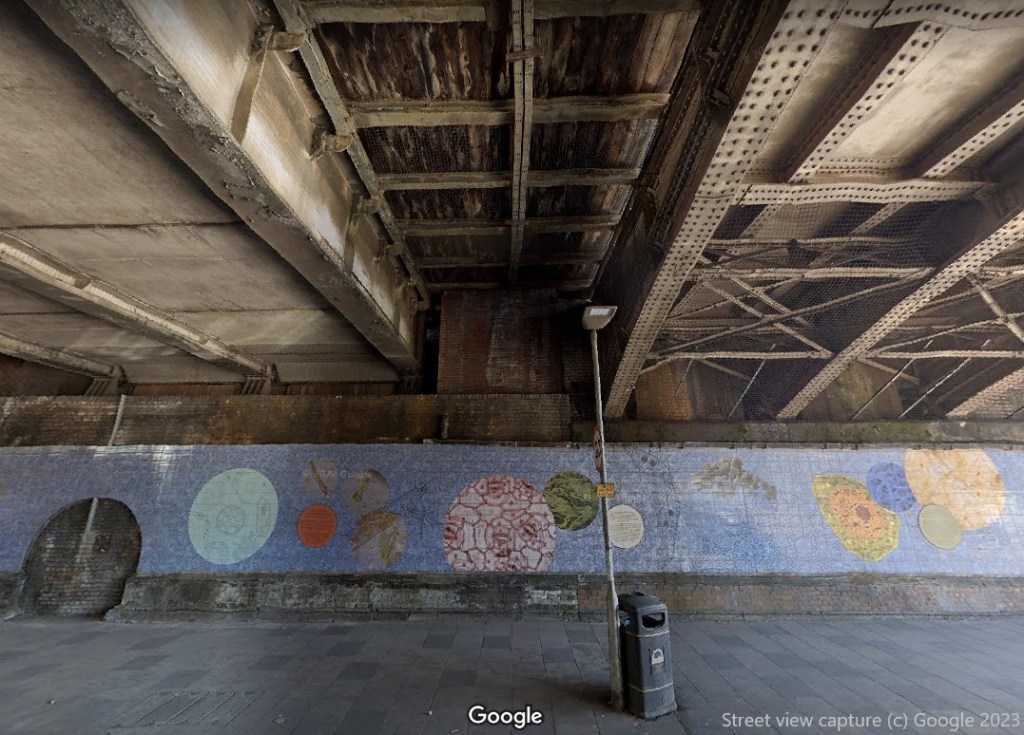
Things get rather more complicated at platform 4&5 (the westbound one) – where the super-steep stairs are right at the southern end of the platform, in a spot where the platform is already very narrow, and with no space to add a lift between the two railway viaducts. This will be a real design challenge: even if there is a way for a lift to go down from the narrow platform there it would end up buried deep in the viaduct and nowhere near the main ticket hall, so unless there happen to be some implausibly convenient old passageways buried in the arches, something unusual will be needed. We can think of two possibilities – neither of them cheap: either extending the new lift from the ticket hall to central platforms 2&3 up further to have a third level, leading to a bridge across to platforms 4&5 and another lift down; or putting a lift in at the northern end of platforms 4&5 (the end far away from the station) that would run down to the road level on Prince of Wales Drive, shown below. This is the cheaper option – as our photo shows, the wooden bit between the two heavy metal bridges is actually the underneath of the platform, so a lift either to the road or one of the railway arches is reasonably doable – but this would create a second entrance and so make the station more complicated to run.
In normal circumstances, this slight engineering headache feels like the sort of problematic project that would have been quietly shelved soon after the first estimates! But fortunately we’re not shouting in to the darkness here in arguing that it still needs to happen, as we happen to have an influential ally – in the form of our local MP, Marsha de Cordova. Marsha is maybe a rare example of an MP who has a deep personal belief in the issue of accessibility, with a powerful track record of campaigning – indeed she was working for disability charity the Thomas Pocklington Trust when she was first elected an MP, and then served as shadow Disabilities Minister, and later Minister for Equalities, until 2021.
As a fearless campaigner for making buildings accessible to all, she was not at all happy that both the stations in a part of her constituency with a well-above-average share of residents who need help with mobility were woefully inaccessible. Her 2017 election campaign focussed on getting the project done – and just a few months after being elected as MP she successfully called for a debate in Parliament called “Step-free Access: Battersea Stations” whose text is available online, including this quote:
Battersea Park station and Queenstown Road station are both in Queenstown ward, which has a higher proportion of disabled people and people with long-term health conditions than does the constituency as a whole. Yet their local train stations are not accessible to them. […] Why is what I have described important? We must not underestimate the significance of barriers. Step-free access to stations can mean the difference between the ability to lead a fulfilling and flourishing life seeing friends and family and going to work, and being left isolated at home, unable to travel and excluded from participation, from leading a fulfilling and flourishing life, and from the world of work. That is the reality for far too many disabled people.
She noted that £47 million had been cut from the funding for the ‘Access for All’ funding’ project, and called on the government to restore that funding, and to put in the investment needed to build an inclusive railway, including accessible stations in Battersea.
Two years after this debate, at the end of the 2014-2019 ‘control period’ of spending, nothing had happened on the ground. But just two days before the end of the financial year there was good news, when step free works for Battersea were again confirmed – presumably because a ‘feasible design’ for the lifts had been found, and no doubt helped by the likelihood that Marsha would make a great deal of noise about it if the government tried to drop the project! The project had now slipped from Control period 5 to Control period 6 (2019-2024).
The Wandsworth Council press release also noted that ‘The council is also working with Network Rail on a comprehensive package of improvements at Battersea Park Station, to cater for increased passenger numbers as more people move to Nine Elms alongside new businesses.’ Wandsworth didn’t give a lot of detail but his was a significant development – as behind the scenes a little-noticed part of the local Transport Implementation Plan confirmed that they had allocated £21 million of funding to “Improvements to Battersea Park Station“, which would come from a mixture of the “Community Infrastructure Levy” and “Section 106” – both of which are essentially funds that developers of the new blocks of flats have to pay towards upgrading the local infrastructure around new developments. £21m is one of the largest allocations of the developer funding anywhere in the Borough (which does make sense given that most of the money was being raised from developments in the Nine Elms area) – to put it in context, the huge 2011 accessibility upgrade at Clapham Junction (which added lifts to all 17 platforms) only cost £14.5 million at the time! Coupled with Network Rail’s own funding this should allow significant improvement.
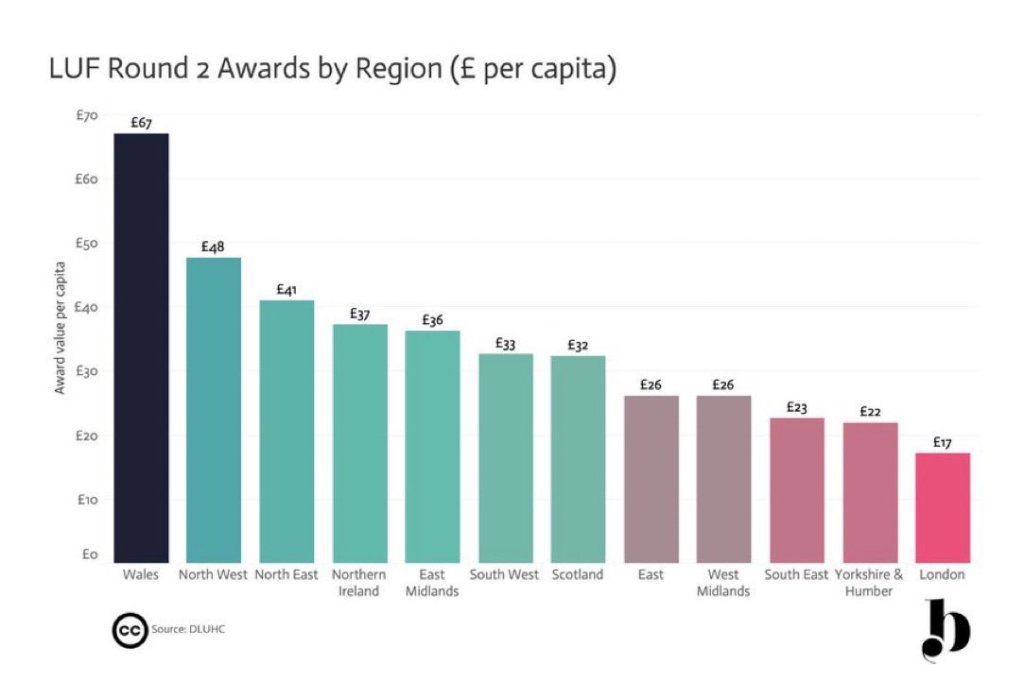
Unfortunately we understand that the delivery of the lifts at Battersea Park Station was significantly impacted by the Covid-19 pandemic – which caused unavoidable delays to the project which prevented the project from moving to the next stage of design. As the UK economy took a dramatic turn for the worse, inflation started to push up the cost of materials significantly, which will not have helped the project either. A particularly problematic factor is the increasingly (and surprisingly) hostile approach the current Conservative government has taken to London itself – having seemingly given up on London from an electoral perspective, and with a determination to direct all new public spending towards its new friends in northern ‘levelling up’ constituencies. This will not have led to a particular enthusiasm for improving London’s transport. The graph below shows the funding per person that was awarded in the most recent round of ‘Levelling Up Fund‘ grants, which probably says all you need to know abut why London’s infrastructure is struggling.
But Marsha, and Battersea Park, weren’t going to give up that easily. Marsha has kept up her pressing of the Department for Transport – for example asking this Parliamentary question last autumn, which didn’t get much of an answer but which is at least one of the ways an MP can keep things quietly on the agenda:
Marsha: To ask the Secretary of State for Transport, when the planned upgrades to deliver accessible access at Battersea Park Station will start which have been deferred from control period 5 of Access for All funding.Kevin Foster (Transport Minister): The project at Battersea Park station to provide a new step-free accessible route is currently in the detailed design phase. Further updates will be provided in due course.
We understand that Marsha also wrote to Network Rail about this in October – which is always helpful, because an MP writing is much more likely to get a proper answer than you or I would – and was informed that they are working with Govia Thameslink Railway (who manage Battersea Park station) to deliver the detailed design phase of the project. Now we know the project had already missed the deadline for the 2014-2019 funding window, and it is clearly getting worryingly close to the end of the next one too (which runs from 2019-2024) without any notable progress on the ground – so a particularly good bit of news was that they have included Battersea Park on the Access for All project list for the next budget round, ‘Control period 7’, which runs from 2024-2029. Fingers crossed it won’t take until 2029 – but it at least means that the budget won’t just ‘time out’ if , as currently looks likely, new lifts are not fully delivered by next year.
So where does this leave us? Well it looks like this project is still on track, more or less. It’s taken ages, it’s been hit by Covid, by inflation, by technical headaches, and by an increasingly hostile environment in Westminster to London boroughs. But the funding’s been preserved by hook or by crook, proper design is going on, and at some stage we can expect a tender for the works, and for a planning application for delivery. There’s a large pot of cash from local property developers waiting to be spent on the station, and we know that the planned road layout upgrades to Nine Elms Lane have left a gap at the station, to not overlap any road changes that are associated with these works. We’ll keep you posted when we hear any further updates.
In the meantime we can thank our MP Marsha for keeping at this like a dog with a bone, because this is exactly the sort of project where a tenacious MP with a strong belief in the cause can badger Minsters and senior officials to make a difference and keep a complicated project alive – and she has told us she will continue to use her voice to ensure we have accessible and inclusive transport. We can also thank Wandsworth Council, for working behind the scenes with TfL to keep this going even as it repeatedly missed delivery deadlines, and especially for negotiating a healthy amount of funding from local property developers to wards the upgrade.
But the gradual unlocking of the accessibility puzzle at Battersea Park also raise the interesting case of Queenstown Road station next door. It’s almost as bad as Battersea Park when it comes to steep steps – as our photo above shows. Admittedly it only gets about half the passenger numbers of Battersea Park – but that’s still a million a year! Quirks of its layout also means that it may be slightly cheaper to convert to step-free access, needing only one lift. Maybe unsurprisingly, Marsha has been campaigning for it to also receive step-free access. In May this year, alongside other local stakeholders, she called for it to also be made step free – and used her influence as MP to meet the then Rail Minister, Wendy Morton. This had some success: Based on her making a case, an application was been made for Queenstown Road to also be included in Control Period 7 – although we do not yet know if it will be successful. Back in 2019, when Wandsworth Council allocated £21m towards upgrade work at Battersea Park station, a much smaller sum of £350,000 was also put towards “Improvements to Queenstown Road Station“, which we presume is linked to the plans we have often reported on to add a second entrance.
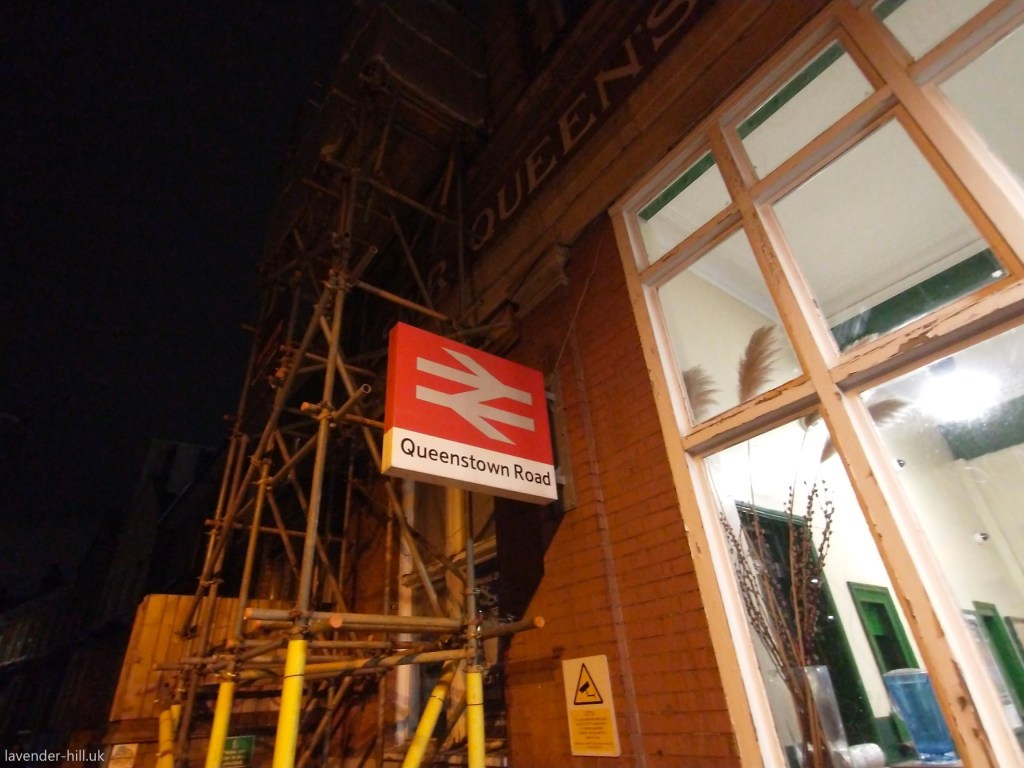
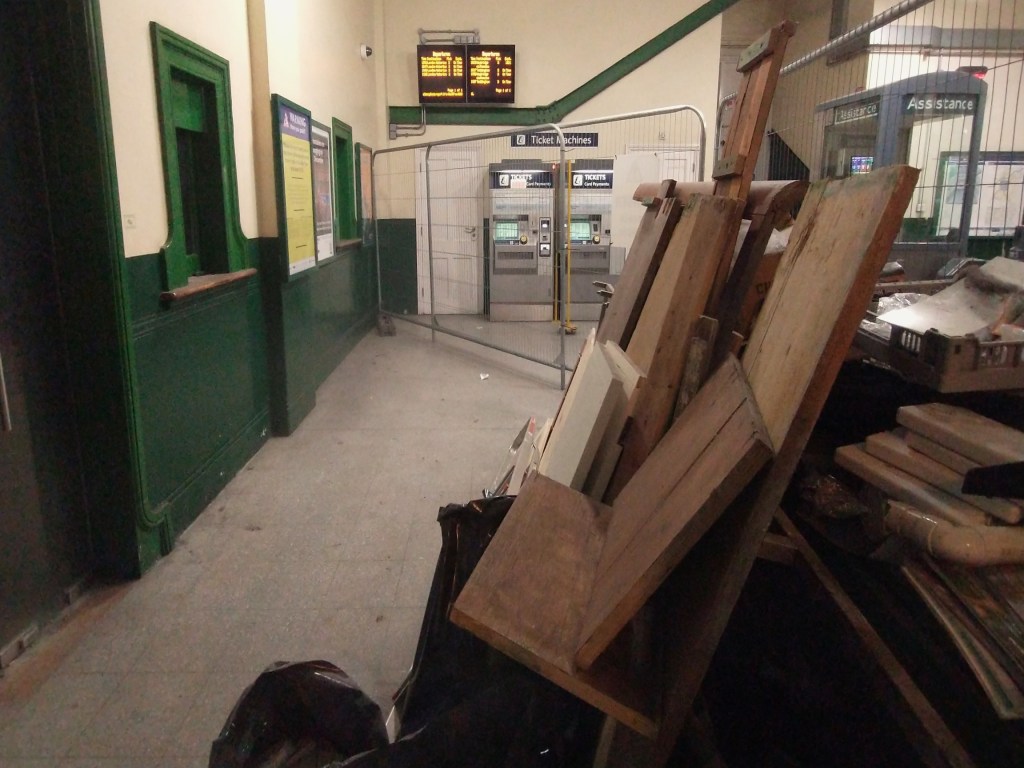
Speaking of which – some works have now started at Queenstown Road. There seem to be a mix of work that is aimed at improving the building and preparing for that second ‘back’ entrance to the station (which as we have previously noted will make the station rather easier to get to from the north and the east, as well as creating a useful link between the two stations), and separate work that is associated with the fit out of the former coffee shop for reopening after several years of it being abandoned. This has been a very long running process too, but it is good to see some work now underway. As ever – we’ll keep you posted on developments, and if you can offer any additional insight leave a comment below or get in touch.
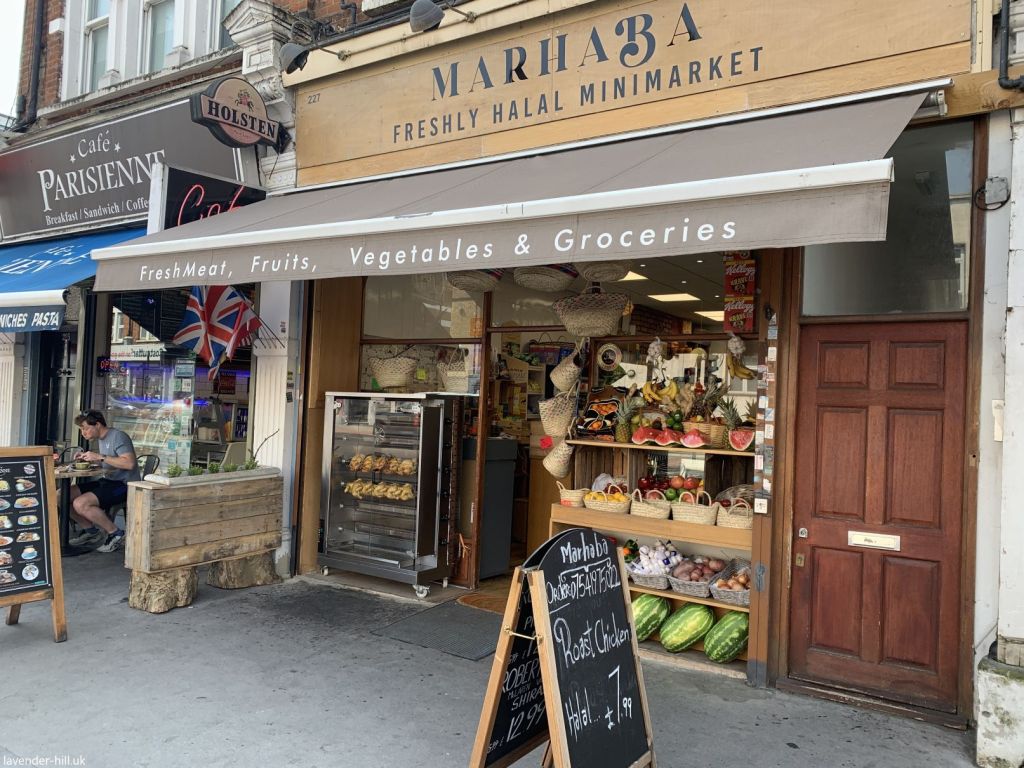
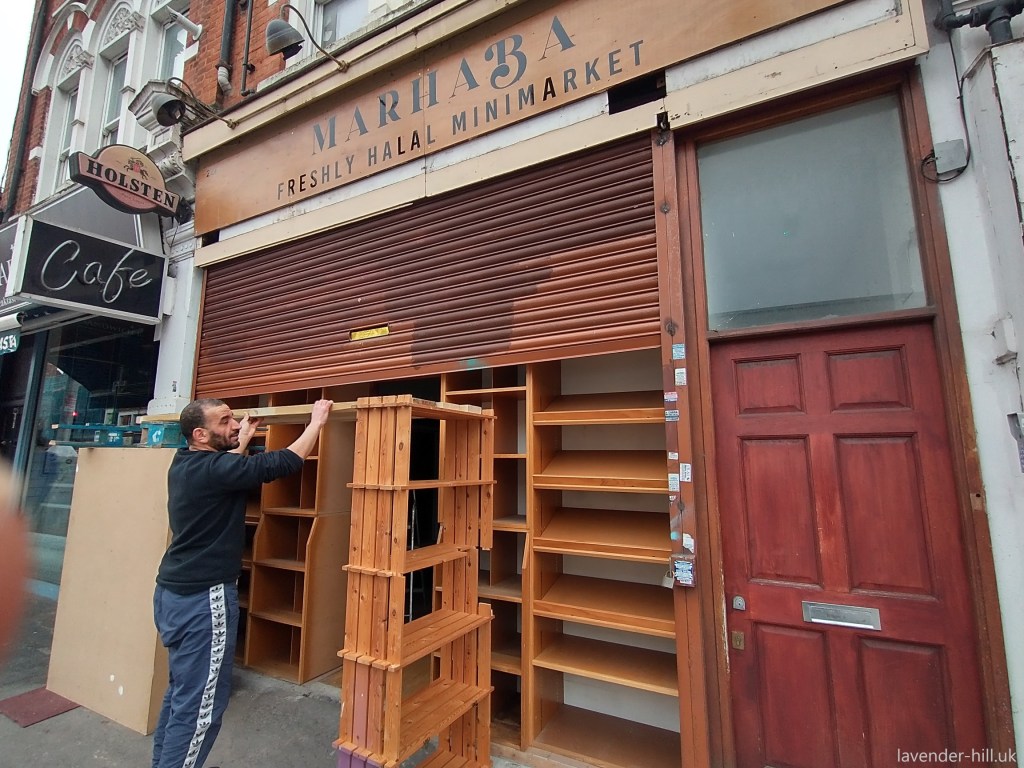
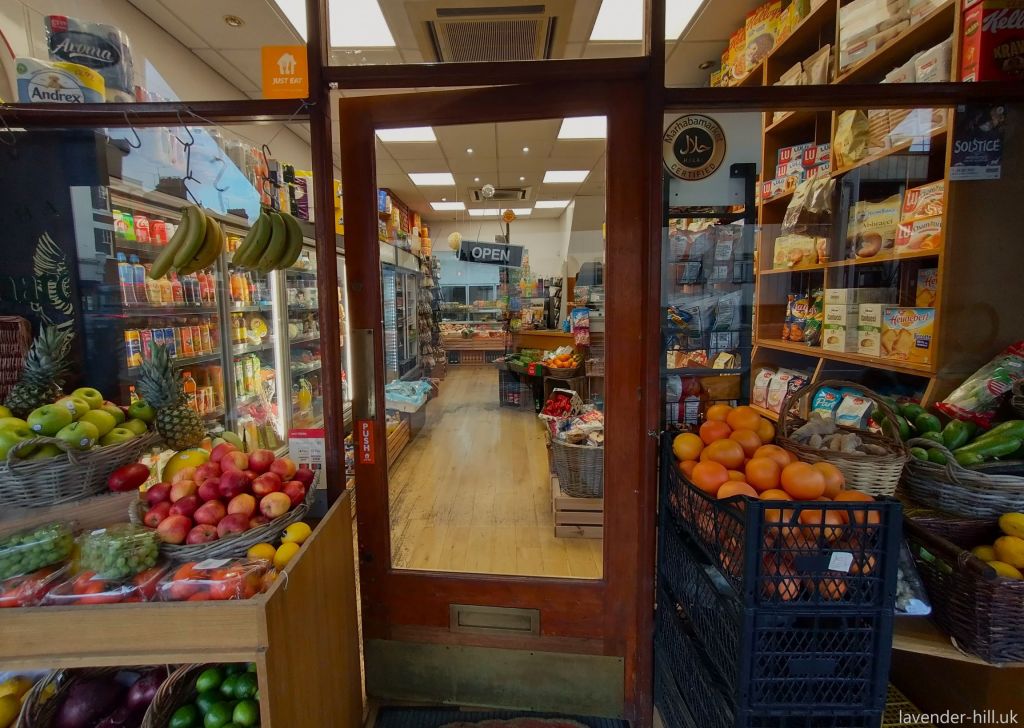
Eagle Wines traded on Lavender Hill for many years (right next to Kazim’s legendary Cafe Parisienne, home of the all day breakfast for over two decades) – offering a huge range of wines, that were notably more interesting than what was on offer in the big chains. However the business closed a few years ago, after trading for many years, we believe because the owner decided to retire from the business. The future of the premises was a bit of a mystery – but it is now being fitted out as Marhaba, a minimarket selling fresh food and veg, and in a rare return for a trade we’ve not seen on Lavender Hill for some years, a Halal butchers at the rear of the premises. As part of this, the interior has had a substantial refit to insert chiller units, and the outwards-facing shelving characteristic of a place that takes its fruit and vegetables seriously has been built behind the roller shutters.
London’s inner suburbs are famed for the mix of specialists independent food shops, with particularly strong showings of shops selling Turkish, Polish, Middle Eastern and Caribbean products (supplemented by more local clusters such as Stockwell’s strong Portuguese offering) – and these are often known for having better meat & veg than the standard fare at the supermarkets, as well as a more eclectic mix of wider provisions than you’ll find in a typical small supermarket. Lavender Hill hasn’t had an independent greengrocers for years, and has relatively non-chain foodstores in general with our half dozen corner shops focussing primarily on drinks, snacks, dairy, and longer-shelf-life produce and household goods. So it’s a warm welcome to Marhaba, who look set to fill a gap in the market.
Edit: Now open!
Marhaba Freshly Halal Minimarket, 227 Lavender Hill, London SW11 1JR. As of the 12th February, they expect start trading in a couple of weeks.
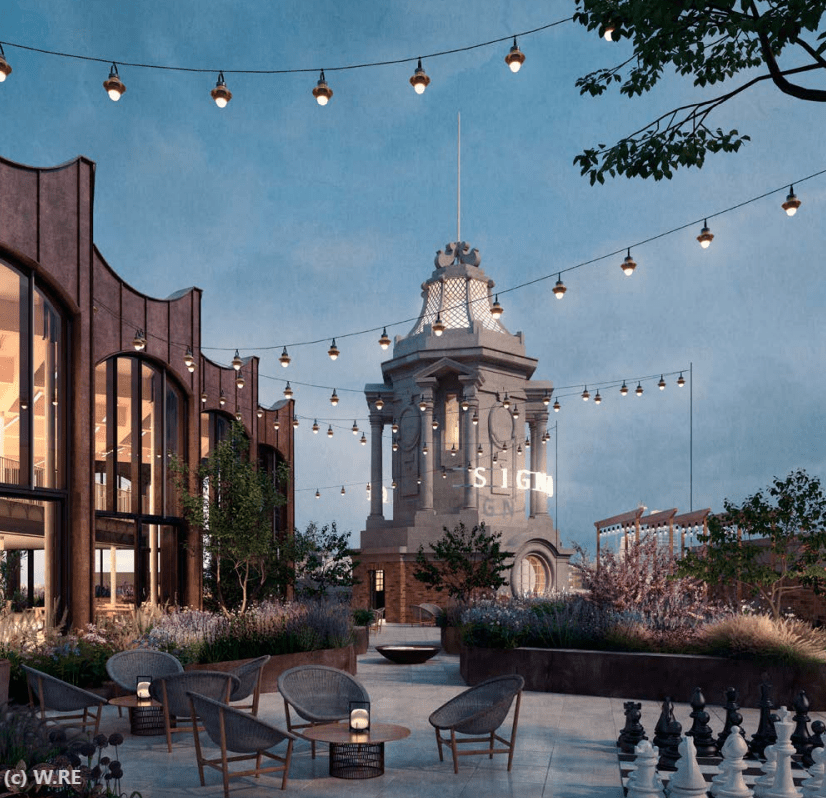
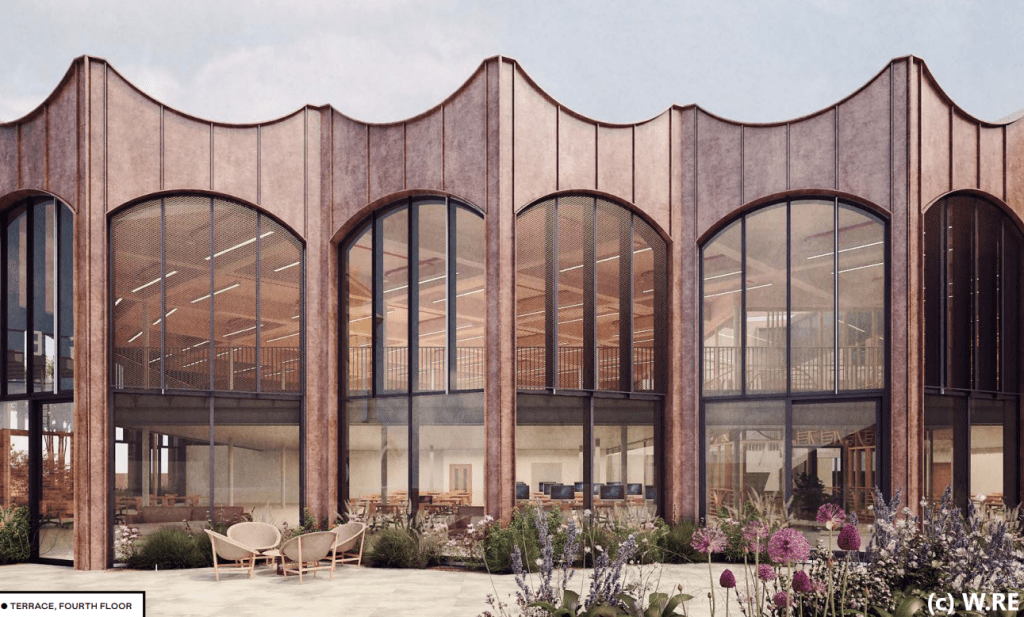
We’ve reported many times on the big project underway to convert the former Debenhams at Clapham Junction, which is reverting to its original name as Arding and Hobbs, to a modern office space, with two new floors on the roof and shops at the ground level. Developers W.RE have released a new set of artists’ impressions of what the office will look like when it is complete, and we have reproduced a few of them here. Above: the roof terrace which runs along the Lavender Hill side of the building, which has transformed an area of air conditioning units and sheds, to a proper outside space for the new offices being built on the upper levels. And below: an artists’ impression of the interior with the stained glass cupola that used to be Debenhams’ top floor cafe.
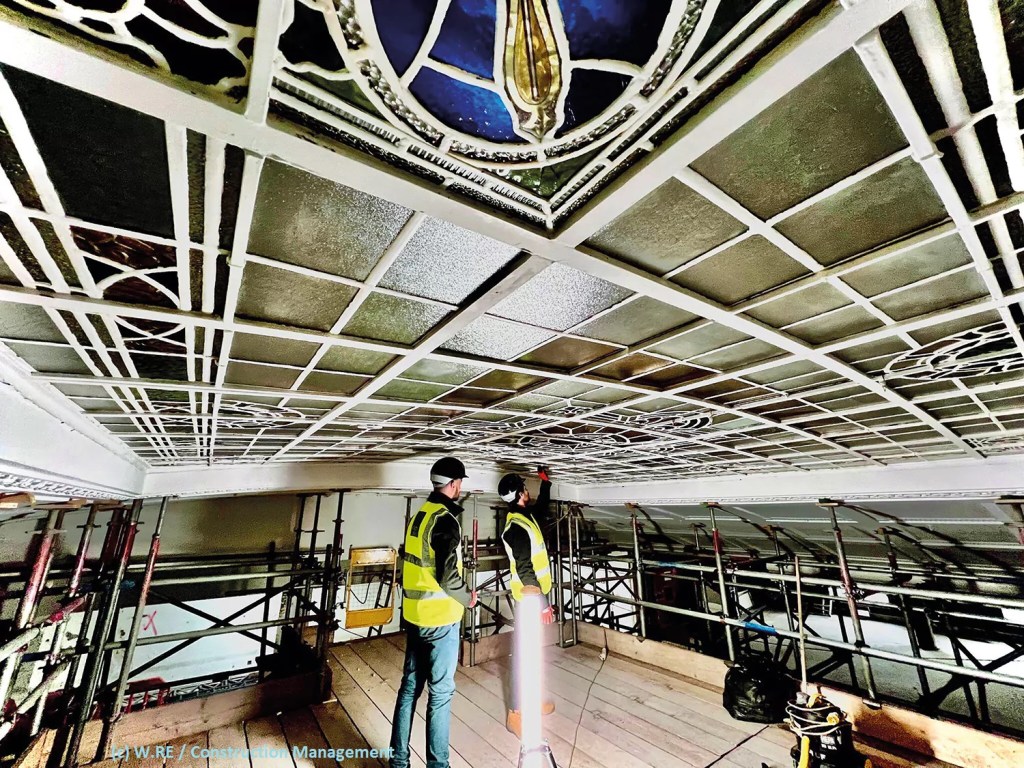
The building might have been looking a bit tired towards the end of its days as a large department store, but it hid some impressive secrets from its early days – for example last summer Construction Management reported that the builders had found another stained glass ceiling – shown below – that had been completely painted over, and which was now being carefully restored to feature in the new offices.
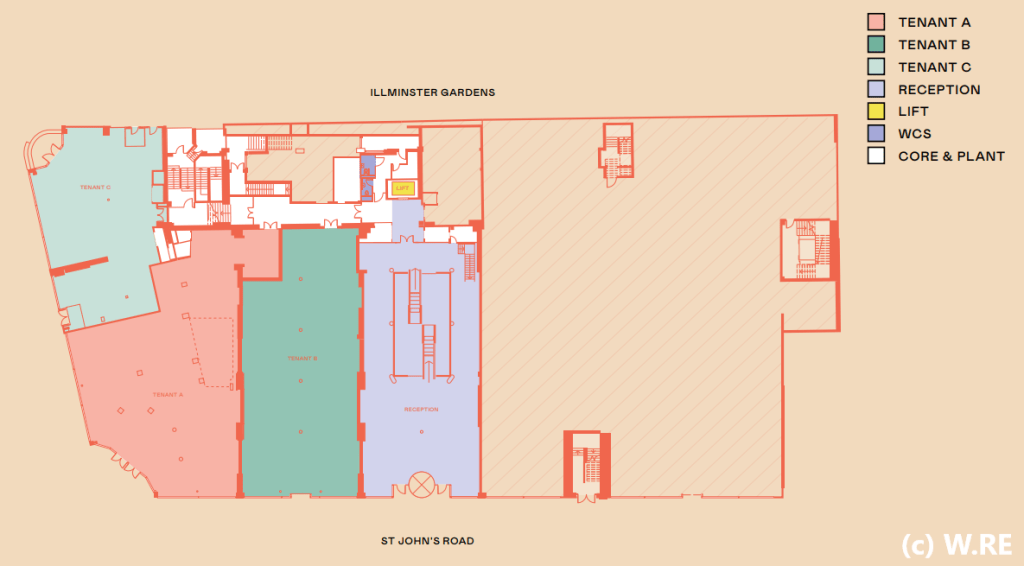
We previously noted that progress had been good on letting the shops, with Albion & East set to occupy the corner unit as a pub, described as “Open all-day & late-night with early-morning coffee, brunch & hot-desking in the day to cocktails, wood-fired pizza & DJs at night and everything in-between“, and Amazon Fresh also set to take a unit along St John’s Road to make a checkout-free convenience supermarket. But Amazon Fresh’s rollout of convenience stores has not been as smooth a ride as Amazon had hoped, with reports that they had substantially scaled back their expansion plans. And the planned store at Clapham Junction seems to have been dropped as part of this, with that 3,700 square foot unit – the dark green one listed as ‘Tenant B‘ on the floor plan below – now available to let again. It’s a well-placed space on a busy stretch of St John’s Road and there are plenty of retailers likely to be having another look now it’s back on the market (one of which is likely to be Boots, who have an awkwardly-shaped and undersized unit a few doors down the road, and one that’s maybe too big and whose lease runs out in May next year on Falcon Road).
Another reason W.RE probably won’t be too disappointed by Amazon walking away, is that they have made progress in letting the biggest retail unit of all, the one on the corner of Lavender Hill and Ilminster Gardens (the light green one listed as ‘Tenant C‘, which had in the final years before closure been Debenhams’ Shoe Boutique and a Joe and the Juice concession). It only has a small ground floor, but these house a lift and stairs that run down to a gigantic basement – and it has unsurprisingly been let to a tenant planning to create a large gym there. We’re not sure which gym (let us know if you know!), but this is a sensible use of the space.
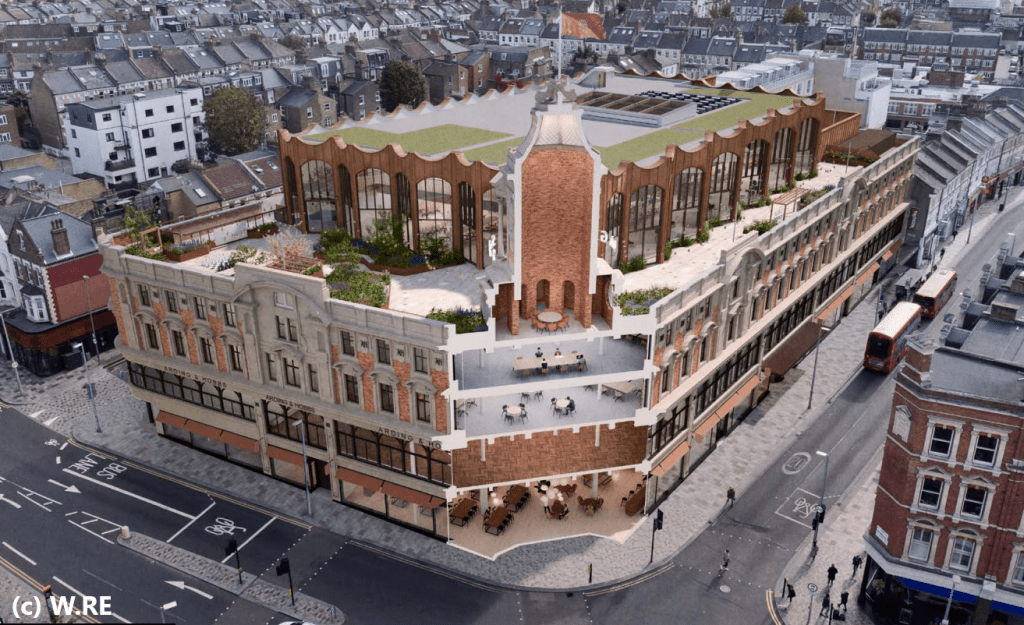
But back to the visuals of the newly refurbished building. The image above is a cutaway of the whole structure, showing the two-storey extension that has been gradually taking shape over the last year, and the picture below shows it in a bit more detail.
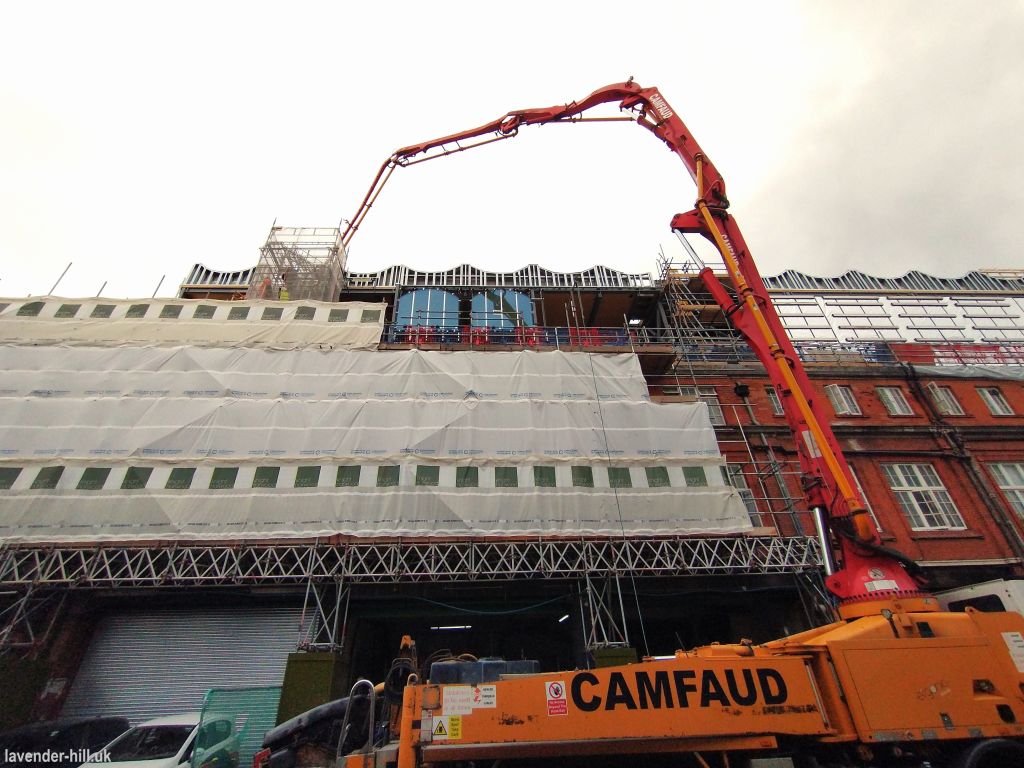
This photo shows the building above in construction, with a large concrete pump sending some concrete to somewhere on the upper levels –
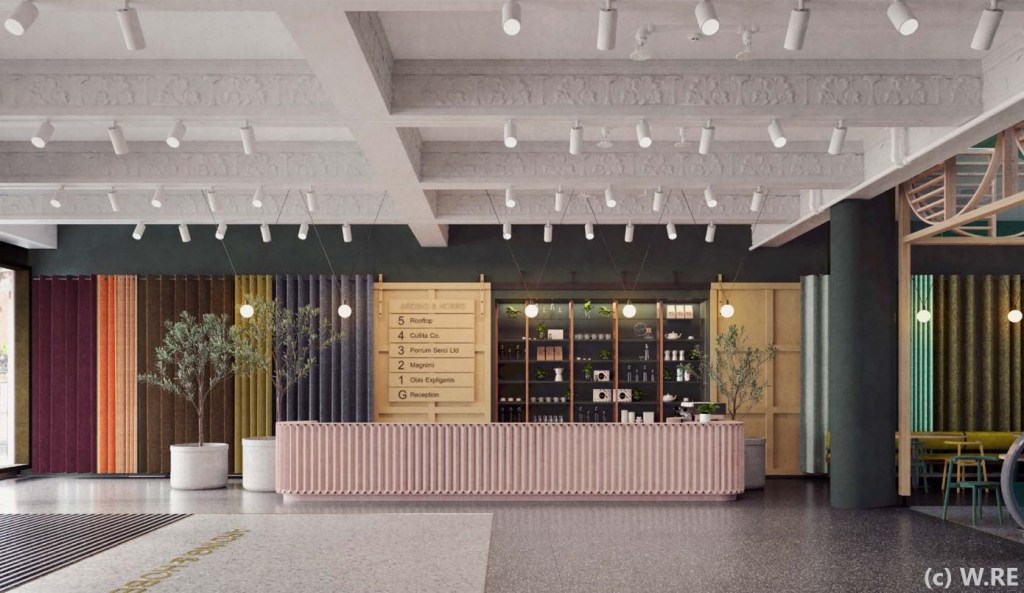
This next image is the planned reception for the office floors, which will be in the area that was previously the main entrance to Debenhams on St John’s Road (the section with the escalators – which were planned to be retained in the new building as pictured below). While the retail sections will be fitted out by tenants, meaning that what we end up with won’t necessarily bear much ressemblance to artists’ impressions, there’s a good prospect that the end product in this particular bit of the building does end up looking a lot like this, as W.RE are fitting it out themselves as the landlord.
This next illustration of the reception is looking at the same area from the right.
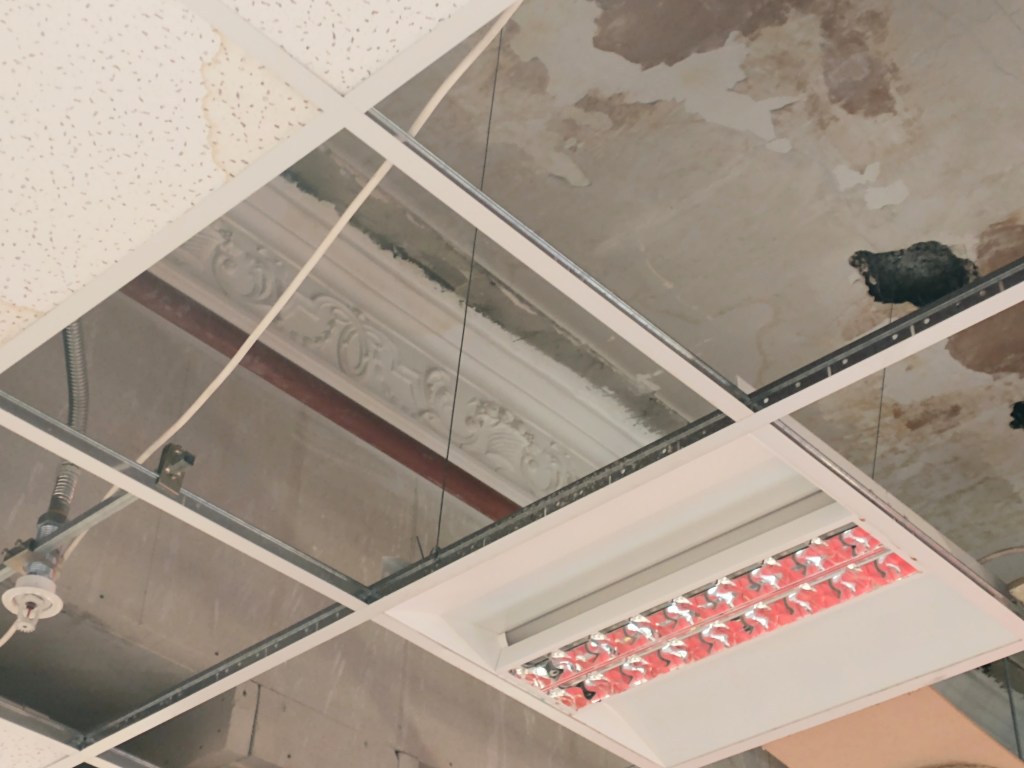
The original ornate plasterwork ceilings have been kept – the same ceilings that have been restored as a feature in some parts of T.K.Maxx next door (and which are still there even in the parts of the building – our photo below shows an area that got uncovered in T.K.Maxx when the works created a small leak in the ceiling, and some of the false ceiling was removed).
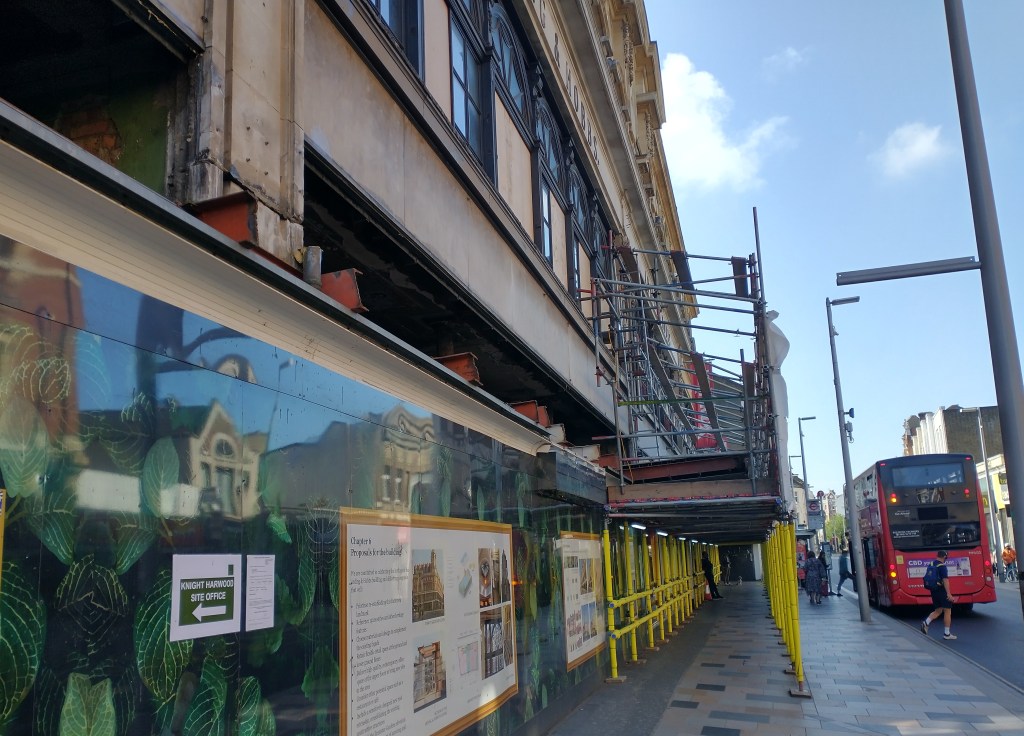
Meanwhile, as we reported a while back the canopy over the pavement – which was not an original feature, but had been added in the 1960s – has been removed. Our photo below shows it in its final weeks…
…and the next one shows it shortly after the main bit was cut off (with the remains of the big red support girders visible)…
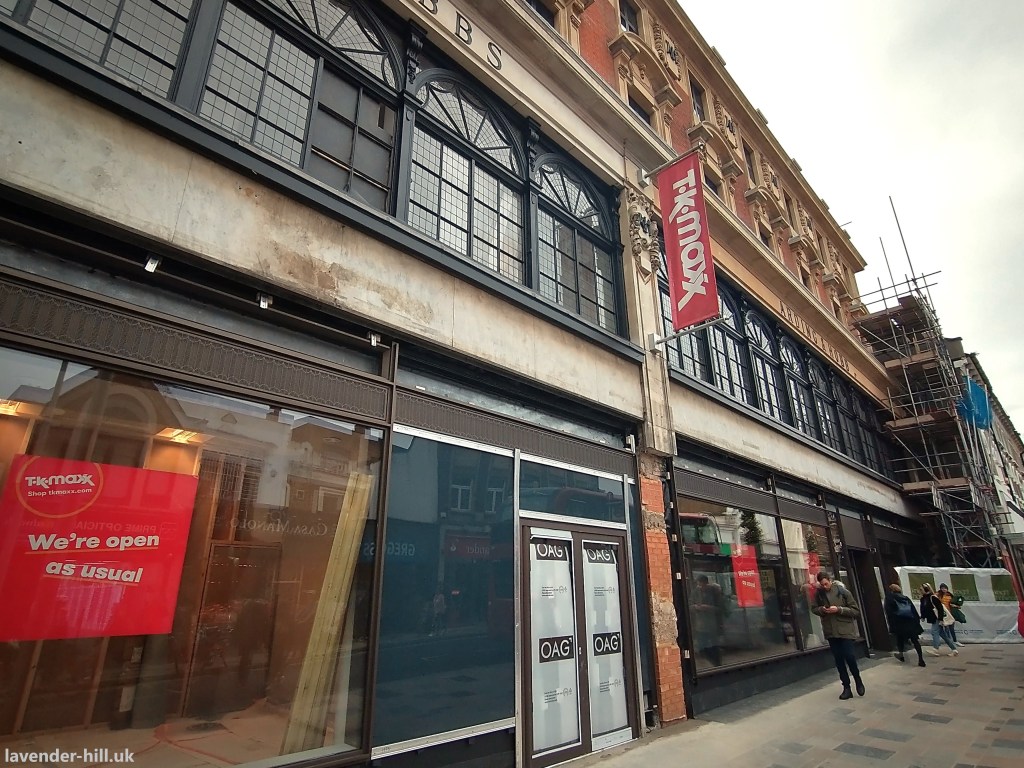
…and finally, here is Arding & Hobbs in its new incarnation. The 1960s canopy had been built very low: it was a surprisingly robust structure, and for reasons we may never know, even the top of it was at least a foot below the top of the original windows – hence the large space above the girders in the photo above. This means that removing it has had quite an impressive effect, letting a lot more natural light in to the shops.
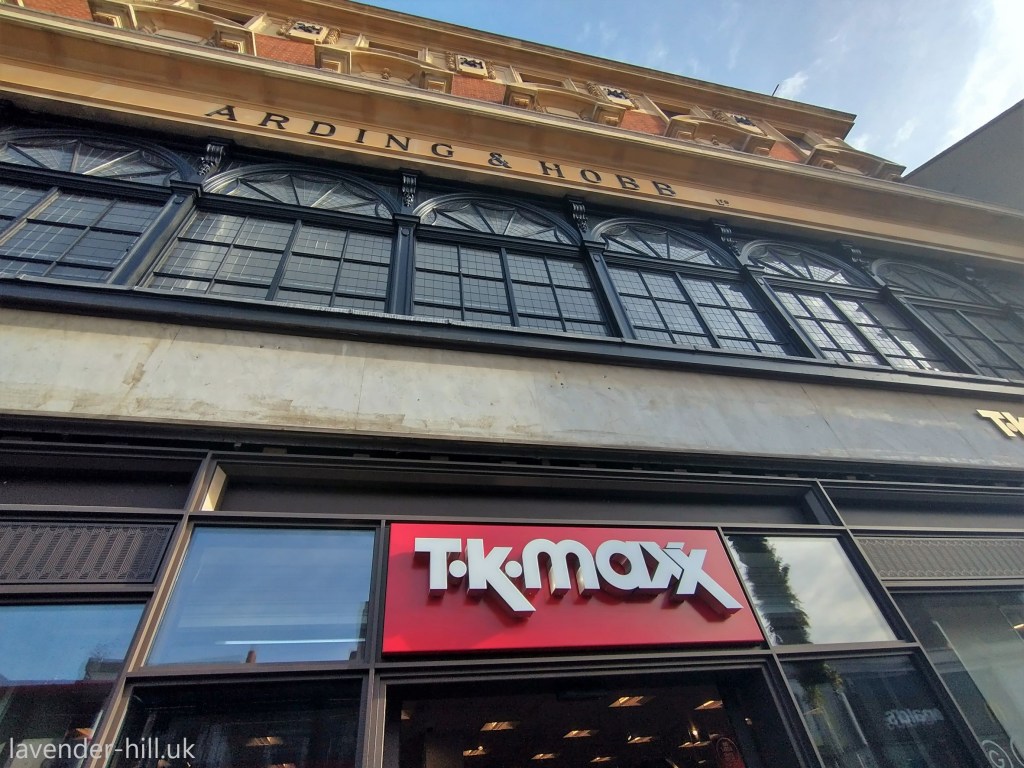
W.RE have made the most of all this extra height as they installed big new windows for their existing tenant T.K.Maxx, with bronze frames that are much more in keeping with the original design of Arding & Hobbs. The white stripe in our photo below is original marble, which wasn’t particularly visible before as the canopy below it got in the way, but which has been lightly cleaned up.
The original plans also included adding a retractable awning – echoing the ones that used to be in place when the building was built, pictured below. It’s not clear whether reinstating the awnings is still part of the plans, but we suspect that this might be what is planned for the recessed areas above the glazed sections above.
One nice touch: another new sign has been installed for T.K.Maxx in the original ‘shop signage’ area, which departs slightly from their usual red and white, in favour of more muted gold lettering that’s in keeping with the listed building they’re trading from. There’s still some way to go on the building works even though the most intensive phase of building is now winding down – and while we understand some of the office space is now under offer, there’s still space if you know someone looking for a new workspace! But as we start to see some of the end products of this refurbishment project, it’s fair to say the quality is looking good.
W.RE have pushed the boat out on this project, investing substantial amounts of money in a proper root-and-branch refurbishment of every part of the building, while remaining true to their word that they would work with the building to restore its original features, and bring back the flair it had rather lost after years of underinvestment by a string of department store owners. We look forward to seeing the rest unveiled over the course of the year, and as ever – will keep you posted.
If you’ve not seen it before, do take a look at our post back in 2020 just as this development started, setting out what we can expect to see.
A lot of neighbours don’t really know what’s behind the blue gate at 99 Lavender Hill – but it’s a source for quite a sizeable amount of local employment, housing lots of local small independent businesses in what was once an envelope and wallpaper factory. It particularly stands out for the good share of creative industries – who are attracted by the generally reasonable rents, and above all that this is ‘working’ office space where you can actually build and make things, without panicking that they’re going to accidentally make a mess of some super-smart premises and cost themselves a fortune.
There are some offices in the site pre-equipped for desk-based businesses, but a lot of of the site is dedicated to workshops and light industrial offices with tough painted concrete or wood floors and white brick walls. So if you want to set up a pottery workshop, an artists’ studio, or a specialist catering firm, you can configure it the way you want it – safe in the knowledge that at the end of the lease it’ll be easy to get it back to the initial condition.
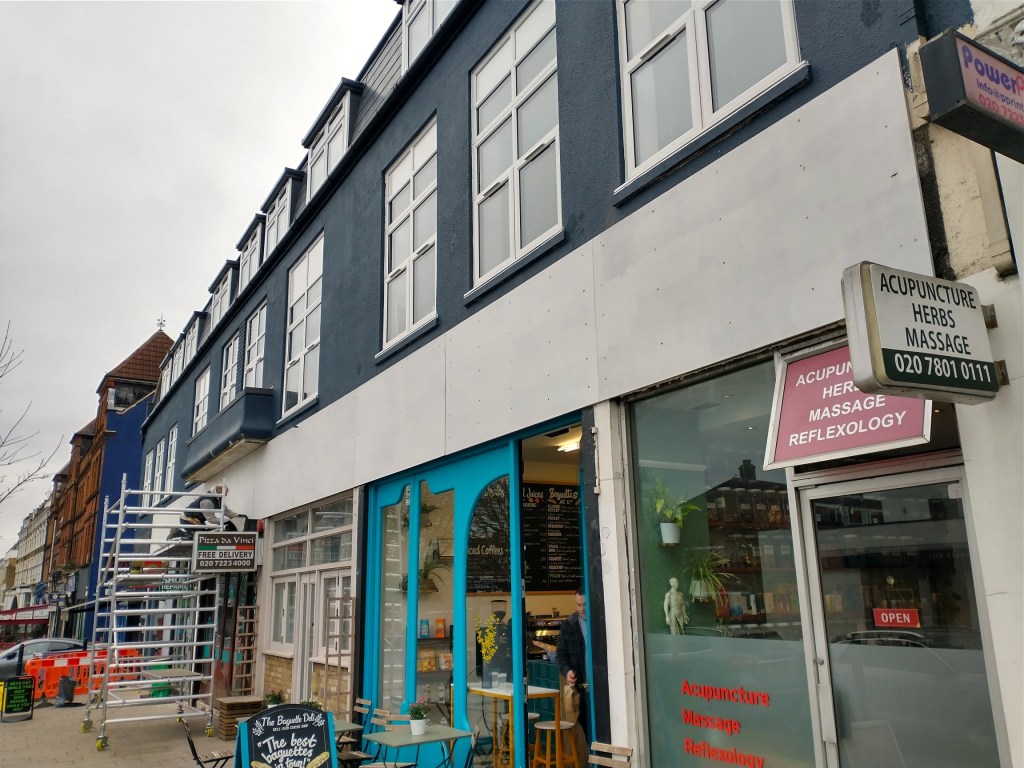
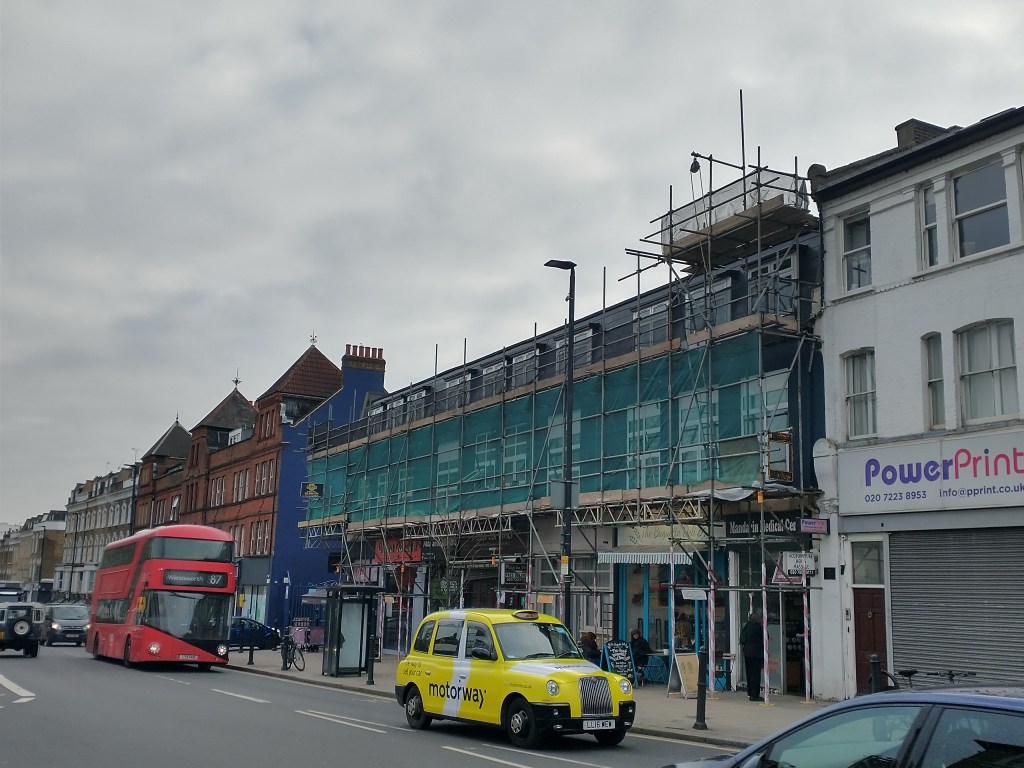
But even a business centre that’s trying not to be too showy and remain focussed on practical businesses needs to keep up with the times, and the rather tatty frontage of the Battersea Business Centre on Lavender Hill wasn’t really doing justice to the place. Mucky white paint, blocked gutters that dripped on to the pavement seating below, and crumbling windows gave an air of general decay. That’s set to change as it has a proper repaint and clean-up, with new windows and roofing, as part of a somewhat overdue refresh and rebranding of the whole site. The most visible change is that the buildings along the frontage have changed from mucky white, to a deep grey-blue that maybe coincidentally matches the branding used by Unit Management, who run this as part of a portfolio of 17 similar centres scattered around south west London.
The work has also seen several of the buildings on the site completely re-roofed, and new windows and insulation installed. The signage is being tidied up right along the building to make the shopfronts more consistent with each other. We understand the name of the centre may also change, to be called the Business Village. This investment isn’t quite on the scale that had at some stages been envisaged – we previously reported on plans to build a new building that would have provided an entrance reception with offices above; and at one stage there were also plans to create serviced accommodation on site. However the the improvements to the existing site will be welcome to the traders along this stretch of Lavender Hill, many of whose premises are also part of the centre. These include the still-not-open China Garden takeaway, pictured, which has looked for a few weeks as though it was about to start trading. As scaffolding comes down and we start to see the new look for the Business Centre, it’s good to see the owners investing to keep the centre attractive to tenants, without making it so smart that it loses its core purpose of providing sensibly-priced and practical accommodation to local businesses. And if you are looking for an office or workshop space – details of availability are here.
It’s rare to see a street in Battersea without a construction site somewhere along it. Scaffolding, a slightly muddy pavement, maybe a front garden full of rubble and old timber awaiting collection. More ambitious projects might see the front garden surrounded by wooden construction hoardings. These hoardings are unexciting things, typically sticking around for a few months during the messiest part of a building project, and no-one pays much attention to them.
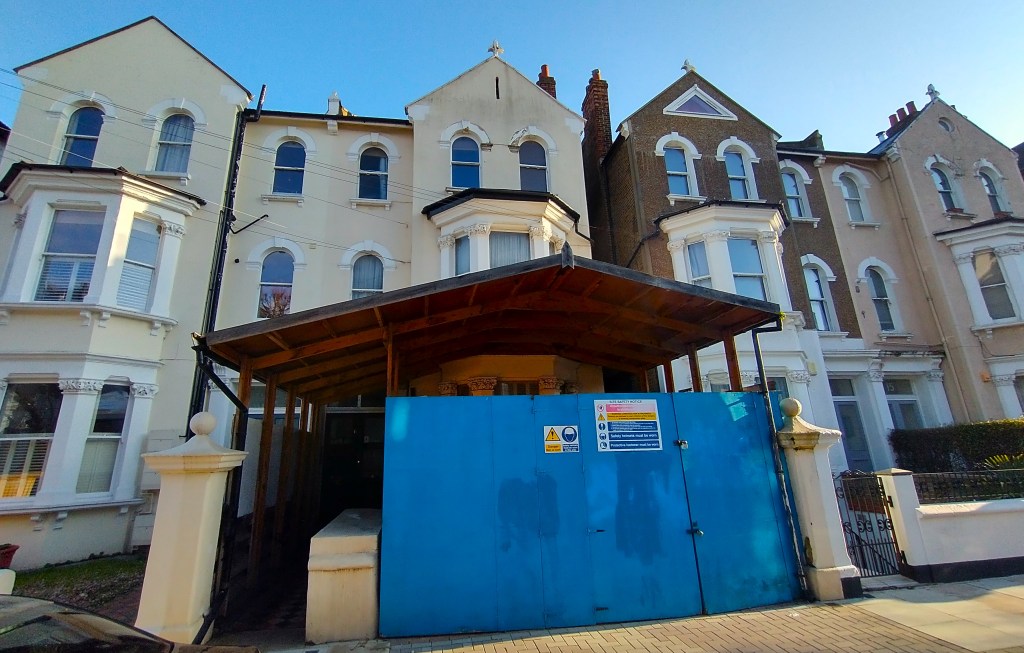
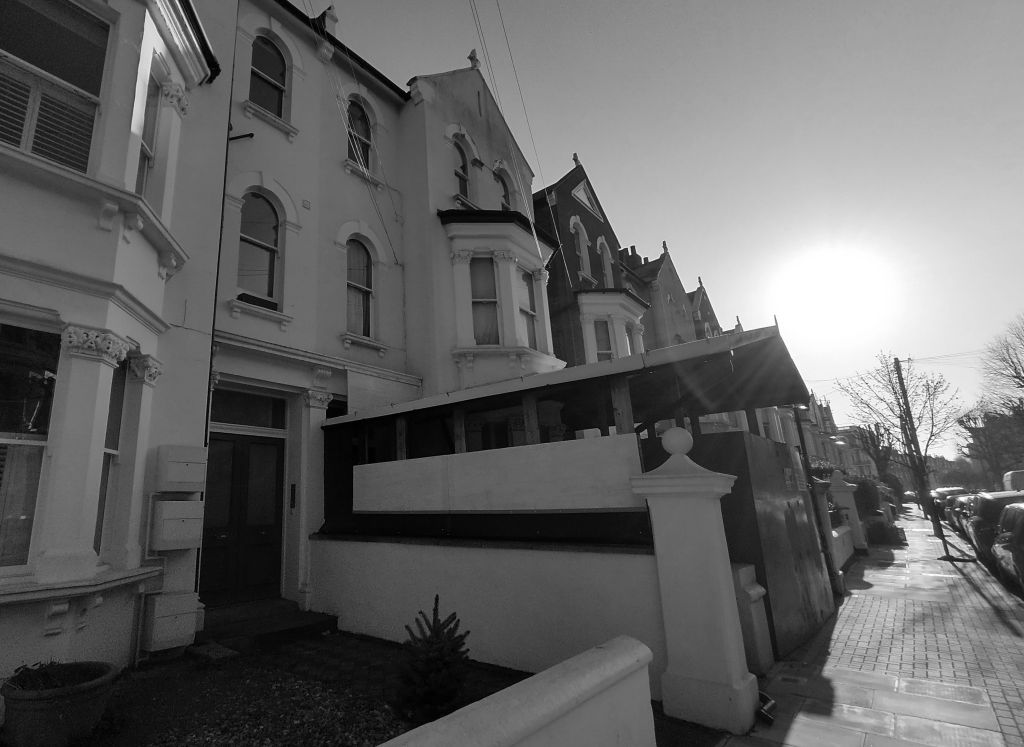
But Sisters Avenue, a street half way along Lavender Hill, has always been a bit different. From the outset it’s been home to rather smarter houses than its neighbours: detached three- and four-storey villas, originally designed for the wealthiest people in Battersea and making the most of the location right opposite the old Town Hall. So maybe we shouldn’t be too surprised that Sisters Avenue is now also home to a construction site hoarding doing its best to break all the records – as it’s now well on the way to its tenth birthday, and we’ve not seen any evidence of any actual construction having taken place!
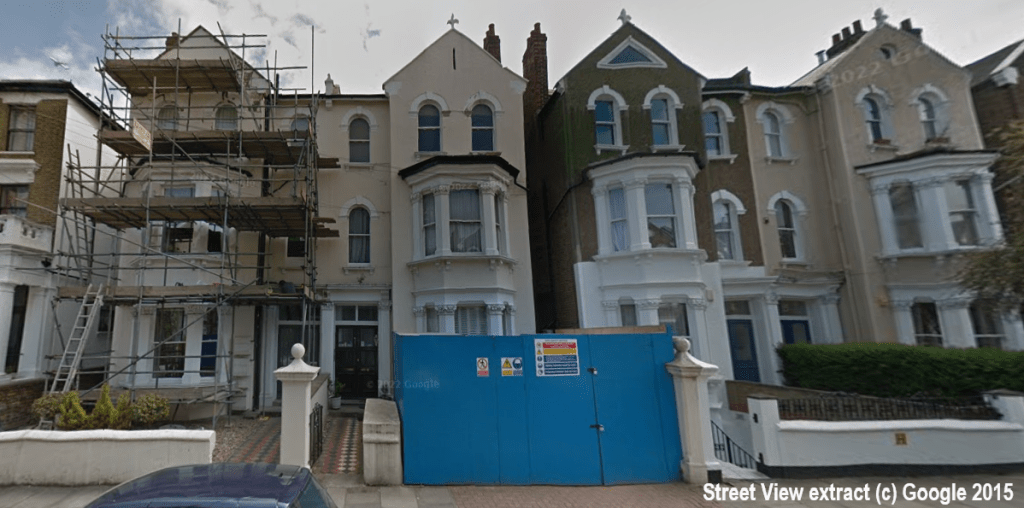
If you live nearby you’ll probably have seen it – because it’s been in place since the first half of 2015! In its first year it was an ‘ordinary’ hoarding – Street View’s first capture of it in May 2015 is below. Not the prettiest thing, especially given the prominence of the site on one of the more architecturally distinguished rows of houses in the area. But exactly what you’d expect, and perfectly understandable given that the house was set to see a large basement excavated, a development which obviously needed the public to be protected. It’s far from the only basement to have been dug out round here, and all the neighbours knew it’d only be there for a few months – maybe a year if the building project hit some snags. Right?
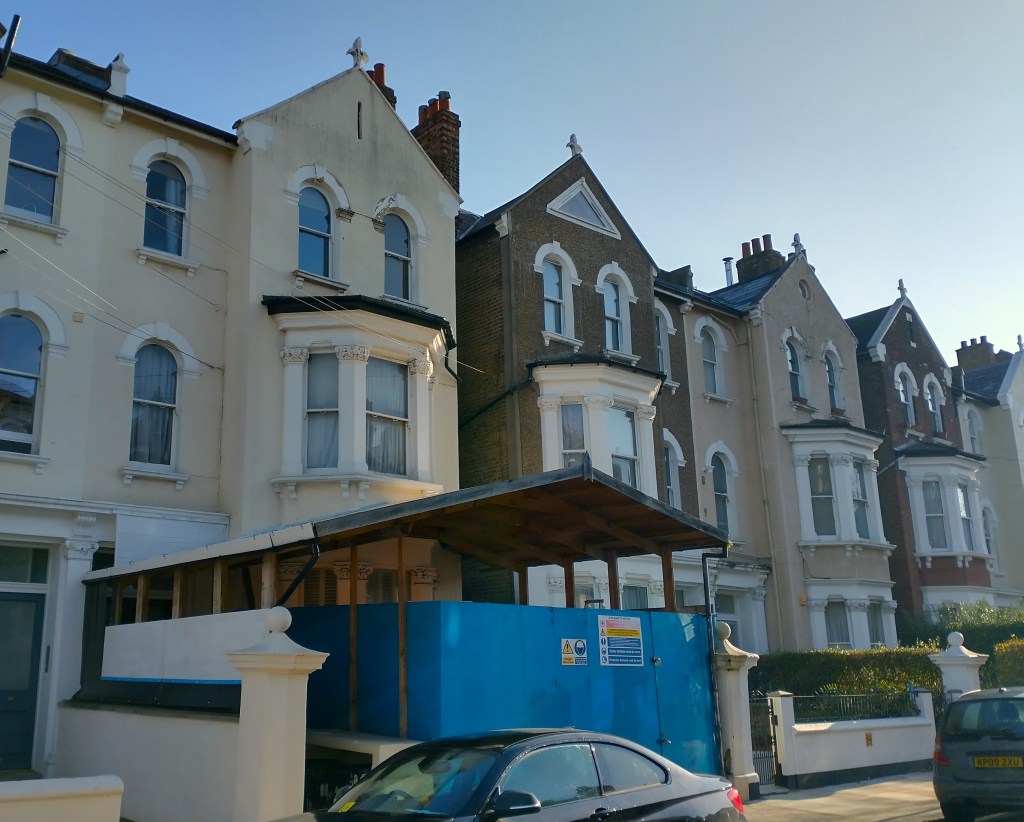
Or maybe not… Because a year later, things hadn’t exactly got moving on the building site. There was, however, plenty of progress on the building of the hoarding itself: it had sprouted a large roof! This stretched beyond the original hoarding to also include the pathway to the front of the building. This created a very substantial structure, now visible from most of Sisters Avenue as well as from Lavender Hill.
But none of the neighbours thought the big blue shed would still be standing eight years later! The planned project had been to excavate the whole of the basement, extending the current small basement that contains a single bedroom to create three bedrooms, a reception room and a further study, and large lightwells at the front and the side of the property. A decent project, but none of this really seemed to get going. Looking at the many captures Google’s street view has of the structure over the years, ladders peeking out from behind the hoarding occasionally move slightly. A bit of the roof falls off in May 2018, and after more than a year dangling off the side of the structure it’s eventually repaired. The once-vibrant blue paint gradually fades with years of summer sunshine.
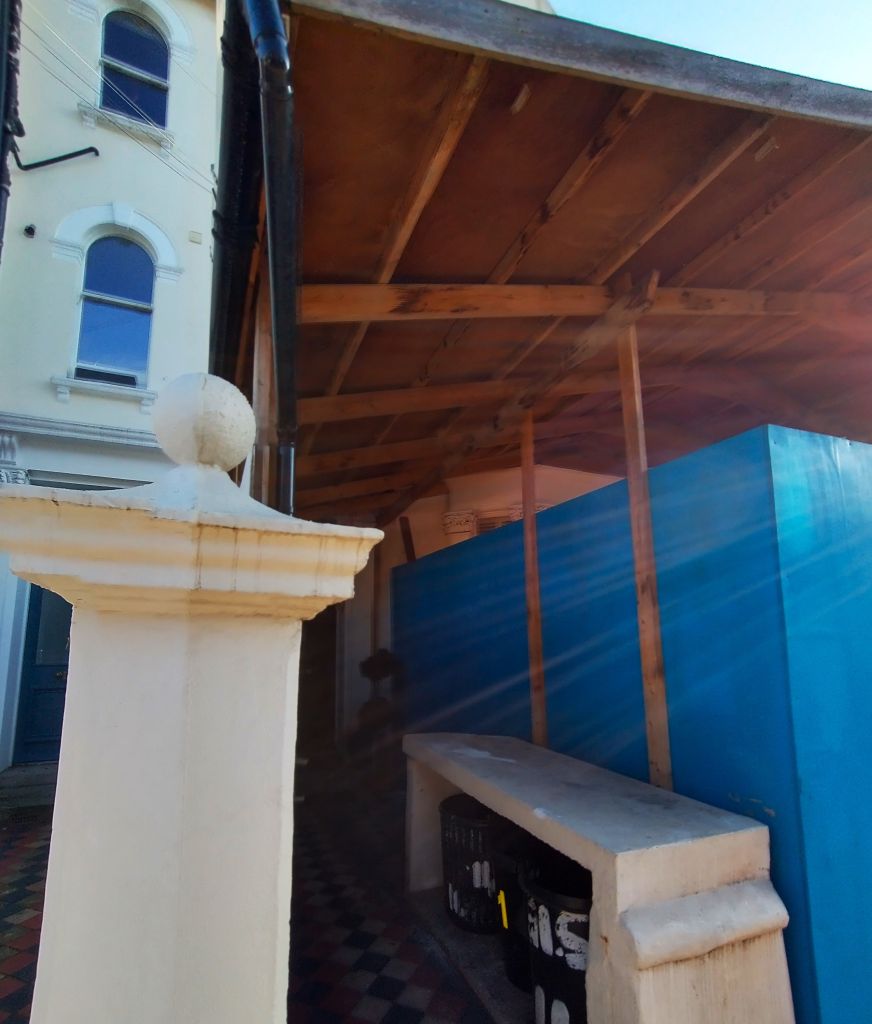
The exact contents of the shed are a bit of a mystery, but the structure seems to have become some sort of general storage space, essentially a large garden shed at the front of the property. Wandsworth’s planners eventually decided that enough was enough – maybe also conscious that the property owners might try to claim that the structure had been there long enough that they could argue it had, in doing so, acquired some rights to remain there in perpetuity. On the 29th October 2021, they issued an enforcement notice requiring the removal of the structure at Flat A, 11 Sisters Avenue, following what was described as “the unauthorised erection of a front garden timber enclosure comprising of timber hoarding to the front and sides and a timber framed shelter above at the property”. The enforcement notice required that the property owners remove both the structure at the front of the building and the one going round the side), that they restore the property to its previous lawful condition; and that they remove all debris from the site. They were given two months to comply. That should have meant that the structure would finally be gone by the end of 2021 – and we can imagine the other residents of the street breathing a sigh of relief – the end of the eyesore was finally in sight.
Or maybe it wasn’t – because over a year later, it’s still standing. It seems the owners weren’t about to let their structure be torn down without a fight – and they duly appealed against Wandsworth’s planning enforcement notice, escalating the case to the Government Planning Inspectorate. They essentially argued that the structure was a ‘permitted development’ on the grounds that it was a “building or moveable structure required temporarily in connection with and for the duration of operations being or to be carried out on that land or adjoining land”. They pointed to planning permission for the basement excavation that had been granted in July 2016 (when the hoarding was just a year old) and said that the structure was necessary for those works.
The planning inspector, Felicity Thompson, visited the site in September last year. She noted that at least some building works seemed to have taken place on site in 2017. However she noted that these works ceased “a number of years ago” following the death of the parents of the current owners (who it seems had owned the property, and were taking works forward before their death). She noted that an ongoing court case linked to the property had limited scope for further building works since then, and also notes a reference to probate processes on the property potentially concluding in 2022 – so it’s easy to see that things could have got in to a bit of a legal grey area.
However Felicity also notes that there was no evidence of substantive building works since 2017, other than the usual basic maintenance of the building. This led to her judgement that while the ‘permitted development’ exception does indeed allow structures to be built, it limits their presence to the duration of the building works. And as there’s no real evidence of any such ongoing building works at the site, the structure is not allowed. Her decision, in October 2022, says: “As a matter of fact, the [building] operations ceased and were not being carried out. The timber enclosure would not therefore constitute permitted development…”. This is a pretty clear cut conclusion – backing up the Council’s enforcement notice.
She does, however, clearly have some sympathy with the position of the owners, with suggestions in the decision document that they may have faced some sort of legal wrangles with the property. In her appeal decision she does also consider some other arguments that could be made in favour of the structure remaining: that requiring its complete removal is disproportionate, or that the two-month timescale Wandsworth allowed for its removal is too short. But to no avail, as on both grounds she comes down firmly in favour of the local authority: the structure is not allowed – and nothing short of full removal will remedy the planning breach. And a two-month timescale is completely sufficient to restore the front yard and dismantle a relatively simple wooden shed structure.
We’re already more than two months after the appeal’s enforcement deadline – and the structure’s still there. This is getting in to a dangerous space for the owners: ignoring an enforcement notice that has been upheld at appeal is not a good move. The Council has powers to take this in to their own hands now and remedy matters, and a charge can be made against the property including confiscation of income. Ignoring an enforcement notice that has been upheld at appeal is a criminal offence, and brings the prospect of trials at the Crown Court and unlimited fines.
There’s undoubtedly a sad story behind this neverending construction project, including the death that led to the original project being suddenly stopped, and whatever seems to have led to years of legal matters. There are two sides of every story, and anyone who has been involved in probate knows it’s not an enjoyable experience (and if you are the owners – please get in touch, as we’re keen to understand your side of this story better). But we’re left wondering why the hoarding wasn’t simply removed years ago – it’s hardly a major task, the wood could even be stored in the side passageway for reuse if works restart. What is so special about this ugly shed that means the owners have fought for so long, and presumably at some cost, for its continued existence? The fact of the matter is, no matter what is going on behind the scenes, there’s little excuse for leaving a supposedly temporary eyesore up for most of a decade. It’s time for this to be taken down, and maybe – if substantive building works ever start again that need a similarly giant shed – a new one could be put up. We feel for the many neighbours we know have had to put up with this thing for years, and who just want to see the back of this eyesore on an otherwise well-cared-for street.
Will the owners now do the right thing, or will this saga roll on? Ominously in late 2022 they applied for a new planning permission, for “Retention of temporary hoarding and canopy over to front and side until basement work is complete” – but then withdrew it on the 26th January. The ball’s in their court now, and we’re quite curious to see what happens next in this surprisingly long-drawn-out tale of an overgrown construction hoarding. Will the blue shed survive in to its second decade? Will Wandsworth move in to demolish it at the property owners’ expense? Might this all end in a criminal trial at the Crown Court? We’ll keep you posted.
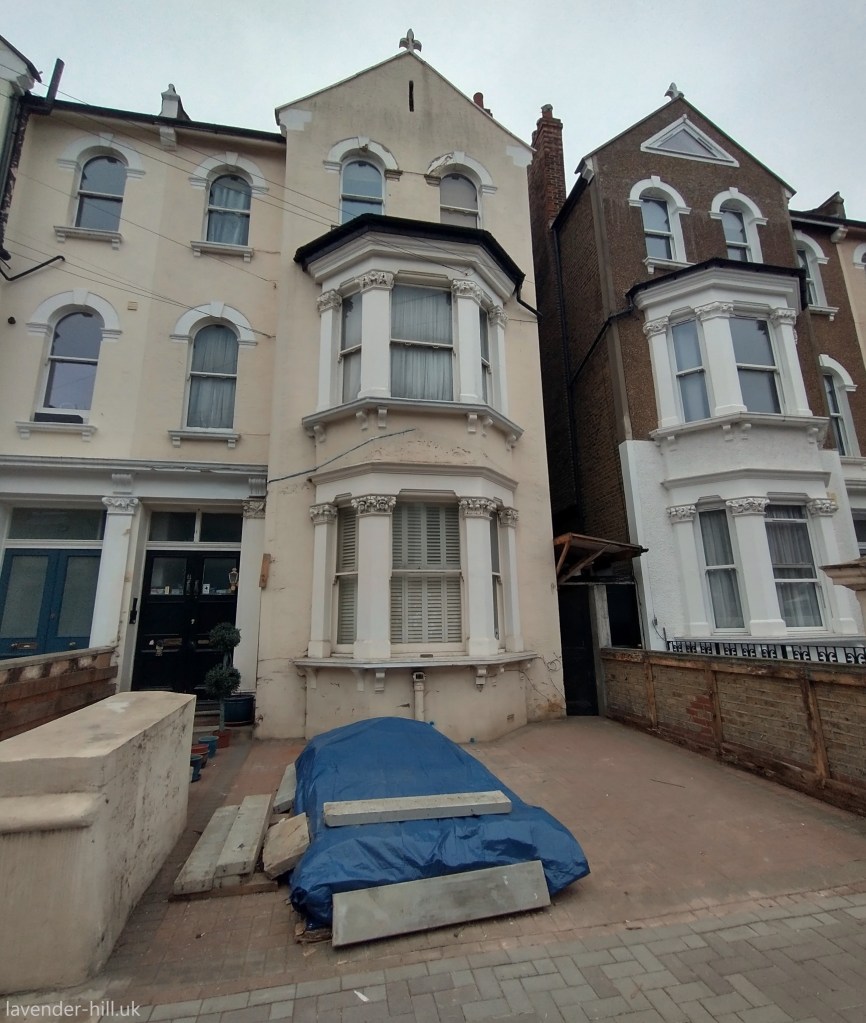
Update (10th February): No sooner had we written about the big blue shed – than it was gone! Just like that. Nothing left but a heap of materials wrapped in a tarpaulin (a blue one, of course, for old times’ sake). Looks like the owners weren’t too keen on a brush with the Courts! And it looks like the answer to the question of what was behind it for all those years is, well, nothing really – no big holes in the ground, no site equipment, no sign of building works at all. One might wonder what all the fuss was about and why the shed wasn’t taken down years ago. Rest in Peace, big blue shed. 2015-2023. We hardly knew ye.
Lavender Hill for Me is a community website working to support Lavender Hill, a neighbourhood in Battersea, London and a home to about 250 shops, restaurants and small businesses. We take an active interest in developments that could improve Lavender Hill for residents, traders and visitors.


















 Lavender-Hill.uk : Supporting Lavender Hill