
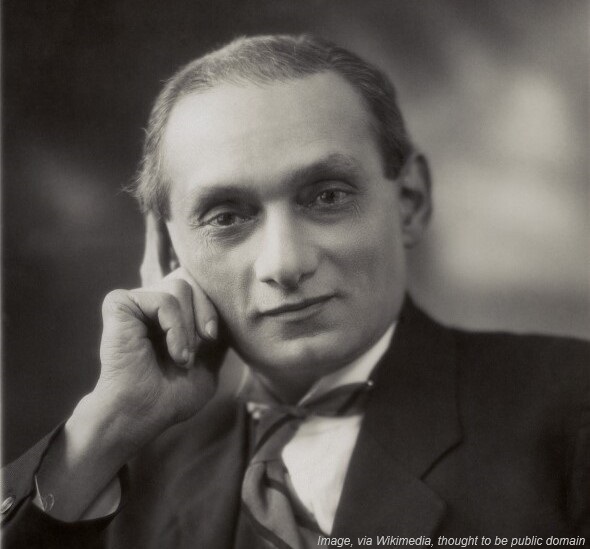
There aren’t many blue plaques in Battersea – but it’s been home to a lot of interesting and Plaque-worthy people over the years, and tireless local campaigners are turning the tide. One of the first was a exceptionally unusual one in a mucky alleyway hidden behind some smelly bins at the back of a petrol station on Queenstown Road, which – as the Short Brothers’ workshop – was the unexpected birthplace of British aviation industry – we’ve covered that story here.
We’ve also seen a series of plaques unveiled over the last few years focussing on the pioneering women of Battersea, including factory developers, social reformers, fearless pilots, celebrated artists, tenacious campaigners and ‘dangerous subversives’.
And as part Borough of Culture, we have three more blue plaques on the way – two of them right here in Lavender Hill. And in a fairly unprecedented move, all three will be unveiled within a single week.
First up is Shapurji Saklatvala – who was elected MP for North Battersea in 1922, receiving 11,311 votes (over 2,000 more than his nearest rival) – and again in 1924 (in a much tougher political climate, but still with a margin of over 500 votes). As an Indian Parsi, he was one of Britain’s first Asian MPs. He was a hugely popular and influential speaker – as well as a very outspoken one, with a lot of strong views! Anti- imperialist, anti-capitalist (as might be expected for an MP who started in the Labour party, but moved on to the Communist party), campaigner for Indian and Irish Independence (which he saw as being pretty much equivalent), internationalist and campaigner for workers’ rights and a hugely popular orator. He never missed an opportunity to campaign for the demands of the unemployed and the cause of cheap housing and lower rents.
He was arrested during the 1926 General Strike following a speech he made in support of striking coal miners, and was jailed for two months on the charge of sedition. His views on Indian independence – coupled with fiery speeches there – led to him being banned by British officials from travelling there in 1927; he was clearly seen as a little too controversial and influential for the government of the day, and ended up quietly under surveillance by the Security Service.
He was part of the super-wealthy Tata family dynasty, which then (as now) are one of the largest business empires in the world – but generally took a rather different path to everyone else in the family. He did work for Tata businesses for a while, as a mineral prospector where he was able to find new iron and coal deposits in eastern India – but it soon became clear he wanted to go down a different path. Catching a bad case of Malaria was a bit of a turning point, as he moved to England to recover – running Tata’s Manchester office, and then training (but not qualifying) as a barrister, before moving in to politics. He was clearly very much to the political left of much of the Tata family, but they clearly continued to have a workable relationship – indeed he managed to rather upset the (very much non-religious) communist party, when he held a Zoroastrian navjote initiation ceremony for his children – but he defended it on the grounds it was to ensure they could benefit from a Tata family trust fund!
The plaque to Shapurji will be unveiled this Friday, the 20th February, at 12pm – at the Labour Party headquarters at 177 Lavender Hill. Everyone is welcome – and the speakers will include biographers Marc Wadsworth and Dr Mike Squires, Marsha de Cordova MP, leader of Wandsworth Council Simon Hogg, Russell Profitt (who was the last Battersea North Labour candidate, Shapurji’s old seat, back in 1982 before it was abolished and merged with Battersea South), and Tony Belton (the longest serving councillor in Wandsworth).
And there are two more plaques on the way in the next few days – which we’ll write about soon.
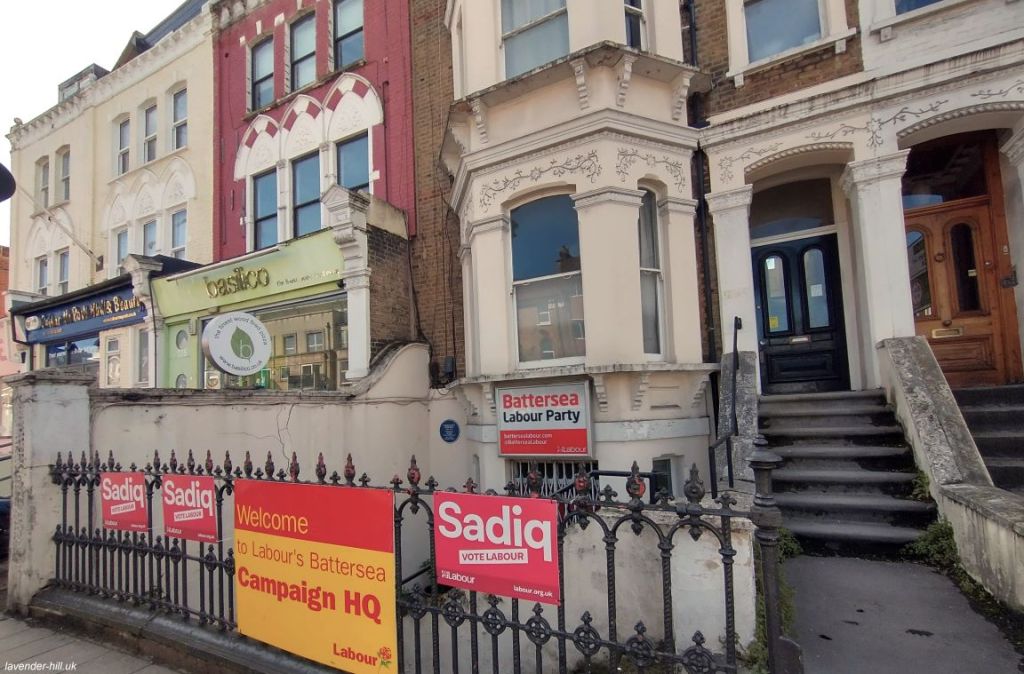

Speaking of plaques – Shapurji’s plaque is almost opposite Battersea Town Hall – now Battersea Arts Centre. Which reminds us that there was, back in 2021, a plan to install a statue of John Archer, mayor of Battersea way back in 1913 – who was elected by fellow Councillors following a fierce election battle where he had to deal with racist campaigns against him and allegations that he did not have British nationality… in the end he won by a single vote, in a landmark moment for Battersea and Britain, as the first time a black man held a senior public office in London. We wrote about John and the plans at the time; sadly while the statue was announced with great fanfare, as far as we can tell the plan seems to have been quietly forgotten! If anyone has any tip offs on what happened to this plan, do get in touch.
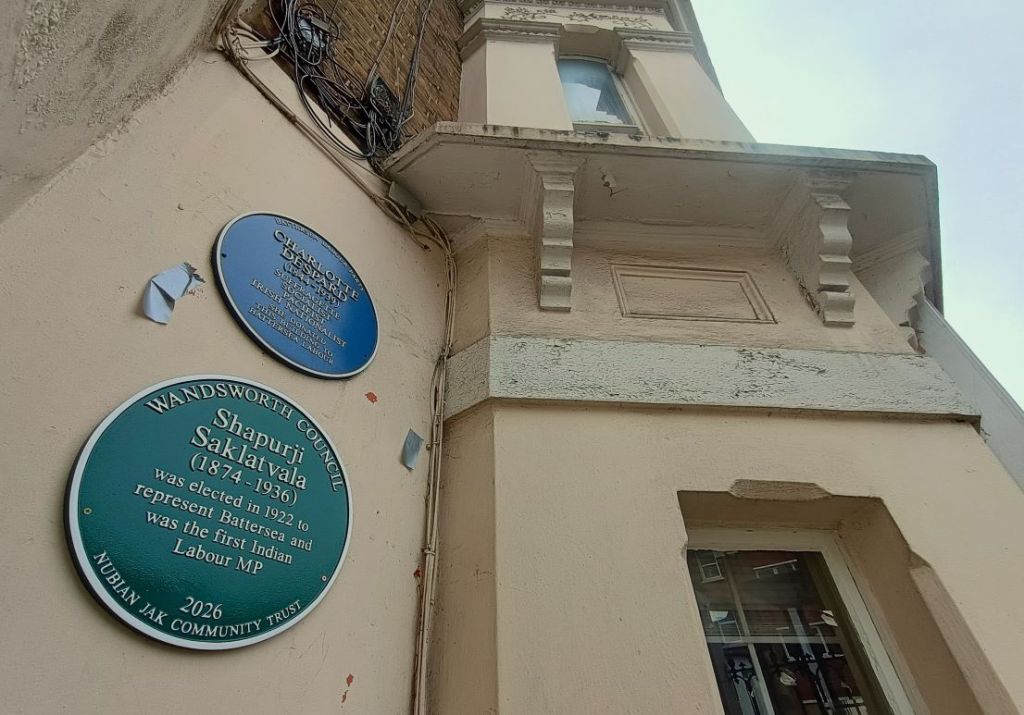
The plaque was unveiled on Friday 20th February at 177 Lavender Hill – and it’s pictured below. We’re indebted to Jeanne Rathbone who has been a driving force behind Battersea’s blue plaques – telling the story of people who have made their lives and careers in Battersea. You may find our previous article about the inspiring women of Battersea’s early days, including factory developers, social reformers, fearless pilots, celebrated artists, tenacious campaigners and ‘dangerous subversives’, interesting; or the story of the blue plaque at 84 Lavender Sweep. And keep an eye out for the walking tours Jeannie occasionally runs, of the growing cluster of local heroes commemorated in and around Lavender Hill.
And if you find our occasional local history articles of interest, you may enjoy a long article on the complicated history of the Cedars Road estate, a similarly detailed look at the past of Culvert Place, a photo story about the Shaftesbury Estate drawing on its conservation designation, an article about the cluster of derelict buildings around the old Artesian Well bar on Clapham North street, a very detailed history of Rush Hill Road, and an article about the area around Falcon Lane that dives in to the area’s messy past and some scary 1970s road-building projects that very nearly got built!
 Lavender-Hill.uk : Supporting Lavender Hill
Pingback: Local historian spotlights pioneering women of Lavender Hill in Battersea walk – Clapham Junction Insider – Local Democracy Reporting
Pingback: A pair of green plaques are being unveiled this week, in Nine Elms & Lavender Hill | Lavender-Hill.uk : Supporting Lavender Hill