
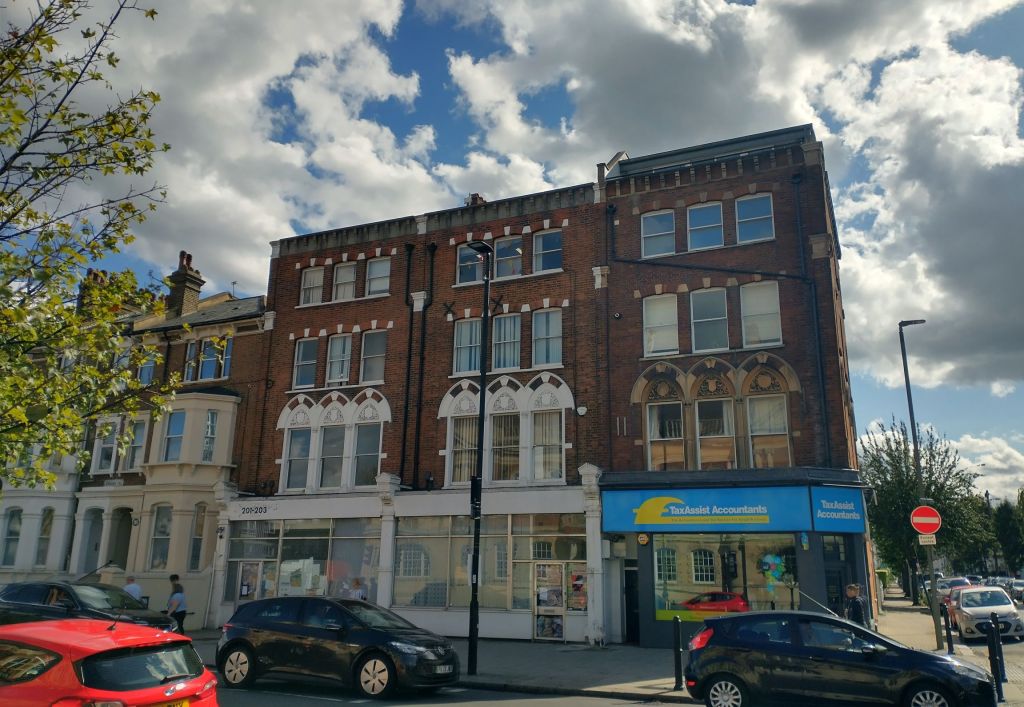
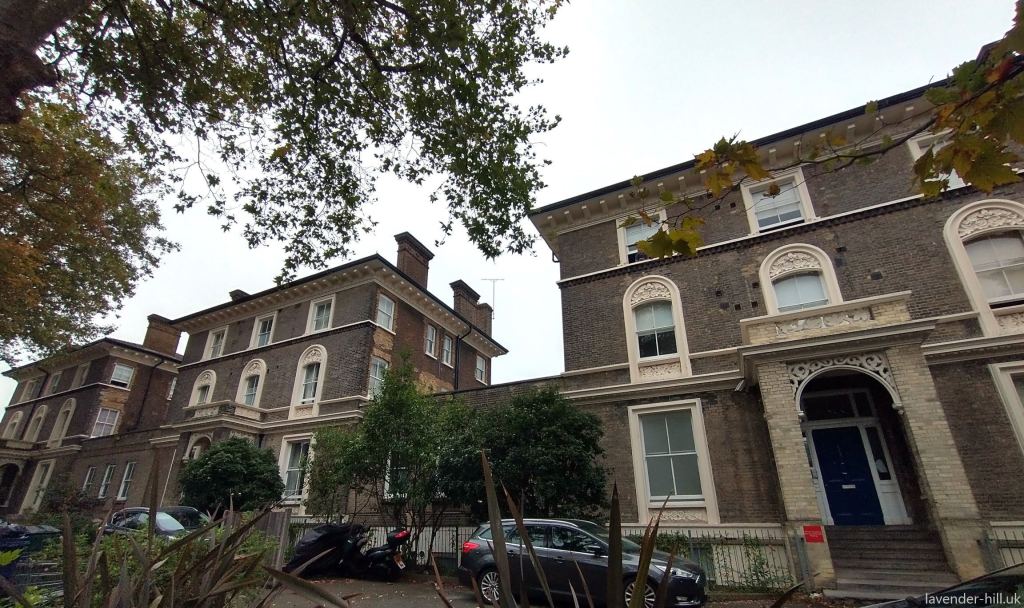
Plans have emerged to convert a small office building on Lavender Hill to a new hub for rough sleepers. 201-203 Lavender Hill, pictured above, would become the Borough’s new ‘rough sleeper assessment hub’. Part of the proposal is a traditional ‘homeless hostel’, which aims to provide a bed for the night for people sleeping on the streets, and gradually move occupants on to sustainable long-term accommodation. But the plans provide quite a lot more than just a hostel, with a relatively large number of on-site staff to provide advice to the residents and a variety of specialist services – supporting them to access specialist services and move away from the dangers of rough sleeping. Some staff will also be on site overnight, to maintain safety on site, given that the residents at hubs can often experience a variety of challenges including substance and alcohol addiction, poor mental health, offending behaviour and histories of abuse.
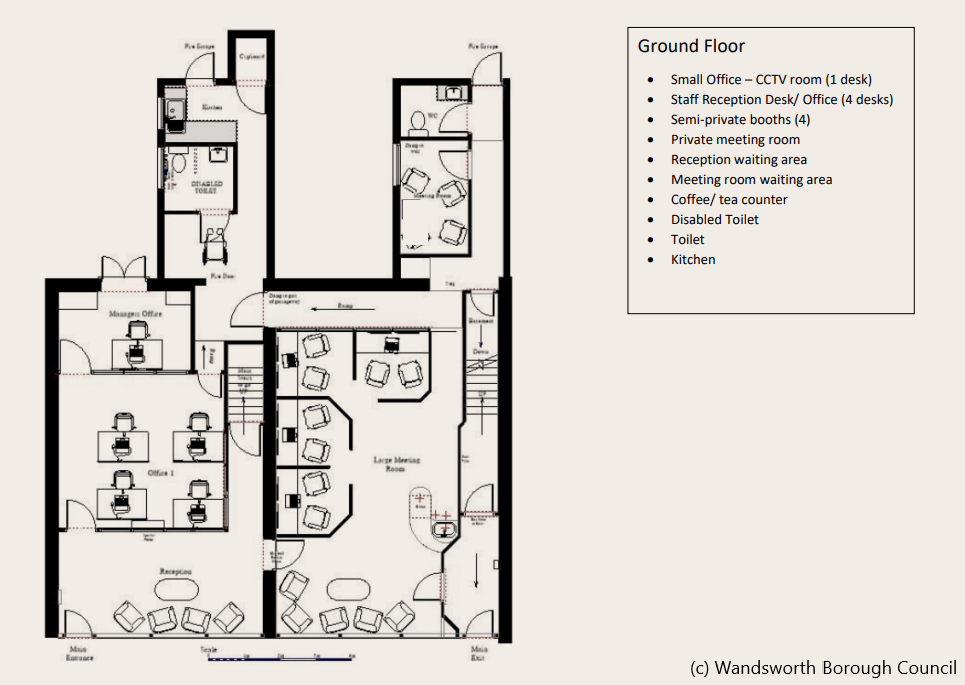
The planned ground floor, whose layout is shown above, would have a reception desk and a small office space, as well as a small coffee and tea area, a set of semi-private booths where staff and homeless customers can have discussions, and a private meeting room, to accommodate various appointment and drop-in services that will be provided at the site. The upper floors would be a series of hostel bedrooms, as well as an office for night duty staff – with 9 private rooms and a further two beds in an open plan area. The customers of these facilities tend to be predominantly male, but not exclusively so – and in a thoughtful move the planned hostel includes a female-only bedroom and bathroom that’s slightly separated from the rest of the hostel and (by being closer to the night duty office) offered a degree of safety from the rest of the residents. The top floor, which will be ‘staff only’ with secure access, has a larger office space with 17 desks, to accommodate the Rough Sleeper Housing Assessment Officers, Homeless Healthlink workers, Drug and Alcohol Homeless pathway and Outreach teams.

There’s no doubt that rough sleeping is a challenge for London – and a more complicated one that many realise. For starters, we’ve all seen the flood of dubious ‘homeless’ beggars dropped off daily by vans at Clapham Junction and other crowded areas in the Borough – and they’re generally not homeless! They have more serious problems though – as they’re mostly victims of modern slavery, being exploited by some pretty well organised criminal enterprises, who keep much of their takings. The ‘real’ homeless are often a bit more hidden – with a fair share of people used to a life of passing under the radar in a world of undocumented and casual labour, where ‘home’ often means quietly squatting in vacant office space or bouncing around from one overcrowded slum to the next, until something goes off track and they’re on the streets. There’s a group of people in short term difficult situations – with relationship break ups and financial difficulties all able to tip people into homelessness. There are specific groups like former prisoners, who can emerge from years of a relatively institutional lifestyle to a world that may have moved on without them, and who find it notoriously hard to get the things going you need to find work and pay rent. And then some – quite a large portion by most accounts – have severe and complicated issues of drug and alcohol dependency, often coupled with various mental health challenges, and may struggle to manage a tenancy.
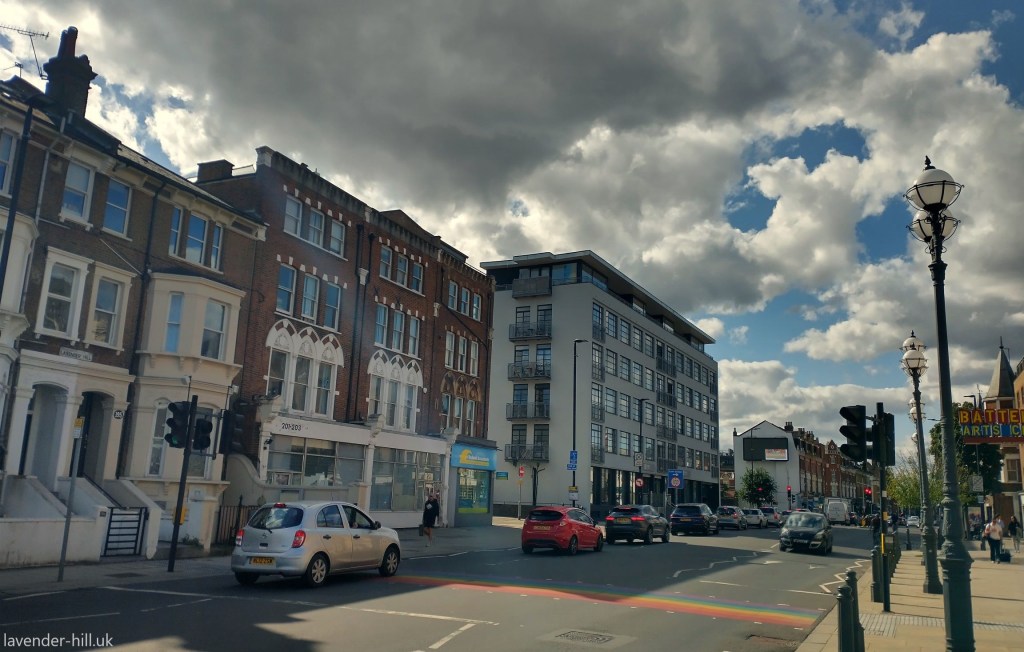
Wandsworth currently has no accommodation that rough sleepers can be placed in at short notice, meaning they are placed in temporary accommodation miles away from the borough and without access to locally provided support services, which harms efforts to bring them off the streets – and which is also expensive for the Council. Looking at what seemed to work elsewhere led to a plan to develop a local co-ordinated hub – that would act as a location for services to the homeless like specialist support and health need assessments , as well as providing eleven short-stay accommodation beds that could keep people local while work is underway to see what sort of housing they are ready for. It’s a bold idea, and a fresh attempt to tackle the challenge of homelessness with a more root-and-branch approach than just putting people in hotels, and generally a laudable aim. So much so that central government (the Department for Levelling Up, Housing and Communities) liked the sound of and agreed to partly fund it up to 2025 with a grant from central government, as part of the Rough Sleeping Initiative.
That said – while the benefits in general are clear, hostels of any type can be problematic neighbours, and we don’t expect this proposal to be popular with those who may feel its side effects more locally. There are several already up and running across London – including in Croydon, in Barnet, in Brent, and in Shepherds Bush – as well as around the country. The experience of their neighbours has been pretty mixed, and seems to depend strongly on how well the hostels are managed, whether the staff run a safe environment for the residents themselves, and how they handle any poor behaviour – some operators seem very competent and effective while others have been criticised for tolerating violence and intimidation inside and outside their sites. A councillor whose ward includes a large hostel run by St Mungo’s in Brighton (one of several controversial sites in the city) reported that “so far this year there have been 38 incidents, 11 emergency calls, and ten urgent calls… it is somewhere many residents pass in the evenings with more caution. I’ve been informed that many people circumnavigate the site from a fear of anti-social behaviour and because it does not feel safe.”
Some residents will inevitably have patterns of aggressive behaviour, which can be intimidating for everyone in the vicinity. Some hostels provide vouchers for residents to buy food nearby, but this won’t tend to stretch to alcohol or other substances meaning hubs can still lead to increased theft from nearby shops, and sometimes aggressive begging. At some sites, residents banned from drugs and alcohol on site congregate in nearby streets instead, causing nuisance and intimidation for neighbours and drawing in wider criminal activity. A concentration of residents with complex conditions and unpredictable behaviour can in some cases lead to safeguarding problems if hostels are too close to other vulnerable people (an issue that may also apply here, with a day nursery immediately next door).
The planning application documents argue that “A considerable body of research in dealing with the effects of rough sleeping indicate that rough sleeping has a number of negative consequences for society more generally, such as anti-social behaviour and other street-based activity such as begging. Tackling the underlying drivers of rough sleeping as intended with this Hub, should have many associated benefits for the community and the broader Lavender Hill locality.“. This is true, although clearly concentrating the Borough’s entire homeless service provision at a fairly quiet edge-of-town-centre location will be a bit of a gamble and is likely to have negative effects for some residents and traders.
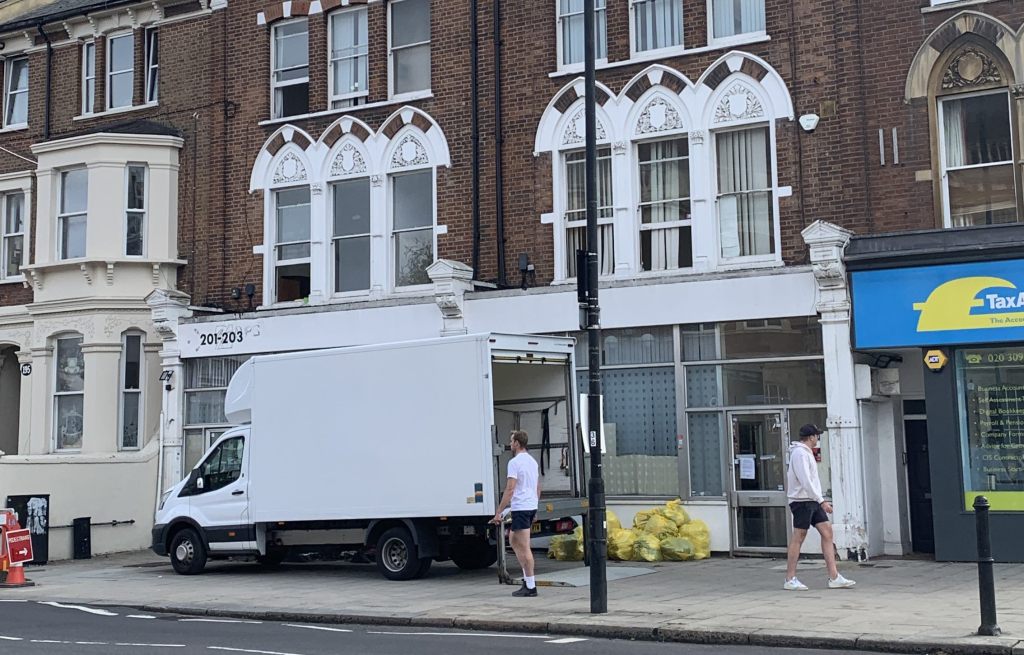
It’s not a huge change, in ‘planning’ terms, to the site – a Council-owned building which has recently been empty and taken over by squatters (the photo above shows some what they left behind being cleared out). The previous office housed a variety of Council-led services, including the Wandsworth Independent Living Scheme, which provided support to young people leaving the care of Wandsworth Children’s Services and to those who have moved into supported housing. No proposals have yet been made to change the appearance of the building, instead the main change in planning terms will be that it’s now becoming a residential facility with potentially complicated residents, rather than an office building.
There are a lot of things that could be done to minimise the downsides – sometimes as part of independent ‘Good Neighbour Plans’ that could be imposed as a planning condition. Other similar hostels have been required to provide 24 hour ‘complaints hotlines’ based in the service, and to advertise it prominently to local residents and businesses if residents cause problems, to ensure problems can be dealt with quickly and avoid the only option for neighbours being to add to the queue of calls to the police. They have also been required to enforce ‘house rules’ including around avoiding noise nuisance, no begging/shop lifting and use / dealing of illicit substances – with rules on swift eviction for breaches. Some also have an area around the hostels that staff patrol to ensure residents are not congregating offsite. An important one is the need for residents to exclusively be brought to the site, and those seeking services to only arrive on appointment, rather than being allowed to turn up unannounced – to avoid the sites becoming a late night magnet for anyone looking for a room, and people then going away disappointed and causing havoc. Several hostels agree to provide all residents with supermarket vouchers to enable them to purchase supplies without more begging or shoplifting, to reduce the harm on nearby traders.
If you want to support, oppose or comment on planning aspects of the proposed change of use for the building, search for application reference 2023/3434 at wandsworth.gov.uk/planning – it’s open for comments until 19th October, and late comments are usually also taken in to account.
As an aside – it’s worth noting that this isn’t the first time there has been a local homeless hostel. St Mungo’s ran a large 120-bed hostel on Cedars Road for some years, which was one of their largest operations in the country – focussed on vulnerable residents with severe drug & alcohol abuse issues. The Cedars hostel took some innovative approaches to improve the experience and care of those who were pretty much at the end of the road as their bodies threw in the towel – but there were also reports that suggested the hostel was not having much success in moving any residents on to longer term accommodation. That hostel was a bit of a nightmare for neighbours, as the erratic and antisocial behaviour of some residents in a quiet residential area (and right next to a large primary school) proved increasingly problematic. To the relief of some neighbours it stopped running as a hostel in 2010, after Lambeth ended its funding as part of a review of its overall rough sleeper provision, with the services being moved to more centrally located buildings near the bus station in Vauxhall. The Cedars Road site is still a St Mungo’s facility but was converted from a hostel format in to a series of self-contained flats in the form of “St Mungo Community Housing Association”, to serve a calmer and more settled group of residents – for example those who were homeless because they had had to escape difficult domestic situations, or who were well on the road to recovery – which calmed things down quite a bit.
 Lavender-Hill.uk : Supporting Lavender Hill
I would expect Wandsworth Council to undergo a comprehensive consultation before proceeding given the impact a homeless centre will have on the community. Many homeless people unfortunately have mental and drug/alcohol issues, thus they come with an number of challenges. They spend the days outside in the streets thus their impact on a community is significant. The council needs to indicate what funding for the surrounding community has been incorporated into their plan.
LikeLike
I am very much in agreement with trying to help the homeless and vulnerable but I think that this proposal will have detrimental impact on residents and local businesses. I have lived in this area my whole life and have witnessed the antisocial behaviour from other schemes including the drug rehabilitation base on the Shaftesbury estate which was later stopped due to an increase of burglary and cars broken into.
LikeLike
Thank you very much for your help bringing this to the attention of the local community, given the Council seems to have “forgotten” to notify the neighbours either by letter or putting up the standard planning notices in the street!
LikeLike
Please note that the Council is holding a public drop-in session to discuss the proposed homeless shelter they want to build directly next-door to Linden Tree Nursery on Wednesday 6 December (4-7pm) at the Battersea Arts Centre .
The meeting has basically not been publicised at all, so my guess is that the Council want to be able to say they have held it whilst avoiding anyone actually turning up and complaining!
So please attend if you can to put across the incredibly strong local community opposition to this scheme….
LikeLike
I am part of the ‘strong local community’ and I 100% support this project, so please be careful not to clump members of the community into the opposition camp, when this is not the case.
LikeLike
Pingback: The Council is hosting a public meeting, following huge controversy on their ‘stealth’ plans for a new hostel | Lavender-Hill.uk : Supporting Lavender Hill
Pingback: Rough Sleeper Hub: Public meeting on Wednesday 6 Dec. – Clapham Junction Insider – Local Democracy Reporting
I am 100% in favour of a new hostel for the homeless at this venue. It confounds me that people here have commented positively to the prospect of ‘supporting’ the homeless, whilst objecting to that help being provided anywhere near their businesses, homes, etc.
LikeLike
Pingback: The latest on the planned rough sleepers’ hub opposite Battersea Arts Centre, following the Council’s public meeting | Lavender-Hill.uk : Supporting Lavender Hill
Pingback: Clapham Junction’s Rough Sleepers Hub opens for business | Lavender-Hill.uk : Supporting Lavender Hill
Pingback: Clapham Junction’s Rough Sleepers Hub is now open for business – Clapham Junction Insider – Local Democracy Reporting