
It’s a story we’ve heard time and time again. Well-meaning local authority realises that one of its estates is falling to bits, and that the cost of getting the ageing buildings – thrown up in a hurry and on the cheap – up to scratch again is probably about the same as the cost of knocking it all own and starting afresh. So plans get drawn up – we’ll use the space to fit in more homes, we’ll sell some off and that will pay for the work on the rest. Residents will have to move at least once – but the new flats will be bigger, warmer, brighter, safer, better.
A few people are nervous about it. How long will it take, and will we still be around to see the benefits? Can we stay on the estate where we know our neighbours, where the kids go to school, during the works – or will we be shunted out to some spare flat no-one wanted in a rough estate at the other end of town? If we fit in hundreds more flats, won’t we be losing all the green spaces? Are we sure the Borough has enough cash to see it through?
The 34 people who bought their flats under right to buy are especially worried – sure, they’ll get paid for their flats, maybe with a slight premium because of the inconvenience. But what they get paid will be the value of a knackered old flat in an estate that happens to be in a good location but needs a lot of work. It’ll be a lot less than the cost of buying a new flat, which will have the ‘new luxury flat’ premium attached. Will they ever find something similar without having to go out to zone 6?
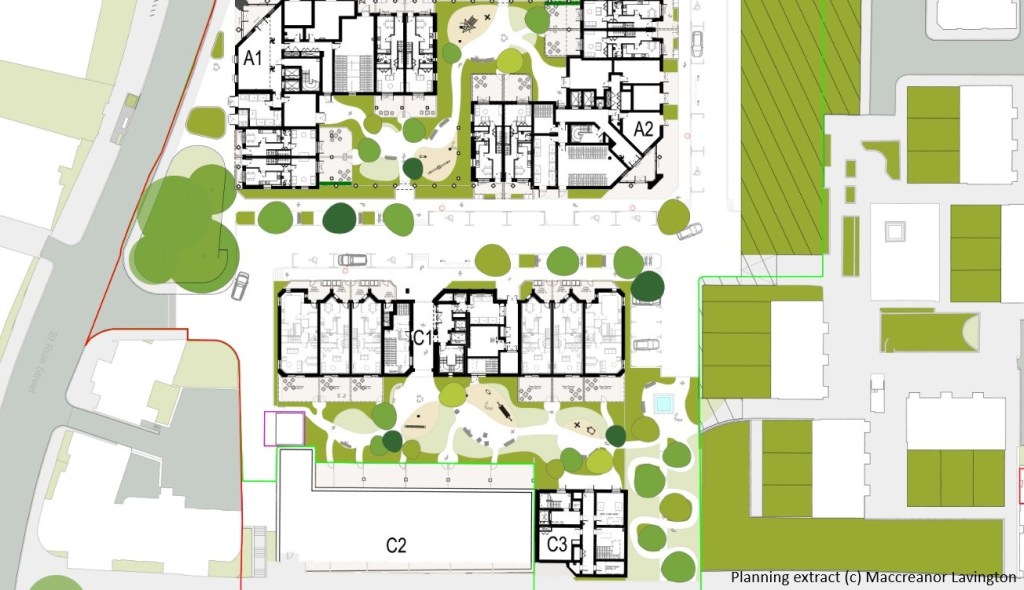
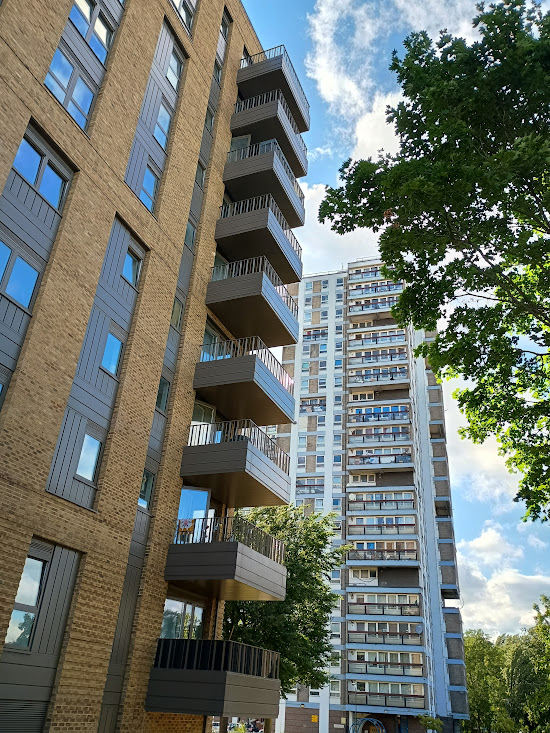
But one way or another, the plans get the nod and work starts. The first few buildings are squeezed in in bits of the estate that don’t have much in them – in this case, part of the green area by Wandsworth Road, and a series of dilapidated garages. This means new flats can be built without anyone being evicted or bought out, then residents can be moved there from other bits of the estate, and their old flats knocked down, new flats built there, and so on. This goes quite well: the first two buildings are built to an impressively good quality, everything is new and modern and clean, they’re miles better than the old flats, those who move in are generally very happy with them.
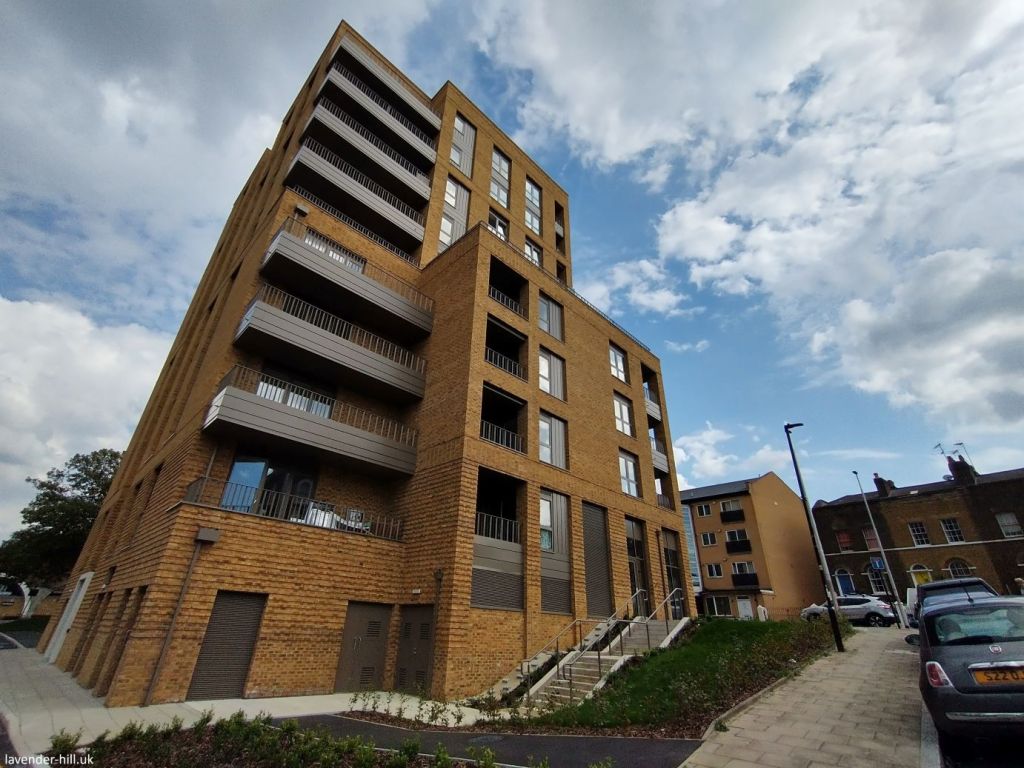
The first two buildings, both directly facing the Wandsworth Road at the edge of the estate, were paid for by developers of other projects in the Borough, as a contribution in place of delivering their own share of affordable properties. In this case, 414 and 450 Wandsworth Road were paid for and built by developer St James, who are part of big developer Berkeley Group, as the ‘affordable’ part of their development of the Dumont building on the riverside at 22-29 Albert Embankment. They were then acquired by Lambeth Council’s delivery company, Homes for Lambeth – and the 64 flats in them mainly house people on secure tenancies moved from the rest of the estate.
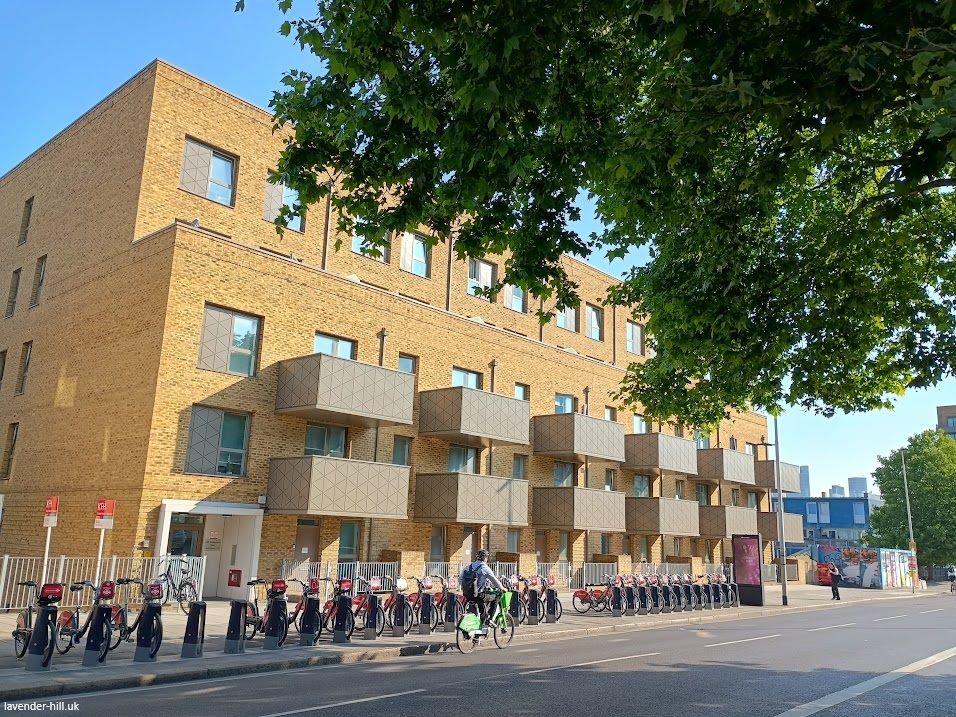
These two buildings were essentially the easy part, because someone else took charge of the delivery (and St James are a very solid developer, for whom this was a straightforward project – even if the project went over budget and Lambeth had to step in with an extra £3 million) – but the long term plan was that the rest of the estate would be built by Lambeth’s development company, and once most of the estate has been rehoused, flats in the later stages could be sold off to recoup some of the costs. The end result would see an estate with 38% affordable housing, the rest being privately owned.
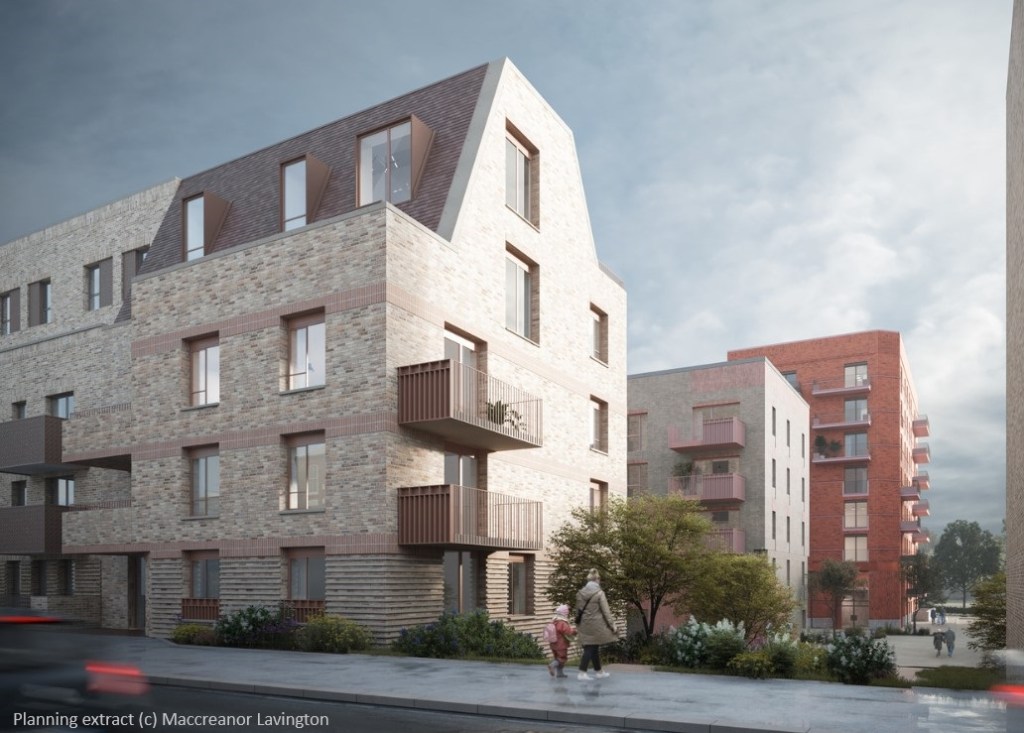
It all sounds great – happy residents, nice new buildings, 334 new homes. What could possibly go wrong?
Lambeth’s Westbury Estate: How did we get here?
Well, as it turns out – quite a lot. The creeping impacts of a hard Brexit were maybe the first sign of trouble on the horizon – by sharply reducing the number of skilled (and in large part, Polish) builders who wanted to work on London projects, and also by pushing up the cost of the materials needed for any building project.
The pandemic really didn’t help either – by tightening supply chains around the world, and for several years making an absolute mess of global materials supply chains. A building project can now easily cost twice what it would have back when this project was first kicked off.
A London Borough left out in the cold by central government
But maybe the most important, thing that went wrong was that Lambeth ran out of money. The Council is widely known to be in a bit of a financial crisis – running at a loss that is needing some fairly savage cuts, and which certainly isn’t offering up any pockets of spare cash to plug the gaps in the economics of its troubled estate redevelopments. We’re not going to try and pin down precisely whose fault this was – but it’d be fair to say some of this was Lambeth’s fault, and some wasn’t. The central governments over most of the life of the project were desperately throwing oodles of money at the north of England to shore up their fragile vote there (‘Levelling up’ – which generally meant levelling down for London) – and weren’t exactly supportive of London or of left-leaning inner city local authorities. Local government is being squeezed everywhere, but the impact in London has been deliberately and especially harsh – which meant Lambeth was left picking up a lot of the pieces on housing, social care, and all the difficult things a Council has to do, without being given anything close to the money it would need to do so. We know some of our posts are quite widely read by people working in the Council, many of whom are doing their best behind the scenes to keep the show on the road in really quite challenging circumstances, and seeing very little thanks or appreciation for their efforts – and we know how hard it is to make ends meet here!
There was also the loss of a key grant. The Mayor of London initially supported the project, allocating £50m of grant funding in 2017 to support projects including 102 new flats at the Westbury Estate (which reportedly worked out at about £60,000 a flat), but in 2020 withdrew £35m of the grant (including all the money that had been allocated for Westbury) on the grounds that the project was running far too late for the funding to be realistically claimed. Lambeth at the time said they’d plough on with their own funds.
A housing department in chaos, and a failing development company
But – and we’re sorry to have to say this – Lambeth themselves has also made an absolute pig’s ear of running some of its housing – with high profile fines linked to serious failings in how it treated some of its residents, and reports of repairs being (to put it mildly) mismanaged – and handled so badly that they were directly named and shamed by Michael Gove. Lambeth was also severely criticised for massively overcharging residents for works that weren’t completed or in some cases weren’t done at all, and then when it ended up issuing refunds to those who challenged them, forcing people to sign gagging orders (presumably in the hopes that others wouldn’t find they had been similarly ripped off and make similar claims). When you’re managing thousands of homes there will almost inevitably be screw ups from time to time, but the sheer number of serious problems coming to light here suggests serious underlying problems in how the place is run. They also lost their £190,000-a-year Chief Executive last year in truly bizarre circumstances that included failing to stop at the scene of an accident, possession of class A drugs, driving over the alcohol limit, and driving without insurance.
Lambeth’s own Council-owned development company, Homes for Lambeth, which would have been the one to deliver the rest of the project also fared poorly. Amid concerns on slow progress (and rumours of tensions between it and the Council) the Council commissioned their own independent review – led by Lord Kerslake, the chair of housing association Peabody and former head of the Civil Service – in to how they could maintain delivery amid the many emerging challenges. The review concluded that it had, to put it mildly, not gone well:
“The performance through Homes for Lambeth’s direct delivery route can only be described as very poor. Since the decision to set up HfL in 2017, it has only started building 65 homes through the direct delivery route. Despite securing significant levels of government grant in 2017 through the Mayor’s Affordable Homes Programme, at that time the largest allocation of any London borough, this grant has largely been unclaimed. Lambeth is one of the lowest performing boroughs in London in terms of delivery against its council housebuilding programme. This is despite Lambeth Council having invested some £30m to date in the set up and running of HfL, as well as providing development funding and meeting the costs of buying out leaseholders“.
Lord Kerslake recommended a fundamental reset – suggesting the company could be (in effect) shut down and replaced by a new housing and regeneration directorate in the Council. The review noted that it was clear that resident engagement had not been positive, and the practice of the Council had been fragmented and inconsistent –
“As part of this review we spoke to residents on these estates to ask them about their experience. […] among those we did speak to, feedback was uniformly negative. They spoke of inconsistent approaches, poor communications, delays, lack of consideration, and confusion of responsibilities between HfL and Lambeth Council. As a consequence, levels of trust in the Council are exceptionally low. We recommend that the Council acknowledges the shortcomings of the engagement with residents and takes a fresh approach to estate renewal in the future.“
In the end Lambeth decided to essentially close Homes for Lambeth, which has taken a few years to do. Luckily they got off relatively lightly, compared to the case in Croydon where a similar effort (Brick by Brick) ended up in total disaster and a financial meltdown for Croydon Council – and it’s fair to say that Lambeth clearly did take action when it became clear that there were big problems with delivery, and haven’t hidden away from the problems that Homes for Lambeth experienced – but this was undoubtedly another setback for anyone hoping the Westbury project could get back on track quickly.
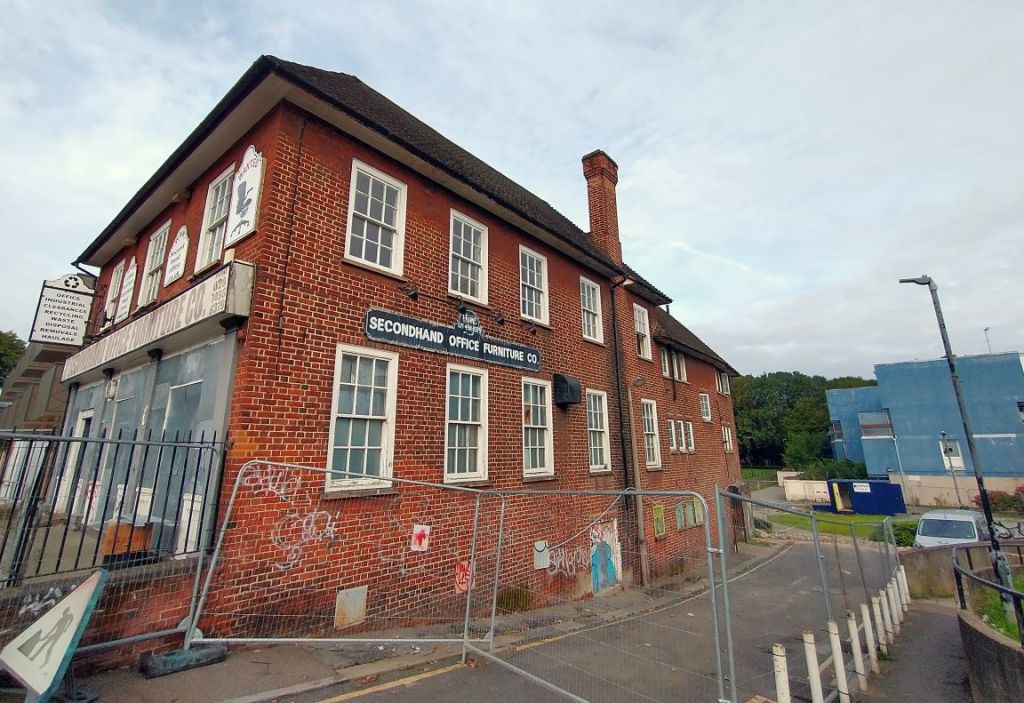
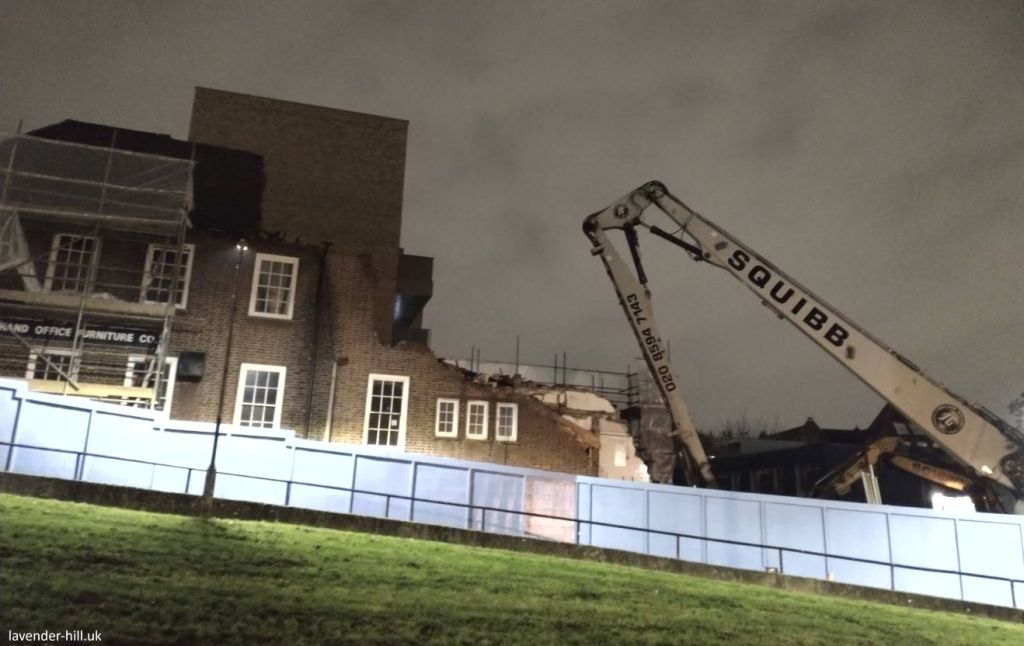
All that is a long way of saying, there’s nowhere near enough money to follow through with the original plan. The project is now way more expensive to deliver, and there’s less cash available to pay for it. Apart from the demolition of the old Queen pub on Wandsworth Road – pictured above- nothing has happened on site for years.
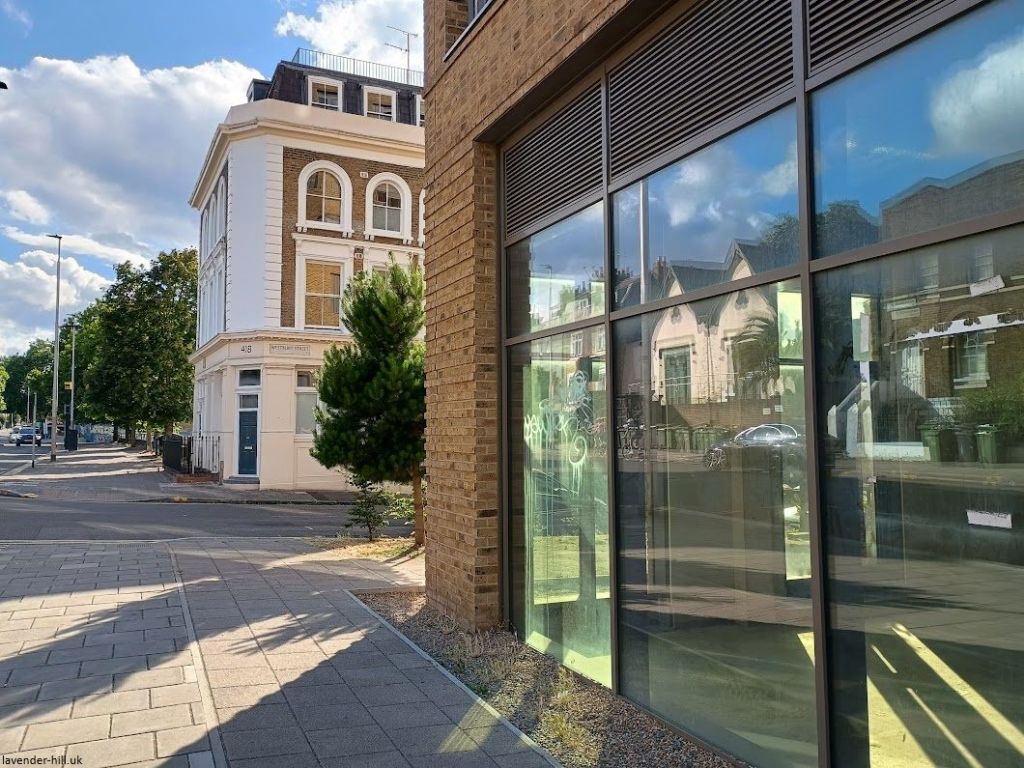
Even the one shop that was built in the new estate, which is right next to the station and a busy bus stop, and which should have been an easy let at the right rent level, has stayed empty – leaving a fair bit of potential rental income for the Council on the table (it’s currently to let at about £50,000 a year). There was a bit of a design mistake made in the sizing of it, because at 1,700 square feet it’s too small to become a mini Coop or Tesco (they need about 3,000 square feet) – but it could still work well as a convenience store.
More problems: the buildings themselves are in trouble
And there are other problems looking on the horizon – because the state of the estate is really not all that great right now. Back in the sixties, when London was racing to build new housing estates, not a lot of thought was given to what would happen to them at the end of their lives. Tall buildings, flat roofed buildings, buildings that needed a lot of lifts, materials where it was hard to tell if they were in good or bad condition, big heating systems in hard-to-access bits of the basement with ducts all over the place, complicated layouts – you name it, all of them were used. For the first forty or so years all was fine – but like an old car, costs start to get higher and higher and eventually everything starts to wear out. It’s bad enough with Victorian terraces, but these buildings have way more problems.
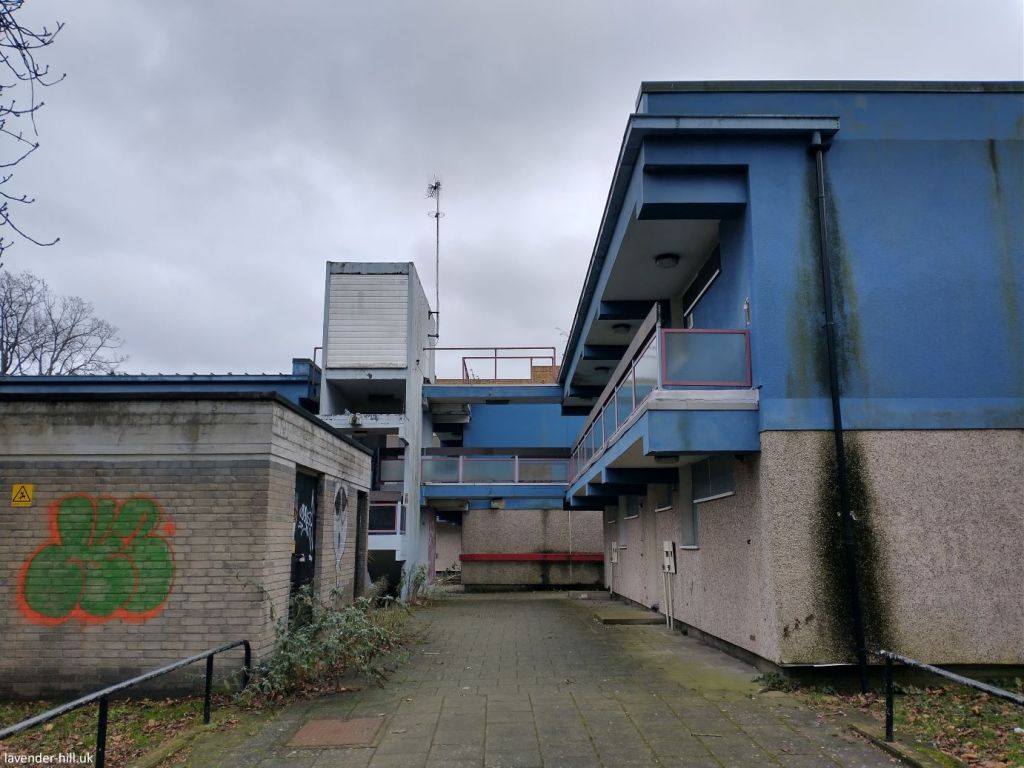
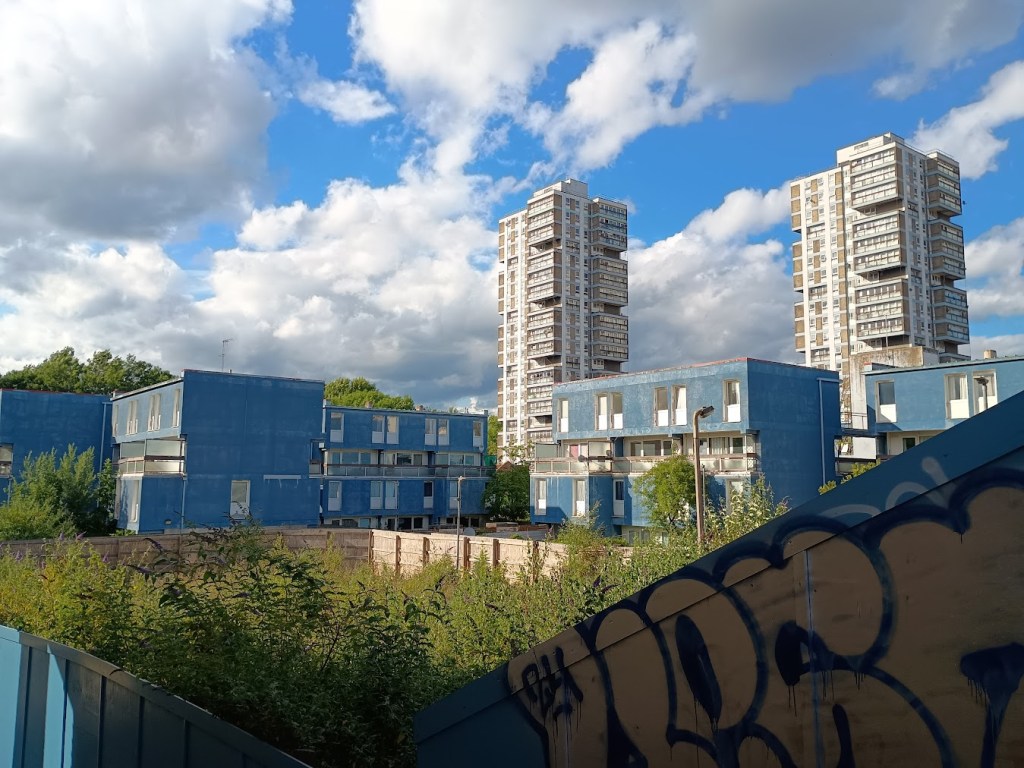
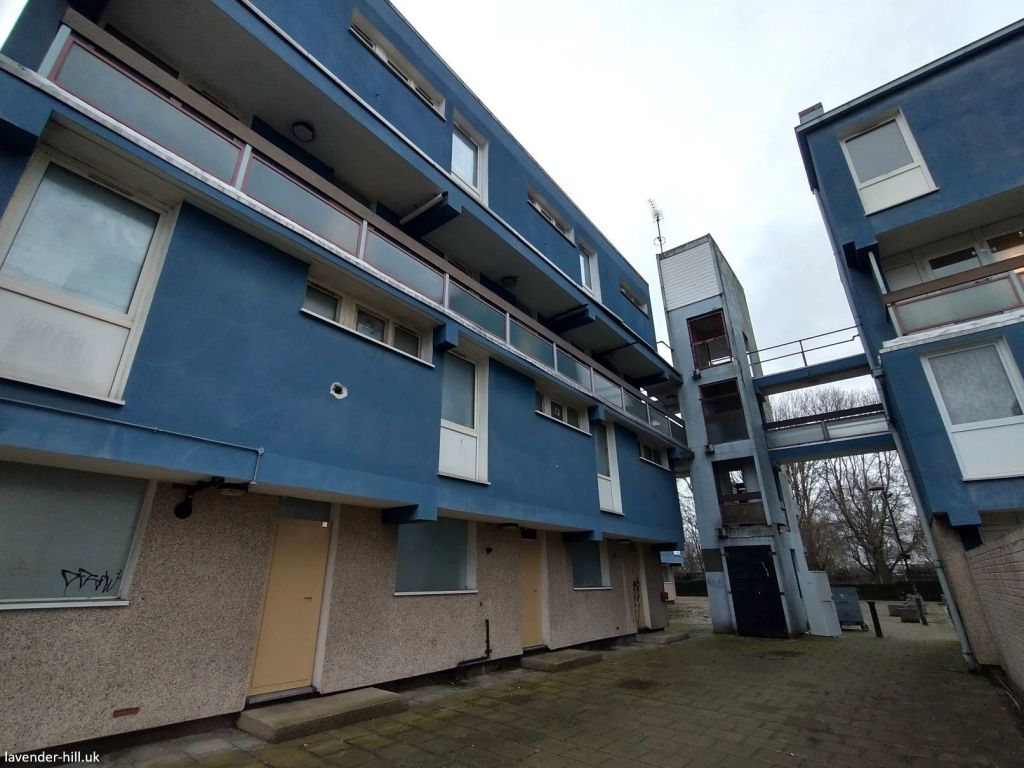
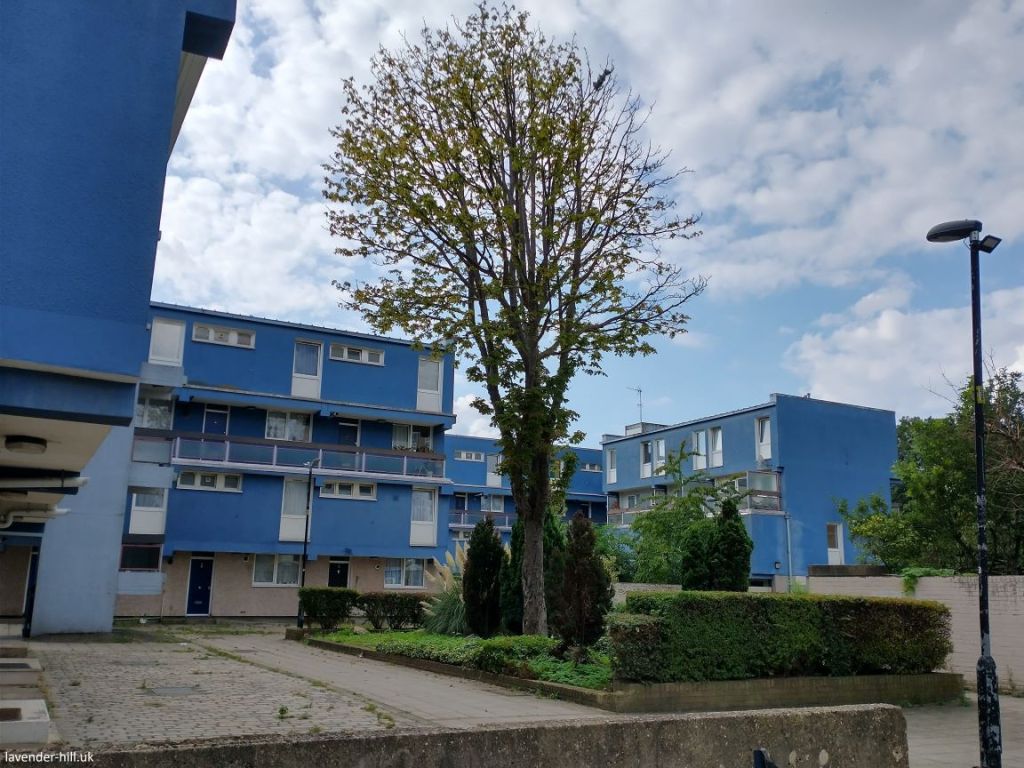
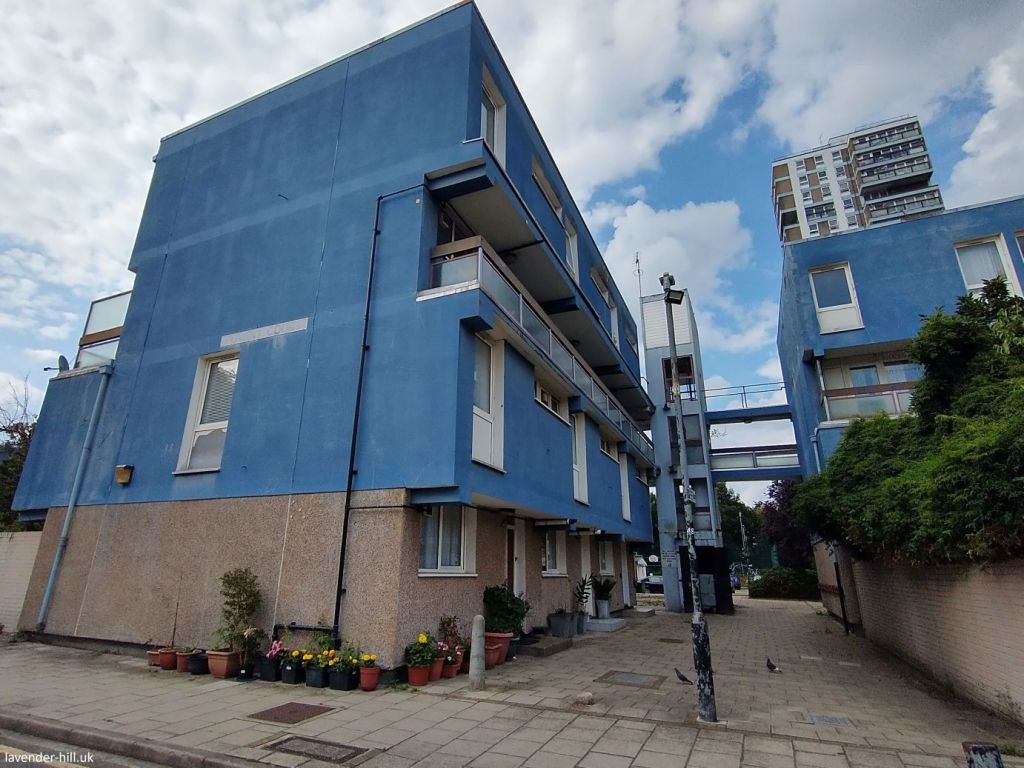
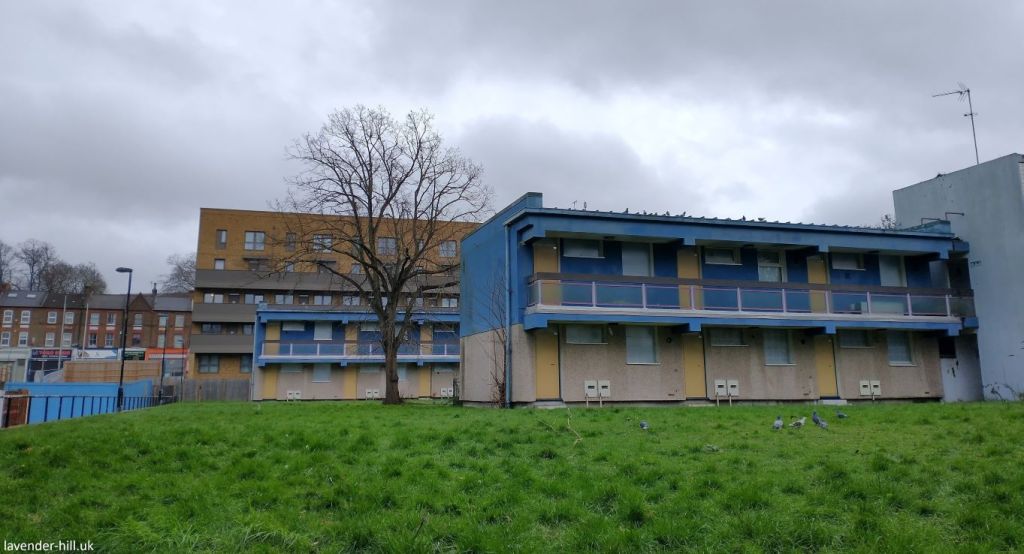
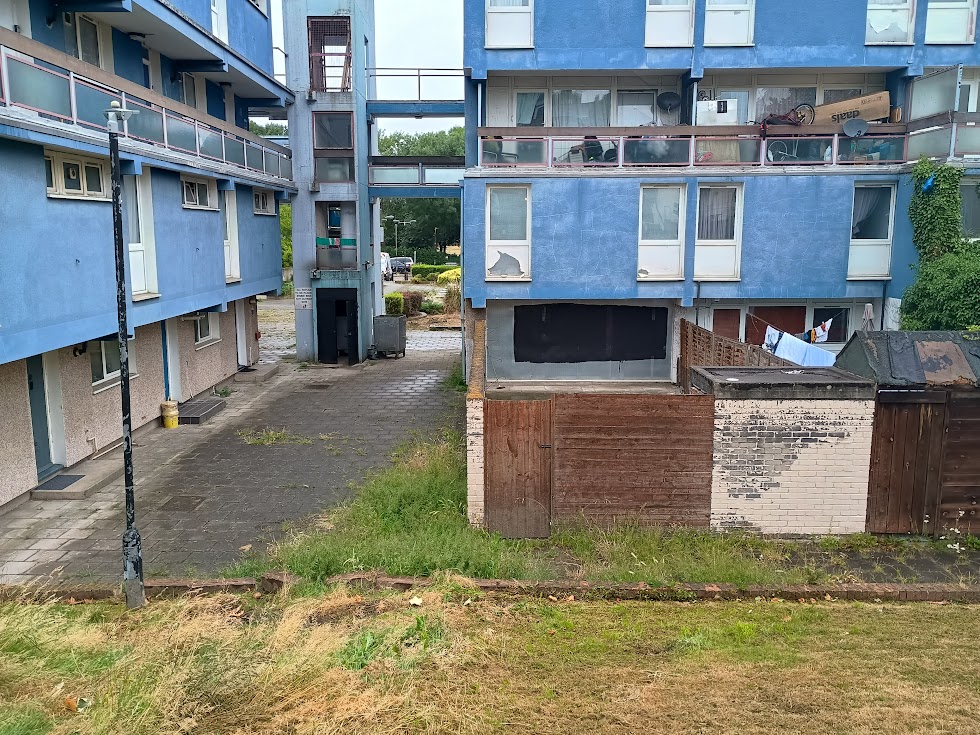
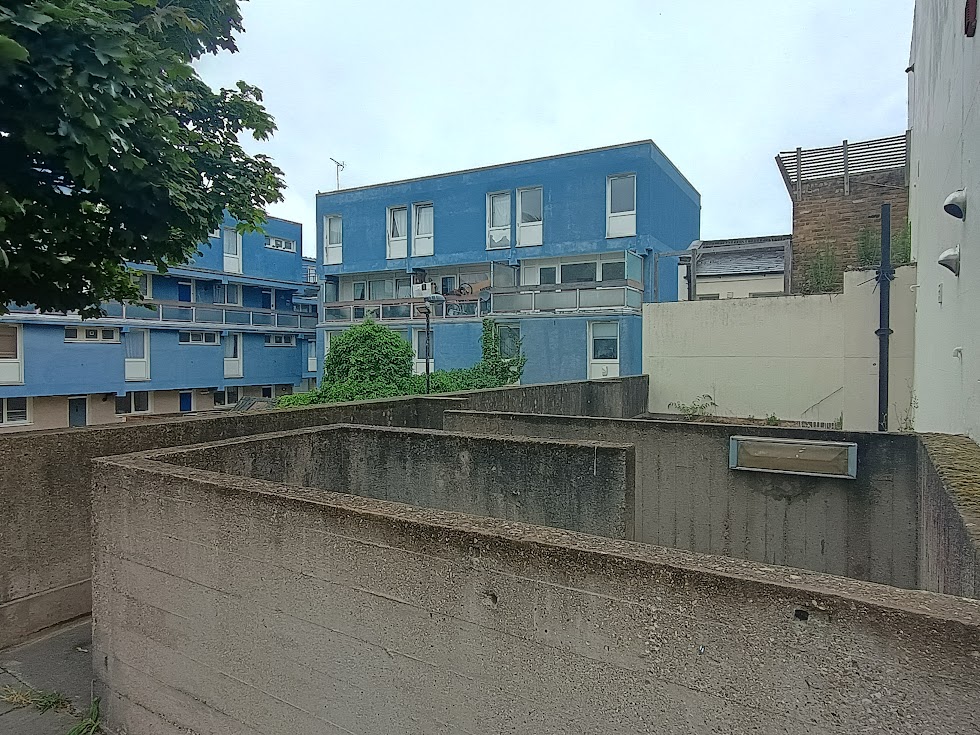
No one has been too worried about the low-rise blue buildings (Allington, Fovant and Welford Court), because they were going to be knocked down anyway – though as the project has been delayed, the impact of going to minimum maintenance is becoming more and more obvious, with peeling paint, leaky drainage, crumbling landscaping, and failing windows and doors. The buildings weren’t maybe the prettiest ones around but they did used to be carefully looked after, with good landscaping and even the rarity of a working fountain in the main central courtyard, and a sense that this was an estate people cared for; sadly these days are long gone with a feeling of abandonment about the place, not helped by a gradually increasing number of flats in the still-occupied bit of the estate being boarded up.
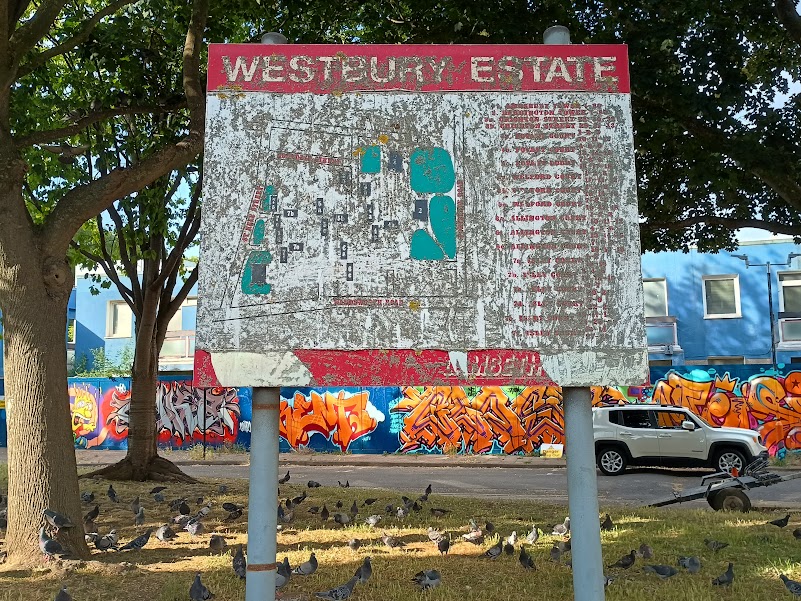
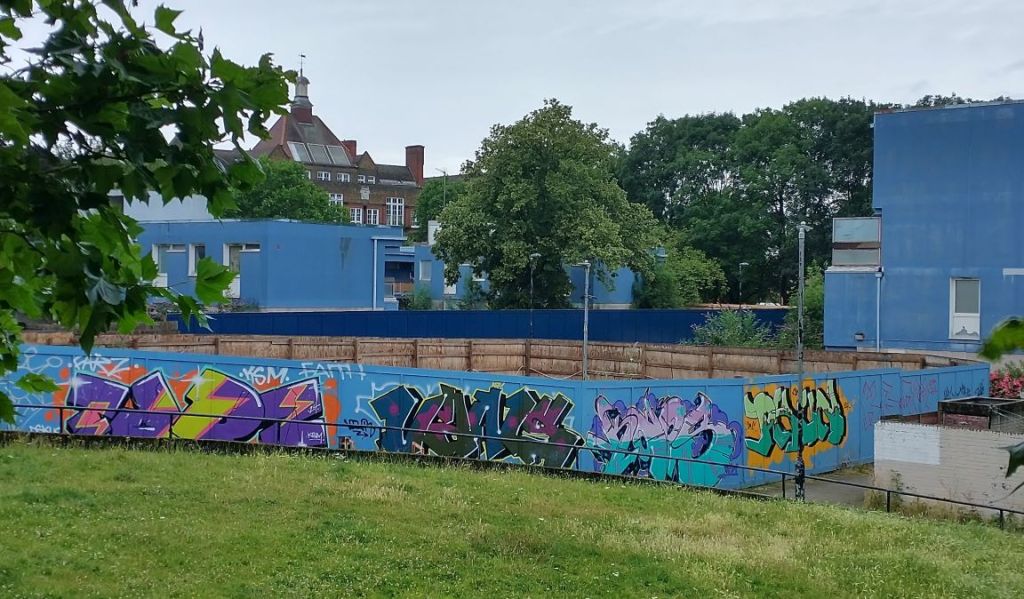
The plan had been to gradually empty the lower rise buildings. Ilsley Court, the one building that was completely cleared of its residents, never actually got demolished and has instead sat empty for years and become a magnet for vandalism and flytipping, really not helping make the estate feel safe or welcoming. Welford Court was going to be the second block to be demolished, and is increasingly empty, with units not being relet as they come available – and it may end up fully closed fairly soon. The rest of the estate is likely to linger on for some time, with Lambeth having slightly reluctantly decided to patch up any empty flats still in adequate condition, to relet them for short term tenancies.
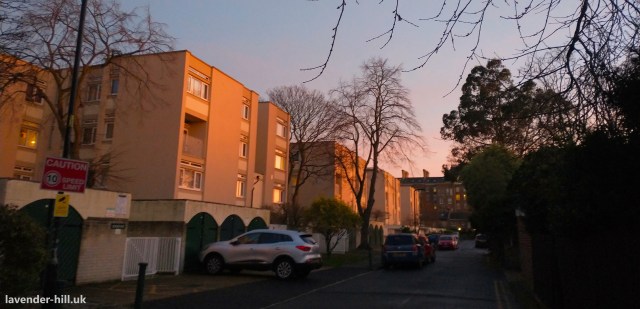
It’s worth a ‘spot the difference’ look at an article we wrote a few years ago on the Cedars Road estate a few minutes’ walk away, which believe it or now was also built by Lambeth and designed by the same architect, Colin Lucas. The Cedars Estate – pictured below – started off very similarly to Westbury, but has had a very different recent history, including being managed by a tenant management organisation since 1997 – and it has been meticulously looked after. Unlike Westbury, the Cedars estate is still in pretty much mint condition, including huge car-free garden areas with wavy footpaths and mature trees that are older than the estate, all supported by regular visits by a landscape gardening team, and which has a fantastic new playground and communal vegetable gardens, as well as having recent upgrades to heating boilers, insulation and windows across the whole estate. A lot of this is down to careful management, a very family-friendly design that has made it a particularly stable estate with a long-term resient management team, and a degree of good luck: one blessing the Cedars has is that none of the buildings is more than four floors high, so there aren’t really any looming lift-replacement or £100k scaffolding nightmares. The Cedars is a very popular place to live, and we’d hazard a guess that a few residents trapped in the Westbury estate’s seemingly neverending will-it, won’t-it development process sometimes quietly wish they were living over at the Cedars.
The trouble with the towers
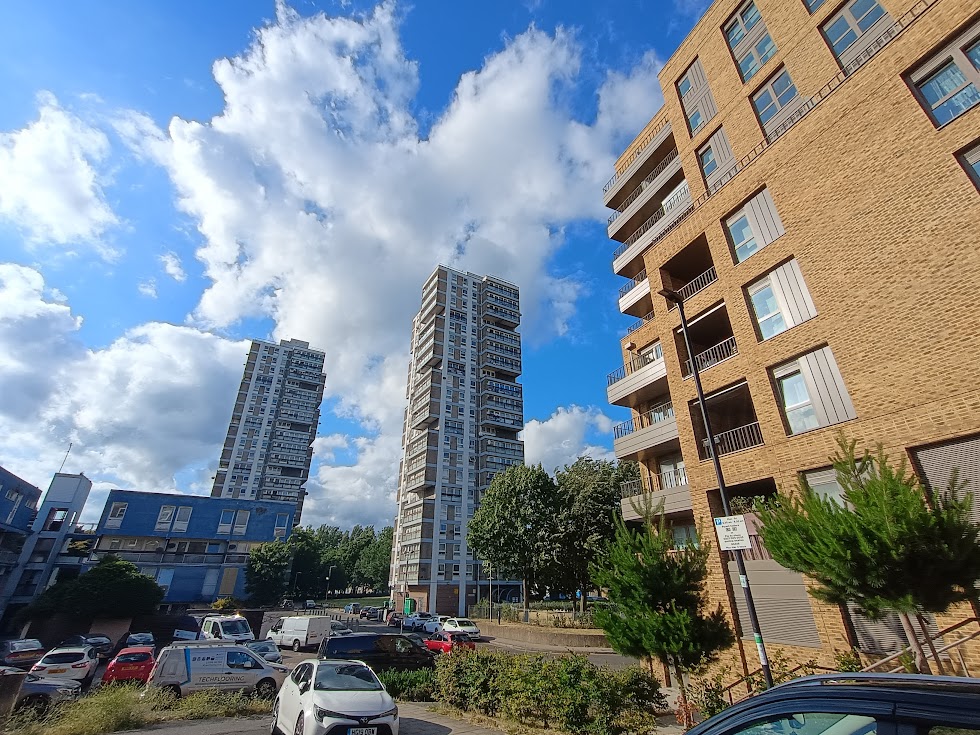
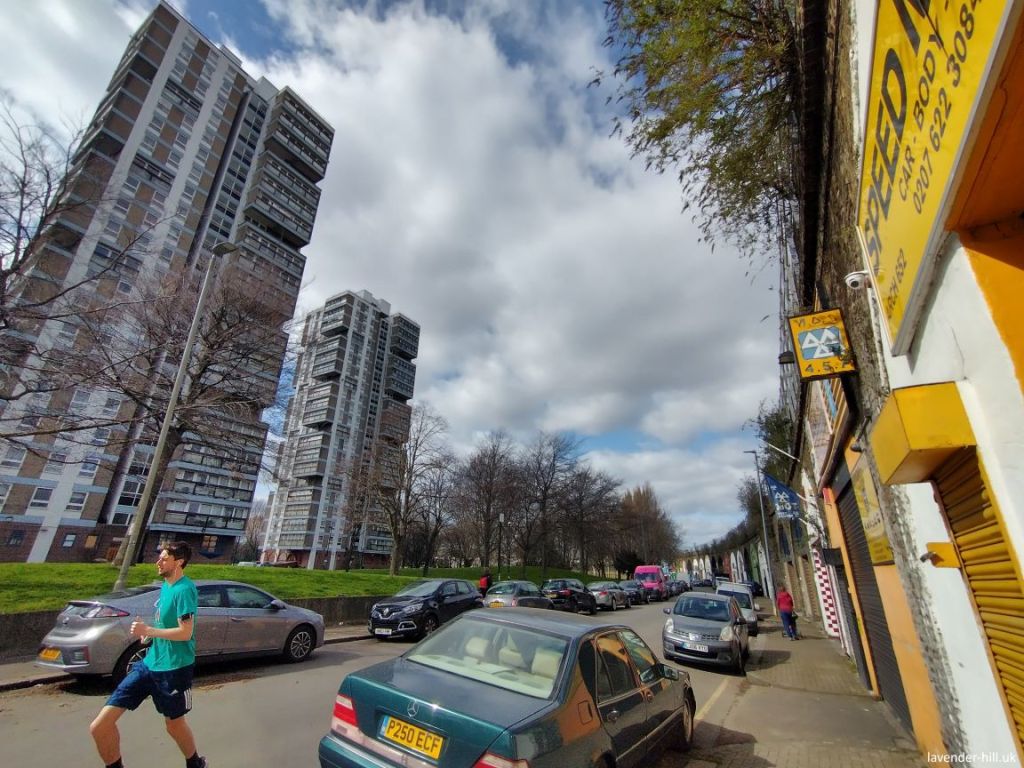
But the real headache with the Westbury Estate, and probably the one that keeps Lambeth’s housing manager awake at night, is the two towers. Under the original plans, these would pretty much stay the same as they are now- but with a new estate built around them. But Lambeth has had a good look at whether it’s realistic to keep the towers going, and the results have been worrying. The towers were built in 1965 and they’re now a decade beyond the typical fifty-year design life for 1960s tower blocks.
A condition survey, by Arcadis, reported that some aspects of the building condition were fair and others poor. The Towers were generally stained, and the widows were life expired. A lot of Lambeth’s other towers had external wall cladding applied in the late 1990s, which in some cases was a bit ugly and in some cases proved to be flammable – but which did have the benefit of protecting the buildings from rain and exposure; however Durrington & Amesbury have been left pretty much unprotected other than a repainting and repair effort in the 2010s. There seems to have no insulation in the roof, wall or floor voids – which is maybe not surprising as they were built when energy was cheap, and insulation wasn’t really a priority – but which is now a liability, because as minimum legal standards for thermal efficiency creep up and up, some flats are becoming unlettable. Internally, both towers were generally tired, with recurring water leaks, damp and mould, and some water ingress in the basement, which also had significant areas of cracking in the walls and floors. Many of the mechanical, electrical and drainage installations were in poor condition – with the cold-water pipework dating back to 1965 and especially leak-prone, and the wiring expected to need a full replacement in the short term. The lifts were 23 years old, with major works planned for this year.
Lambeth also commissioned Arup for a structural survey, which had some good news – in that the structural concrete frame of the towers is in reasonable condition. But it was all downhill from there – as they suggested core building components, such as mechanical and electrical systems, lifts, pipework, and risers, are likely to require renewal in the short to medium term to maintain reliable performance. It also noted many areas of wear and deterioration. A lot of the concerns hinge around these old buildings now being some way off current standards: The towers have a single staircase – but there’s a risk that a second staircase may have to be added (at enormous cost) in the future if fire safety rules change, and also that the current heating system may become non compliant. Some of the concrete slabs used in the structure – having been built to the standards of sixty years ago, when standards for structural fire resistance were rather less developed – are also rather thinner than what would be specified if designing to modern design codes; this doesn’t mean it is unsafe but it does pose a risk that updating work could be needed at some stage. They also note, ominously, that ‘it is likely that a closer and more detailed inspection would indicate that the Towers are in a worse condition than indicated by the surveys carried out thus far, particularly at higher and, therefore, less accessible levels, not included in the surveys done to-date.’.
We could spend a lot of time debating whether the towers really are doomed. After all, the Somerset Estate near Battersea Square is essentially the exact same estate design as the Westbury Estate, it’s a popular place to live in good condition, and no one is saying that one needs demolishing. There are two more of the same towers at Canada Water – which is again popular and not going anywhere any time soon. And there are five of them in Camberwell‘s Wyndham & Comber Estate which have been less successful – maybe thanks to having a run-down underground car park & small shopping precinct attached – but even there they’re still in moderately good condition. Others question the cost estimates and certainly reckon the estate could be maintained in its current form.
But on balance, and looking at the nightmares we have seen in trying to get other vintage towers up to a decent standard, where everything ends up costing a fortune to deliver a still-not-great outcome, Lambeth probably has a point that these are old, tired buildings with a patchy-at-best maintenance record, and whose running costs have every possibility of skyrocketing.
A different approach: Can someone else make this work?
So with a decaying estate, no money, and a less-than-half-finished redevelopment project – where do we go from here? One option would be to throw in the towel and leave the estate as it is – maybe selling off Ilsley Court (the smallest of the blue buildings, that has been empty for years – which has a fair bit of open space around it) to a developer, and using some of the income to try and catch up on the maintenance that’s been somewhat put on hold in the rest of the estate.
But as the surveys make clear, this would probably just be kicking the can a fairly short distance down the road, because these buildings are now all in a fairly bad state and will probably spend the coming years throwing up ever more expensive headaches, draining the housing budget and forcing rents up.
Lambeth’s instead going for the approach of calling for a private developer to get involved as a partner. They’re essentially saying ‘look, this really hasn’t gone well – but there’s an opportunity for a more experienced housebuilder who’s better at building houses than we are to make some money here – can someone else come on board to take this forward’? In October last year the Council asked developers to come forward and take over the project, which it suggested would be a project costing between £190 million and £370 million. The development partner would be responsible for pretty much everything: redesigning the masterplan and securing planning permission. Upon the grant of planning consent and the discharge of other conditions, they would also be responsible for funding construction stage and the sale and marketing of the residential homes and commercial units, plus other development costs on the project.
This is, interestingly, the exact opposite approach to what Wandsworth just down the road have done – who had Taylor Wimpey on board as their partner for a somewhat similar redevelopment of the Winstanley estate, but who (as reported on our sister site Clapham Junction Insider) had a well developed partnership with Taylor Wimpey, who had already (very slowly) built a several new buildings – but recently dramatically parted ways and decided to go it alone.
There would, of course, be strings attached. The developer would need to deliver a residential-led development, that complies with the Local Plan, through the delivery of new homes and maximisation of affordable housing where social rent is the priority tenure in the affordable housing offers. The development would need to be a net zero-carbon development with a target to achieve a minimum of 50 per cent carbon reduction as per the London Plan. There would also need to be ‘Excellent engagement and consultation involving local residents’, a community engagement and consultation plan, and a programme of community benefits. Back in October, Lambeth expected the advert for partners to go out in the autumn, and for the process to then find a partner in 10-12 months. Importantly, Lambeth will retain full nominations rights for the social rent homes at completion.
Another twist: The towers come in to join the redevelopment party
There was then another twist in May this year – where Lambeth changed course, and decided to bundle a redevelopment of the two towers in to the overall package on offer to a developer, in addition to the low-rise blue buildings. This seems to have been driven by two factors – one of them, the one that was framed as the key reason, clearly being the poor condition and wide mix of future liabilities linked with continuing to own and run the towers (ad we can very much imagine that Lambeth would love to see the back of them). Lambeth reckon it will need to spend between £20 and 40 million if it keeps the towers, depending on whether it’s case of keeping them up to the most basic ‘decent homes’ standards or upgrading them towards the standard of newer Council accommodation – and note it would be significantly cheaper to have them completely replaced with something more up to date.
But there’s another less widely advertised reason, which is that for major estate redevelopments to go ahead with any support or grant funding from Sadiq Khan’s City Hall, at least 50% of residents now need to vote in favour of the plans (including leaseholders, social housing tenants, and any temporary accommodation residents who have lived on the estate for over 12 months).
Lambeth may have initially planned to include just the residents of the to-be-demolished low-rise buildings in a vote, who realistically would all stand to benefit from the changes, given they are in tired and worn-our flats, many of which only have staircase access and where new development will clearly be welcome.
But it was later confirmed that because the towers were part of the estate as originally built, their residents would also have a vote – and so would the residents who had already been relocated to the new buildings built in that first phase (so who frankly didn’t have much more to gain either). There are far more residents in the towers than the low rise blue buildings – 64% of the whole estate’s residents – and realistically the tower residents would be in a position where they’d be voting on a huge multi year building project all around them that would not deliver much in the way of benefit to them. Lambeth seem to have concluded that thy would probably not get a vote to proceed unless the tower residents also stood to get newer, better accommodation from the process. The key paragraph in Lambeth’s report is –
In October 2024 and in accordance with ‘The Mayors Best Practice Guide’, the GLA confirmed that all estate residents, including those in the Towers and the Homes for Lambeth (HfL) homes, would have a vote at any resident ballot given they are within the estate redline. Residents will vote on the Landlord Offer that pertains to their tenure on ballot day. Without significant improvements to living standards or redevelopment, there will be no Landlord Offer for Tower residents to support. 64% of secure tenant residents on the estate live in the Towers.
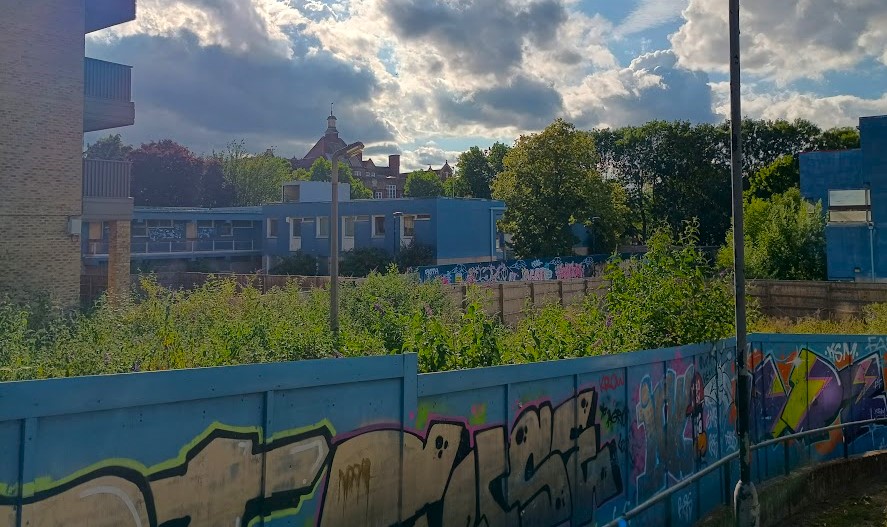
Including both towers in the overall scheme – and essentially assuming that a developer would rebuild the towers , and offer their residents proper new flats as part of a bigger development project – was realistically the only way Lambeth would have a good chance of seeing a positive vote in favour of continued work. It was helped by Lambeth having canvassed tower residents, and finding that of 105 respondents 72% supported their inclusion in the process, and just 9% opposed it.
However, including a requirement to redevelop (or at the least, do a lot of work on) the two towers won’t make the job of a private developer partner any easier. The towers are way more expensive to demolish, and including them will mean rehousing far more people (with 114 secure / introductory tenancies, 35 leasehold owners whose flats would have to be bought back – and who would want to see something they could afford in the new development, and 11 empty flats in the towers). The towers also don’t bring much more useful development land in to the equation.
It’s also fair to say that there is a bit of a quirk in the City Hall voting rules: including the already-moved residents in the 64 brand new flats in the vote seems strange, as they’ve already received the benefits of the redevelopment – and may now have a slightly perverse incentive to vote against their neighbours also seeing new flats like they already have done, just to avoid the noise and disturbance of a nearby building site. Obviously there’s a trade off for them, as if nothing is done and the estate continues to decay and becomes less and less popular for new residents, they could also end up living next to a sink estate in the future – which won’t be much fun either.
The moment of truth: Will a developer want to get involved?
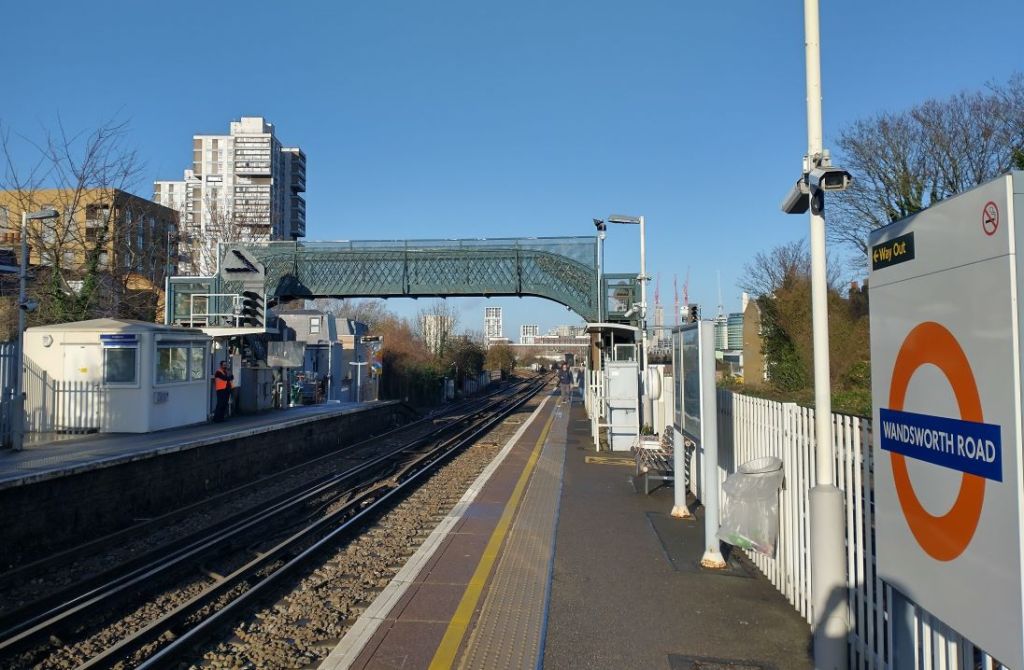
Whether this call for a developer partner works will all hinge on whether a partner comes on board. This might have been quite a safe bet a while back – after all, this is a nice safe inner London area that’s developing quickly, it happens to have a very good school next door, as well as a fairly large park that isn’t used very much – and it has decent transport connections with the Overground right next door (both estate and station are pictured below), a not too long walk to a Zone 1 tube station at Battersea Power Station, and loads of frequent bus routes running right to the middle of London.
But things have been getting harder for a while even on completely new-build developments. Flats have declined in popularity, and development costs are rising. Other nearby development sites in Vauxhall and in final stages of the Battersea development – which are already empty and shovel-ready sites with no current residents, so which are good-to-go from a developers’ perspective, as well as being much better connected – are taking a long time to get moving.
And some of the Westbury Estate is far from shovel-ready! A developer partner will need to get a vote to move forward, and factor in the complicated process of moving a lot of current residents around. The list of ‘asks’ from Lambeth is a long one, and may look like a bit of a wish list – as the developer also needs to be able to make a profit or they’ll never get this one through.
The Kerslake report on delivery by Homes for Lambeth had – rather ominously – already noted that the next phase of the Westbury Estate development had stalled due to ‘viability challenges’. Homes for Lambeth had also procured property experts JLL to help with viability assessments, who had advised that no revised scenario for the second stage would deliver a viable scheme without a reduction in costs, increases in revenues, changes in design, and /or a revised land value.
Maybe recognising that private developers may not be exactly queueing up to sort out the Westbury Estate, the call for developers proposed a minimum of 35% of affordable housing in the final scheme – which some way below the 50% in Lambeth’s own Local Plan (“This procurement process recognises the different market conditions that now apply, together with the site-specific circumstances here, in setting a minimum 35% affordable housing requirement“). This dilution of the level of affordable housing has seen a bit of fair criticism, but to be frank, there’s no way anyone would be able to deliver 50% affordable housing while also sorting out and probably rebuilding all the existing buildings – as the estate doesn’t have a huge amount of extra development land available. Whenever we write about development projects involving the Council we can be sure someone will argue that there’s a corrupt Council enriching their property developer mates, and maybe sometimes there is – but frankly this is a case where it doesn’t look as though there is all that much money for anyone to make.
Meanwhile the estate is continuing to decline
In the meantime, despite a somewhat improved effort at engaging and working with everyone living on the estate, the fundamentals of this stalled project are clearly affecting residents – who are not really getting the environment they deserve. There was reasonably strong support when the scheme kicked off more than ten years ago – and when it was clear that this ought to result in much better quality housing for everyone – but the sense of frustration at this having moved at such a snail’s pace and then ground to a halt, leaving everyone in limbo, is clear. If all goes well, we understand an estate-wide vote could happen in autumn 2027 – but this is an optimistic estimate.
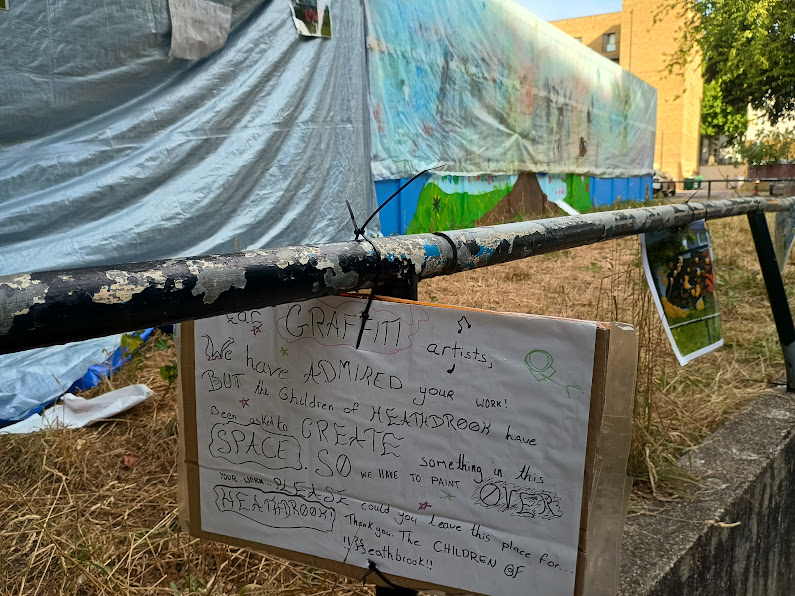
A fair few people also signed short term tenancies to live in flats on the doomed estates- which they knew were time-limited, but who have nevertheless had an unexpectedly rough ride as the plans have lurched forward in fits and starts – never really being sure when or if they will need to leave.
So – is the call for a partner basically a letter to Santa hoping for a miracle – or will this be the way this long-stalled project finally gets moving, and the ageing and increasingly dilapidated buildings finally get renewed, to provide decent housing for current and new residents?
We’re keeping our fingers crossed that a private developer does come in and make this work, because the current situation isn’t really working for anyone. There are some positive signs: Lambeth has recently done a deal with Pocket Living to build a development at Leigham Court Road in Streatham Hill, but that was a smaller and simpler beast, worth about £60m and on a site that was mostly car parking and an old bowling green without any existing residents.
Doing nothing is not really an option
Failing that, all bets are off – and Lambeth will be stuck with an estate that’s crumbling and approaching the end of its design life, and that needs a lot of money spending on it that they don’t have. What will happen if no developer is interested?
There’s probably a bit of room for manoeuvre on the land values Lambeth assumes for the project (they’re envisaging offers of £5.5 million or more from the developer partner), the levels of affordability in the new development, and the amount of new housing built. Because while more affordable housing is what we want here, the really core aim for Lambeth is to get old and tired housing replaced with new, more accessible, and lower-maintenance housing built to current standards for the current residents, and the first thing to go may end up being the ‘extra’ affordable housing in the project.
Another bad option would be for Lambeth to have a bit of a fire sale of Ilsley Court, that has been sitting empty for years, to whoever wants to buy it – and uses the receipts to cover their rising costs and do a very light touch upgrade on the rest of the estate, to buy some time. This is not a great option – as it removes any scope to rehouse people on the same estate during any future phased redevelopment and makes the longer term work even harder.
There are maybe cautionary tales from Wandsworth down the road – where their partnership with Taylor Wimpey moved achingly slowly and – despite building a few very smart new buildings, including a new school and a new church – seemed to really struggle to deliver a workable redevelopment as costs soared. Rather like what’s happening here, the Winstanley project saw a few estate residents win the housing lottery when their blocks came up for the first wave of demolition, as they got to go out in the first wave to some fabulous new homes built close to the site near Lavender Hill and on Battersea High Street – but as the project ground to a halt everyone else was left in a decaying part-redeveloped estate.
But there are definitely some cautionary tales here for Wandsworth too, which has gone against the grain and is now looking to develop things itself rather than in a partnership deal with established property developers: following the example which has proved such a headache for Lambeth is a bold move. Lambeth has ditched the ‘doing it ourselves’ model, seemingly having found out to its cost that developing housing is hard, and that no matter how hard you try, high density residential developments in inner London are not easy things to build on a budget. Does Wandsworth’s keen new Labour-led Council have the secret sauce to succeed where Lambeth (and Croydon, Barking, Devon, Liverpool, and more) have failed?
Or is it just too hard to redevelop ageing inner city estates now, no matter how hard you try and no matter what approach you take? Requirements for new flats are getting ever more stringent, construction costs continue to soar across the sector, and demand for privately owned flats is cooling – an especially awkward point given that private sales are key to balancing the books, when you have a government that’s quite hostile to London and isn’t passing any funding towards old estates. It’s a fiendishly complicated project, and not an easy one to make work.
Ultimately time will tell, and we’ll be following this development in the months to come.
This is part of our series of posts on housing issues in the area in and around Lavender Hill and the western end of Wandsworth Road. If you found this interesting, you may also want to see our recent article on the cluster of buildings at the junction of Silverthorne Road & Wandsworth Road, and one on a planned block of flats planned for St Rule Street, as well as a mini series on the so-far-fairly-successful additions to the Gideon Road Estate just north of Lavender Hill, and our wider articles on local business, environment, planning and housing issues – as well as some of our favourite articles on local history. Our sister site Clapham Junction Insider has also run a long series on the similarly complicated redevelopment of Clapham Junction’s Winstanley & York Road Estates.
To receive new posts by e-mail (for free), sign up here. If you live in the estate, or are involved in the development – or would like to get in touch for any reason – details are here.
 Lavender-Hill.uk : Supporting Lavender Hill
Pingback: A fall from grace: Is there a future for Clapham’s little-known Georgian orangery? | Lavender-Hill.uk : Supporting Lavender Hill
Pingback: Clapham Junction’s Rough Sleepers Hub opens for business | Lavender-Hill.uk : Supporting Lavender Hill
Pingback: Antrim House may be about to gain a bundle of phone masts | Lavender-Hill.uk : Supporting Lavender Hill