
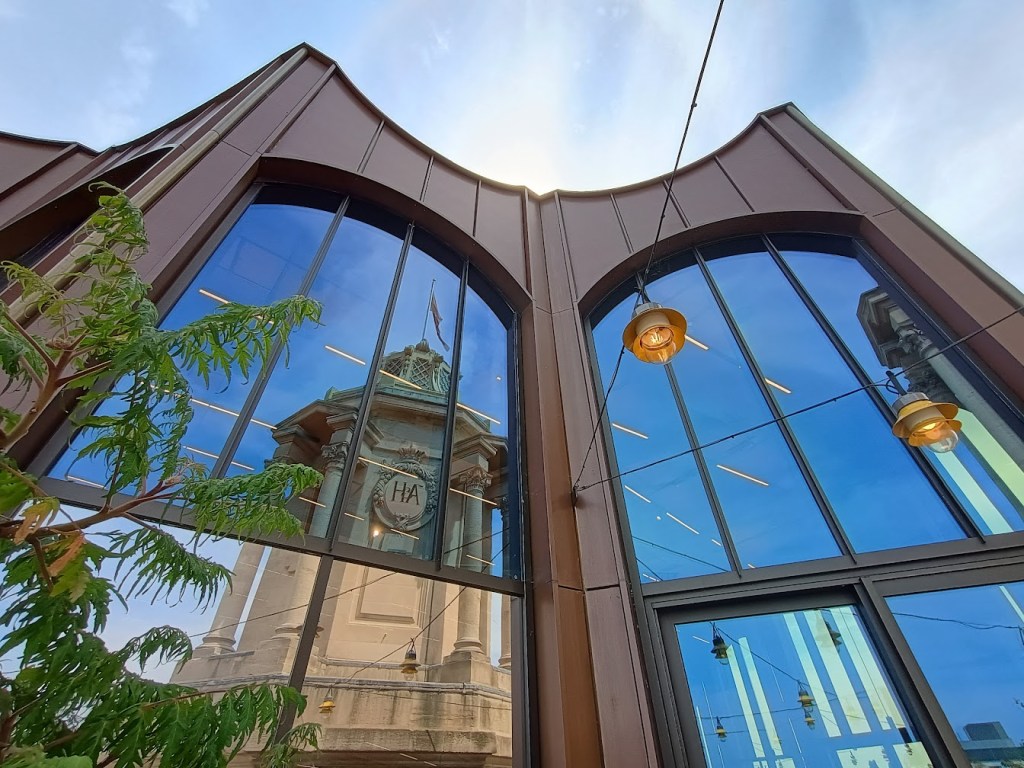
It’s been five years in the making – but we’re finally here. Arding & Hobbs is Clapham Junction’s flagship building, a departments store from the days when department stores radiated style and elegance – which survived wars and riots, as well as online retail, venture capital and the pandemic, to become probably the emblem of the area. Come with us as we take a walk through the history of the store, look at how it’s been given back a lot of its former style, and explore the thinking behind the new no-expenses-spared renovation.
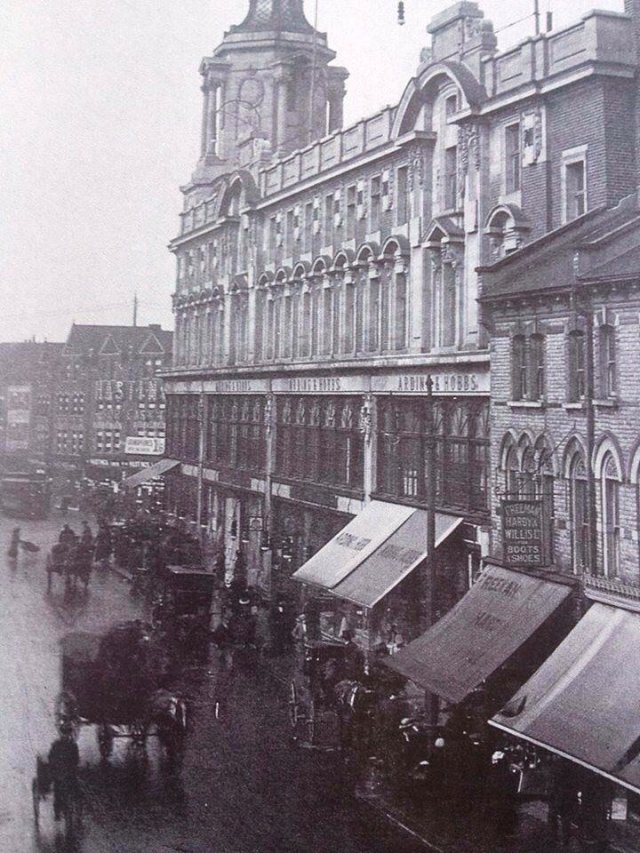
Arding & Hobbs kicked off in 1876, when Clapham Junction was in a time of huge change. It had been a land of fruit, asparagus and lavender, fields, criss crossed by country lanes and a scattering of big ‘out of town’ houses with sweeping views over the fields towards the Thames. But within a decade that would be completely overrun by a dense Victorian railway suburb, and a small riverside track along the side of the Falcon brook, lined with a handful of farm workers cottages, would become St Johns Road, the core shopping street of a new town centre. A big new town centre would need a big new store – and Aring & Hobbs bagged the key spot in town – the giant corner site at the key crossroads by the station, one of the key junctions in south west London – and at first built a smaller and slightly simpler building on the site.
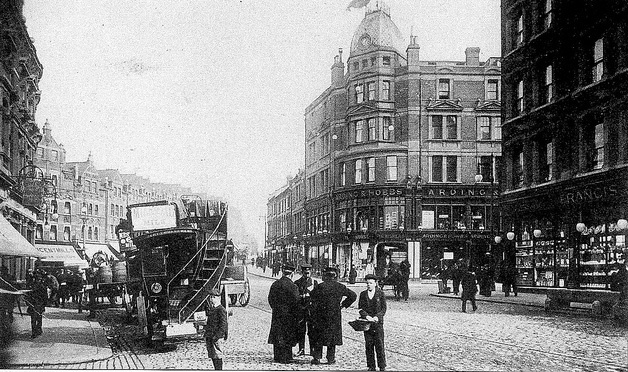
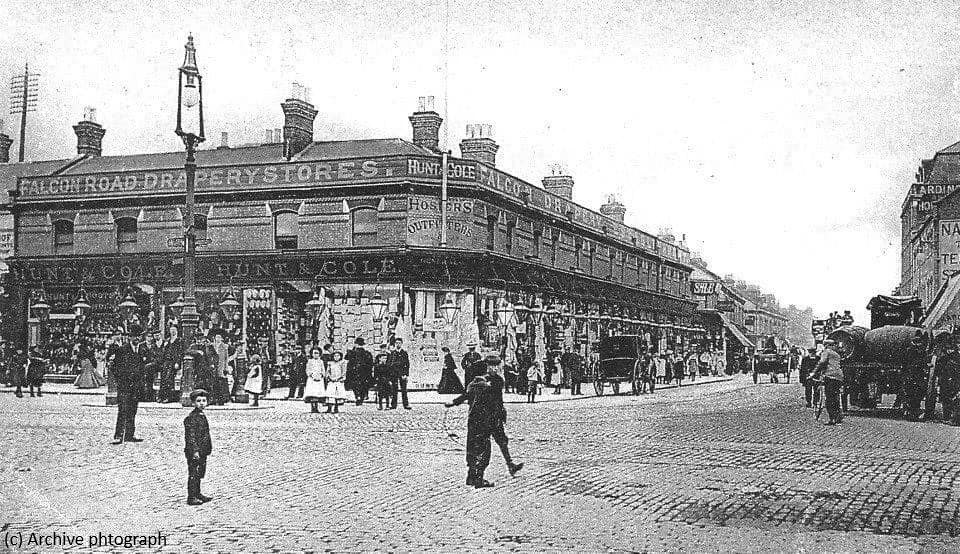
This traded happily for nearly thirty years. Indeed it traded so well that they developed a separate drapery shop on the other side of the railway at the junction of Falcon Road and Battersea Park Rad, but this was sold on in 1894 to two former employees, Mr. Hunt & Mr. Cole – who continued to trade as Hunt & Cole’s Falcon Road Drapery Stores. That building was later replaced by a modern office building with a large pub, the Asparagus, on the ground floor.
But the store then fell victim to a catastrophic fire – just before Christmas in 1909 – which saw 30 people hospitalised, and eight deaths – and was so big it was even reported on in Australia in the Sydney Herald. The fire ended up with the whole lot being demolished – and it led to a new regime of fire safety regulations that aimed to control fire spread in large buildings.
The business didn’t hang about, quickly rebuilding on a bigger and better scale, getting the current building done within less than a year. The new building was in an Edwardian Baroque style, and designed by architect James Gibson – who also designed the building that is now the UK’s Supreme Court on Parliament Square. The new building included a great big cupola, to make sure no one could miss the building as they approached it. And this time it incorporated cutting edge fire-proofing technology (of which more later!).
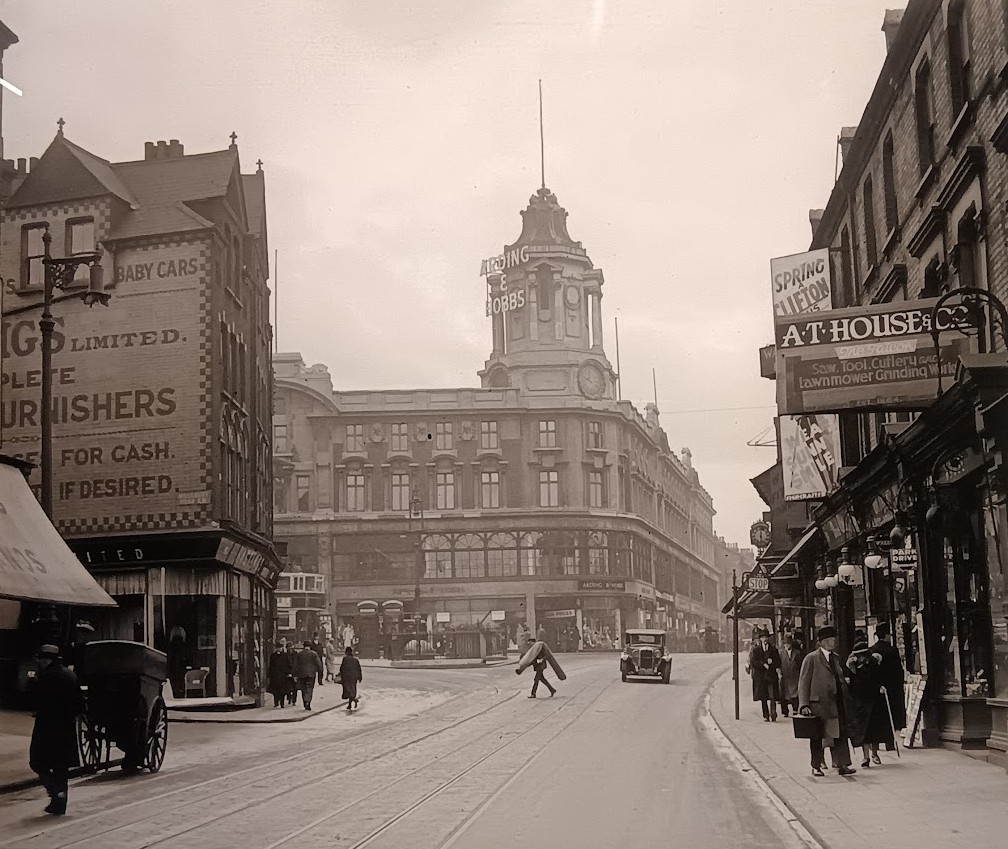
It would go on to spend the next hundred years as a department store. For the first thirty or so years it ran as Arding & Hobbs, a business squarely rooted in Clapham Junction. It was sold to the John Anstiss Group in 1938, who were in turn sold to retail giant United Drapery Stores (who went on to become one of the largest retailers in the country, running dozens of different brands) in 1948.
In the late 1970s United Drapery Stores sold the business to Allders – who merged it in with their wider chain. It traded well for decades – being the source for many of the clothes and furnishings in Clapham Junction and a wide area of south west London.
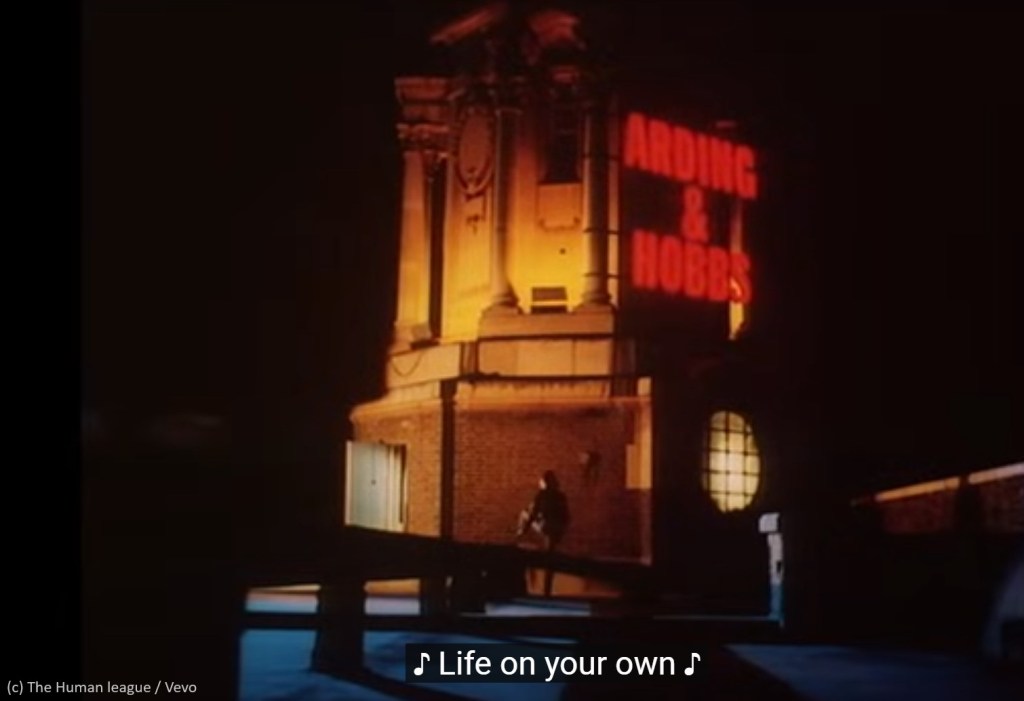
In 1984 the building acquired some fame in the video “Life On Your Own” by The Human League – which was set in a future, apocalyptic London where lead singer Philip Oakey was the only person left alive – and lives in the cupola. A somewhat home made electricity supply arrangement means he can turn on the original store sign (a big red one designed to be visible along Lavender Hill), and power some of the interior.
In contrast to the Arndale centre just down the road in Wandsworth, which drifted downmarket for many years (to the point where it was said to be ‘difficult to buy anything for more than a pound’) until a major reset in the early 2000s, Allders kept itself firmly in the middle market of department stores. Allders did make some internal changes to the building itself over the years – notably fitting escalators, which would become the main way for people to move round the building.

There was a bit of downsizing of the store. In the early 2000s, a series of modern terrace houses and a block of flats were built on Ilminster Gardens, that had previously been the Arding & Hobbs carpet warehouse. A small part of the store was also split off over three floors that could become a separate retail unit. This was at first going to become a branch of Sainsbury’s central, with a large travelator splitting the shopping area over two floors, and a smaller basement area for the back of house. This didn’t work out and after a bit of a gap the space was taken over by ‘off price’ retailer T.K Maxx – as an early foray away from retail parks to much more ‘town centre’ locations. They almost immediately found they had a hugely successful store on their hands, and went on to open a load more stores in all the nearby town centres including Wandsworth, Putney, Brixton Balham, Tooting and even Kensington.
Things were going well for T.K. Maxx – but Allders was struggling with what was maybe an overambitious acquisition of other businesses and stores, and was running in to increasingly severe financial difficulty. Arding & Hobbs was one of eight sites they sold to Debenhams in 2005 as the chain desperately tried to stave off collapse. We understand Clapham Junction – once it saw a light refit and the introduction of Debenhams’ somewhat sharper product range reasonably successful own brands – quickly became one of Debenhams’ more profitable sites, in stark contrast with Allders’ flagship store in Croydon which stayed with the parent chain and limped on for a few more years until collapsing completely – and whose huge building has remained largely empty in the doomed and decaying Whitgift complex ever since.
Debenhams might have been profitable in Clapham Junction – but even at the point of their Allders takeover there were storm clouds on the horizon for Debenhams, who were running well over a hundred large stores around the country of rather varying profitability – all of which were expensive to staff, but many of which weren’t generating much turnover. More problematically (and in a sadly familiar tale for those who follow retail disasters) the company spent three years under private equity ownership in the early 2000s, which saw its owners make a sizeable profit (over a billion pounds) – but which left the company saddled with a billion pounds of debt.
The private equity group – which included CVC Capital Partners, Texas Pacific Group and Merrill Lynch Private Equity – paid £450m for Debenhams’ real estate but only £68m was equity (or ‘real’ money), the rest was debt. Just 14 months later in February 2005 they sold Debenhams’ 23 freehold properties to property giant British Land for £495 million, in a deal that would see Debenhams lease them for £27.9m a year, rather than owning them. This made the private equity backers a £45 million profit – an impressive 67% return on their £86m investment in just over a year. A month afterwards, the Arding & Hobbs building was also sold on to British Land and Debenhams went from being a freeholder, to being a tenant. But selling the freeholds the company had kept on many of its stores meant they were now instead locked into expensive and lengthy lease deals. This mountain of debt made it hard for the company to invest in online shopping or in updating its stores.
Debenhams did continue to expand, opening another huge department store just a mile and a bit down the road in Wandsworth’s Southside centre, which was the last big bit of the jigsaw in updating the 1960s Arndale centre to a more up to date urban shopping centre. This was an opportunist move on the part of Debenhams, and we believe they took over a space that has been previously expected to become a branch of Marks & Spencer.
By 2018, British Land was trying to sell off some of its Debenhams properties – and the Arding & Hobbs building caught the eye of a fairly little-known real estate company called W.RE, who went on to buy the whole building for £48 million – becoming the landlord for both Debenhams and T.K. Maxx (whose slice of the building covered about 30,000 square feet over three floors).
Unlike the Clapham Junction store, we understand the huge Wandsworth Debenhams never turned a profit in its five years in business. In 2019, the company announced they were abandoning the Wandsworth branch, alongside 21 other poor performing stores, as part of a turnaround effort. The giant Wandsworth space went on to have a happy ending of its own, albeit a very different one to Arding & Hobbs, when it reopened as the very successful Gravity Max – with electric go karts, giant arcade, bowling alley, minigolf, bars, pool, darts, and a fair bit more.
Clapham Junction was to carry on trading, as part of a smaller, leaner Debenhams – that had dumped the no-hope locations and also pushed down the rent on many of its stores. However in late 2019, we first reported that the end might be not too far off for Debenhams in Clapham Junction too. Not a lot had been said in public, but we received tip offs that they had been given some sort of notice, presumably having done a deal to carry on at lower rent but in exchange for being thrown out at short notice if a better opportunity came along.
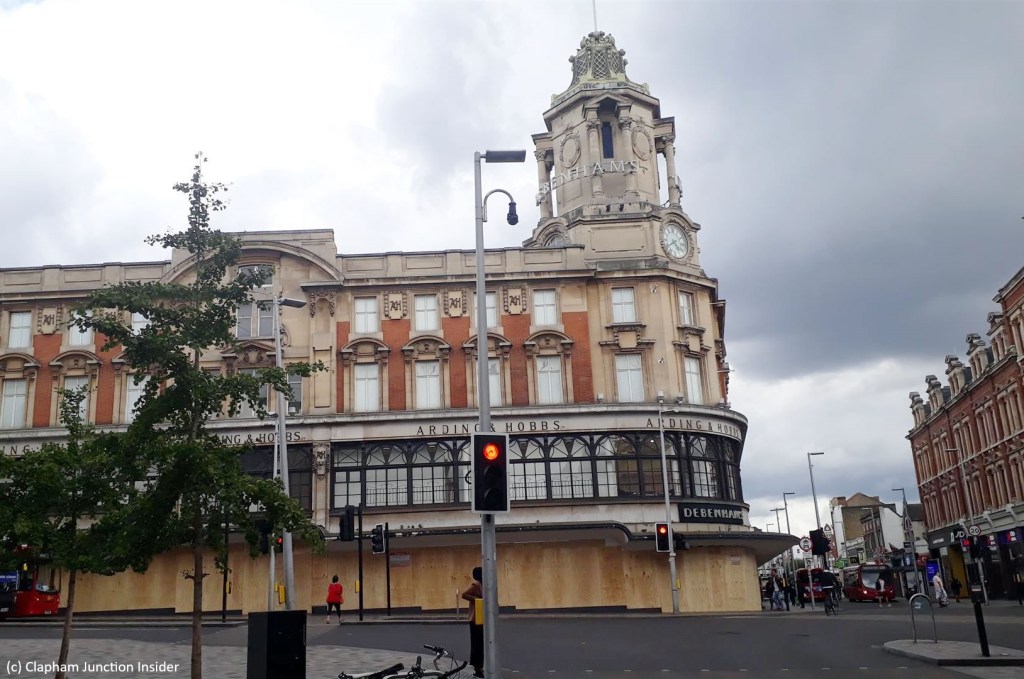
But within weeks of the final closure of the doomed Wandsworth store in January 2020, the Coronavirus landed, the doors to all Debenhams’ stores closed across the country – and all bets really were off. Debenhams went in to administration later that year, and this time it really was the end, with the business being liquidated shortly afterwards.
W.RE, the up-to-that-point relatively little noticed landlord, got a phone call saying Debenhams was gone for good – and they were suddenly in charge of the building. They’re a clever set of people – and when they took over the building back in 2018 with about twenty years to run on Debenhams’ lease they had a fairly good idea that they weren’t likely to be a landlord to Debenhams for that long, and change would be ahead. But this turned a medium-term development project in to a very near-term one – with some immediate questions about managing the security and services for what had become a large empty building, and working out what to do with it.
And it’s fair to say that Clapham Junction, as a town centre, was lucky at this point. Some of this luck was down to the nature of the building and its location: we’re blessed with one of the better department stores – it has style and elegance, it’s bang in the middle of a busy and successful town centre, it’s directly opposite one of the busiest railway stations in the country, it was tired but in a generally adequate overall condition, it’s not so big and deep that it won’t work for any other uses, and it’s Grade II listed. Something would likely happen – unlike the dozens of huge sixties department stores still sitting empty around the country, that are becoming liabilities for their owners and increasingly hazardous eyesores for the towns they’re in.
We were also lucky in the form of the landlord. Because W.RE, who we didn’t know all that much about, proved to have a proper interest in the building – and in making sure that whatever happened to it, did justice to the style and history of the original department store. In the ‘stay at home’ summer of 2020 we had a call with W.RE’s boss Sascha Lewin, and spoke about the plans in some detail. He and his team had been carrying extensive research on future developments, working with architects and consultants on multiple options. We noted at the time that W.RE were commendably frank about their plans for the building, and happy to have detailed discussions with community groups.
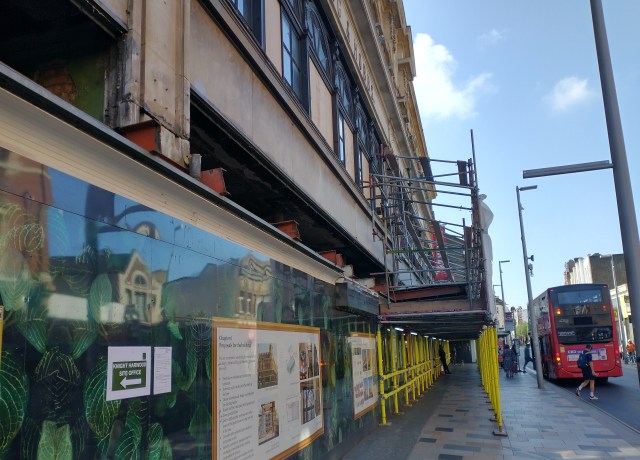
W.RE at first explored turning the upper floors in to a hotel – not a daft idea, given the few mid-range hotels we do have in the area do very well (especially the Premier Inn along Lavender Hill, which at the time was being extended due to high demand). However, the very deep floors meant that the hotel would either have a load of rather undesirable bargain-basement rooms without windows, or a fundamentally inefficient hotel layout. Sascha also recognised that a lot of the character of the building, such as the elegant proportions, the high ceilings, and the still-visible roof decoration, would be lost if it was split up into many small rooms.
The chosen option was for an office to take most of the upper levels of the building, with retail only on the ground floor and the basement. T.K. Maxx, with a long lease, would carry on as they do now.
And our photos here show that what was planned has now been delivered. The first thing you notice is that out on the front of the building, the old canopies (which weren’t original, but had been added at some stage in the late sixties – and added with the original height of the windows) have gone – which allows much bigger windows to be fitted, that reflect the original design of the building, as well as allowing the building to be properly seen from the pavement below.
The ground floor space was quickly let – and we’ve reported separately on some of the retailers that have taken the space. The corner has become new pub / restaurant Botanica Hall, a large and extremely busy food and drink venue, complete with full size pizza oven and lots of internal space – we wrote about them when they opened.
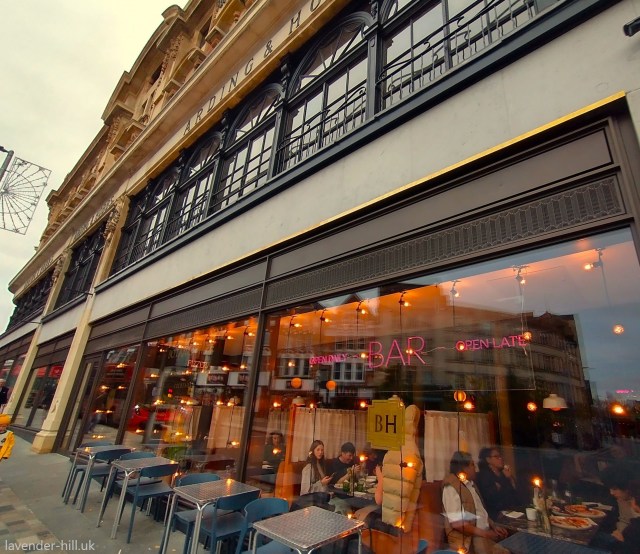
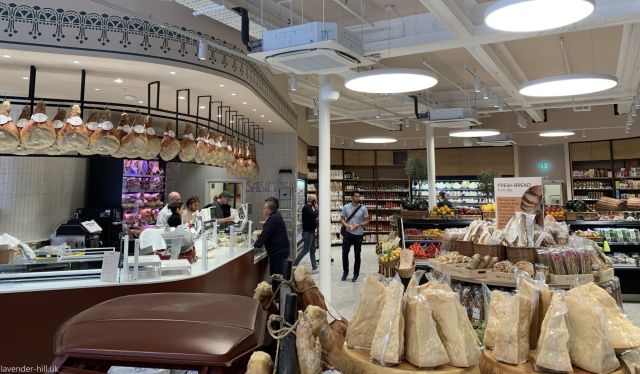
The next bit was briefly down to become an Amazon Fresh supermarket, but following a change of plan we ended up with the much-superior Prezzemolo & Vitale – a proper emporium of all things Italian – including a wide selection of cheese, meat and charcuterie, drinks, fruit and veg, and bakery produce, which includes an Italian cafe with a generous supply of cakes, and a food-to-go offer including sandwiches, salads, cold cuts and cheeses. There are lots more photos of them in our article last year.
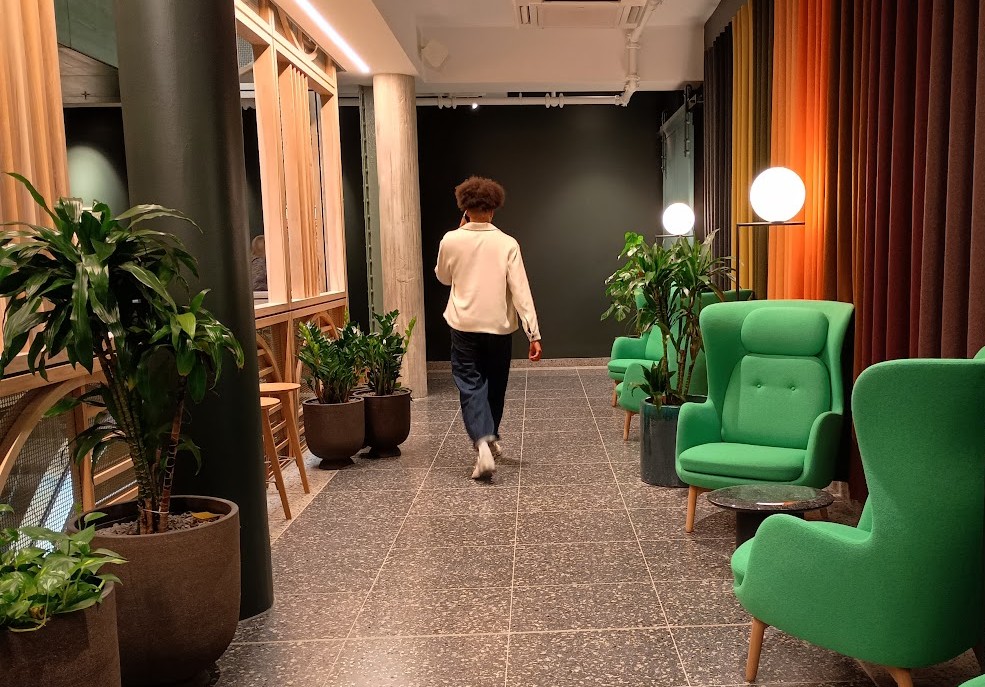
What’s new, though, is that the office space on the upper levels is now also complete and mostly occupied. Going in to the reception, Debenhams’ white tiles and handbag display has been replaced with dark granite tiling, and deep green walls.
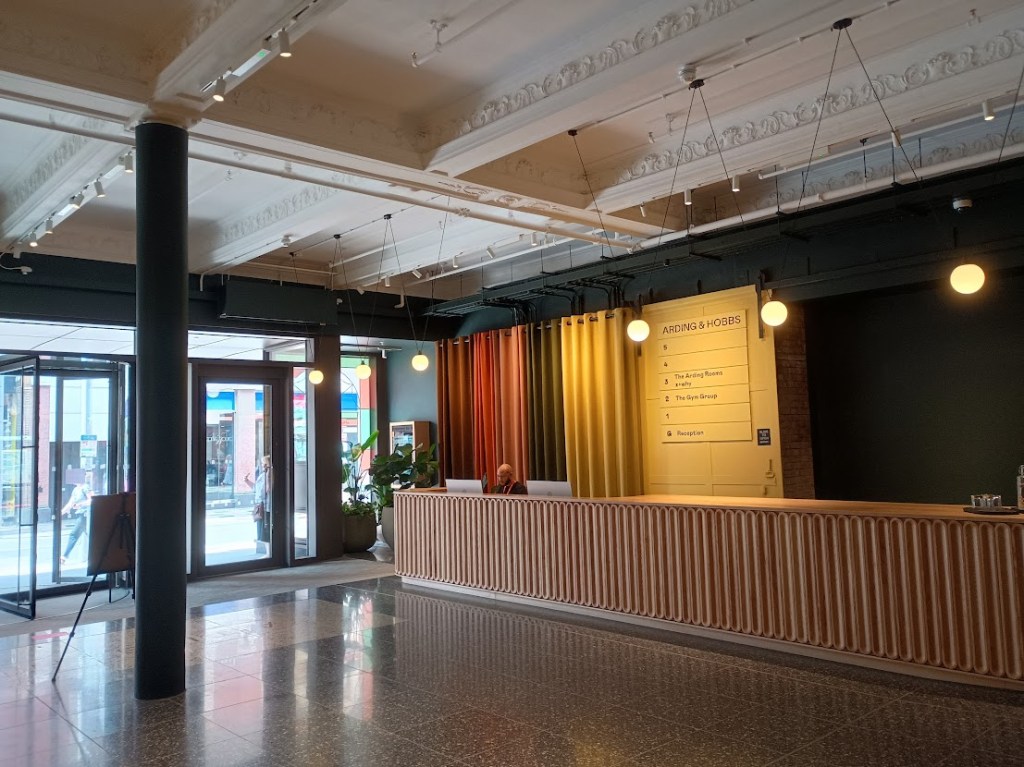
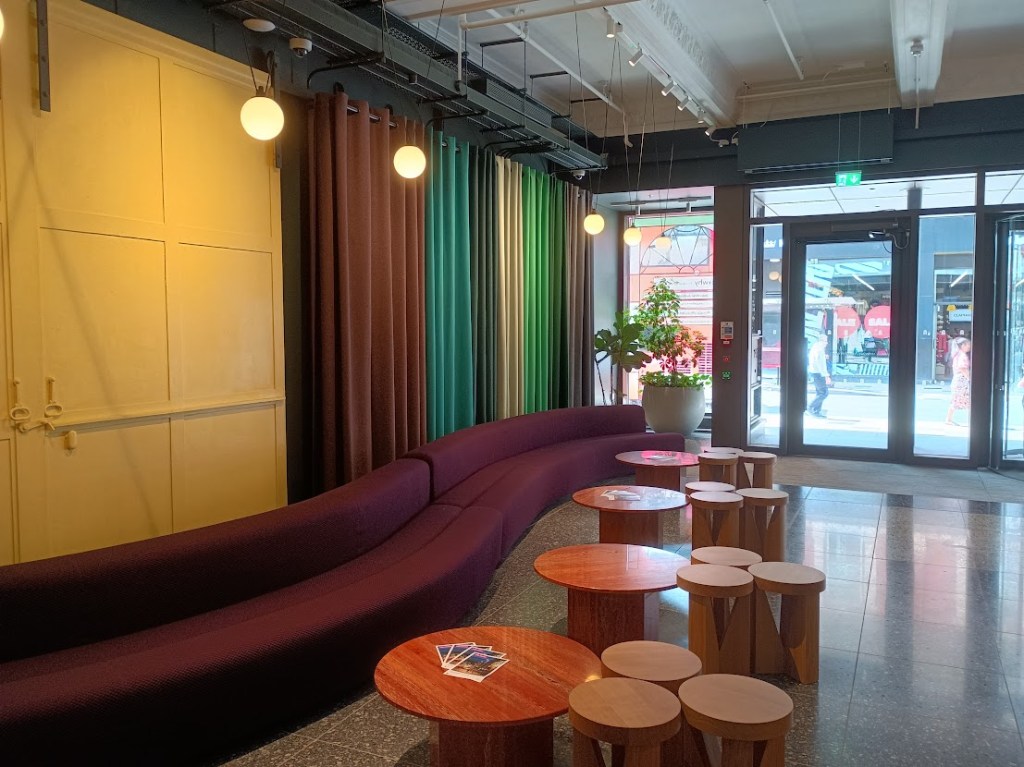
The multicoloured curtains in the reception are a deliberate nod to Arding & Hobbs’ displays in its days as a drapery, when it was the place you’d go if you needed some new curtains.
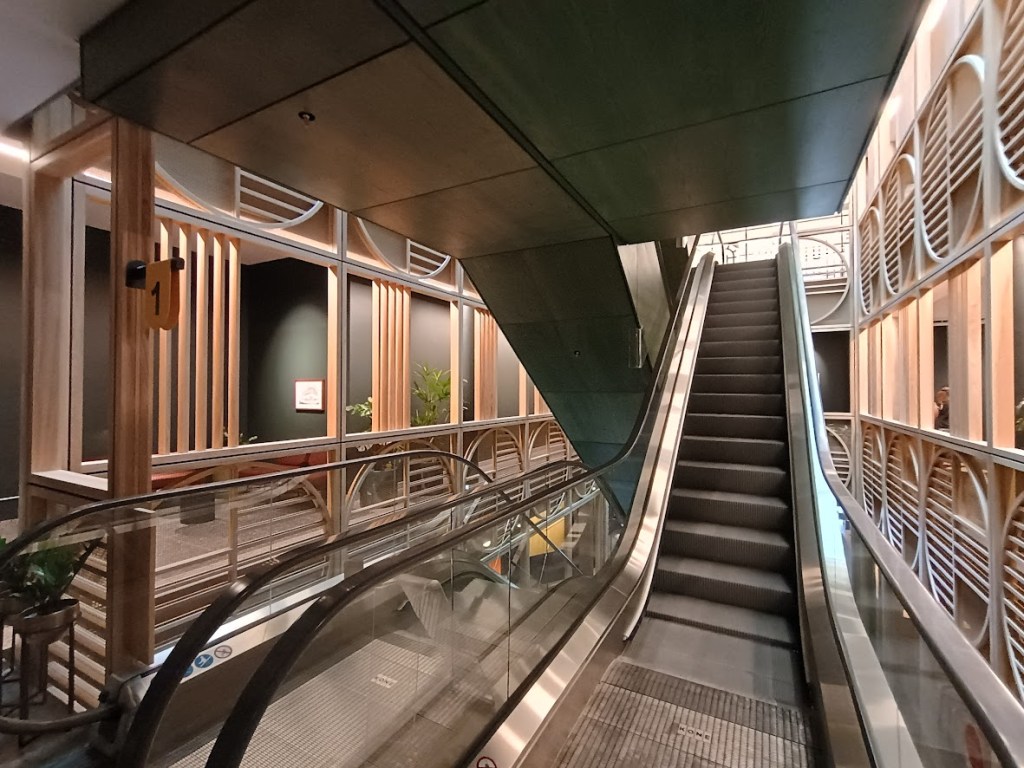
The current escalator access has been kept as the way in to the offices (but with new escalators, or at least very heavily refurbished ones) – again a choice designed to reflect the building’s character as a former department store.
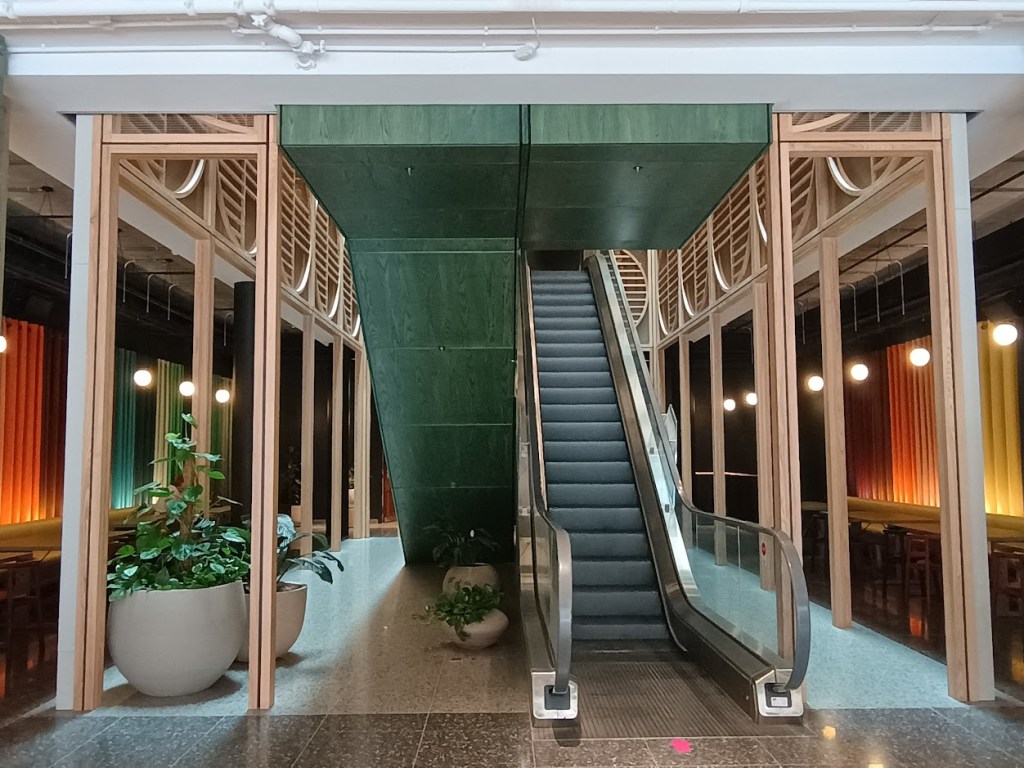
The escalators weren’t there when the building was first built, but they were there for most of its lifetime, so it feels fitting to have preserved them.
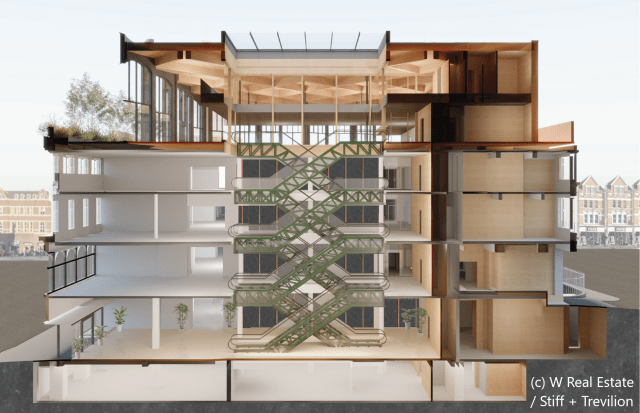
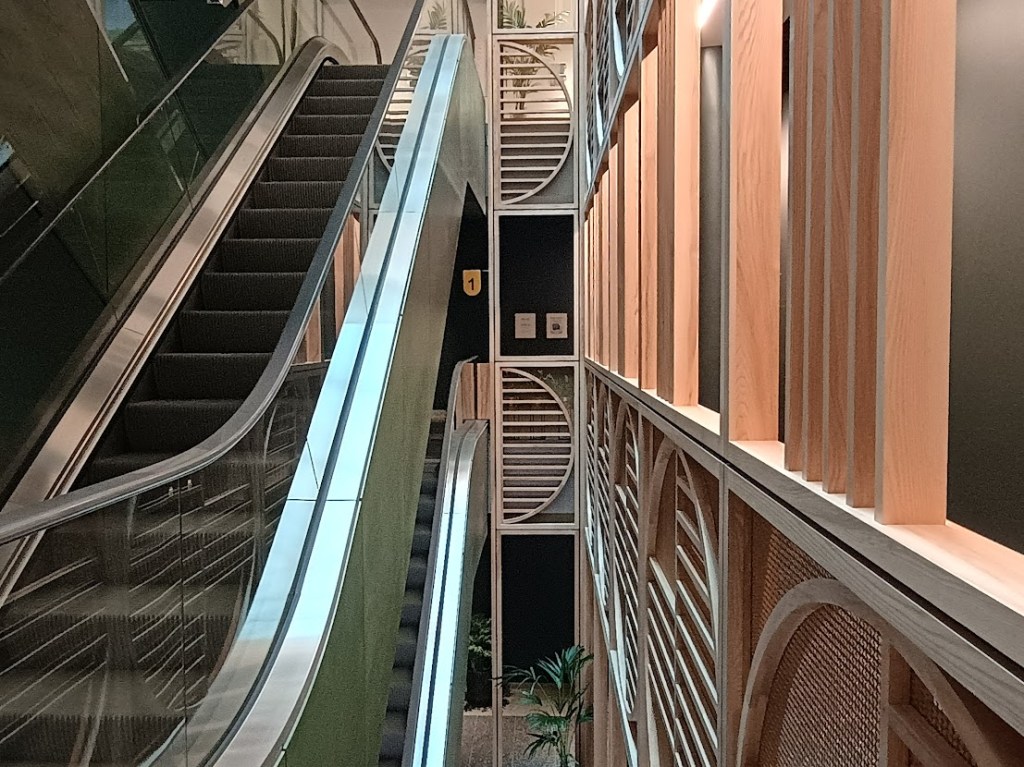
All the way up the building the glass escalators are surrounded by a wood-based pattern that draws from the arch shape of the first floor windows.
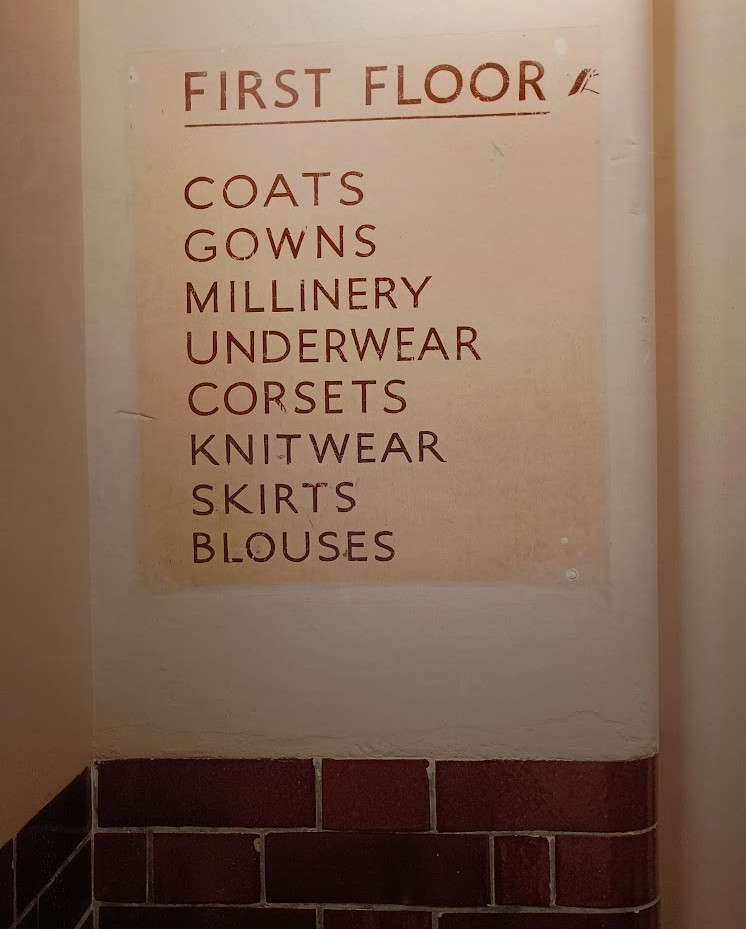
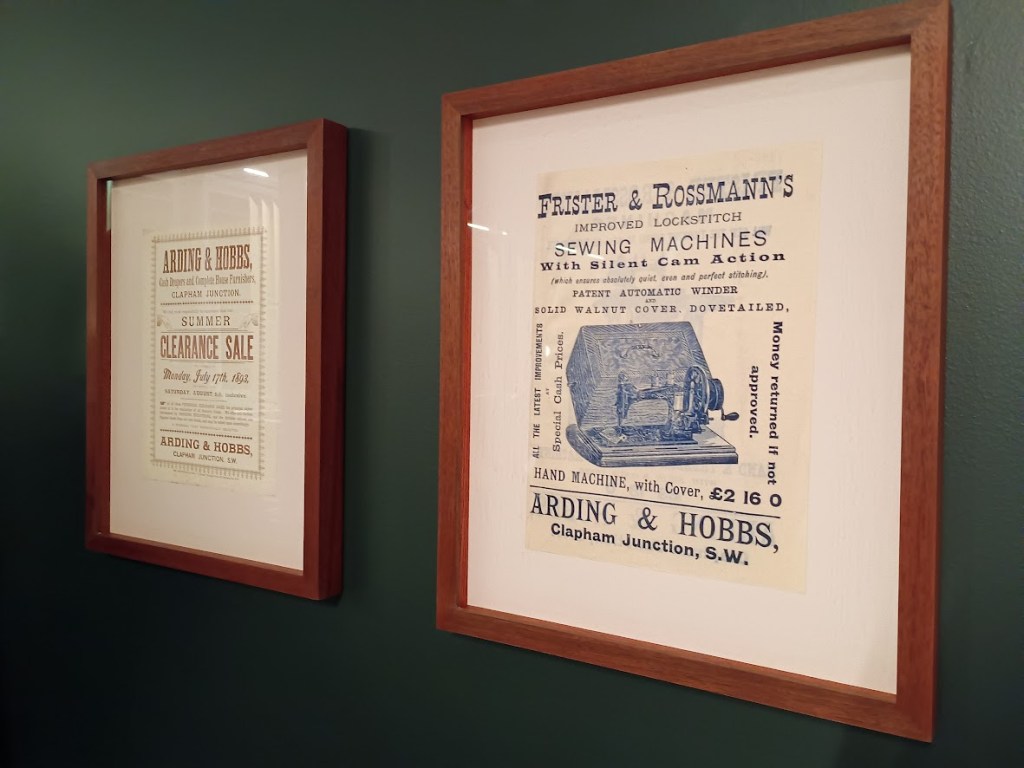
The first floor is a bit of a surprise – it’s got the same colour scheme as the ground floor reception, which means it’s very smart, and it has a small gallery of photos from the earlier days of the department store, as well as of a few classic features that were uncovered during the building works. But there’s no connection to any office space on this level.
This office-less floor is the result of an early, and large, tenant arriving who W.RE maybe weren’t really expecting at the initial design stage: as we reported in 2023, Third Space jumped right in and took on the whole of the ex-Debenhams basement, a slice of the ground floor on Lavender Hill, and the whole of the first floor, to open a large and luxurious new gym.
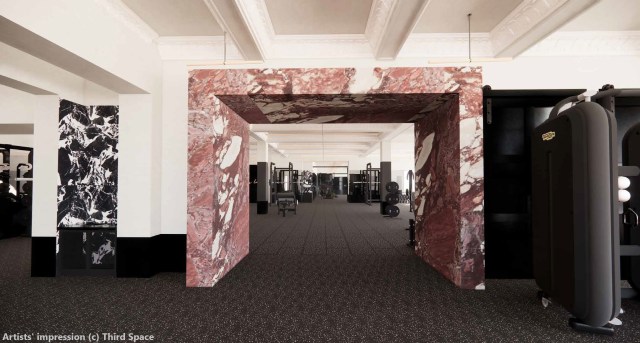
The first floor is a very large space and exactly what Third Space wanted, with big windows and large floor areas. The plans below show the general layout, with the escalators at the top right essentially carrying on up through to the upper levels-
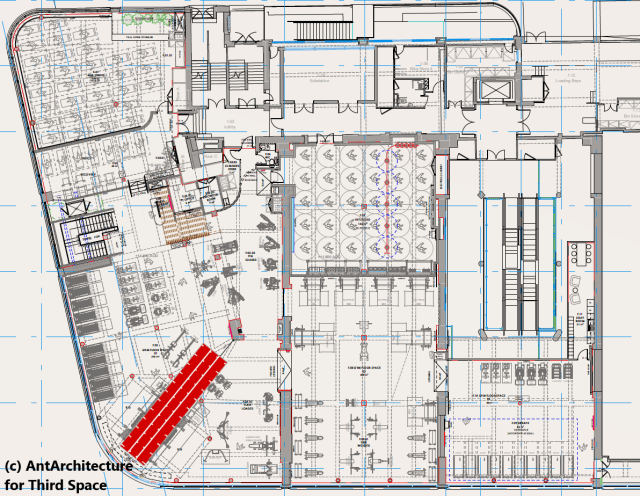
We had a few thoughts and suggestions back at the very start of the project, including concerns about the sheer scale of the proposed reduction in retail floorspace – from five full floors, to just part of the ground and basement; we had suggested the first floor would also be a good space with easy access from the ‘half floor’ facing Lavender Hill – which could be an excellent restaurant if it had separate access from the Lavender Hill corner. In the end this was exactly what did happen – and while it’s ended up as a gym rather than a restaurant, it suggests we were right.
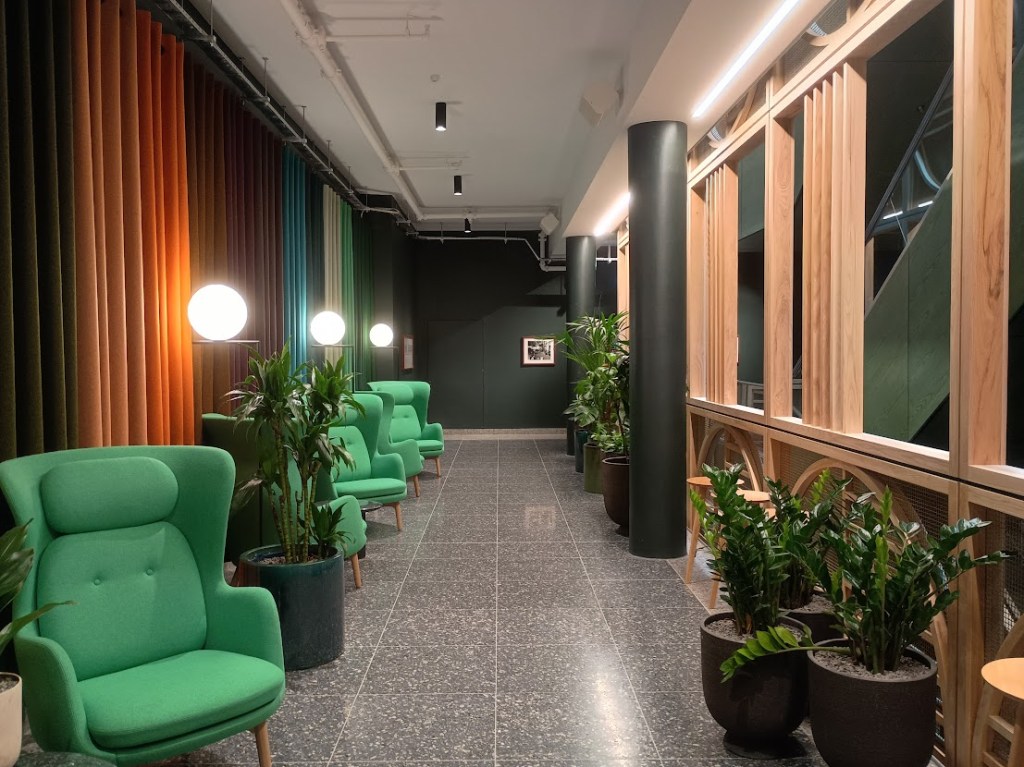
With their own entrance over on Lavender Hill, Third Space don’t need everyone to pile through the office reception, so this floor has ended up as a small access route to the upper levels instead. This first floor does feature the first of what are a whole series of classic steel fire doors, that were added after the big fire that destroyed the first Arding & Hobbs building:
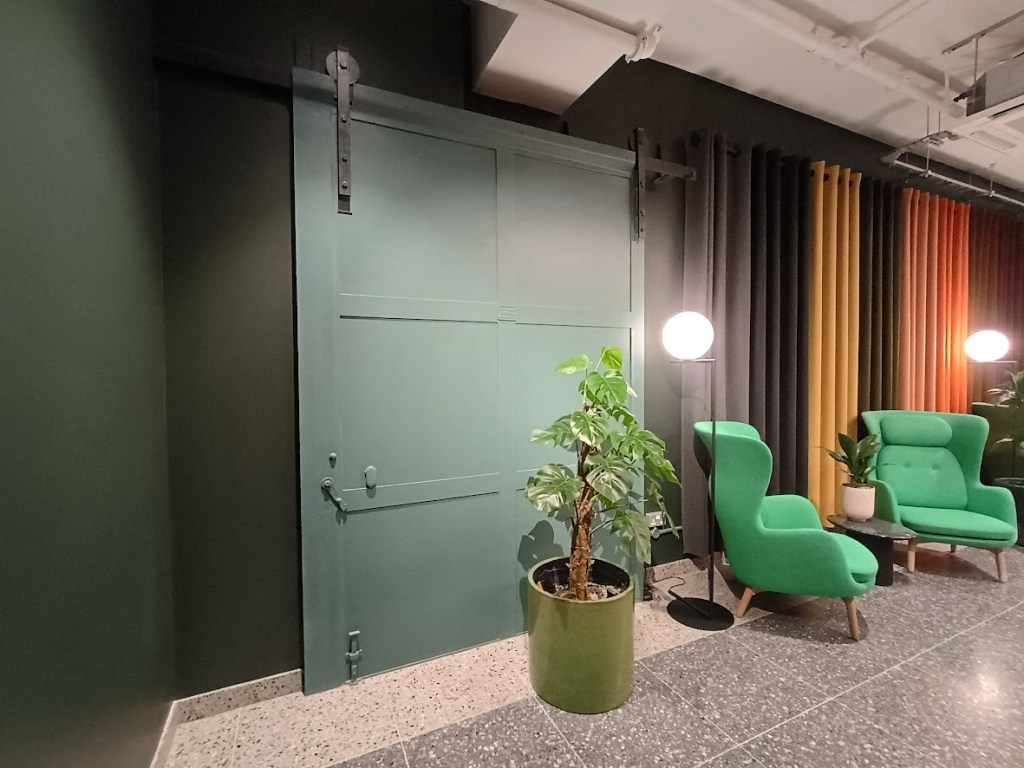
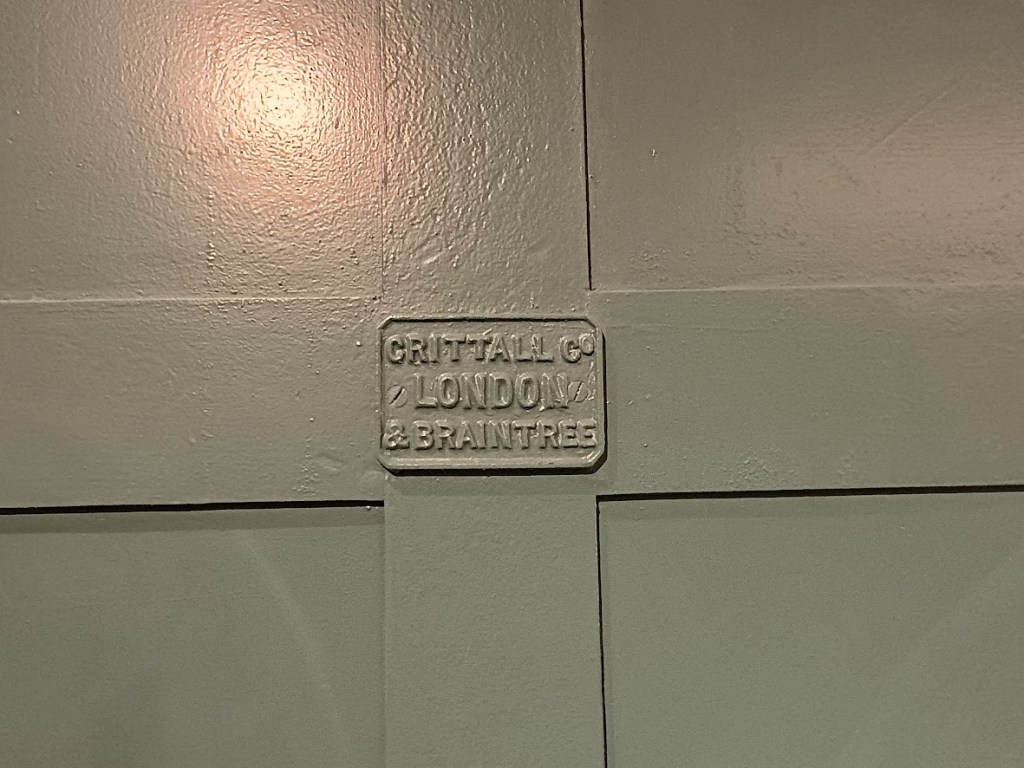
They are all made by Crittall, who some of our readers may recognise as a company that started out as an ironmongers based in Braintree – but went on to become nationally famous in the 1920s and 1930s for making the steel framed windows that are beloved by architects and pretty much archetypal of a lot of 1930s housing.
So it’s on up the escalators to the second floor:
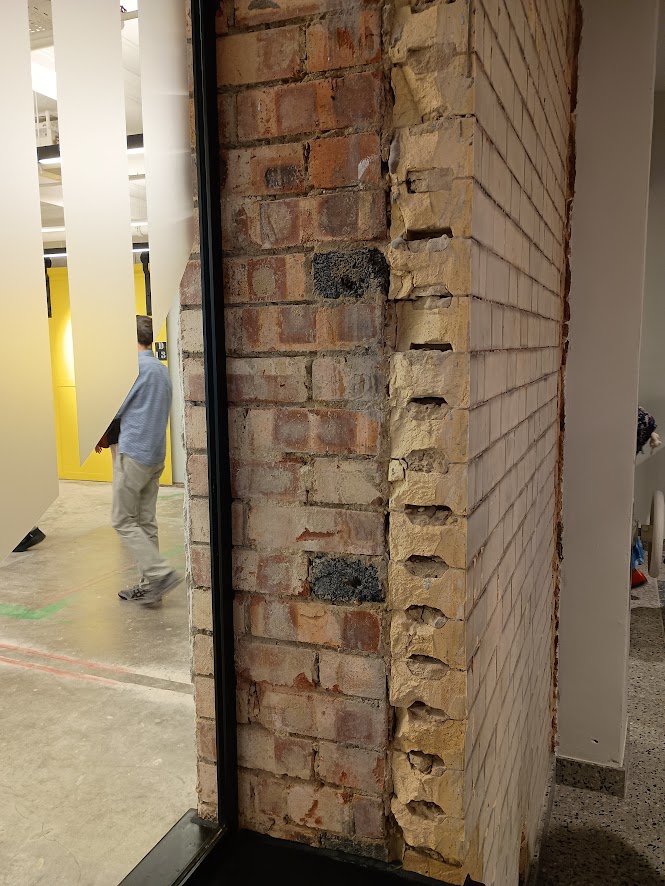
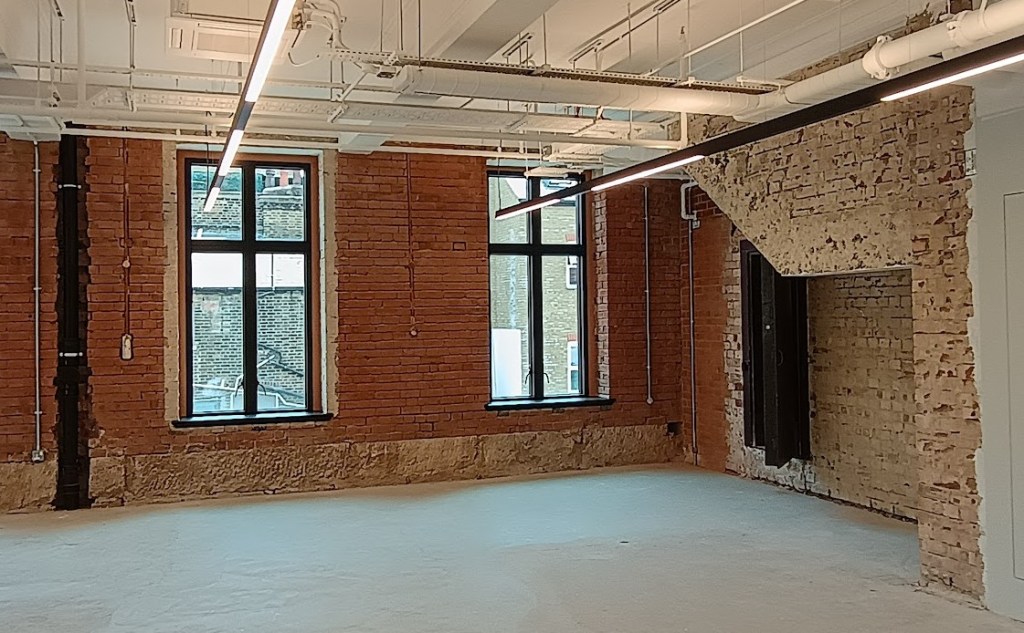
The look of the building here changes completely. The dark green perfectly finished walls and drapes give way to a much trougher surface – because this floor has retained the existing walls, as they were once all the layers of department store surfacing were stripped away. The walls show the many changes the building has seen over its years as a department store, with additions, holes cut through, bits bricked up and reopened, and a few bits of deep building work that the original builders probably never thought would be on show.
The amount of office space available on the second floor is much larger, as with no T.K. Maxx on this level it covers the whole of the building. This floor has noticeably lower ceilings and smaller windows than the ground and first floor, but it’s still a decent space.
W.RE have let half of this floor to The Gym Group, not as a gym, but as their new head office. They used to be based in the famous 50p building by East Croydon station, but in April they joined what seems to be a growing exodus of businesses from Croydon and moved everything to Clapham Junction (and there’s a good chance that their old building will soon be converted to flats). They have very much gone with the look of the building – keeping the same style in the entrance area, with more classic office spaces further in. We’ve not put photos of here, to respect their privacy – but they have a video of their new office made just before it opened on Linkedin.
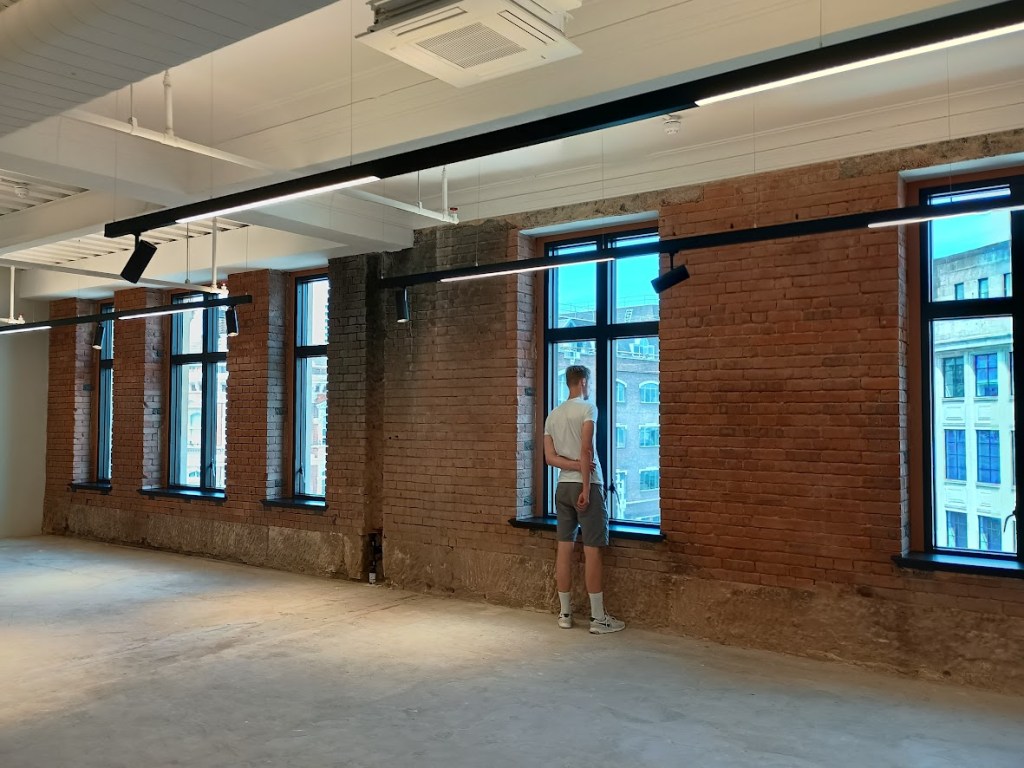
The other side’s currently available – which meant we could have a good look around!
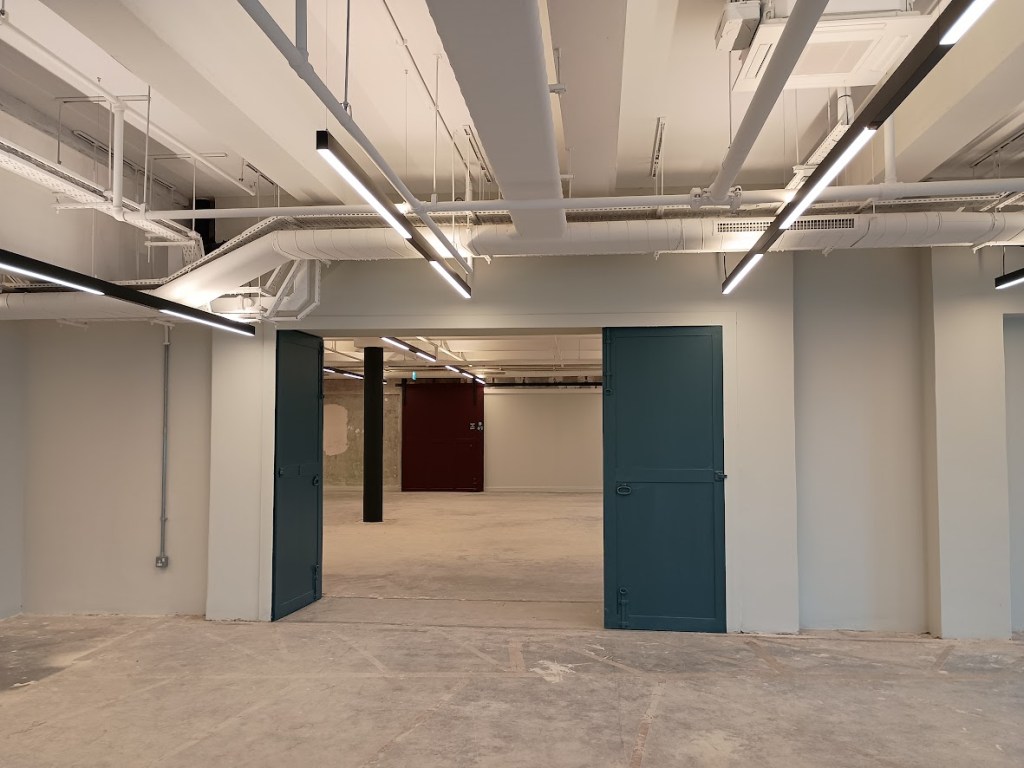
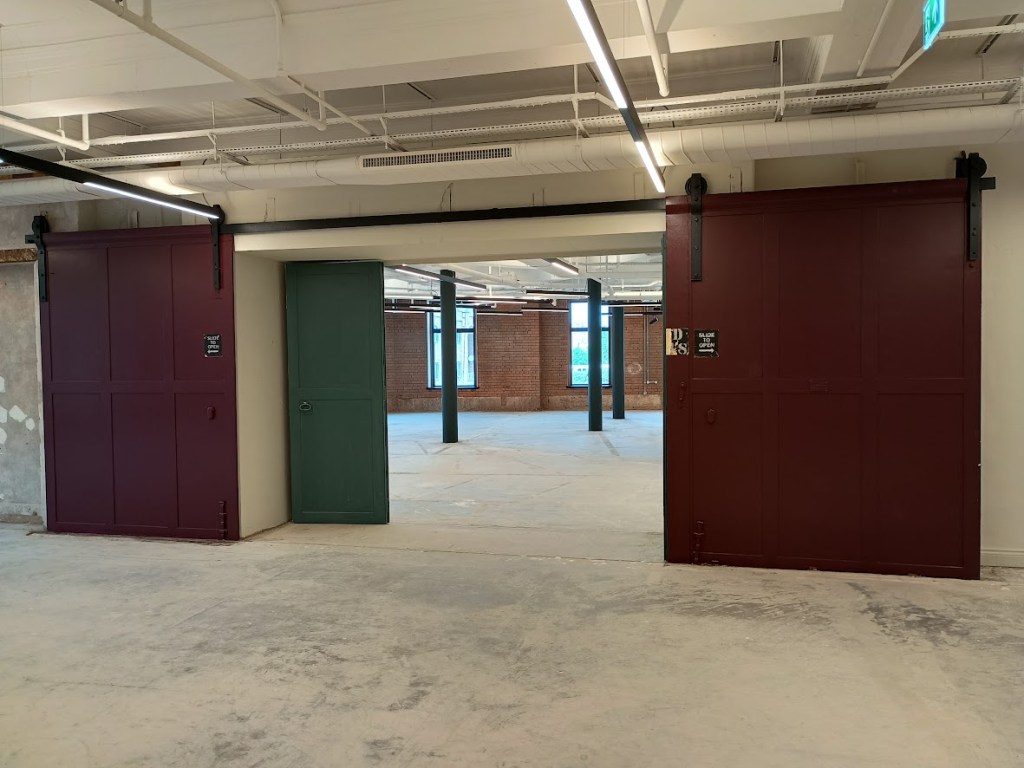
This floor includes several more of the original big steel sliding fire doors – kept as features. These were designed to be quickly closed if a fire broke out, so that it could be contained within specific bits of the building. It seems very basic now, but this was quite ahead of its time when it was built – and it does echo the modern approach to containing fire in larger buildings. Rest assured that none of this is in use any more and the building has been updated with the latest technology!
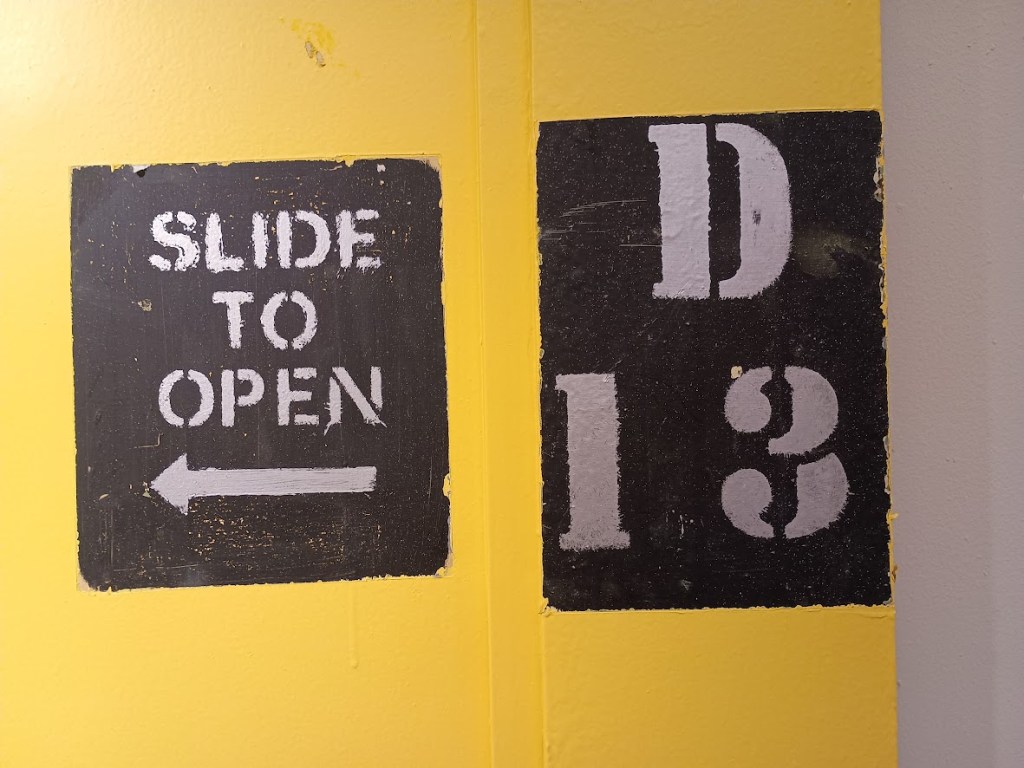
The original fire shutters are also still in place over some of the internal openings – and if you knew where to look a few of these used to be visible in the Debenhams days –
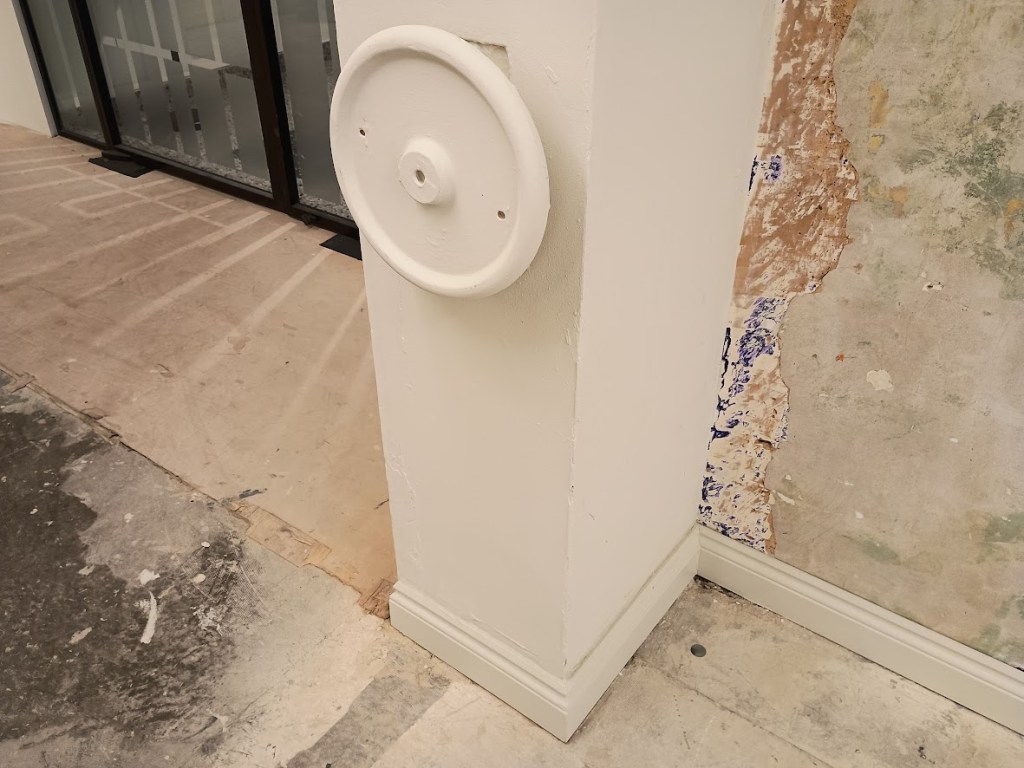
Those who remember this as a department store will likely be struck by how much larger it now looks, without all the shelving and display space, as well as with all the windows now open and in use – as in the Debenhams days only some were visible.
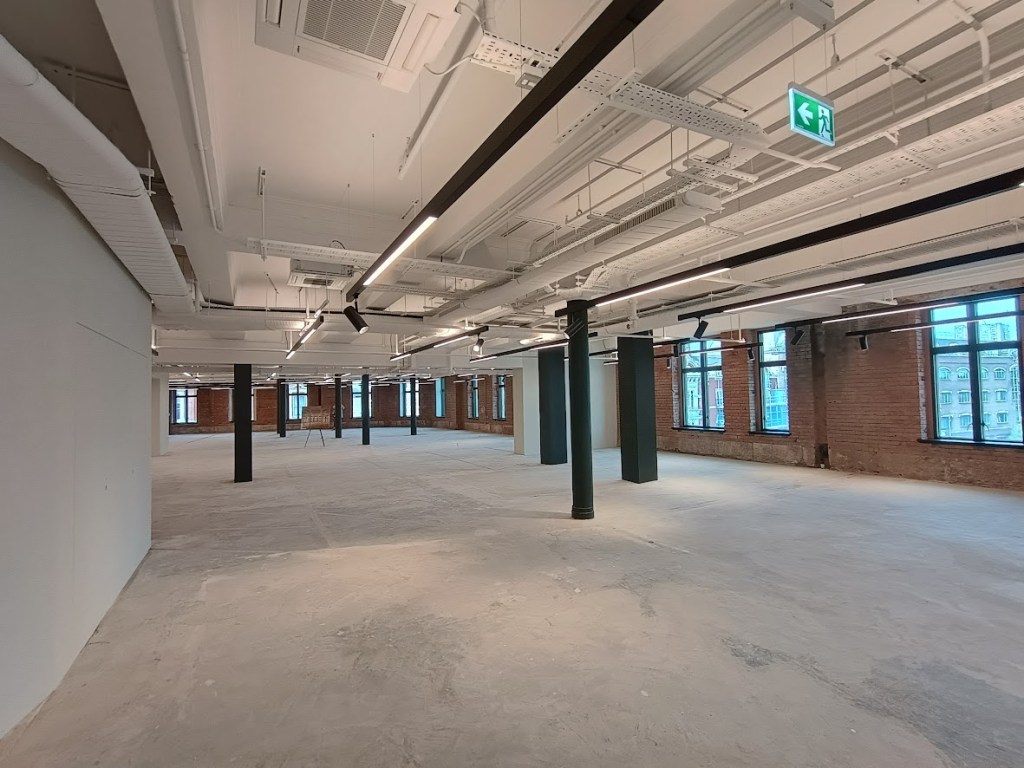
There’s a sense of openness that wasn’t there before.
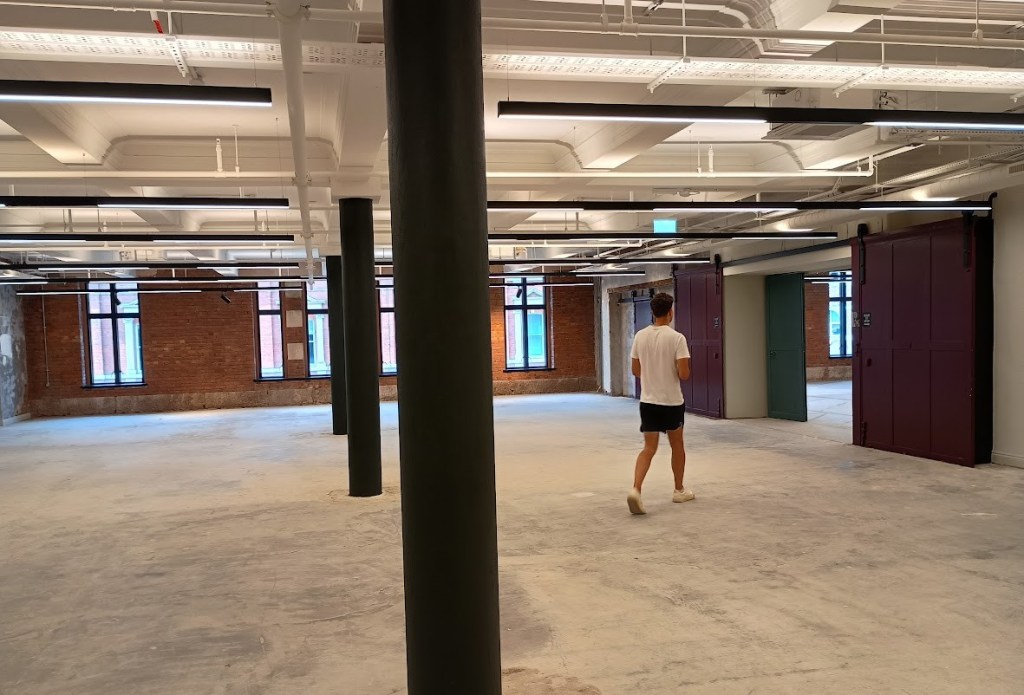
A lot of clutter has also been removed at ceiling level, and the entire building has been stripped back to show the original walls and ceilings.
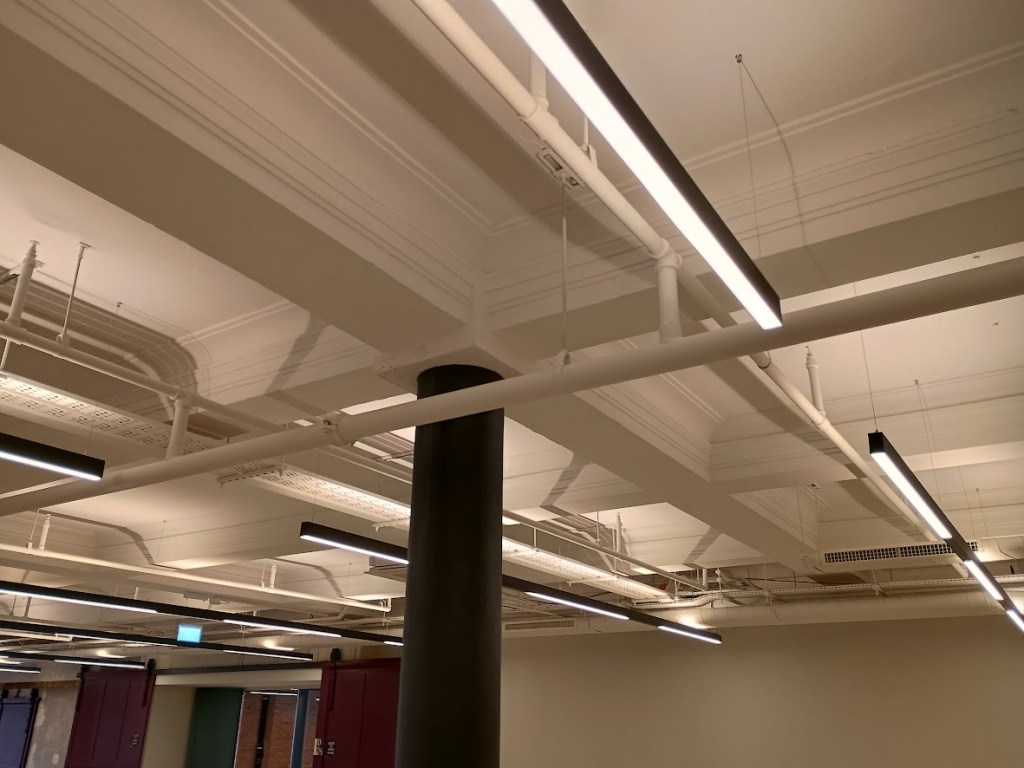
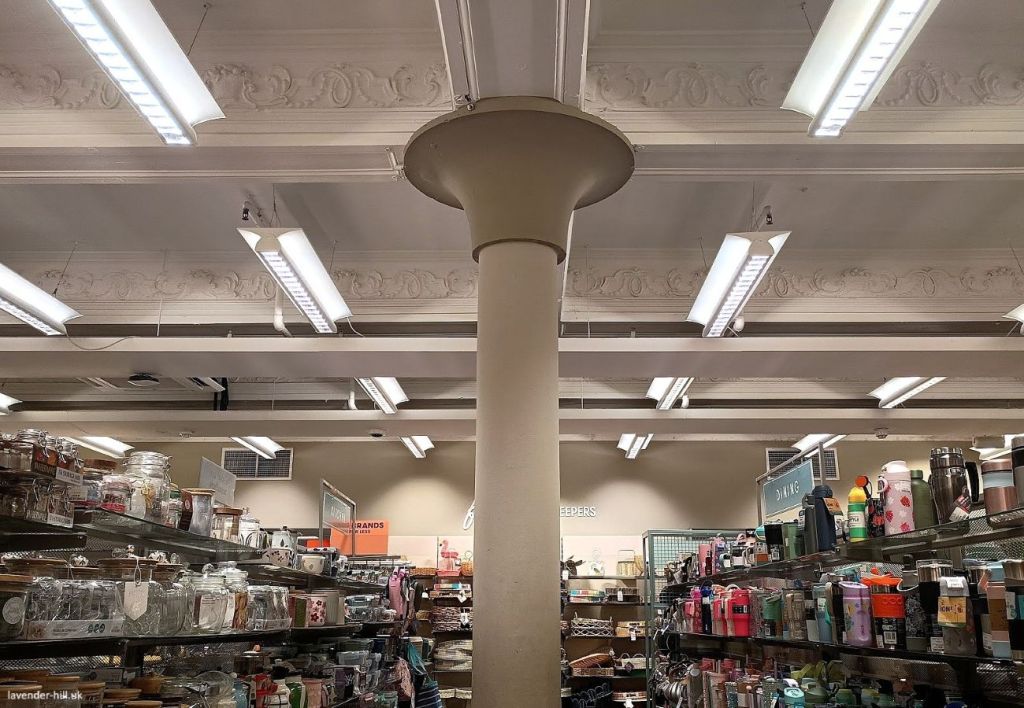
The ceilings on this floor are noticeably simpler than on the level below – where they have far more plaster decoration (as is visible in the T.K. Maxx homewares section) –
This is the second floor corner overlooking Clapham Junction – and the photo shows the same view on the floor below (which is now part of the Third Space gym).
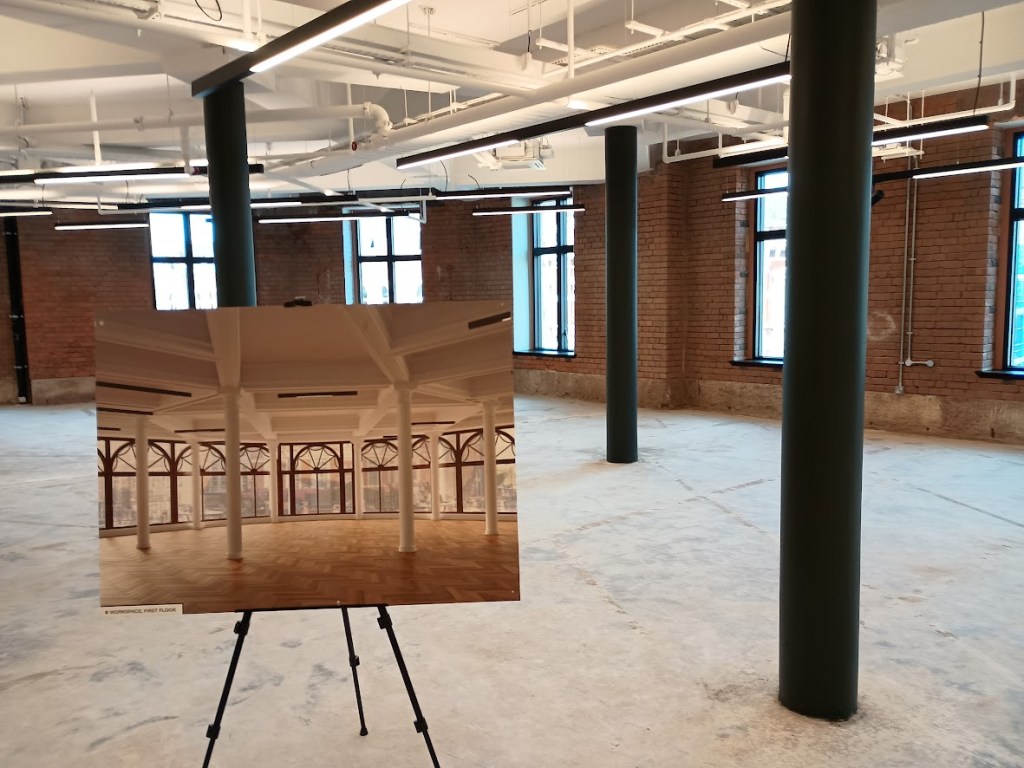
The original plans were going to see the windows restored, but part way through it was established that a lot of them had been hidden behind shelving and neglected for so long that they were beyond any realistic restoration – co on this floor many of them are new windows built to look like the original ones.
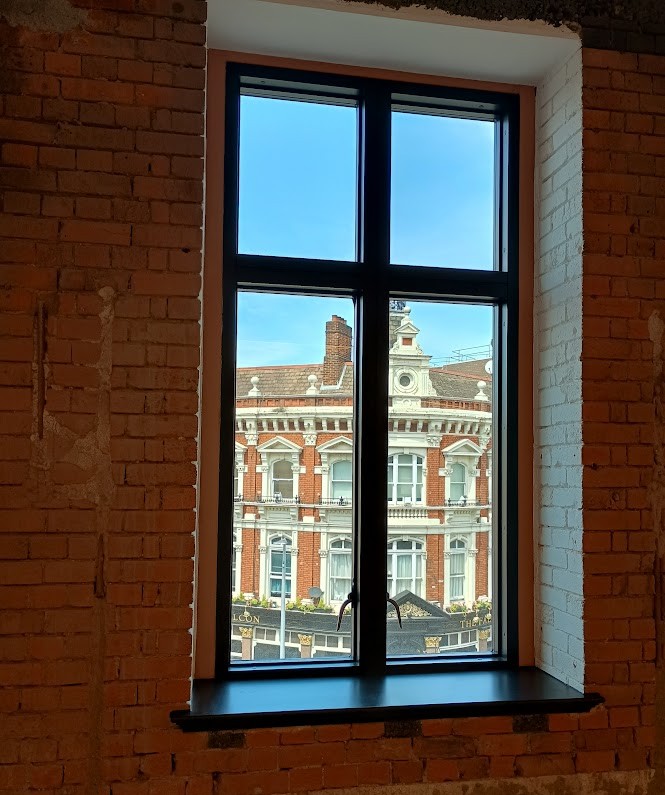
As layers and layers of old panels and wall coverings were stripped back, a few surprises emerged. Hidden away at the very back corner of the second floor, built in to the wall structure, was a big steel door. A locked one.
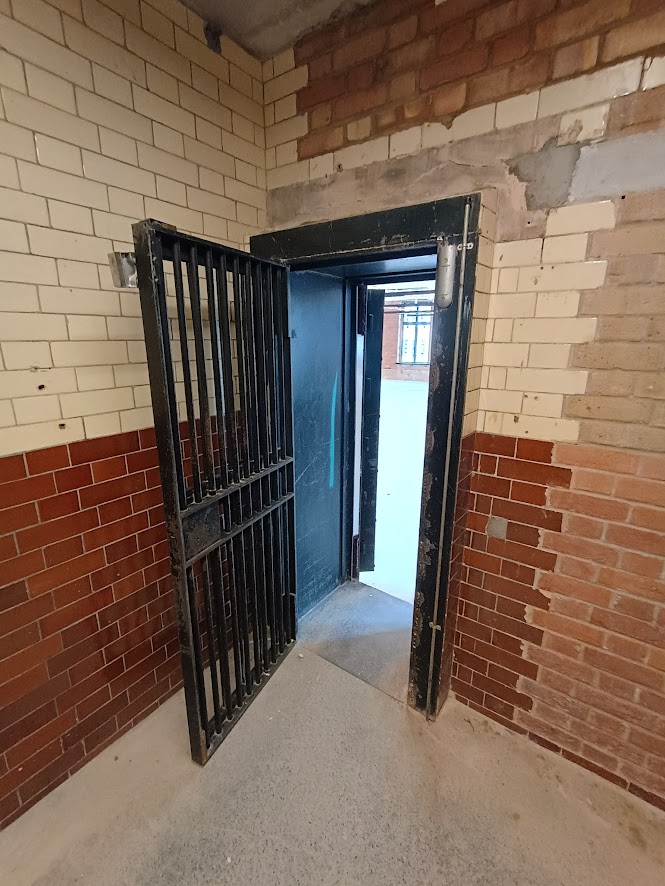
After a lot of effort it was opened – to reveal the original store safe! A whole room, complete with strengthened floor, and glazed ceramic tiling.
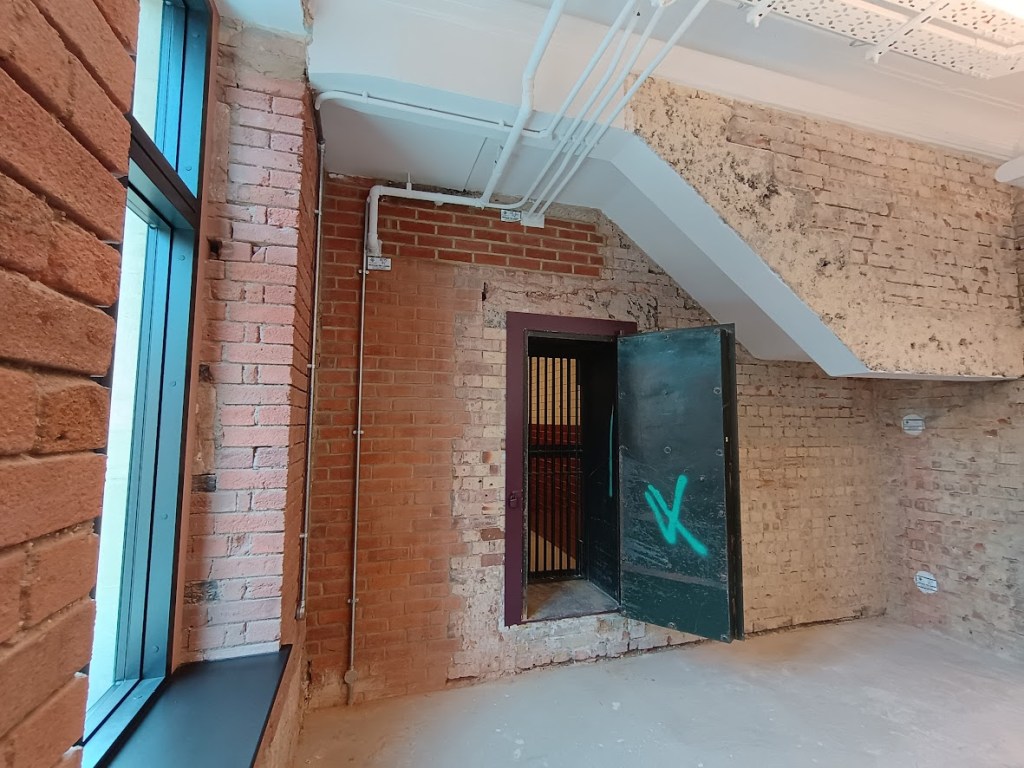
Sadly there were no missing millions, just a lot of very out of date gift tokens. But it has now been cleaned up and is a rather unusual space for the future office tenants to use.
Up one more floor, the third floor used to be the top of the store – including homewares, kitchenware, lighting, furniture and the cafe. At this point another new feature starts to appear: the escalators now have a huge new skylight above them, letting light in to the middle of the building.
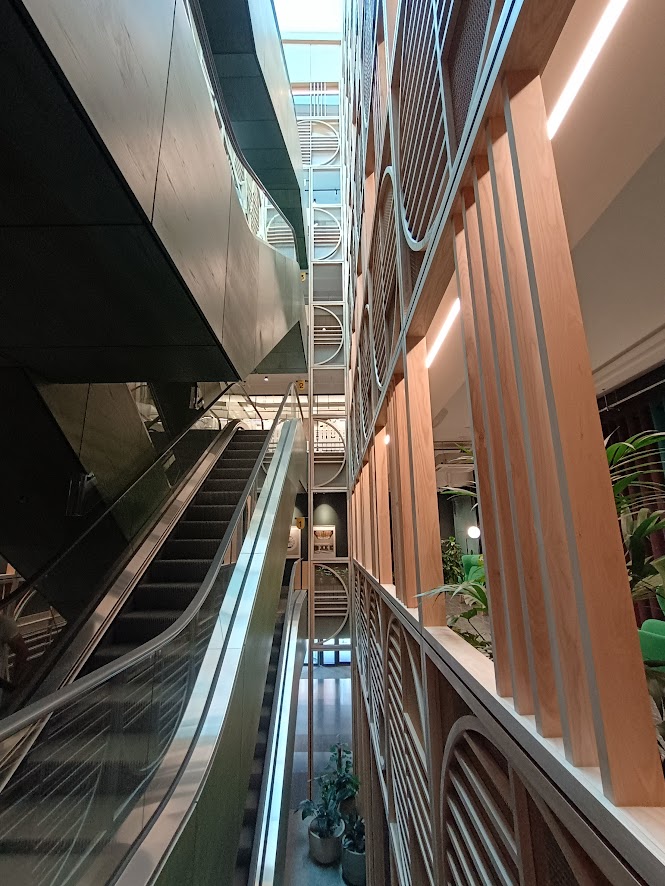
This was always the most eclectic floor – it briefly included concessions from other furniture businesses, for a year or so it hosted the Party Superstore after their building had a catastrophic fire in the London Riots, and in the later years a large slice of it became an in-store Sports Direct concession.
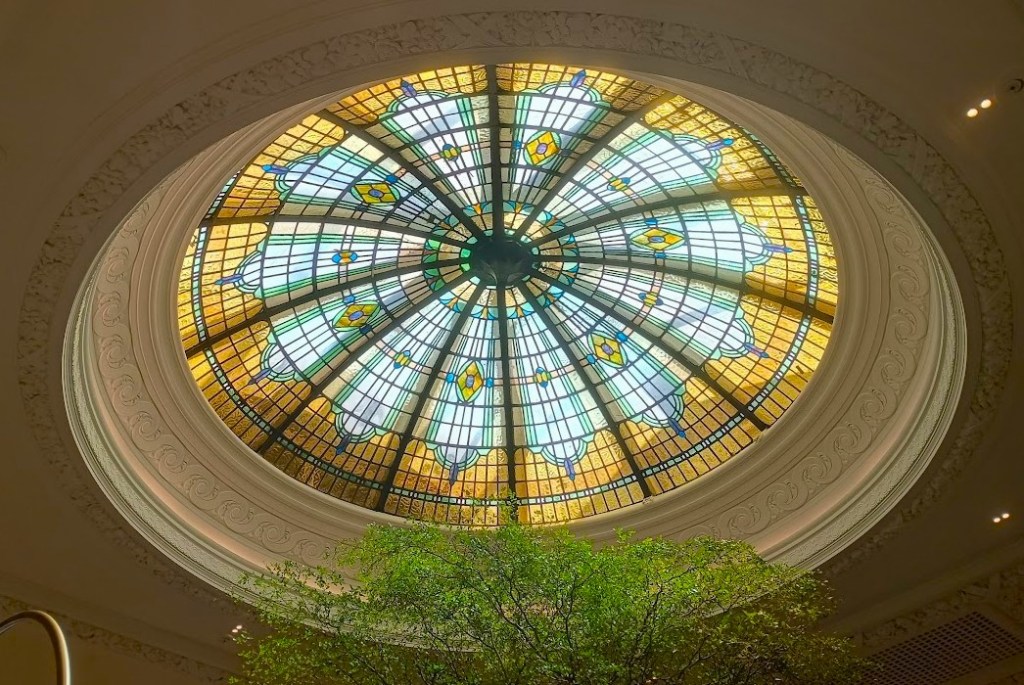
The whole of the third floor has been let to X+Why – a whopping 27,500 square feet (which is about the same as the whole area of T.K. Maxx). It’s been fitted out as a members’ club and workspace, offering “premium flexible workspace options from private offices to dedicated desks to day rooms, meeting rooms and glamorous event spaces” – with a high degree of luxury across the board. The appeal of the third floor to them was clear – unlike he relatively compact second floor, the third has dramatic high ceilings and considerable style.
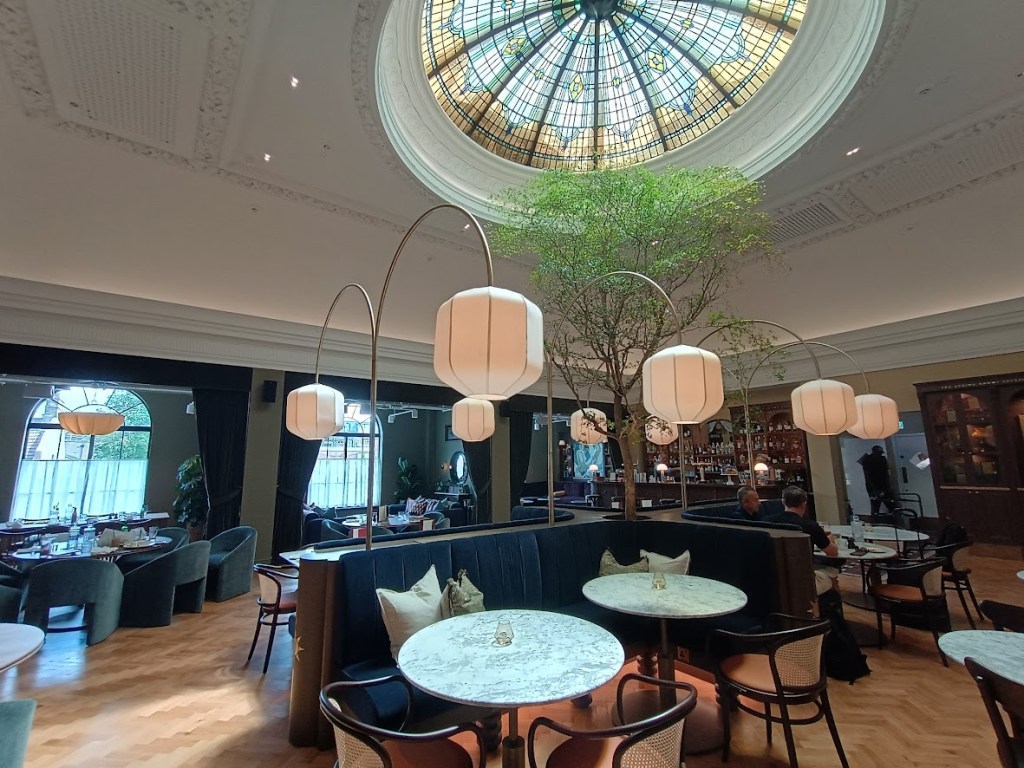
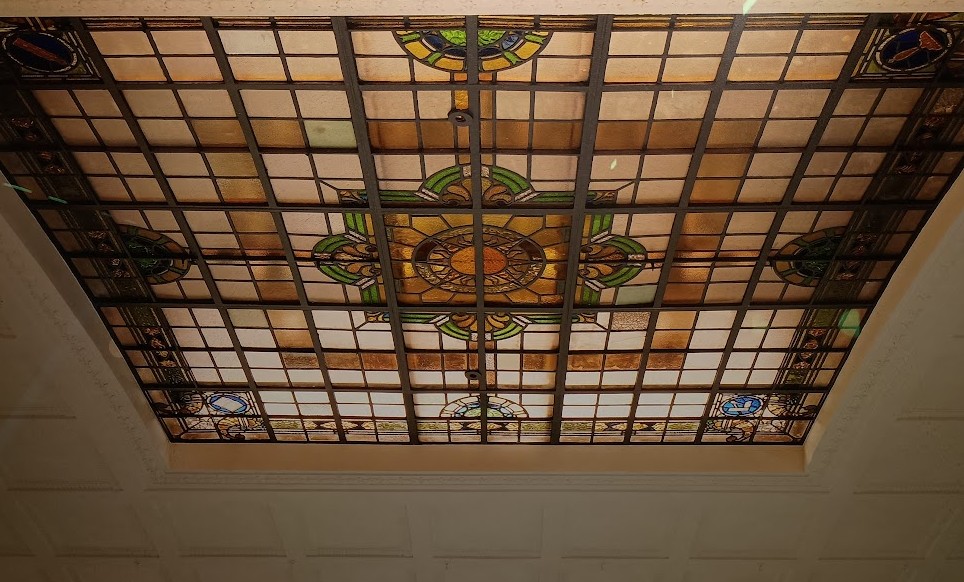
The old Debenhams cafe with its large dome has had a major makeover, but still has much the same function as it did right from the start of Arding & Hobbs. The central skylight has been carefully cleaned and repaired, and is a real feature. As we reported on at the time, work on this floor uncovered another long-forgotten skylight, which has also been restored as part of the X+Why space –
Probably more than any other bit of the building, this floor shows the building in its ‘original’ style. Reinvented for sure but very much using the rich materials and colour schemes that would have been suitable for an upmarket department store in the early years of Clapham Junction.
It’s up at the fourth and fifth floors that things really change. These used to just be the roof.
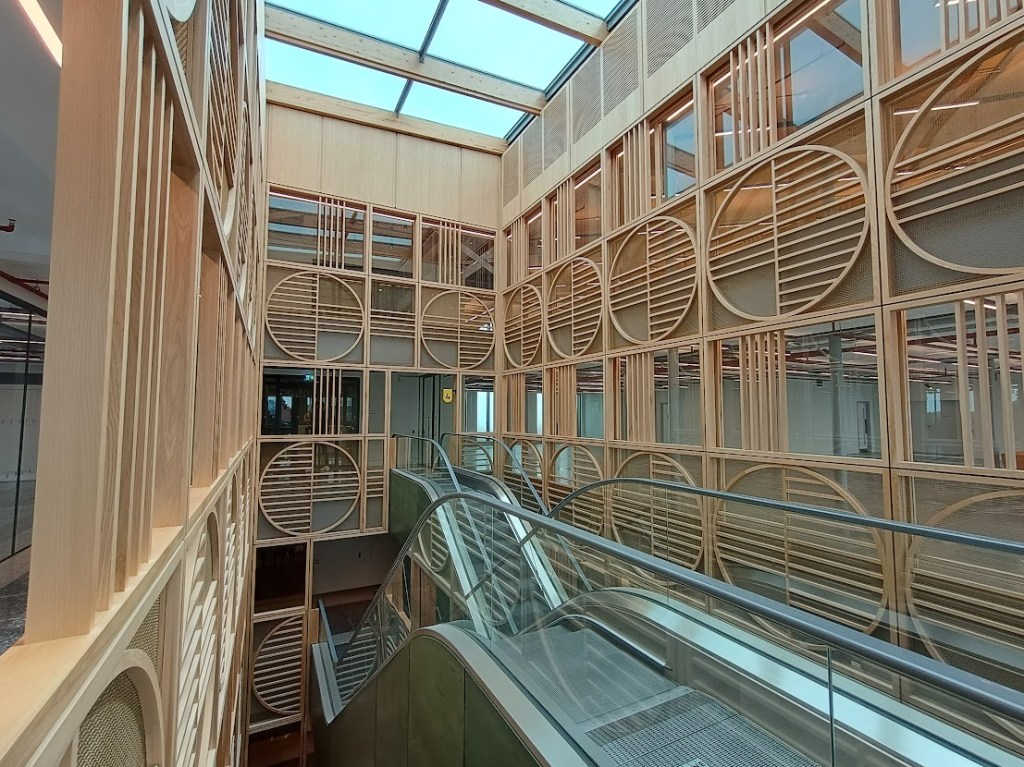
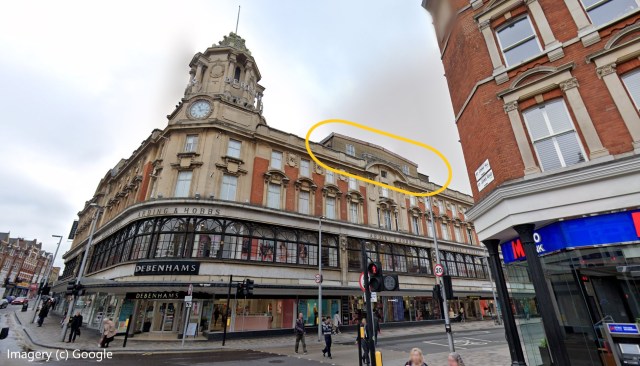
The roof used to be covered in a right mish mash of small single storey structures, including various sets of lift machinery and air conditioning from the old Debenhams (one of the larger bits was visible from the street – we’ve circled it below).
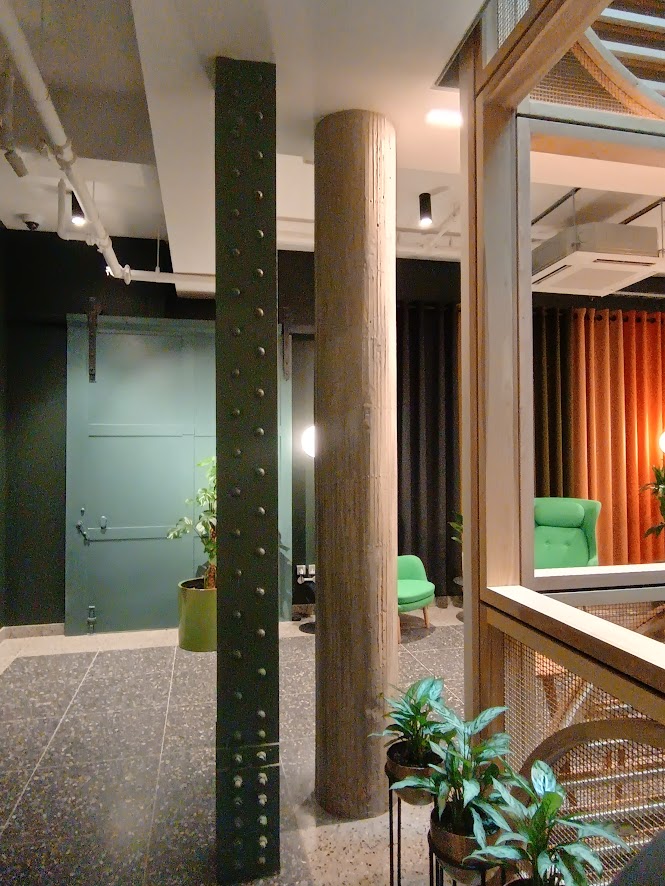
W.RE could see straight away that this was a wasted space, and that they had the potential to add floors to the roof. The original building is robust and well built, so it didn’t need much in the way of extra work to add extra floors – there have been just four new pillars added through the existing building (mainly in the escalator area), one of which is shown below –
They spent quite some time on the design of this new top floor– trying out various shapes as well as various designs. Their thinking was that a ‘plain, generic’ rooftop extension won’t work on what’s a fairly complex and ornate building, and we’re inclined to agree.
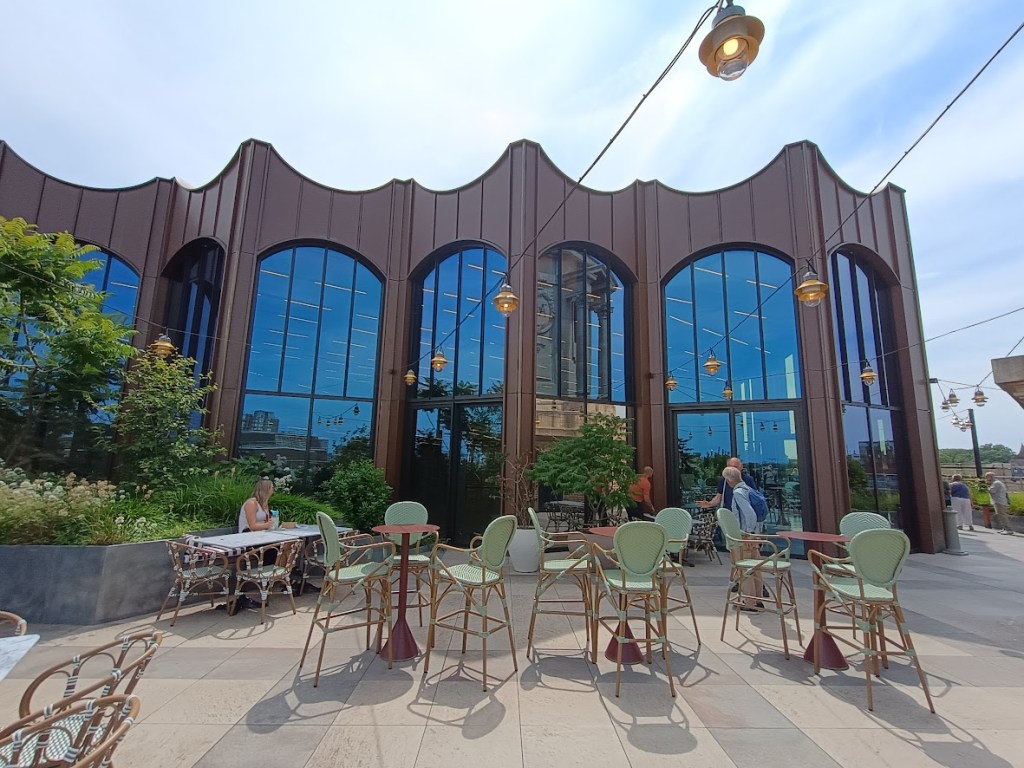
In the end they went for something really quite bold: a two storey structure covering much of the roof surface, with curves echoing some of those on the building below.
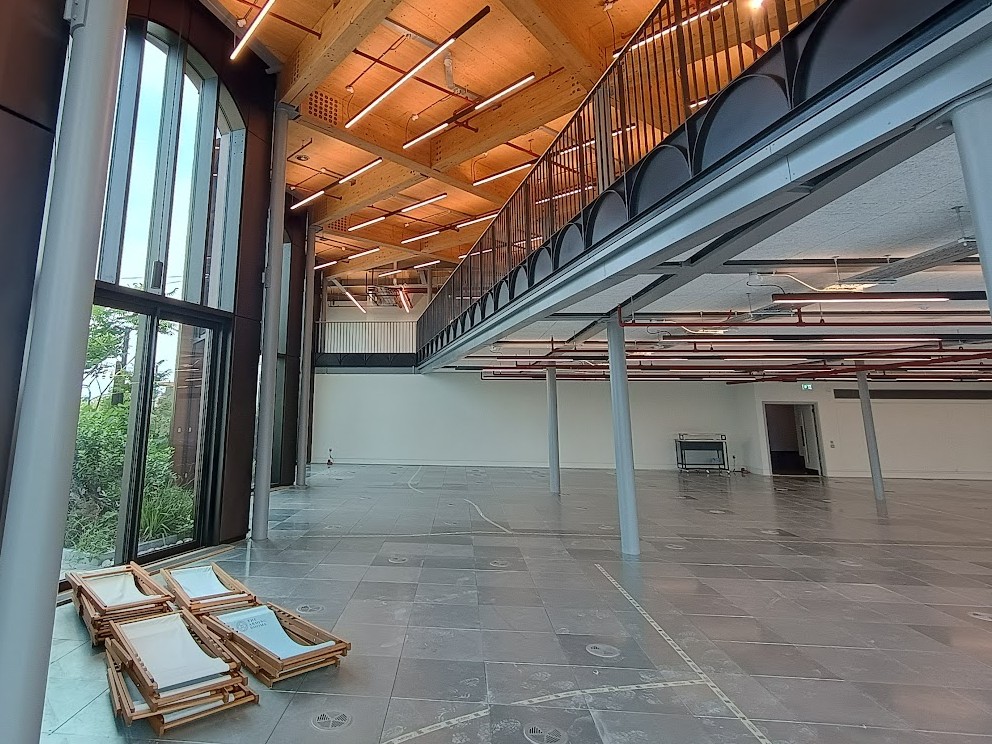
Inside is a mostly open plan space – a really huge space, with lots of light and no internal walls at all.
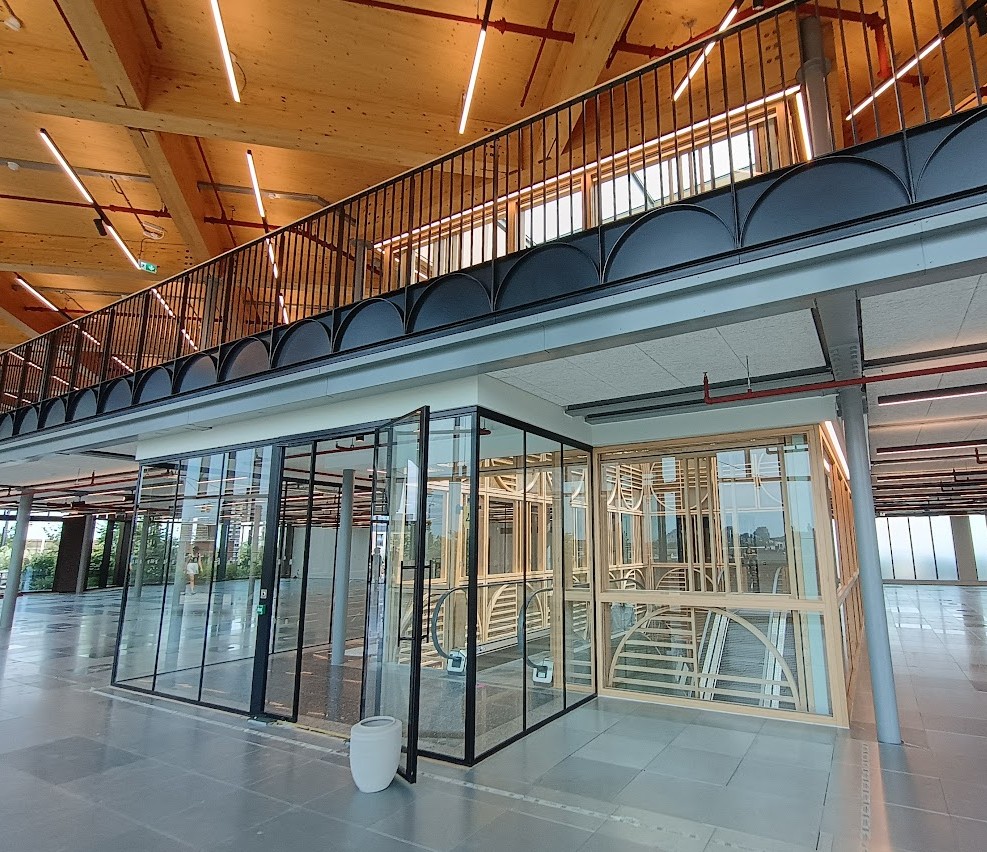
Most of this floor is made of structural timber – which makes it light, and also marks a bit of a contrast from the heavy structure of the rest of the building.
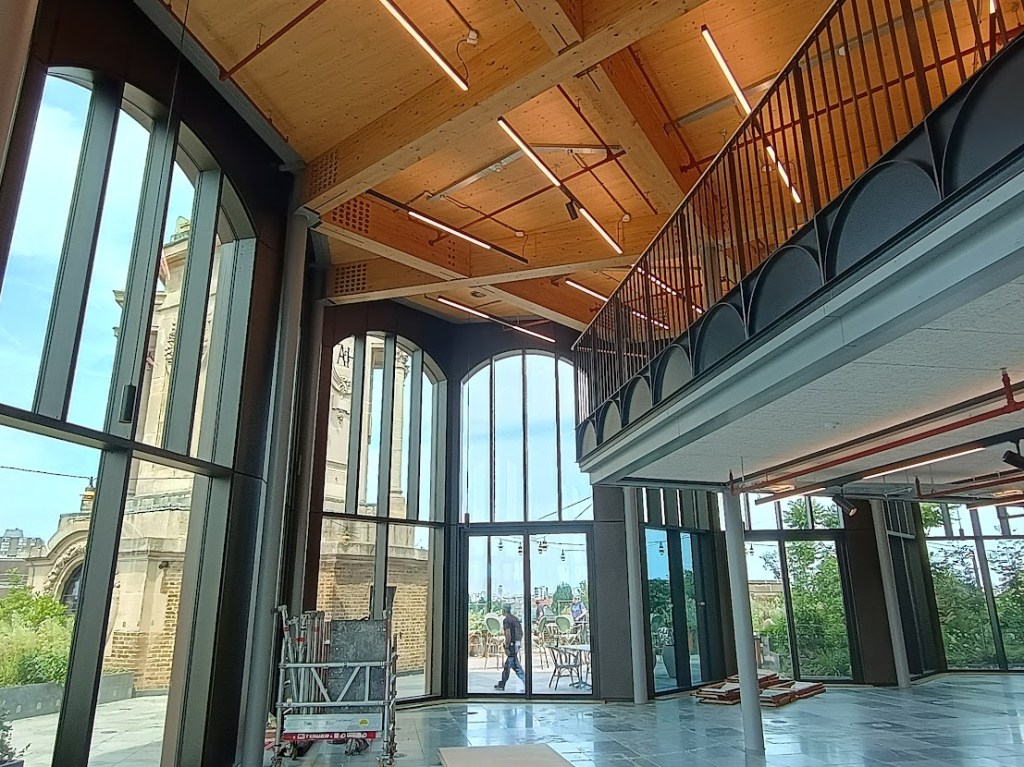
The two new floors at the top are perched on the existing structure, with hardly any change to the lower levels. That said a small handful of extra columns have appeared – like these ones in the main foyer –
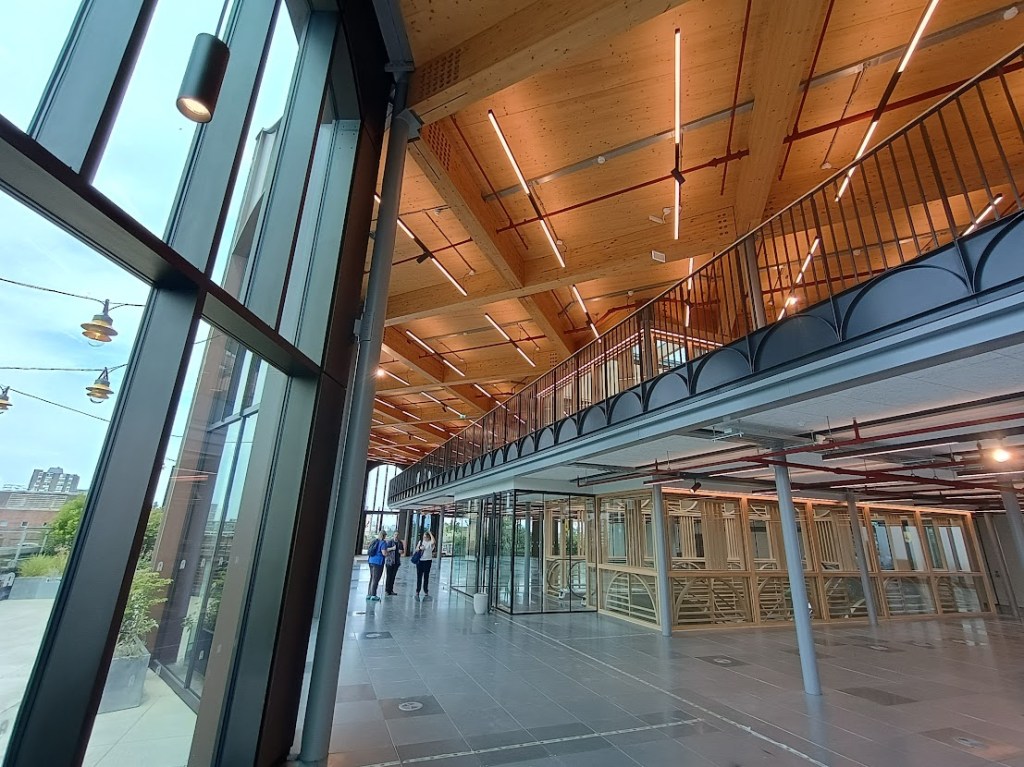
The two levels are designed to be let to a single tenant, with provision for the future occupiers to add whatever works for them in terms of access between the two levels.
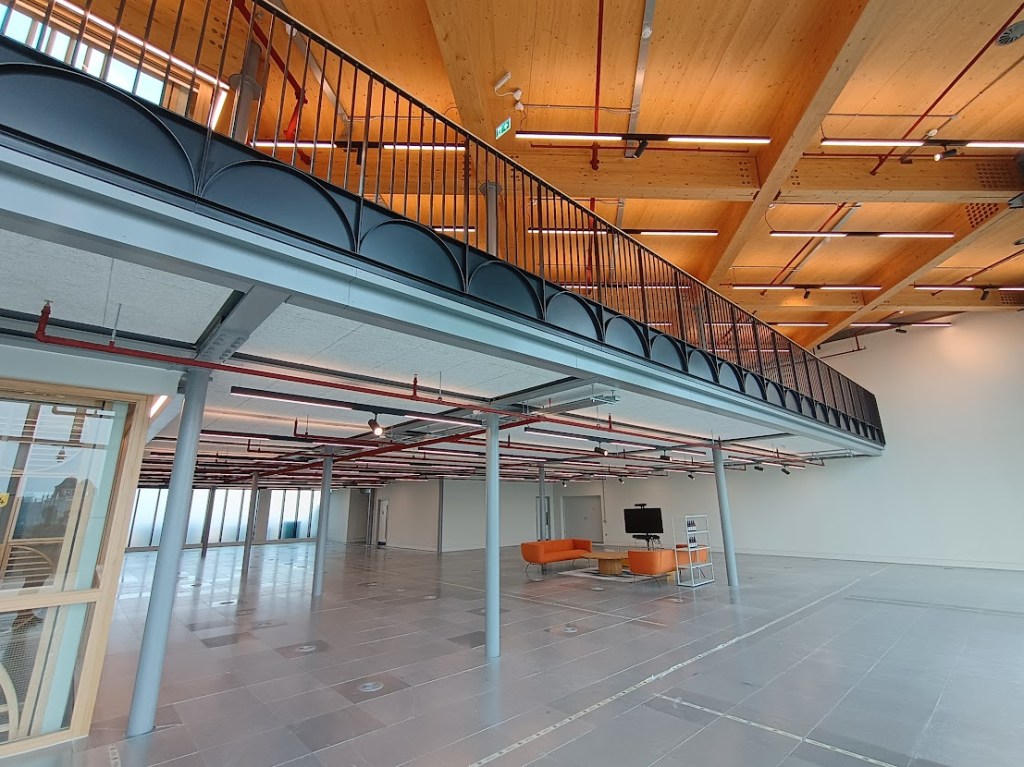
It’s a really impressive space, and there’s definitely nothing quite like it in the area.
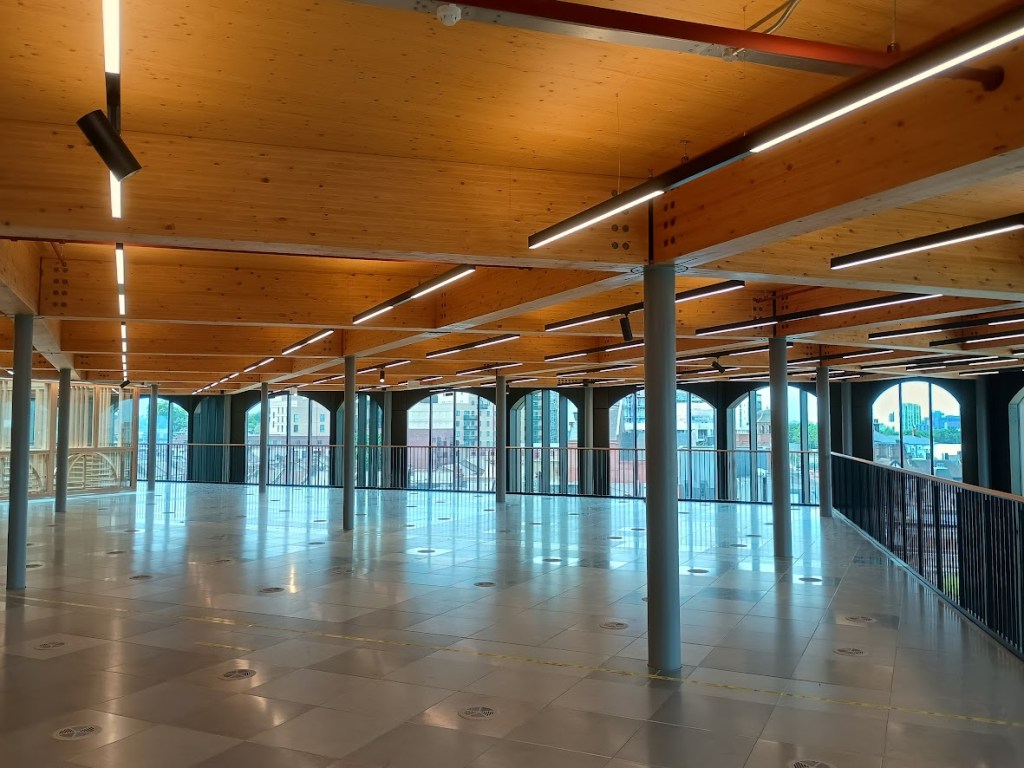
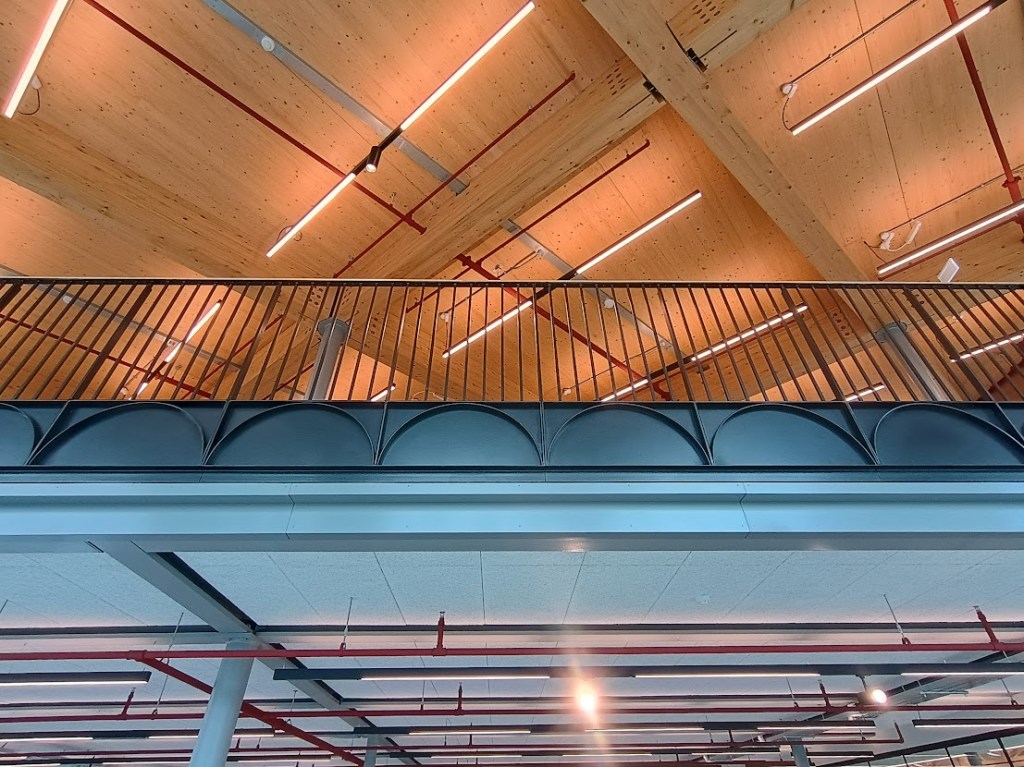
It’s a radical departure from the style of the lower floors – but the arches from the first floor windows, that we saw in the wood framing round the escalator, make another subtle appearance on the internal balustrade.
There are far reaching views towards the towers of the City from up here, with most of Battersea also clearly visible.
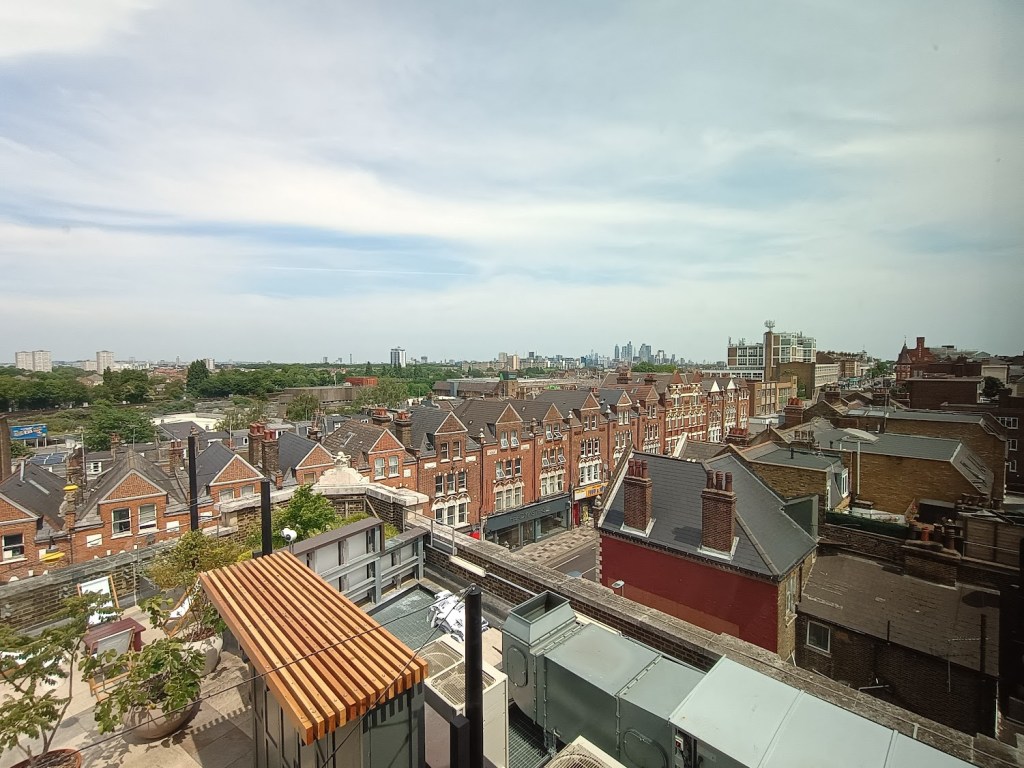
Looking the other way, the blocks at Battersea Reach, and distant building sites in Fulham are visible.
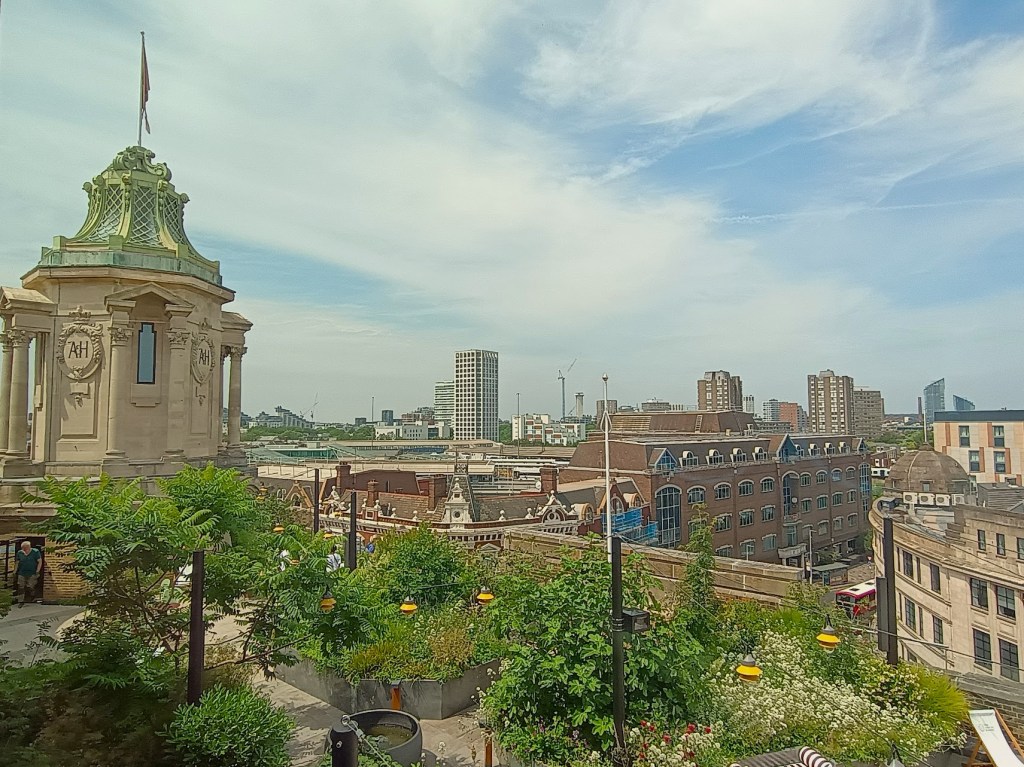
The building is now mostly occupied – with the whole of the basement, ground, first and third floors fully let, as well as half of the second floor. The top floor extension is still available at the time of writing – and it would make a fine office!
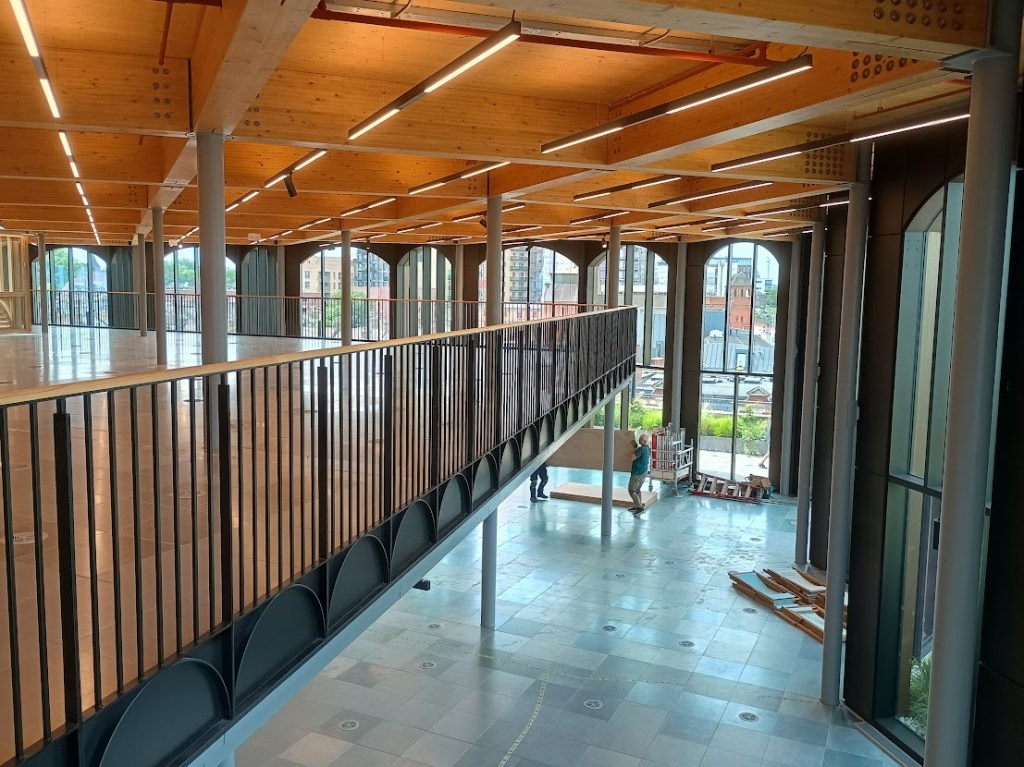
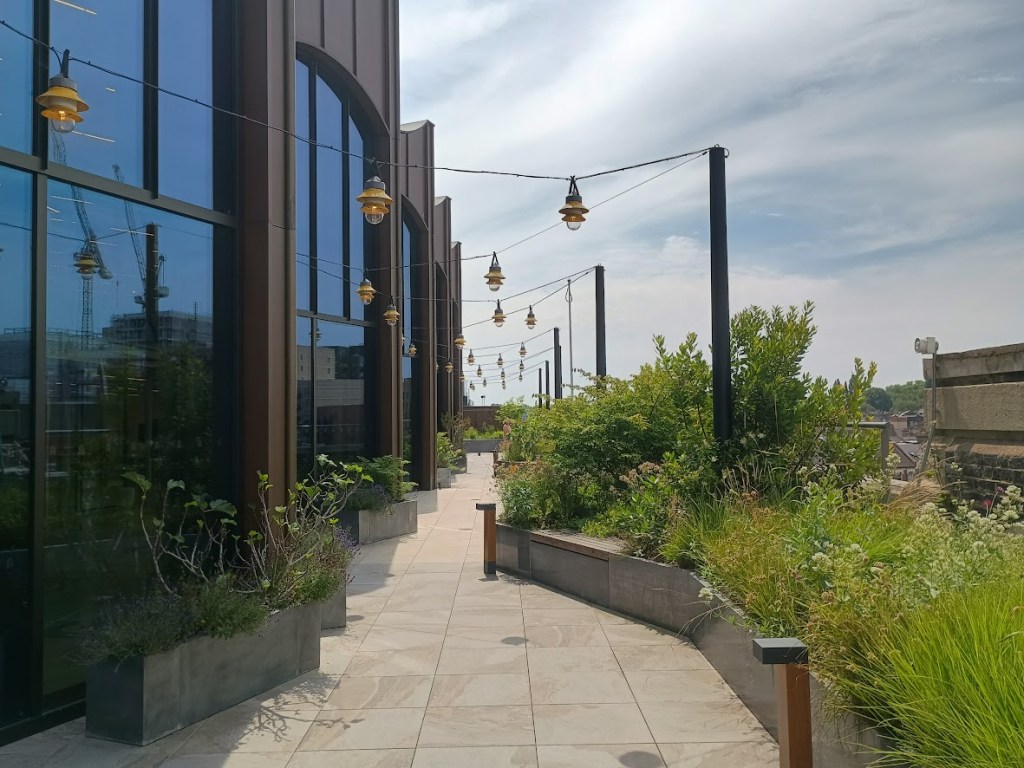
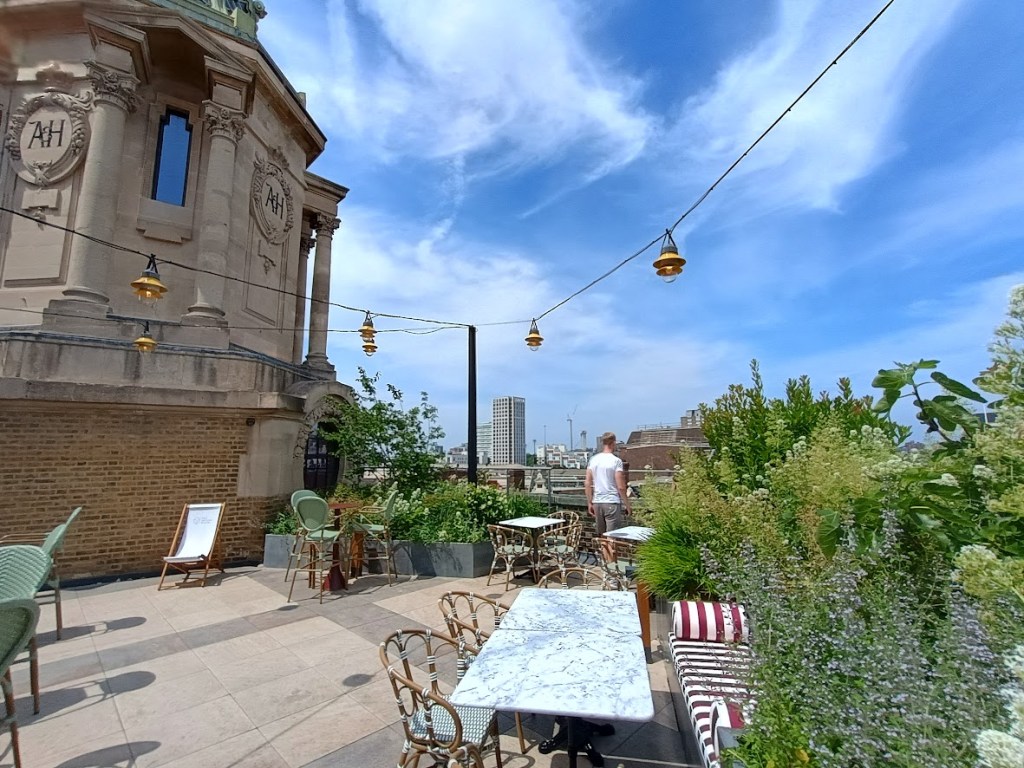
But that’s not all – as this level also comes with a wraparound balcony – complete with lighting, speakers, seating and a lot of planting.
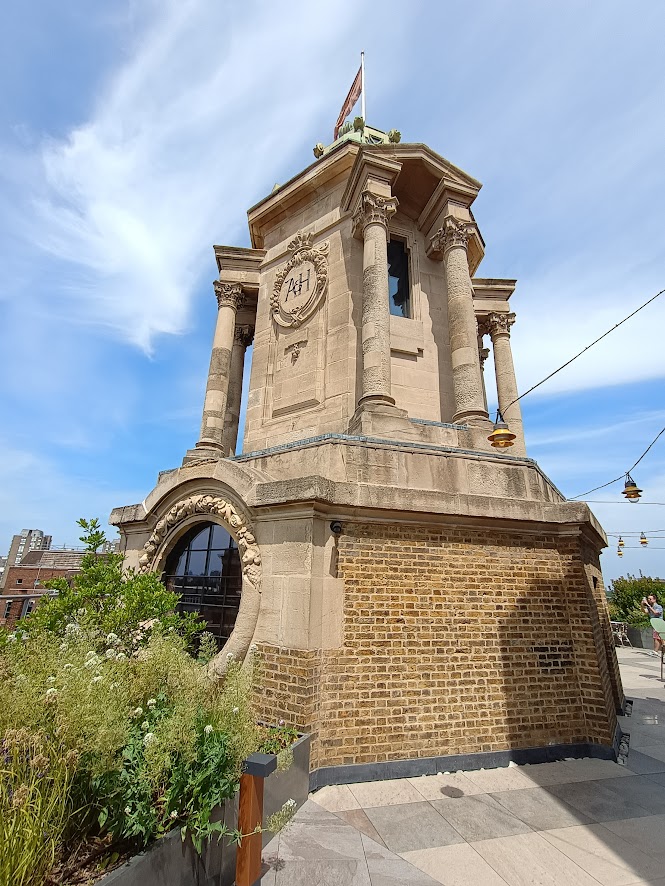
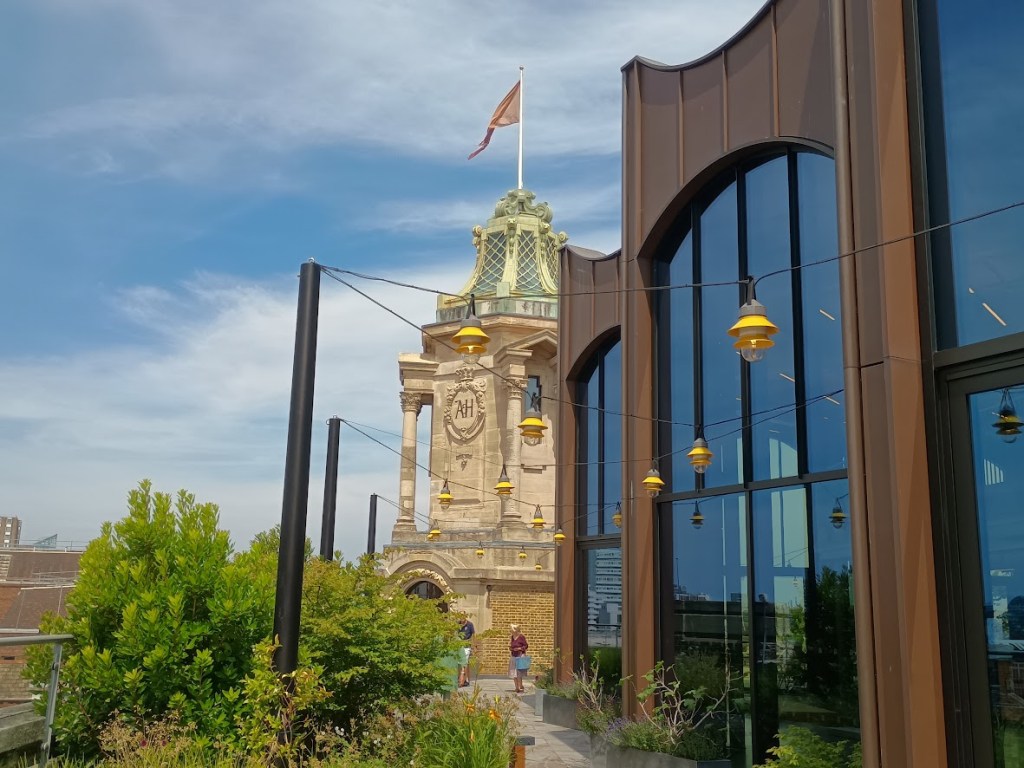
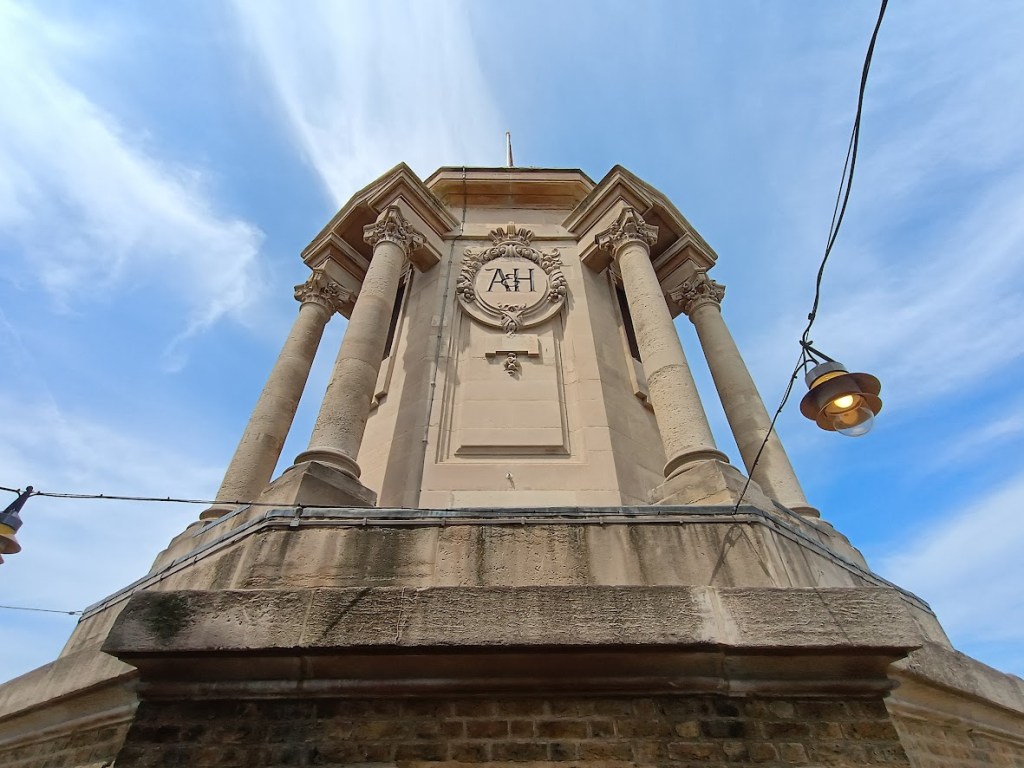
The cupola, the landmark feature of the building, has been repaired and cleaned up – we understand the plan is to have a small servery added to serve the terrace.
The terrace is a really rather nice space, and a world apart from the busy ground floor environment.
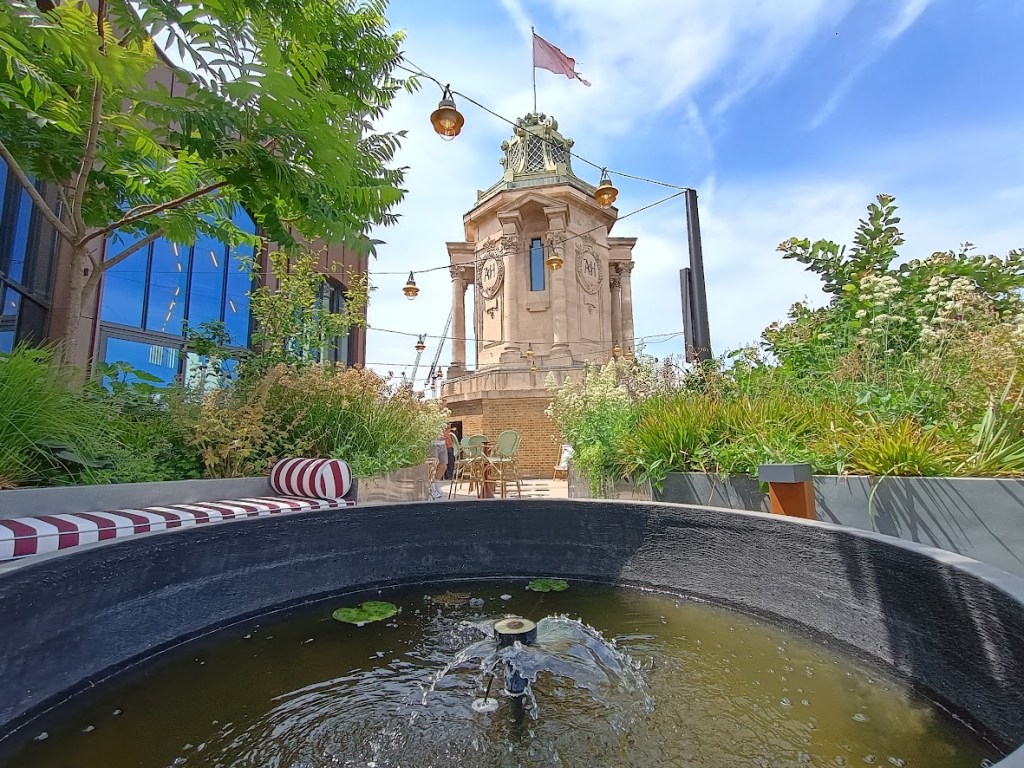
One side of the terrace (the part on the St John’s Road side, which runs along the side of the office space) is planned to become a private space for the top floor office, while the other part (which is more separate, with thick planting between terrace and office) is open to tenants from the rest of the building.
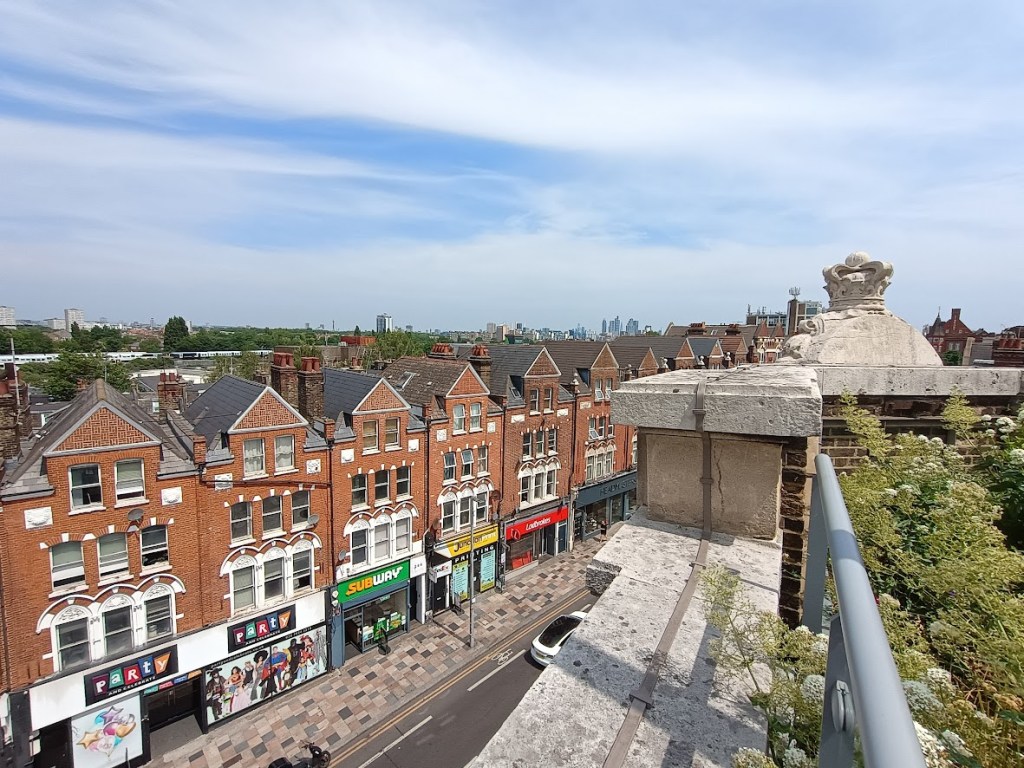
Looking down, Lavender Hill is surprisingly far below us. There’s a glimpse of the Party Superstore, which is (as we’ve reported) set to partly become a new branch of Rudy’s Pizza.
The brass cladding on the rooftop extension (which was very bright at first) has, as predicted, weathered rather well.
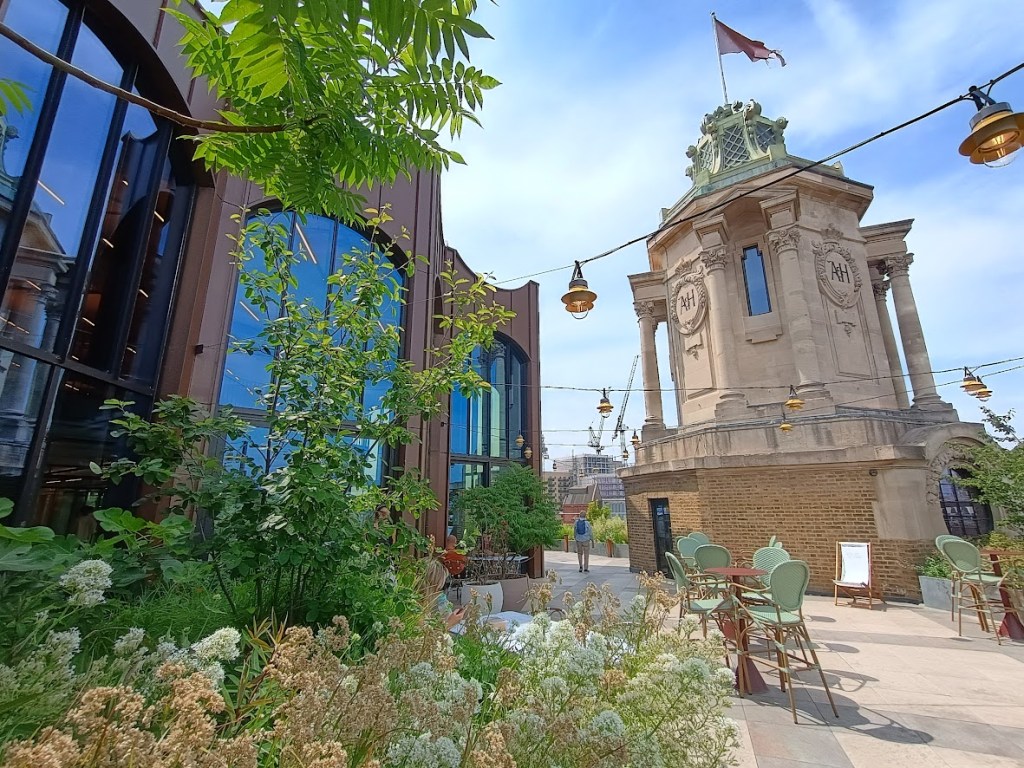
The shape of the extension – which got reduced in size in the design stages to make sure that there was still a clear view of the Cupola from along Lavender Hill – has given a nice deep terrace with plenty of hidden away seating areas among the planting.
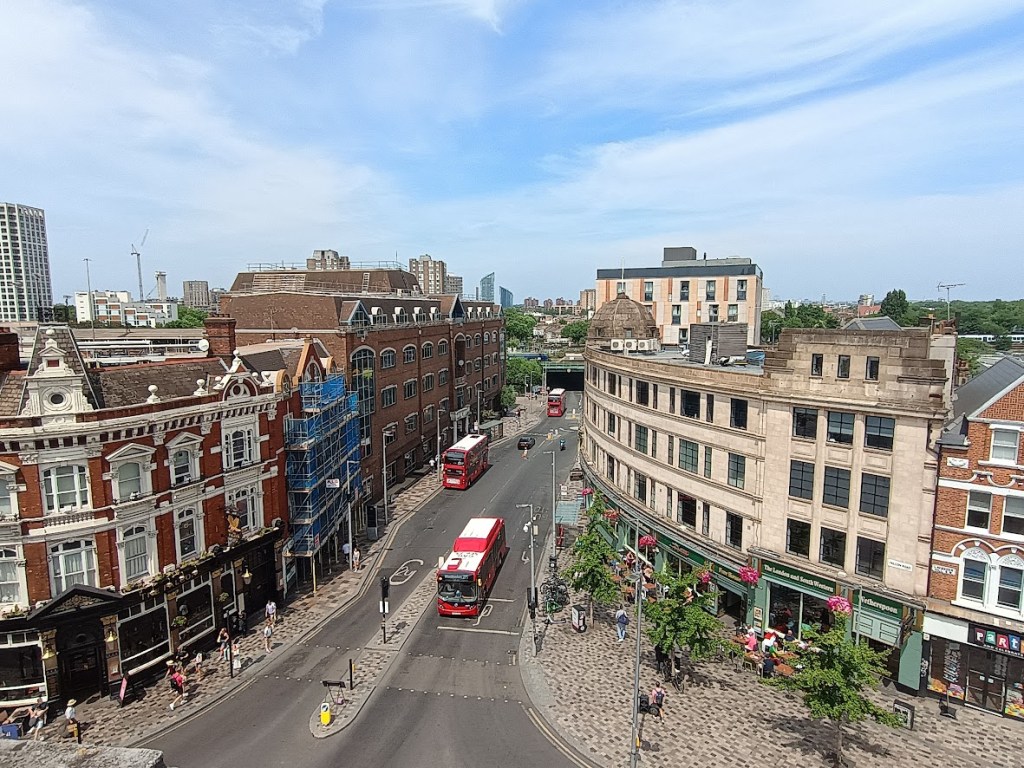
It is visible from ground level – but in our opinion the aims of the architects Stiff & Trevillion – which were to add a feature rather than just a bland box on the roof, but to also make sure that it was a feature that didn’t detract from the original look of the building – has worked.
It’s been an impressive transformation overall – done to a high standard. Department stores aren’t straightforward buildings to repurpose, and while we were blessed with a better quality building than many, this wasn’t an easy project or a cheap one. Of course it’s a shame to have lost our local department store after over a century – but what’s been done here is imaginative and fairly unique. The big investment made has also caught up with decades of underinvestment in the fabric of the building, with a complete renewal of all the building’s facilities and infrastructure – and created something that will prepare it for its next hundred years.
The wide mix of tenants who have taken up space in the building, all of whom are doing healthy levels of trade, a waiting list for Third Space, and a mostly-let office section, is also a vote of confidence in Clapham Junction as a town centre. Hats off to W.RE for making this happen, and to Sascha Lewin and his team for staying true to their original intent of doing this properly.
Special thanks to general & facilities manager John of Lee Baron who led the visit. If you found this interesting, you may want to see our previous articles on the long running redevelopment of Arding & Hobbs. Lavender-hill.uk is a community site covering retail, planning and development and local business issues, centered loosely on the Lavender Hill area in Battersea, with more occasional more detailed articles on local history, and other subjects of community interest. If you found this interesting you may want to sign up to receive new posts by email (for free – unsubscribe anytime) – and if you have tips and leads to share, get in touch. If the remaining part of the second floor, or the dramatic rooftop extension, look like the office for you – you’ll want to contact CBRE – but don’t hang about as we doubt it’ll be long before it’s fully let.
 Lavender-Hill.uk : Supporting Lavender Hill