
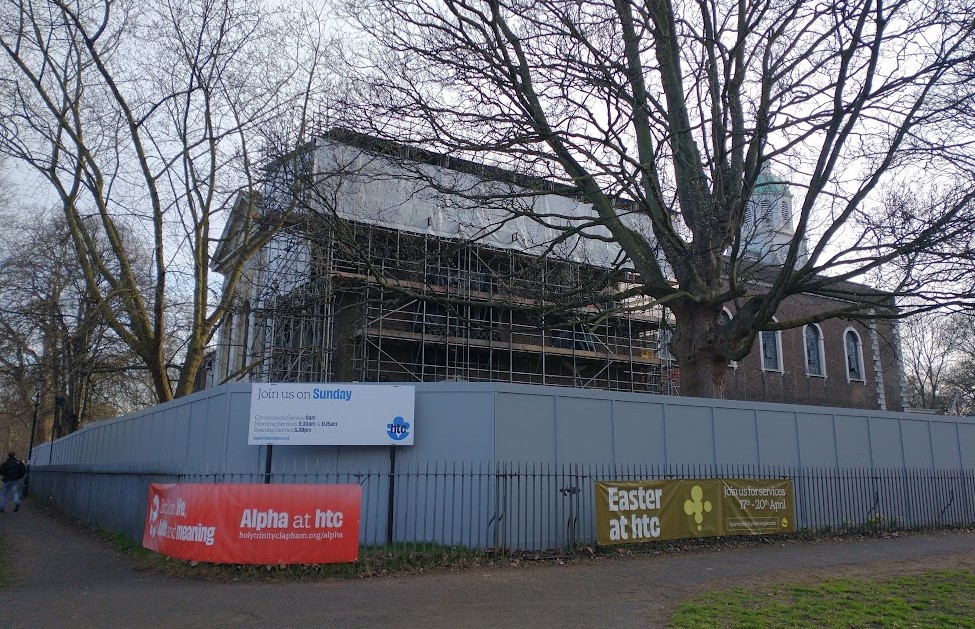
It’s rare to see a church turn in to a building site – especially one as prominent as the Holy Trinity, which is surrounded by part of Clapham Common. We reported back in 2021 that plans were afoot to extend the building and modernise its facilities, and works have now started – with half the church surrounded by construction hoardings.
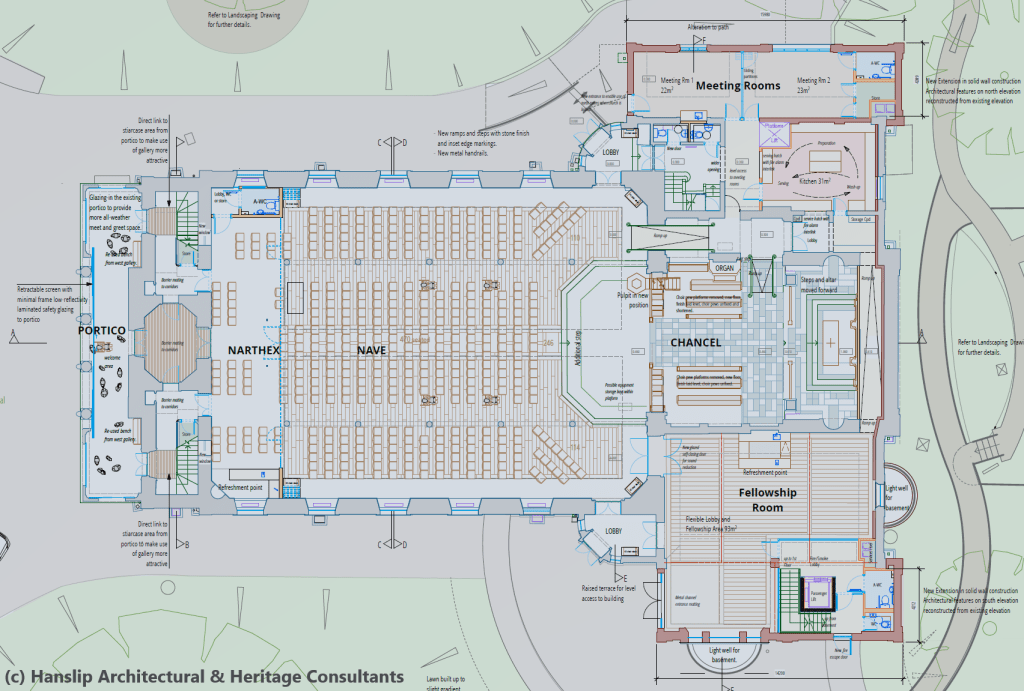
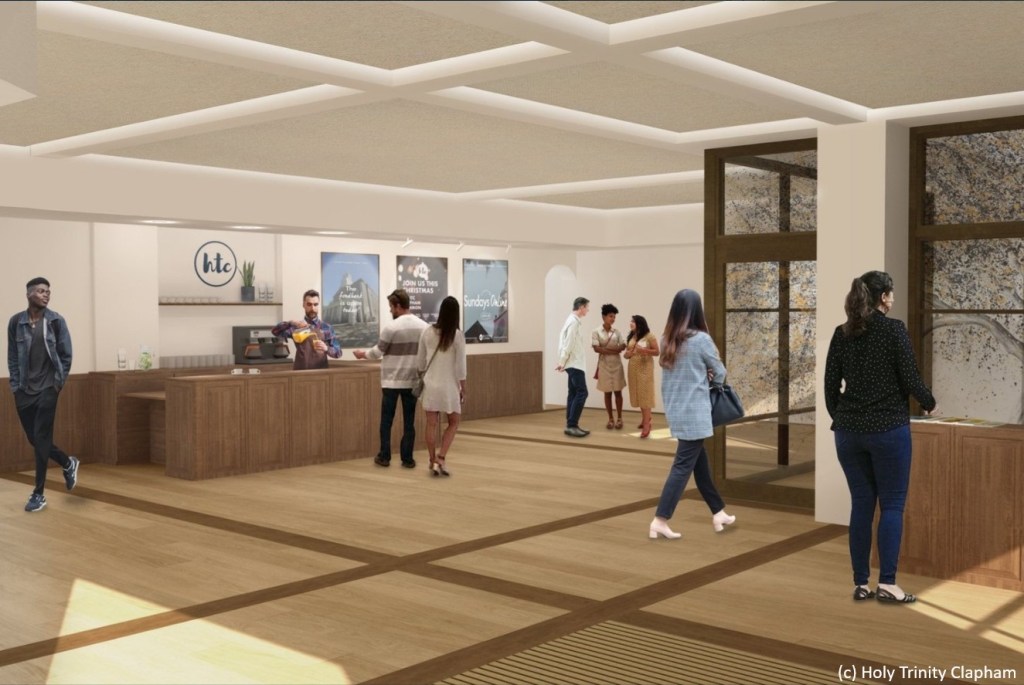
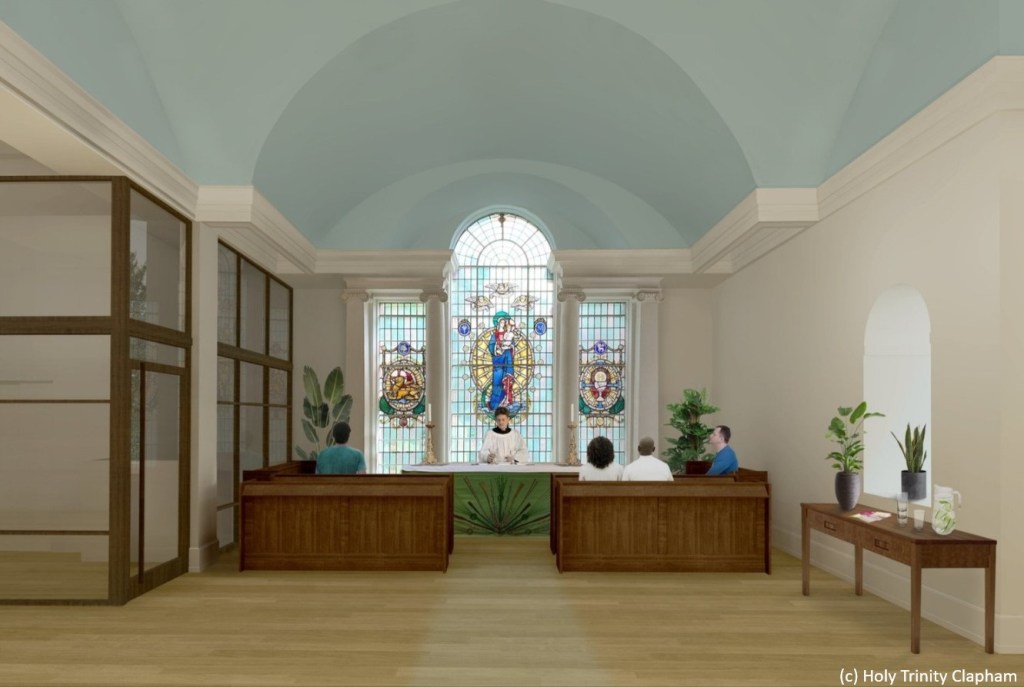
The project is essentially a set of extensions and changes to make the church a more flexible building, and open it up to wider set of uses. The north vestry will be extended to add four new meeting rooms spread over two floors, and the former south chapel will also be extended to include a disabled accessible entrance, ‘meet and greet’ space including tea and coffee facilities (pictured below), new fully accessible toilets, a new kitchen facility, and a lift and stairs down to the basement (a well as new lightwells to bring daylight to the basement).
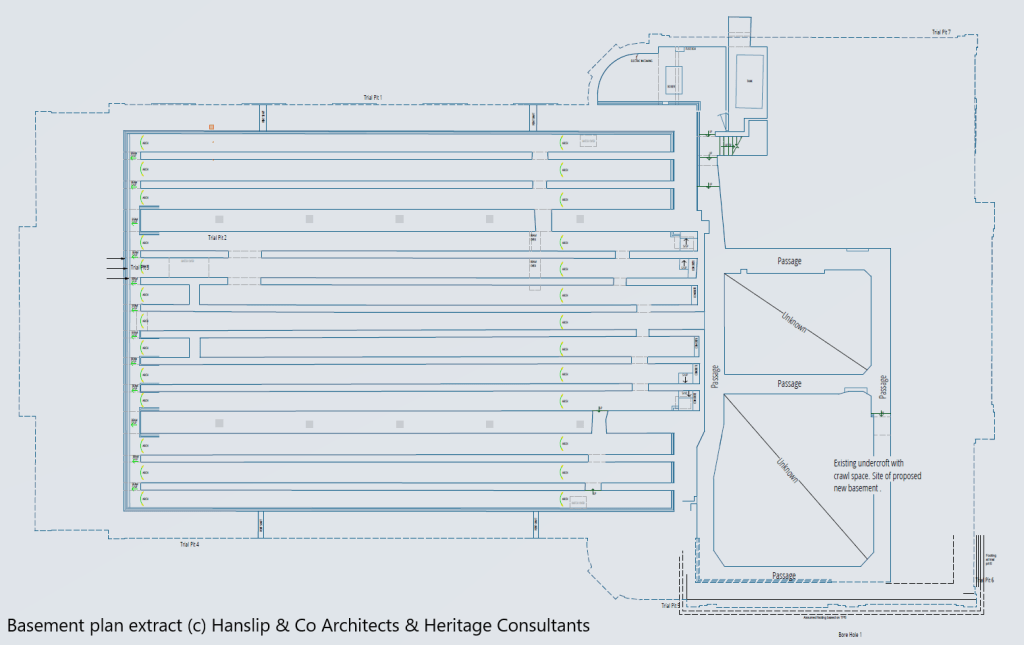
Now having mentioned the new lift to ‘the basement’ – there’s not currently a basement in the church! Just a series of narrow arched vaults and passageways, with a couple of larger crawl spaces at the south east corner of the building – as shown in the basement floorplan below. As part of the extension work, some of the baement is being excavated and turned in to usable space.
The extensions are essentially going to make the two parts of the church that stick out at the sides, now stick out a bit further – in a pretty similar style to what is already there. And works are now well underway – with the aim of finishing by the end of the year. At the north side of the church a small brick wall is in place, which looks like the edges of a poured-concrete foundation for the extension.
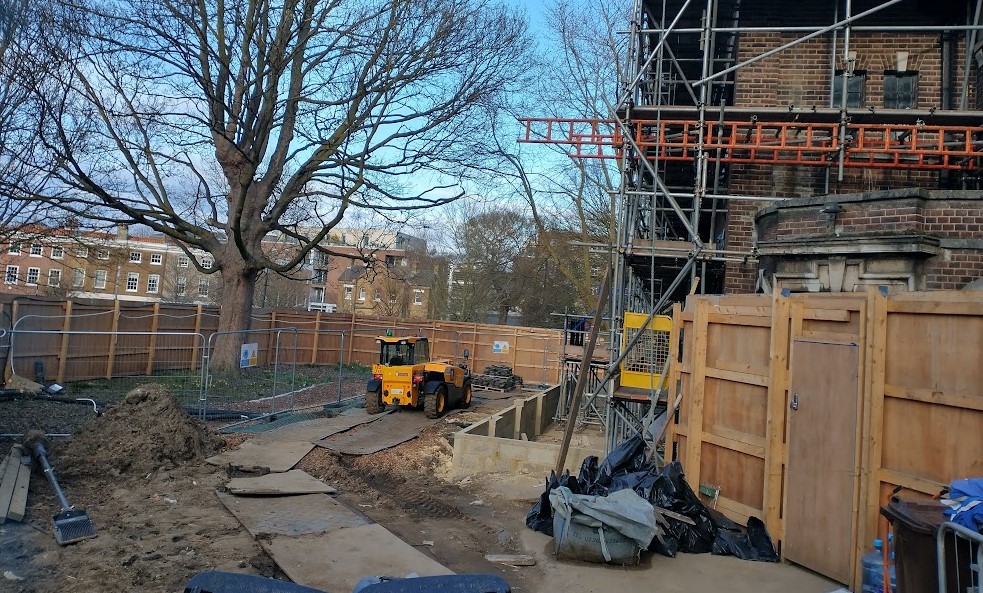
The south side now has the foundations for the new basement in place, which are just about visible in the picture below behind the area of new tarmac surfacing.
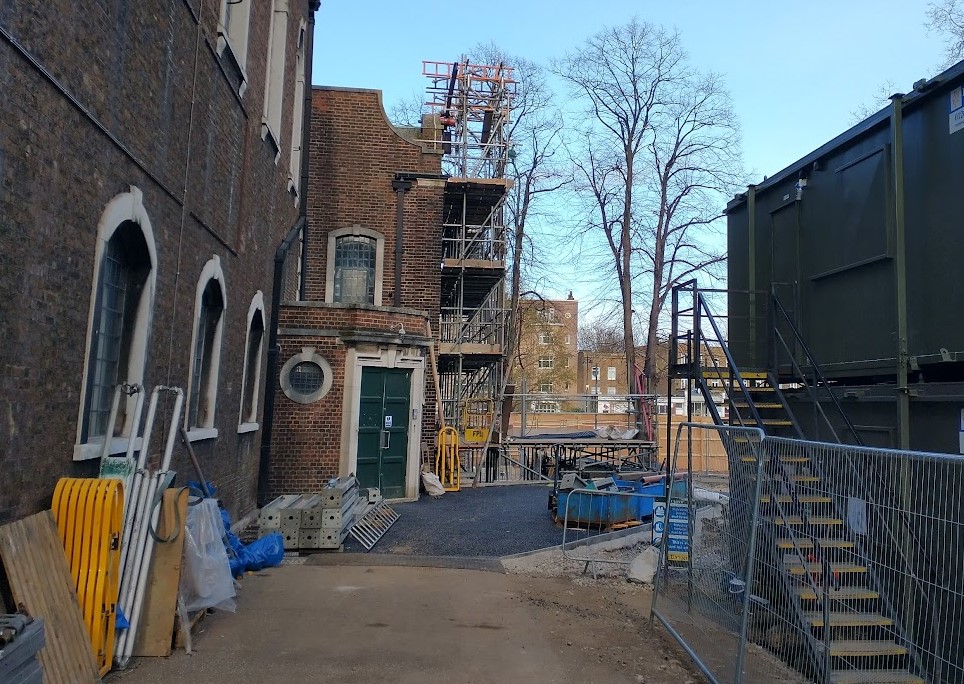
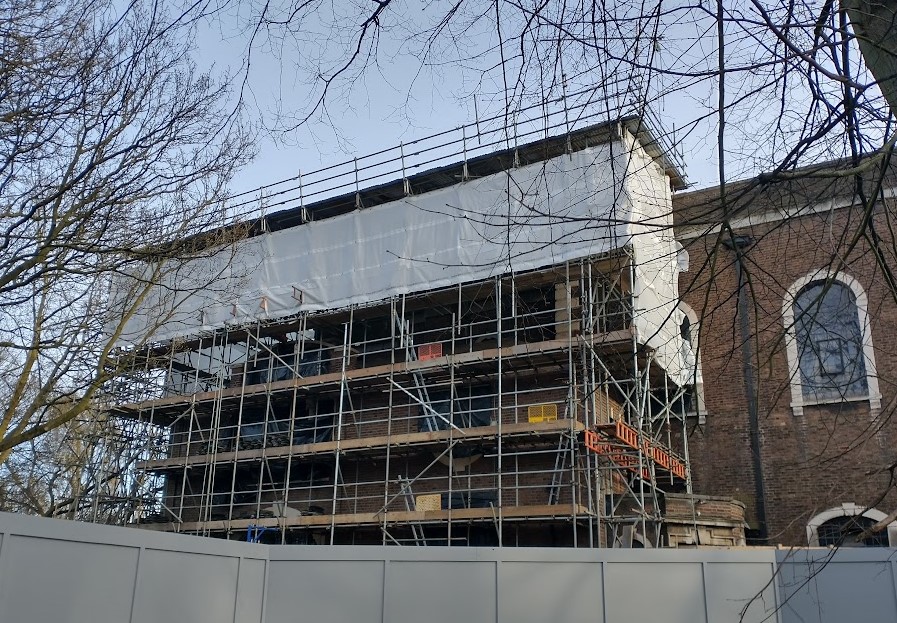
The first floor of the extended south wing (pictured below) will include the relocated stained glass window – and the scaffolding visible in the above photo is likely to be preparing for its temporary removal.
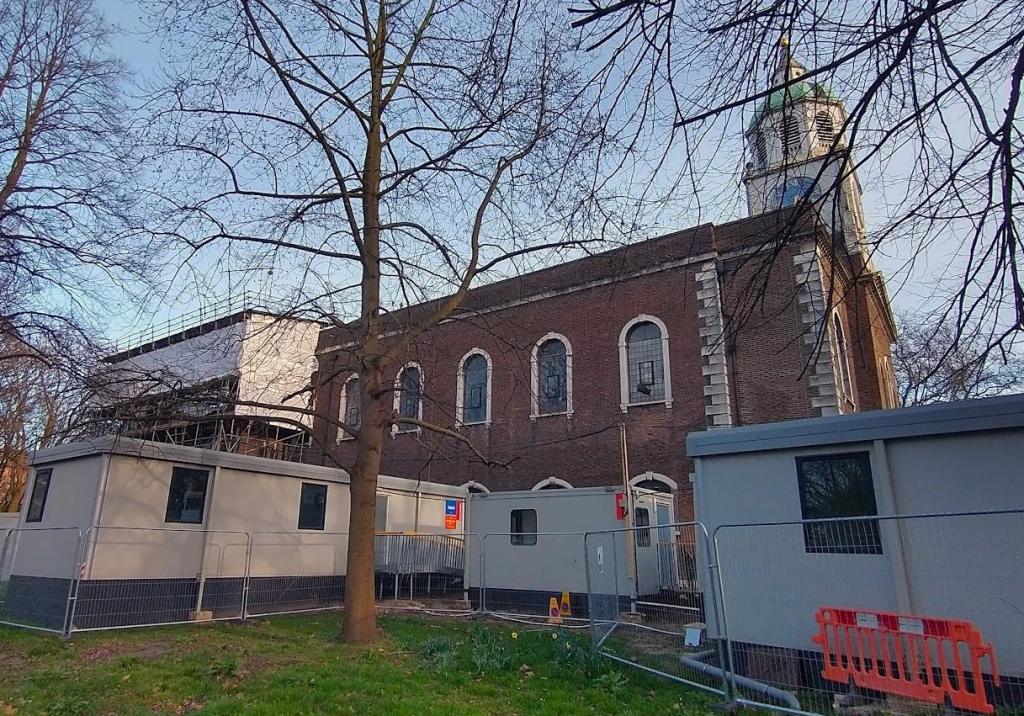
A whole load of site cabins are currently scattered around the site – some as site offices, but most serving as temporary accommodation for activities that would normally take place in parts of the church that are closed for building works.
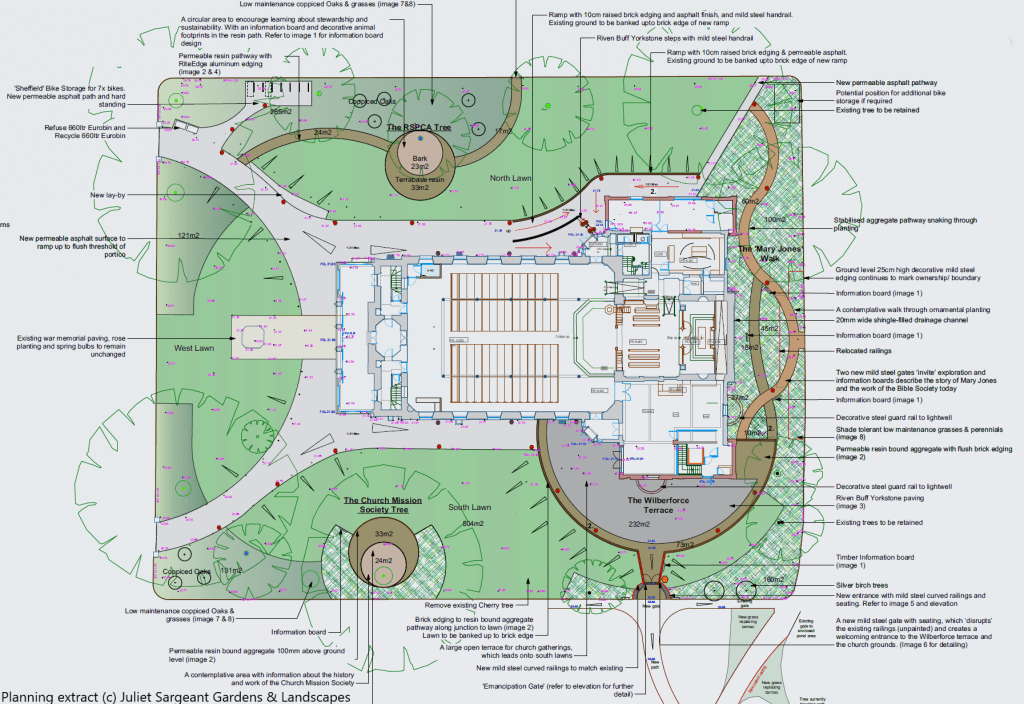
There will be works to the landscaping, including a new entrance gate with curved railings and seating at the south east corner of the church crounds, which will lead to a new outdoor terrace for gatherings (to be called The Wilberforce Terrace – the bit in grey in the diagram below – and named after former local resident, and leader of the movement to abolish the Atlantic slave trade, William Wilberforce). There will also be a more richly planted area with new paths around the eastern side of the church, and a refresh of the lawns and some new trees.
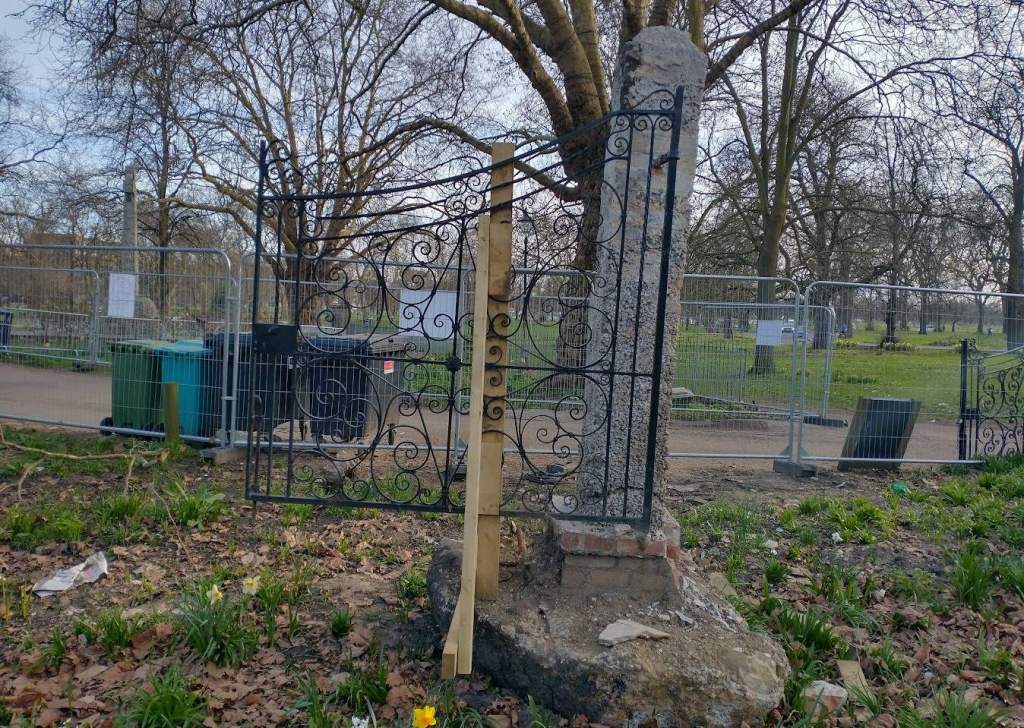
One slightly intruguing sight on the building site is one of the old gates, which has been removed to widen the entrance route and allow larger construction vehicles in to the site. The whole structure including its foundation has bene lifted up and moved out of the way, supported by a wooden prop. The gate post has been stripped down at the same time to reveal the rough concrete core.
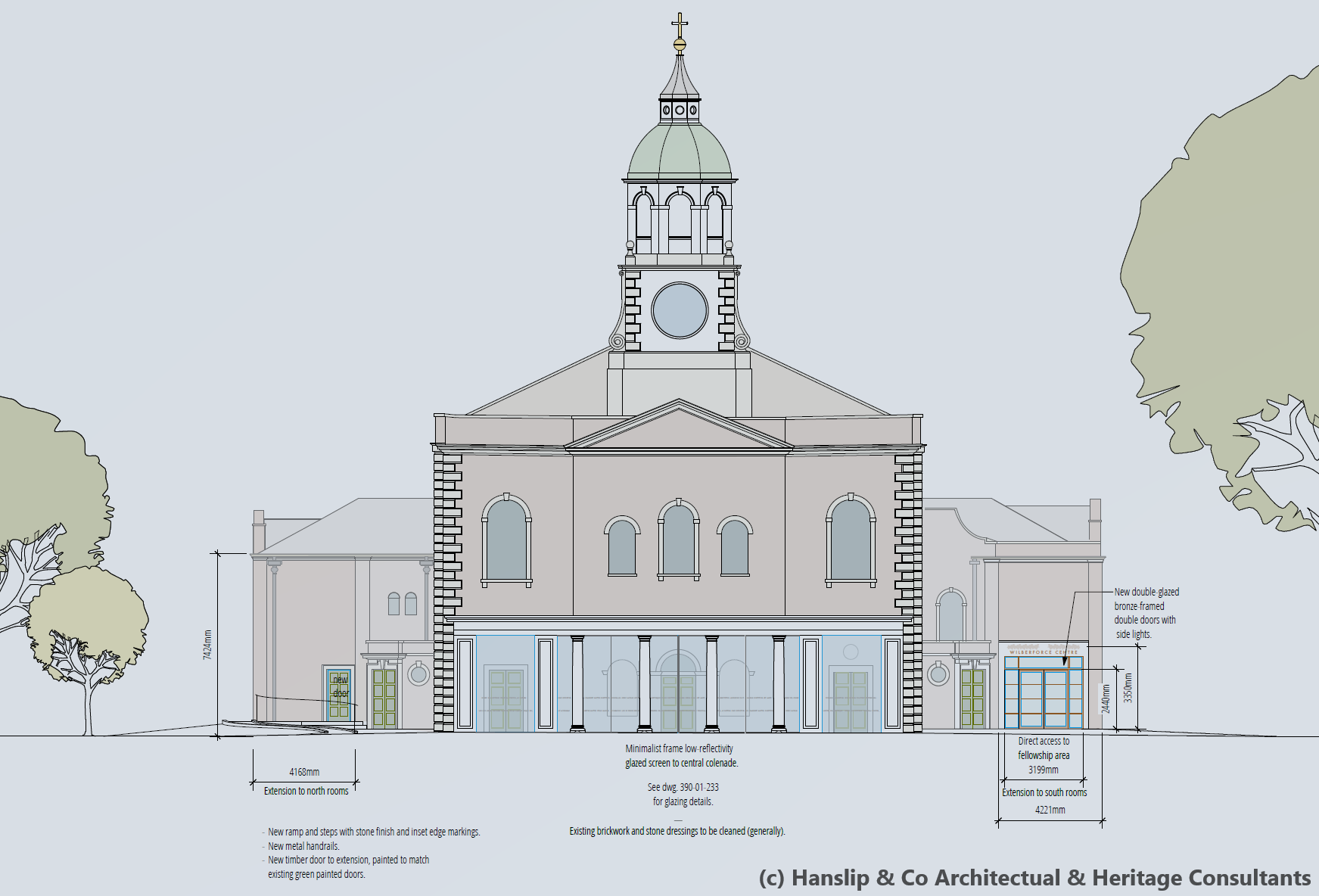
The original plans involved demolishing the portico, and rebuilding an extended version of it, which would have changed the overall proportion and appearance of the church quite significantly. This led to quite a lot of concerns – so the plans were revised to keep the portico much the same size as it is, but close off the entrances with glass (shown in the planning diagram below). This still proved controversial – so the plans were then revised a second time to make no changes to the front of the building.
Changes are also planned for the interior – in particular moving the pulpit, and removing the pews. This also proved controversial during the planning process, and it’s a frequent debate in the church world: on the one hand, pews are part of the core fabric of a church, and removing them fundamentally changes the original interior. On the other hand, they do really limit the use of the building to activities involving linear rows of seating, which makes it harder to use the building for anything other than the classic church service. Following concerns, including from the Clapham Society, the plans were changed to keep some of the pews within the northern upper gallery. There will be a new and improved audio-visual system so everyone in the building can clearly hear and see what is going on, including those in the galleries.
It’s a big and ambitious project. The church’s congregation has grown significantly over the last decade to over 700 people on a Sunday, and these works will help the building handle the needs of these much larger crowds. The church already has many calendar clashes in accommodating the various groups, courses and meetings that are part fo running a modern church, and has to use other spaces away from the church for the children’s groups that support Sunday services. The new meeting spaces in the extensions will be able to host all these at the main building, alongside the main services.
Regardless of whether you’re religious, it’s good to see this carefully thought through, sensitive project to refurbish one of the major landmarks of the Common and prepare it for the future. It’s a sizeable investment coming in at a shade over £6 million – coming from a mixture of some grant aid but mostly donations from 350 individuals. Holy Trinity are still looking for donations to complete the building works – partly because changes to tax rules have increased the overall cost. More details on what to do if you’d like to support the works, and the wider project, are here.
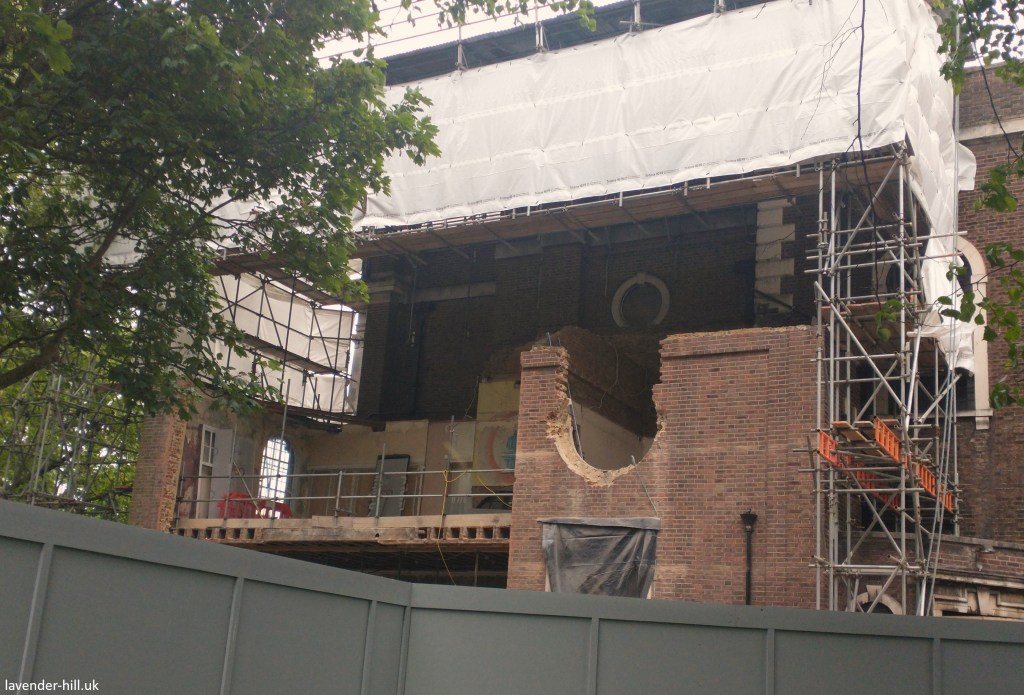
Update (May 2025) – one more photo of works well underway on the North wing. The windows have been removed for safekeeping, and demolition of the old end wall is now well underway –
We mainly cover the Lavender Hill area, but sometimes also report on developments on Clapham Common; we previously covered the Holy Trinity project in 2021. If you found this interesting, you may want to see our previous articles on planning and development, or on shops and food & drink traders in the area. To receive new posts on lavender-hill.uk by e-mail (for free, unsubscribe anytime), sign up here.
 Lavender-Hill.uk : Supporting Lavender Hill
It better not be a mosqueSent from my iPad
LikeLike