
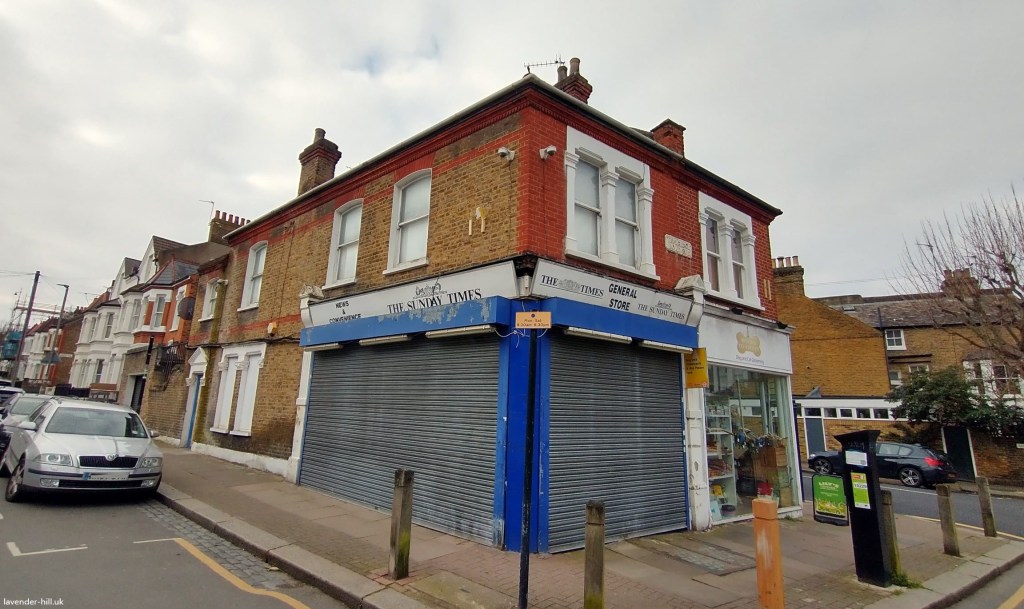
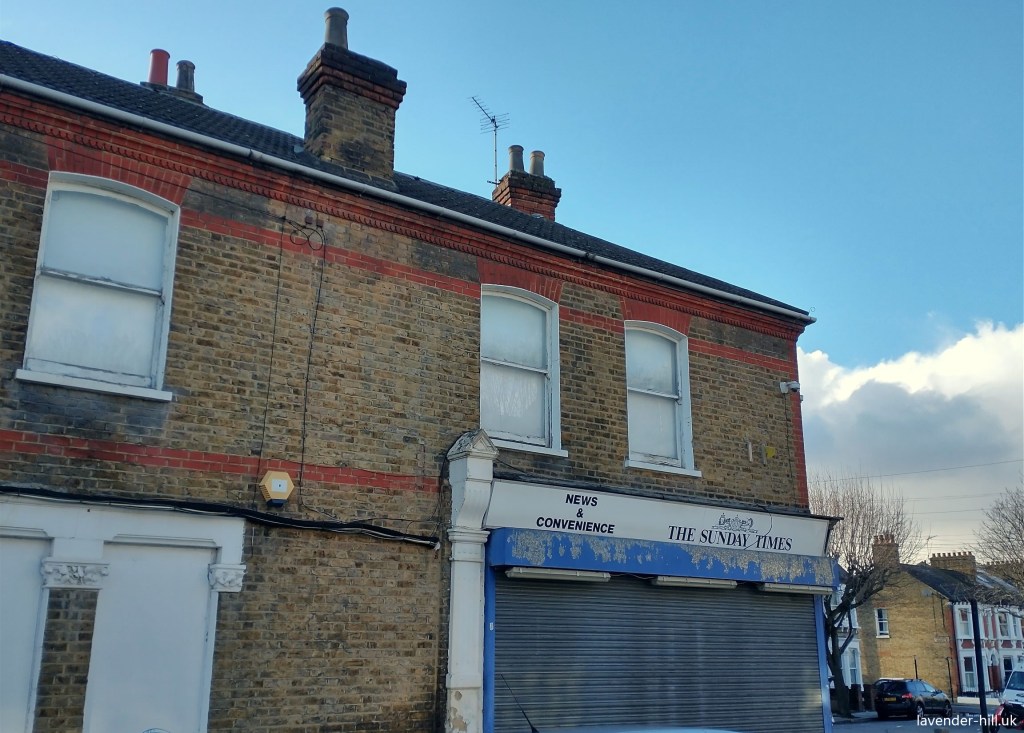
For over a century, a newsagents’ and corner shop stood at the corner of the small square at the junction of Taybridge Road and Marmion Road. It was a rare surviving example of a corner shop that was hidden away deep in a really local set of streets: these used to be quite common (similar ex-shops are visible on street corners around the Shaftesbury Estate, and indeed in most big Victorian housing developments) but as the focus for shops gradually moved towards the main roads it was quite unusual to see one still trading. The odd shape of the roads here is a direct result of the slightly complicated shape of the very end of the back garden of the long-lost country house that used to cover this land – a big house called Northside. We wrote about that house just last week – as one small piece of it is still standing, facing Clapham Common!
The shop and the little cluster of buildings around it was built in 1897 by a Wandsworth solicitor, Henry Nicholas Corsellis, and his family’s chief builder John Stanbury. In just three years this dynamic duo built around 180 houses on an area of just six acres, including the south end of Taybridge Road, Tregarvon Road, Jedburgh Street and a small bit of Clapham Common Northside. They mostly went for relatively straightforward house designs, but built larger and more luxurious houses on the prime spots overlooking the common, with fancier rooflines, balconies and carved brick decoration. The development was a commercial success and the houses saw high demand. The Mitchell Charity, a still-running Charity based in the City, clearly saw this development as a safe bet, as they paid just over £30,000 to buy most of the estate freehold in 1900 as a long term investment.
But nothing is forever: Vairvar Food & Wine closed in the late-2010s, and the property has been empty ever since, gradually falling in to disrepair. A few years ago some quite unusual mushrooms even grew on some of the outside walls! The building is split into a ground floor shop, with a linked first floor flat. There’s a very small outdoor space (not quite big enough for a bin), and two small basements under the building. There is also a garage that was used to store stock when the shop traded.
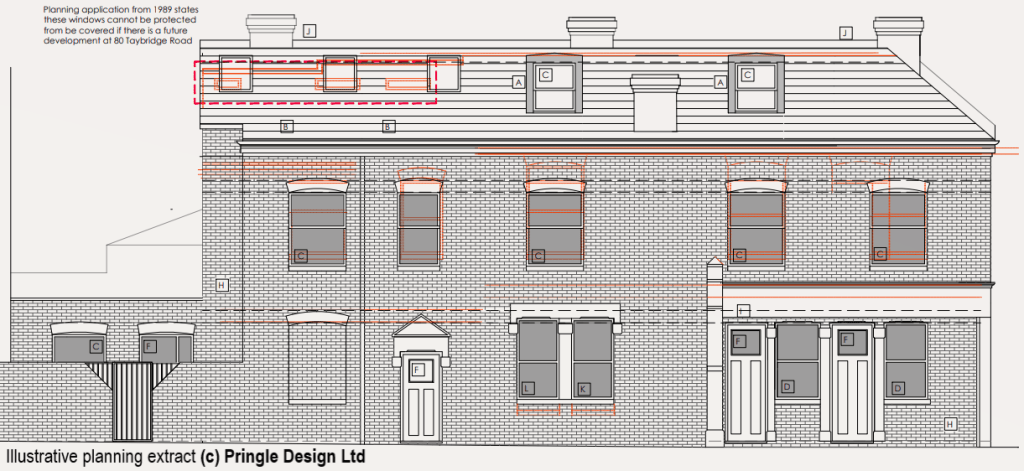
After a good few years with no signs of action at all, plans were approved last year to convert the whole building to three flats: a two bed one on the ground floor with a small outdoor courtyard (created by removing part of the existing ground floor garage – at the bottom left hand corner of the floorplan below), another two bed flat on the first floor, and a smaller studio flat on the second floor. The lower section of the roof would be raised a bit to make the space more efficient, so that it would align with the slightly higher building next door, and the internal floor heights would be adjusted to accommodate the flat in the loft with only a slight height increase to the main bit of the roof. Most of the windows will be rearranged, and dormer windows will be added to the roof.
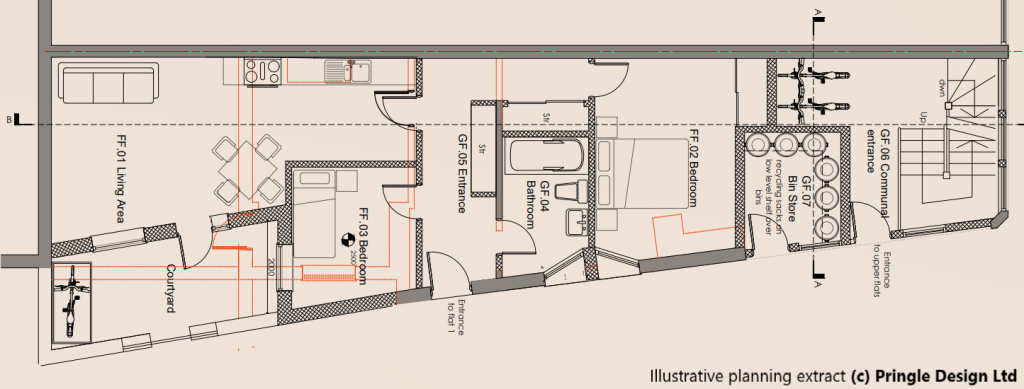
The development was the second set of plans for the site (the first version planned to have larger flats, and included using the basement as the ground floor flat’s kitchen, and a larger courtyard shared by all three flats – but these plans were withdrawn). And it wasn’t especially controversial at the planning stage. The changes to the overall appearance are minor, the quality of the planned flats seems decent, and it’s a fairly obvious place for flats. Loss of shop fronts can be a concern, but at this hidden away spot this was not an issue, with plenty of local shops on Lavender Hill including a branch of the Co-op that opened in 2018 at the other end of Taybridge Road. The existing Victorian shopfront surround will be kept (albeit partly infilled with windows to the internal staircase to the upper floor flats) to keep the overall appearance of this very visible building balanced, given there remains a roughly symmetrical shopfront next door (home to Woofs to Kittys pet supplies and dog groomers). The flats don’t really meet current outside space requirements for new properties, but planners decided this was acceptable given how close the building is to Clapham Common.
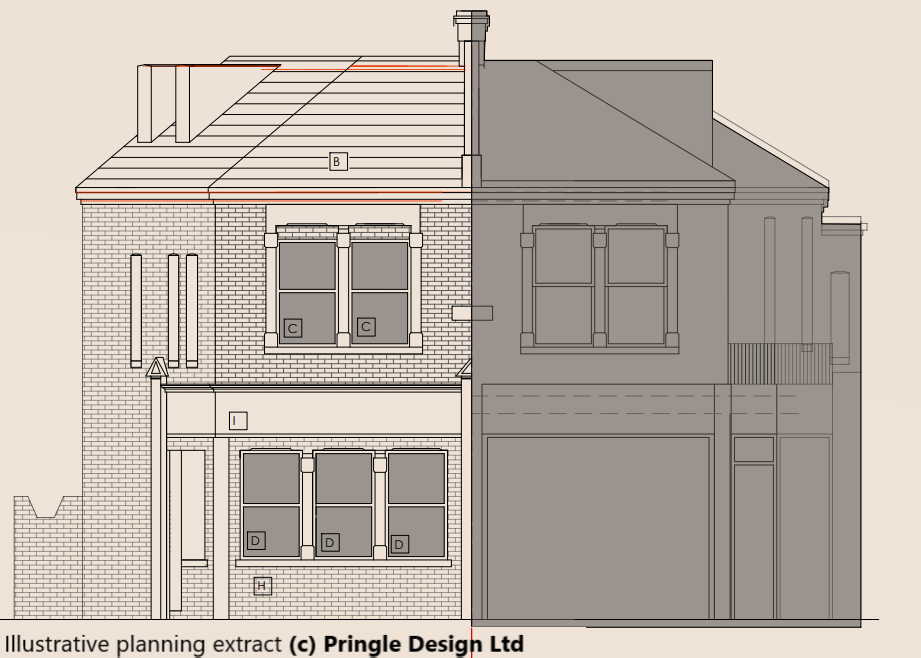
One unusual aspect is that the building next door has lot line windows – which are quite common in American cities (especially New York) but really quite a rare thing in British planning. They’re essentially where someone has built windows that are actually on the edge of a property – and look directly in to a neighbour’s land. The three narrow windows are visible at the top edge of the roof in the street view photo below:
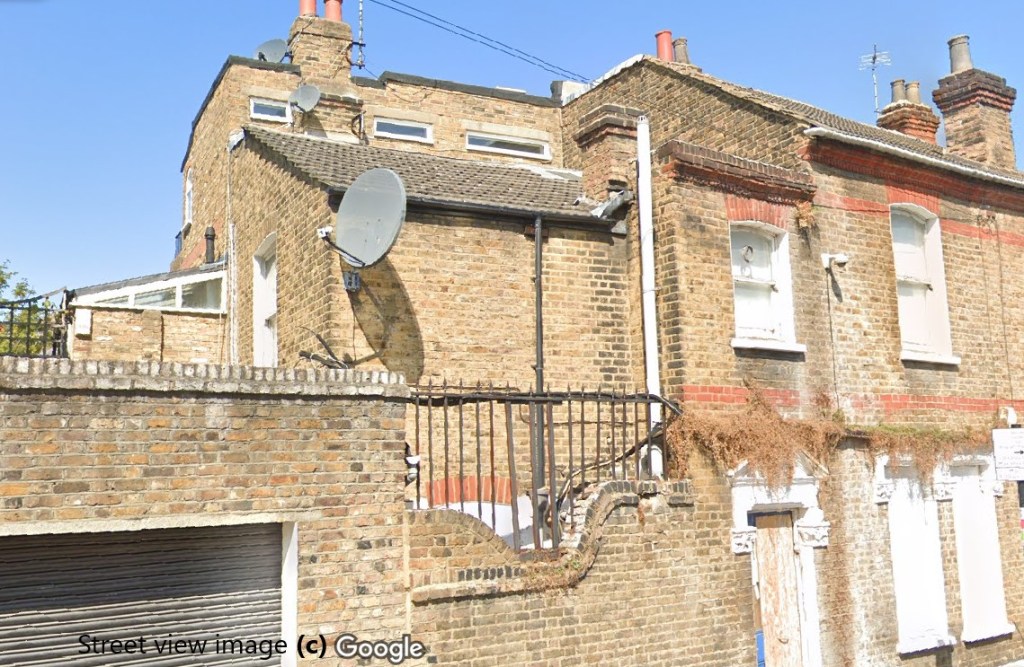
These windows can be a short term thing – you can sometimes build them (subject to some privacy restrictions), but they don’t guarantee you any access to light – if the people next door build a wall right up to them, then you no longer have a window! When the roof extension at the house next door was approved (all the way back in 1990) the decision notice included a specific comment on this, approving the build but saying “You are advised that the proposed high level windows to the eastern elevation at 2nd floor level, could not be protected by the Council in the event of future developments at 80 Taybridge Road.”. So sadly for the neighbours, after 35 years of service these windows look to be doomed.
All in all, this is pretty much what we expected would be the future for the property, although it’s surprising that it has taken this long to see any sign of development work. There’s no sign of any actual building work yet – but after many years, the time 80 Taybridge Road being empty may be coming to a close. If this is of interest, you may want to see our other articles on planning and developments in the Lavender Hill area.
 Lavender-Hill.uk : Supporting Lavender Hill